
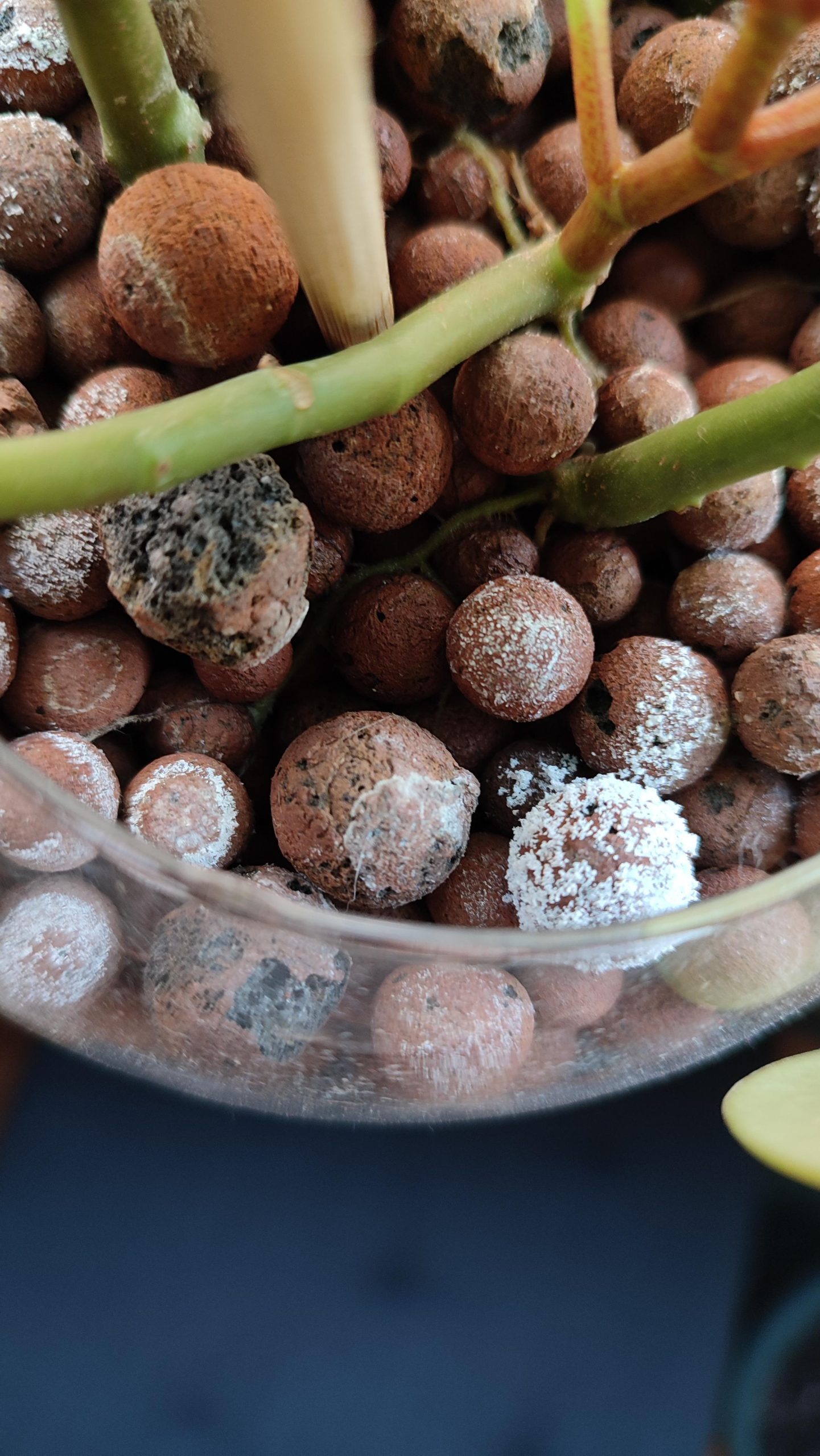
When clay pebbles (LECA) turn white, it’s likely due to salt buildup from water and fertilizers. This accumulation can disrupt the nutrient balance and impact plant health. Insufficient rinsing of the pebbles or high fertilizer concentrations can also lead to white residue. This white buildup can cause browning, burning, wilting, growth stagnation, and hinder nutrient uptake in plants. To prevent this, ensure regular cleaning, thorough rinsing, balanced fertilization, and monitor watering practices. Proper care of LECA promotes optimal plant growth and longevity while reducing the risk of diseases. Prioritize plant health for overall well-being and vitality.
Mineral Deposits and Salt Buildup
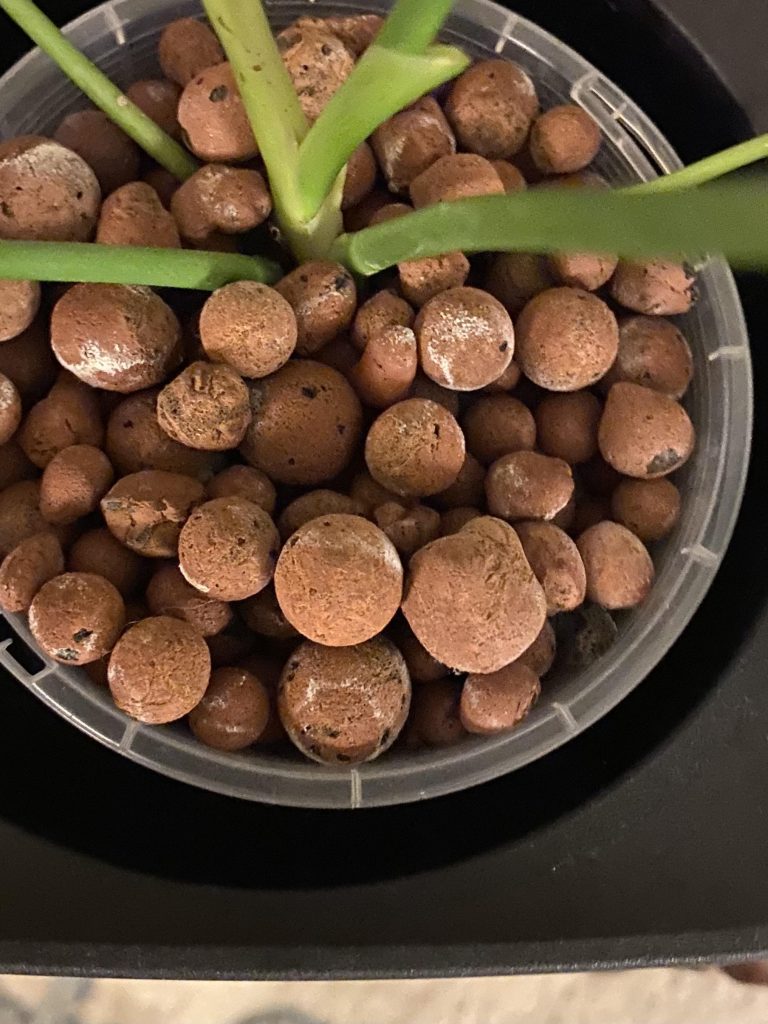
When water with high nutrient content evaporates in the growing medium, salts can accumulate on clay pebbles, leading to the formation of white residue known as mineral deposits and salt buildup. These mineral deposits and salt buildup can be detrimental to plant health as they impede proper nutrient absorption and water uptake. The white residue often visible on the surface of clay pebbles is a visual indicator of this issue.
Salt buildup, if left unchecked, can cause various problems for plants, including browning, burning, and wilting of leaves due to the excessive minerals present. To mitigate these effects, it is crucial to regularly check and clean the clay pebbles to remove any accumulated salts. Failure to address mineral deposits and salt buildup can lead to root damage and stunted growth in plants grown in LECA.
Impact of Water and Nutrient Solutions
Excessive salts present in water and nutrient solutions can have a detrimental impact on the health of plants grown in clay pebbles (LECA) by contributing to the formation of white residue and hindering proper nutrient absorption. When water with high salt content evaporates, it leaves behind salt residues that accumulate on the surface of the clay pebbles, leading to the characteristic white buildup.
- Nutrient Solution: The quality and consistency of the nutrient solution used can directly influence the salt content in the water and subsequently affect the health of plants in LECA.
- Water Quality: The purity of the water source is crucial as water high in salts can exacerbate the formation of white residue on the clay pebbles.
- Salt Residues: Excess salts in the water and nutrient solutions can not only cause white discoloration on LECA but also harm plant roots, impacting overall plant vitality.
- Proper Maintenance: Regularly flushing the clay pebbles with clean water and monitoring the nutrient solution’s salt levels are essential practices to prevent white buildup and ensure optimal plant growth in hydroponic systems.
Prevention Through Flushing
To prevent the issue of white buildup on your clay pebbles (LECA), flushing with nutrient water is crucial to eliminate excess salts. By regularly flushing the pebbles, you ensure proper distribution of nutrients and prevent mineral accumulation that can hinder plant growth. Remember, flushing with clean water each time you water your plants in LECA is an essential practice to maintain the health and vitality of your plants.
Flushing Benefits Plant Roots
Flushing with nutrient water plays a crucial role in preventing white buildup on clay pebbles (LECA) and maintaining optimal root health in semi-hydroponic systems. Regular flushing is essential for the overall well-being of your plants grown in LECA. Here are some key benefits of flushing for plant roots:
- Prevents Mineral Accumulation: Flushing helps prevent the accumulation of harmful minerals on the clay pebbles, ensuring a healthy root environment.
- Maintains Nutrient Balance: By flushing with nutrient water, you can maintain the proper balance of nutrients in the root zone, promoting robust plant growth.
- Improves Water Quality: Flushing aids in improving the water quality within the semi-hydroponic system, which directly impacts root health.
- Enhances Longevity of Planting Medium: The process of flushing with nutrient water contributes to the longevity and effectiveness of the LECA medium, providing sustained support for plant roots.
Flushing Removes Excess Salts
Removing excess salts through the process of flushing with clean water is crucial for preventing white buildup on clay pebbles (LECA) and maintaining plant health in semi-hydroponic systems. Flushing involves rinsing the clay pebbles thoroughly to eliminate salt residues, ensuring a balanced nutrient water environment for your plants. Regular flushing is necessary to prevent salt accumulation, which could harm both the clay pebbles and the plants they support. Before adding any fertilizer, it is essential to remove salt buildup through flushing to avoid potential damage to the delicate plant roots. Proper flushing not only maintains the health and longevity of the clay pebbles but also creates an optimal growing environment by keeping the nutrient balance in check.
| Flushing Benefits | Plant Roots | Prevents Salt Buildup |
|---|---|---|
| Maintains Nutrient Balance | Enhances Root Absorption | Eliminates Harmful Residues |
| Ensures Plant Health | Strengthens Root System | Prevents Root Damage |
| Promotes Longevity | Boosts Plant Growth | Enhances Nutrient Uptake |
| Prevents Salt Accumulation | Improves Water Absorption | Supports Overall Plant Health |
| Enhances Oxygenation | Prevents Nutrient Imbalance | Supports Optimal Growth |
Maintenance for Optimal Growth
Proper maintenance of clay pebbles is crucial for ensuring optimal growth of your plants. To maintain the health of your plants when using LECA and prevent the white buildup issue, follow these maintenance tips:
- Regular Cleaning: Schedule routine cleanings to remove any salt residues that may have accumulated on the clay pebbles.
- Thorough Rinsing: Before reusing the clay pebbles, make sure to rinse them thoroughly to eliminate any lingering salt buildup.
- Prevent Nutrient Imbalances: By keeping the clay pebbles clean, you can avoid nutrient imbalances that may arise from the white buildup.
- Enhanced Effectiveness: Cleaning and maintaining the clay pebbles regularly will prolong their effectiveness, promoting healthier plant growth.
Addressing Accumulated Minerals
You can address the issue of accumulated minerals on clay pebbles by understanding that the white buildup is caused by mineral deposits from water and fertilizers. Preventing white residue involves managing evaporation in the growing environment to reduce mineral deposits on the clay pebbles. It is essential to monitor and control the salt residues in nutrient-rich water to minimize the risk of white discoloration on the clay pebbles.
Mineral Build-Up Explanation
Mineral accumulation on clay pebbles, such as LECA, arises from the presence of nutrients in the water utilized within hydroponic or semi-hydroponic systems. When nutrient-rich water is used, minerals like calcium, magnesium, and potassium can gradually build up on the surface of the clay pebbles, leading to the formation of white deposits. This mineral buildup can have detrimental effects on plant growth by impeding proper nutrient absorption and potentially causing browning or burning of plant roots.
- Regular flushing with clean water is crucial to prevent mineral buildup on the clay pebbles.
- The white residue can hinder plant growth by affecting nutrient absorption.
- Removing salt buildup before adding fertilizers is essential to prevent potential harm to plants.
- Maintaining optimal conditions for plant growth in LECA involves monitoring and managing mineral accumulation effectively.
Preventing White Residue
To prevent the accumulation of white residue on clay pebbles like LECA, regular and thorough cleaning of the pebbles is imperative. Cleaning involves rinsing the clay pebbles with water to remove any salt buildup that can contribute to the white residue formation. Salt buildup occurs as water evaporates, leaving behind mineral deposits on the surface of the pebbles. By rinsing the pebbles regularly, you can prevent the accumulation of these minerals, ensuring a healthier environment for your plants.
When cleaning the clay pebbles, pay special attention to areas where water tends to pool, as these are prime spots for mineral buildup. Use a gentle scrub brush or cloth to remove any stubborn residues. After cleaning, make sure to rinse the pebbles thoroughly to eliminate any remaining salt deposits. By taking these steps to prevent white residue through proper cleaning and rinsing, you can maintain the effectiveness of your LECA and promote optimal plant growth.
Ensuring Plant Health
Regular maintenance and proactive measures are crucial for ensuring the health of plants when dealing with white buildup on clay pebbles (LECA). The white residue, often caused by salt buildup from nutrient-rich water, can harm plants by leading to browning, burning, and wilting. To maintain plant health and prevent nutrient imbalances, follow these essential steps:
- Regular Cleaning: Ensure you regularly clean the LECA to remove any white buildup and prevent salt accumulation.
- Thorough Rinsing: Properly rinse the clay pebbles to eliminate salt residue and maintain a healthy growing environment for your plants.
- Prevention of Salt Accumulation: Take proactive measures to prevent salt buildup by monitoring the watering and fertilizing routine.
- Prioritize Plant Health: Always prioritize plant health by eradicating salt buildup before adding any new fertilizers to prevent potential damage to your plants.