

I’ve found that choosing the right raised garden design can significantly impact plant health and yield. Factors like material durability, soil depth, and bed shape all play a role in optimizing growth conditions. Whether you have limited space or want easier access, there are practical configurations to consider. I’m about to share 13 effective raised vegetable garden ideas that address these factors, each with unique benefits you’ll want to explore further.
Classic Cedar Raised Bed Design

A classic cedar raised bed offers a durable and practical solution for growing vegetables, combining the natural resistance of cedar wood with straightforward construction techniques.
Cedar’s inherent oils protect against rot, moisture, and insects, ensuring longevity of 10-15 years or more. Using 1-2 inch thick boards joined by exterior-grade screws, the bed maintains structural integrity and resists warping under garden conditions.
Metal Frame Vegetable Garden

While cedar raised beds offer natural durability and a warm aesthetic, metal frame vegetable gardens provide an alternative that excels in longevity and resistance to environmental stressors.
Materials like galvanized or Aluzinc steel resist rust for 20+ years, with minimal maintenance. Metal’s heat conductivity can extend growing seasons but may need shading in hot climates.
Assembly requires tools but yields durable, pest-resistant beds ideal for varied crops.
Tiered Raised Beds for Vertical Gardening
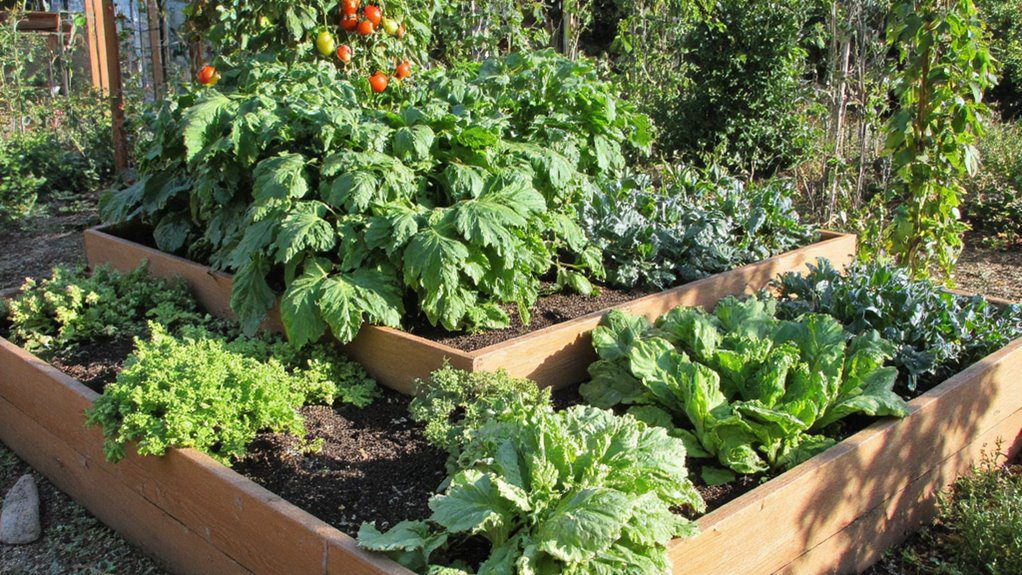
Because space often limits gardening options, tiered raised beds offer an efficient solution by stacking planting areas vertically.
This design maximizes planting area in small spaces while ensuring light and water reach each tier. Raised levels reduce bending strain and improve accessibility.
Using durable materials, these beds enhance soil drainage and warmth, supporting diverse plants and increasing yield per square foot through optimized vertical growth.
U-Shaped Raised Bed Layout
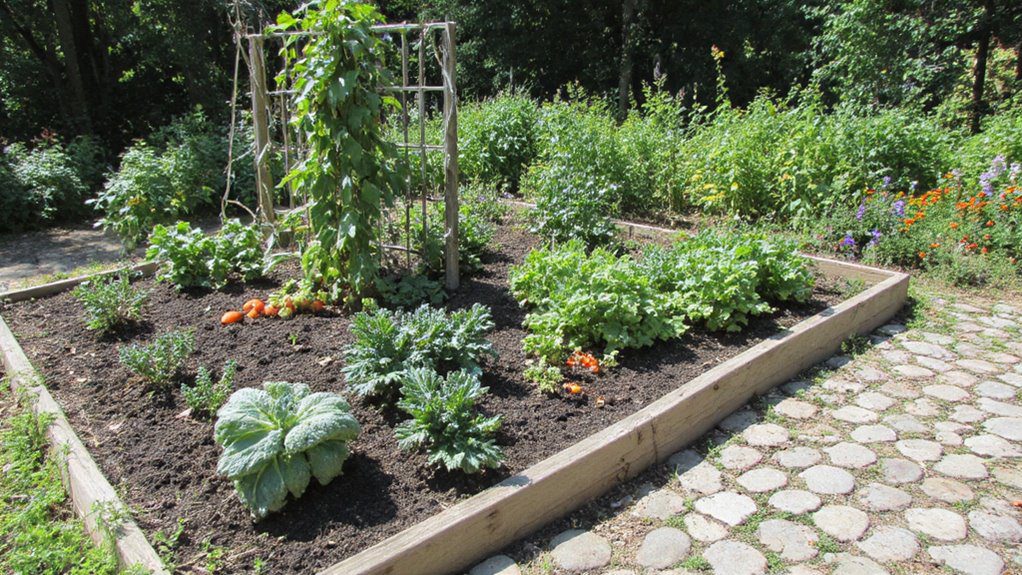
When you design a garden that prioritizes both accessibility and efficient use of space, a U-shaped raised bed layout offers an ideal solution.
Using weather-resistant, non-toxic lumber like cedar, this design maximizes planting area while providing easy access from all sides.
It supports diverse crops, facilitates crop rotation, and allows for strategic watering and sunlight exposure, enhancing productivity and soil health efficiently.
Elevated Tabletop Garden Bed
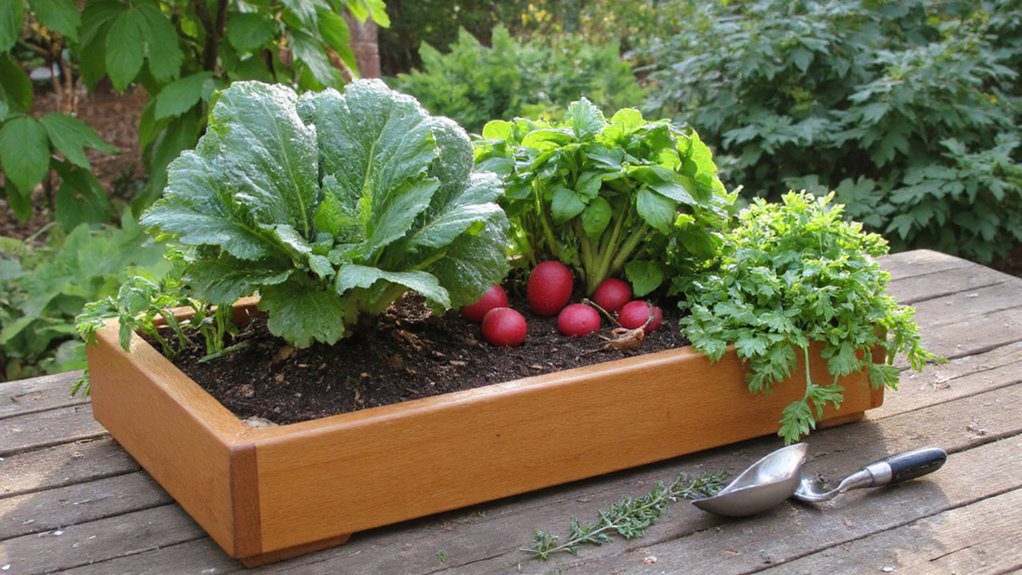
Shifting from the ground-level U-shaped beds, elevated tabletop garden beds offer a different approach that prioritizes accessibility and control over growing conditions.
These beds warm soil faster, reduce bending strain, and deter pests like rabbits. I use rot-resistant cedar, build waist-high frames, and add trellises to optimize space.
This design supports diverse vegetables and herbs with improved maintenance and extended seasons.
Stone and Brick Raised Vegetable Beds

Stone and brick raised vegetable beds provide a durable and aesthetically pleasing foundation for growing a variety of crops. Their thermal mass warms soil, extending the growing season.
I recommend ensuring a level base and using pest barriers underneath. Though stone is pricier, its longevity offsets costs.
Brick offers customizable heights and easier construction, both requiring minimal maintenance while enhancing garden design with classic appeal.
Raised Garden Beds Along a Fence

Although space in many yards is limited, raised garden beds built along fences offer an efficient solution for growing vegetables while maximizing available area.
I use untreated cedar beds with galvanized hardware cloth underneath to prevent pests.
Adding trellises supports vertical crops, optimizing sunlight despite fence shading.
Customizing bed size and shape ensures compatibility with fence lines and enhances both privacy and security.
Spiral Herb Garden Bed

While raised beds along fences maximize linear space for vegetables, incorporating a spiral herb garden bed can optimize vertical and microclimate diversity within a compact area.
Built with bricks or wood, it uses layered rocks and organic matter for drainage and thermal regulation.
Positioning herbs by sun exposure enhances growth, while water management and companion planting boost productivity and pest resistance.
Composite Material Raised Bed
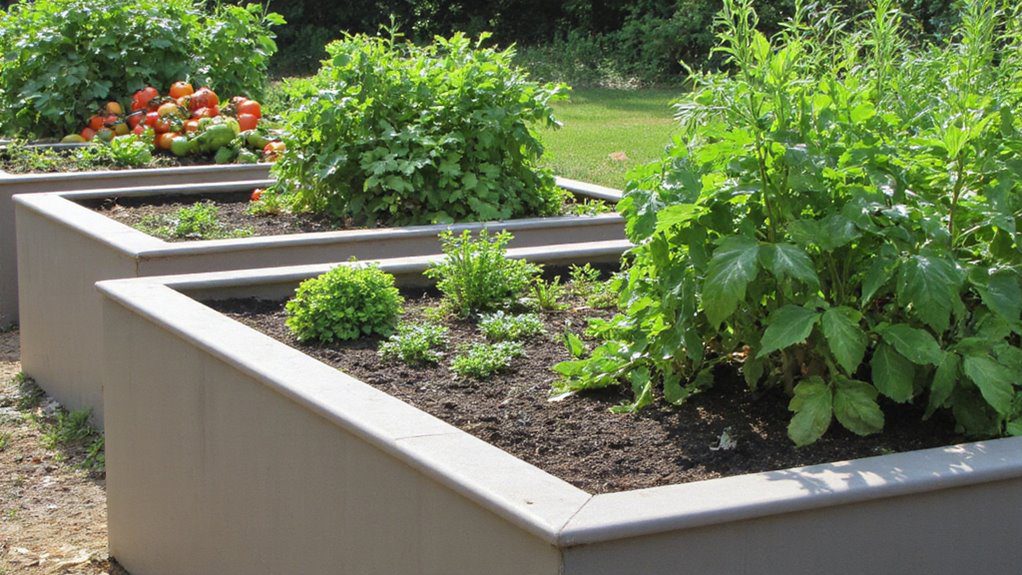
A composite material raised bed offers a durable and low-maintenance alternative to traditional wooden garden beds.
Made from recycled HDPE plastic and wood fibers, these beds resist moisture, rot, and warping.
Their wood grain texture and tool-free assembly add practicality and aesthetic appeal.
Although pricier upfront, their longevity and eco-friendly composition make them cost-effective for long-term vegetable gardening.
Raised Bed With Built-In Seating Ledge
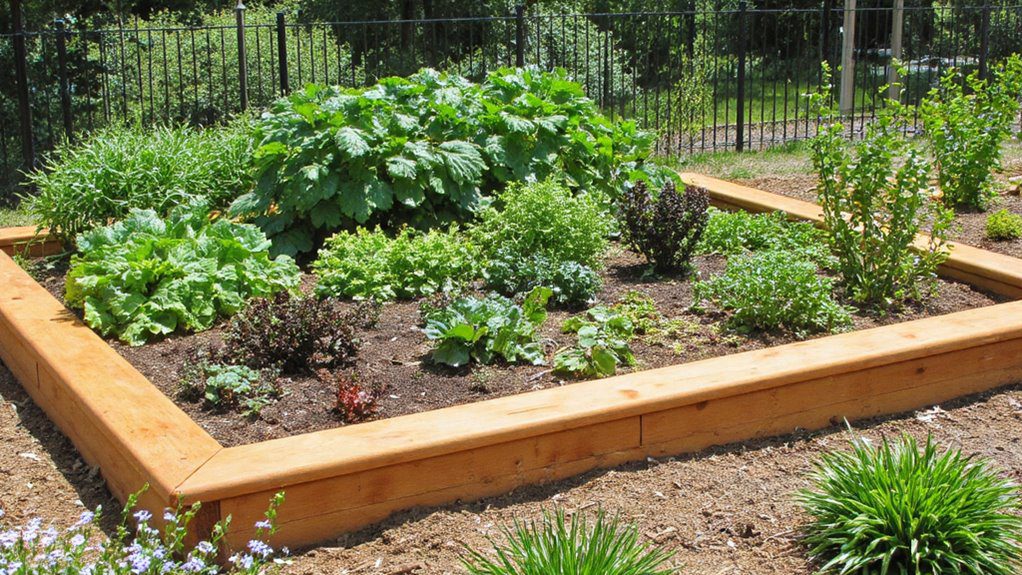
When you design a raised bed with a built-in seating ledge, you combine functionality with comfort in a single structure.
I use cost-effective pine, adding horizontal slats for a flat seat. Precise leveling and sturdy posts ensure stability.
This design improves accessibility and reduces strain while maximizing garden space.
Applying protective finishes prolongs durability, making it a practical, multi-purpose gardening solution.
Pallet Wood Raised Vegetable Bed
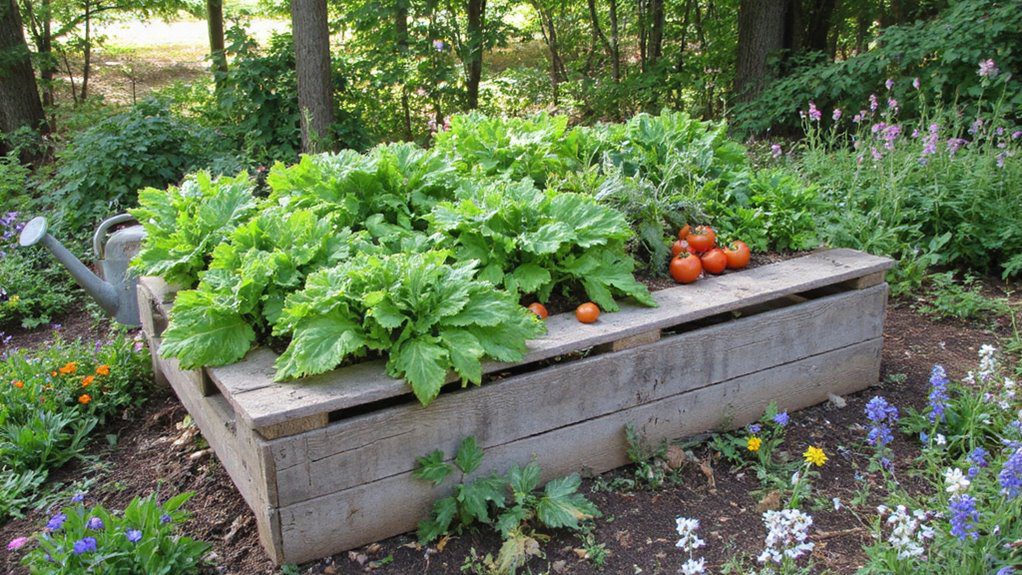
Three key aspects define the effectiveness of a pallet wood raised vegetable bed: material selection, construction techniques, and maintenance.
I choose heat-treated (HT) pallets to avoid toxins, cut boards uniformly with a circular saw, and assemble corners using clamps and deck screws.
I line the bottom with landscaping fabric to prevent weeds and stain the wood for weather resistance, ensuring durability and a fertile growing environment.
Raised Bed With Trellis for Climbing Plants
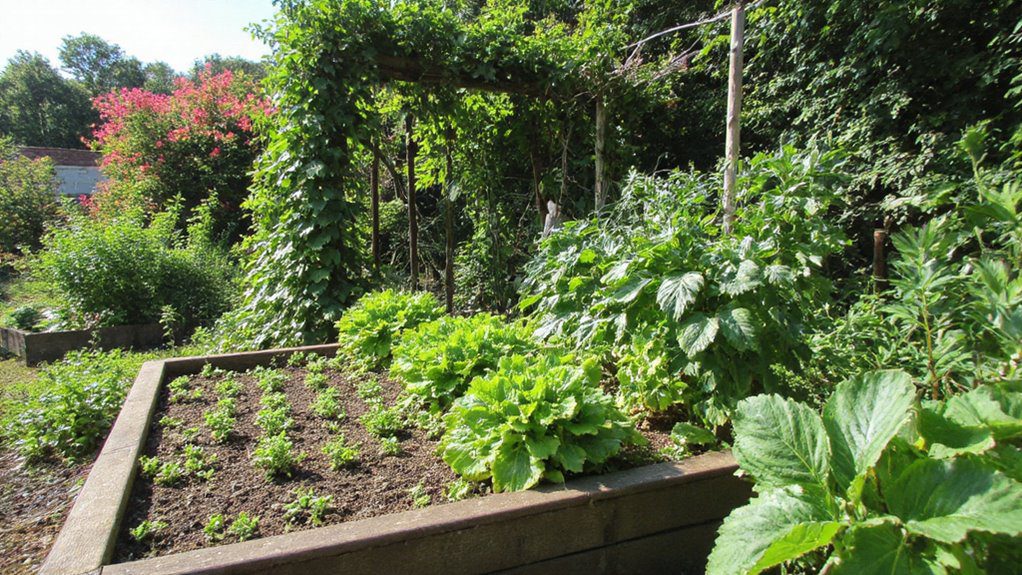
Incorporating a trellis into a raised vegetable bed significantly enhances vertical growing space and plant health.
By supporting climbers like pole beans and cucumbers, it maximizes yield while improving air circulation, reducing disease risk.
Choosing materials like metal or wood, and positioning trellises on the north side prevents shading.
This practical setup simplifies harvesting and integrates well with garden design.
Square Foot Gardening in Raised Beds
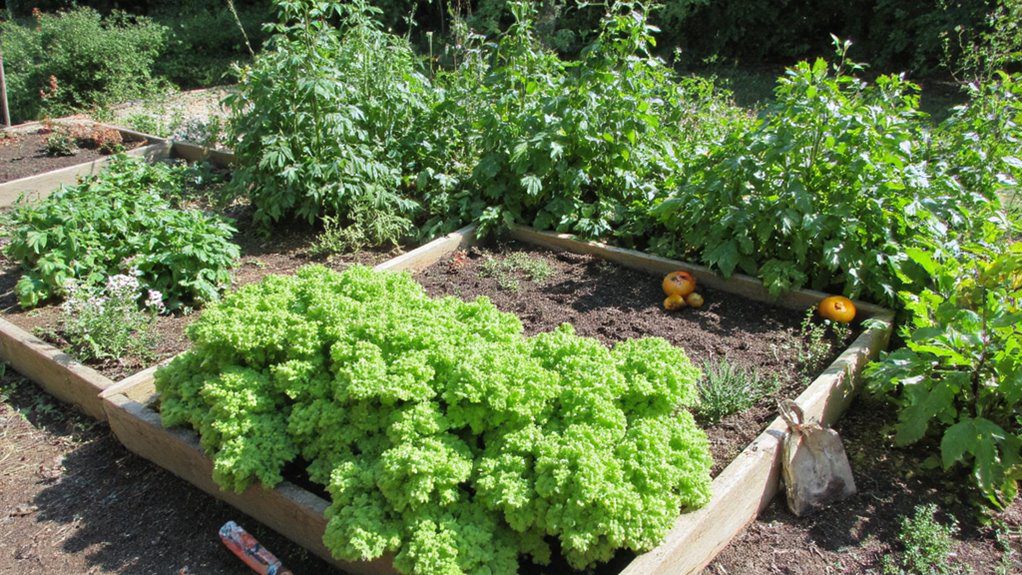
Square foot gardening transforms raised beds into highly efficient growing spaces by dividing them into manageable, one-foot sections tailored to specific crops.
I recommend using a 4×4 or 4×8-foot bed filled with a nutrient-rich mix of compost, peat moss, and vermiculite, ensuring 6-8 hours of sunlight.
This method maximizes yield, minimizes weeds, and simplifies planting through precise spacing and crop rotation.