

When it comes to enclosing a vegetable garden, the options go far beyond simple fences. From raised beds with protective screens to modular enclosures that adapt as your garden grows, each approach offers unique benefits. Choosing the right structure depends on factors like pest control, space efficiency, and climate. I’ve explored ideas combining functionality and durability, but one method stands out for maximizing both protection and productivity—let’s explore what makes it effective.
Wooden Fence Enclosures for Classic Style
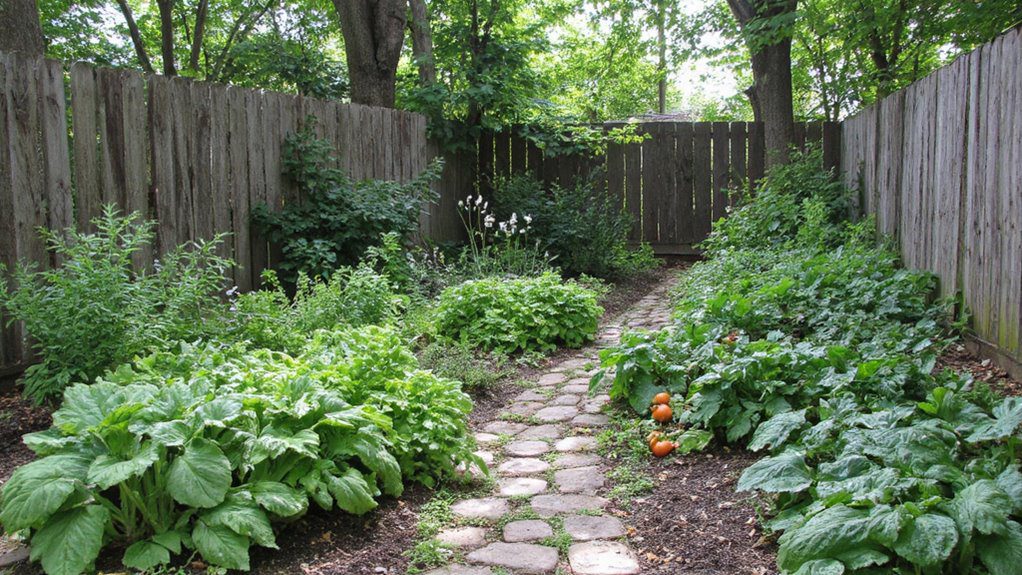
Although there are many materials available for garden enclosures, I find wooden fences offer unmatched classic style combined with practical benefits.
Using durable woods like cedar or oak, they provide strong pest protection and privacy. Their customizable design fits various garden sizes, and proper treatment extends longevity.
Plus, sustainable sourcing minimizes environmental impact while seamlessly integrating with garden aesthetics.
Metal Wire Garden Boundaries

When setting up a garden boundary, metal wire fencing stands out for its durability and versatility.
I recommend galvanized or welded wire for corrosion resistance and rigidity.
Installation involves planning, clearing ground, setting posts firmly in concrete, and securely fastening panels.
These fences offer excellent visibility, deter pests like deer, and require minimal maintenance, making them cost-effective and functional for enclosing vegetable gardens.
Raised Beds With Protective Screens

Since raised beds offer controlled soil conditions, adding protective screens enhances their utility by safeguarding plants from pests and environmental stressors.
I use hardware cloth frames combined with insect barrier fabrics, secured firmly to bed walls, to block insects and small animals.
Adjustable height and removable covers allow access and pollination, while shade cloth reduces heat stress, optimizing growth and extending the growing season efficiently.
Mini Cloche Covers for Individual Plants

Raised beds with protective screens create a controlled environment for groups of plants, but sometimes individual seedlings or delicate herbs need extra attention.
Mini cloche covers—made from glass, plastic, metal wire, or repurposed bottles—offer targeted protection against pests, frost, and wind while retaining moisture.
Their portability and varied materials enable customized microclimates, enhancing early growth and overall plant resilience.
Greenhouse Structures for Year-Round Growth

Although constructing a greenhouse requires careful planning, I’ve found that selecting durable materials like glass or polycarbonate ensures structural integrity and resilience against harsh weather.
Incorporating climate control systems regulates temperature, humidity, and airflow, while automated irrigation and lighting optimize growth.
Efficient ventilation prevents overheating, and advanced heating—such as geothermal systems—maintains warmth, enabling year-round cultivation of diverse crops in varied climates.
Recycled Materials for Budget-Friendly Gardens
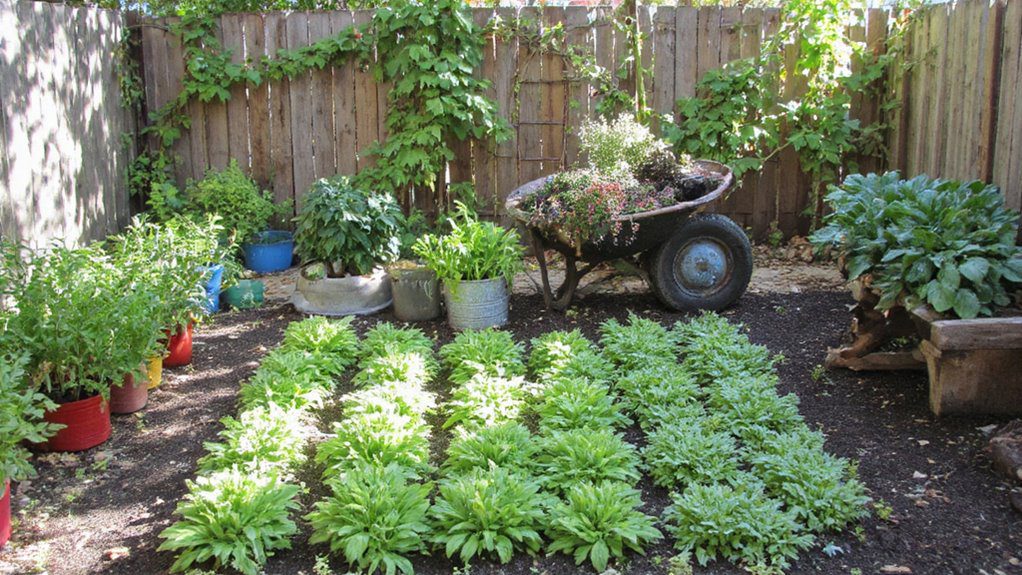
When you want to create an efficient vegetable garden without overspending, turning to recycled materials offers practical and sustainable solutions.
I use plastic bottles as mini greenhouses and old tires for root vegetables.
Wooden pallets transform into raised beds, while broken eggshells enrich compost.
These materials optimize garden structure, irrigation, and soil health, reducing costs with eco-friendly, effective designs.
Combining Vegetables and Flowers Within Enclosures

Since space within garden enclosures is often limited, combining vegetables and flowers can optimize both functionality and aesthetics.
Integrating edibles like tomatoes with marigolds enhances pest control and pollination. Using tall sunflowers supports climbing vines, while mixing foliage textures enriches visual interest.
This approach promotes biodiversity, maximizes space, and ensures year-round productivity and beauty in compact garden environments.
Stone and Gravel Pathways Around Enclosed Gardens
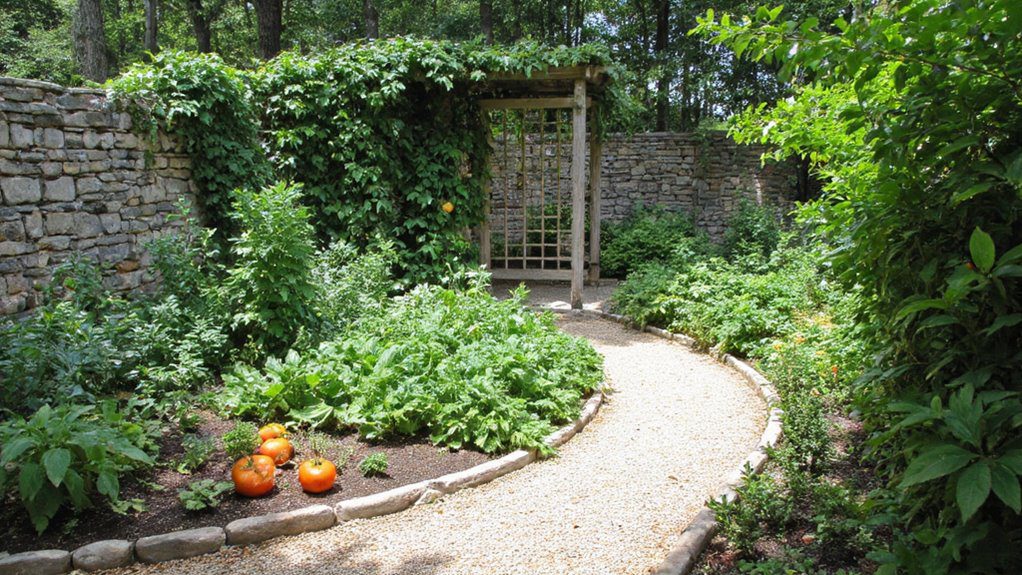
A variety of stone and gravel materials can create durable, low-maintenance pathways that enhance the functionality and appearance of enclosed vegetable gardens.
I recommend preparing a leveled base with gravel and sand, adding landscape fabric to prevent weeds.
Crushed gravel compacts well for stability, while flagstones offer premium aesthetics.
Gravel ensures excellent drainage, especially in shifting soils, maintaining path integrity year-round.
Incorporating Existing Yard Fences Into Garden Design
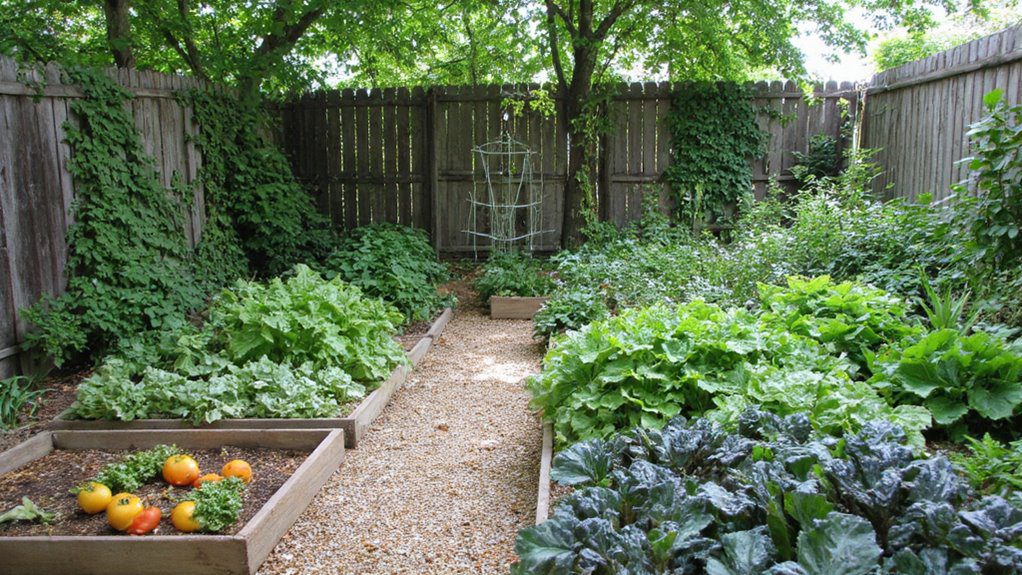
Although existing yard fences often go underutilized, they offer a valuable framework for enhancing both the productivity and aesthetics of your enclosed vegetable garden.
I recommend adding trellises for climbing plants, attaching vertical planter boxes, and installing sturdy, pest-resistant fencing.
Incorporating lattice structures supports vertical gardening, while decorative elements and proper positioning regulate microclimates, improving plant health and visual appeal efficiently.
Water Features to Enhance Enclosed Garden Spaces
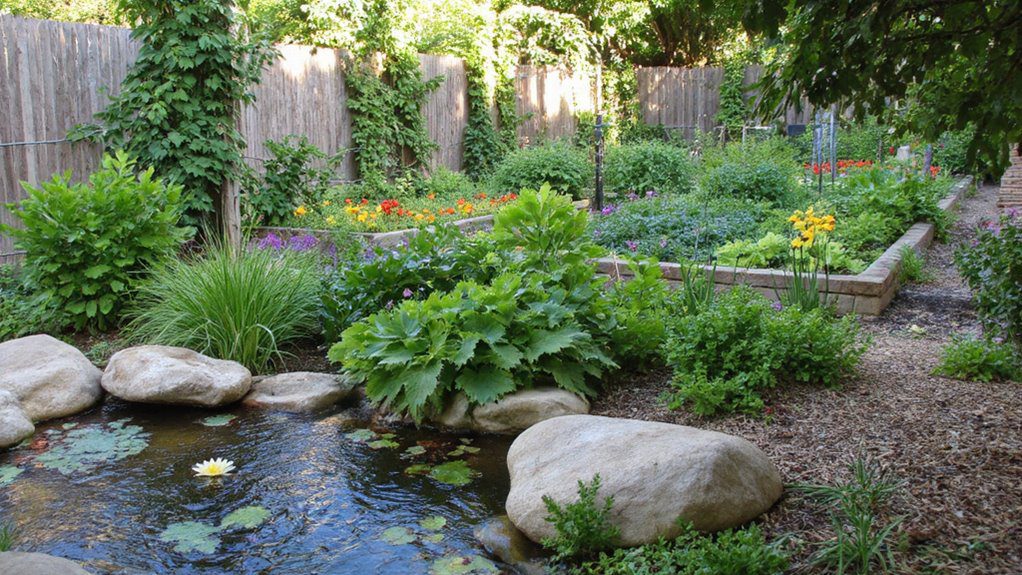
When you integrate water features into an enclosed vegetable garden, you not only enhance its visual and auditory appeal but also improve ecological balance and plant health.
Fountains, ponds, and birdbaths support biodiversity by attracting beneficial wildlife while aerating fountains maintain oxygen levels.
Incorporating natural materials and water circulation systems ensures sustainability, reduces noise pollution, and creates a calming, functional environment for your garden.
Modular Enclosures for Flexibility and Expansion
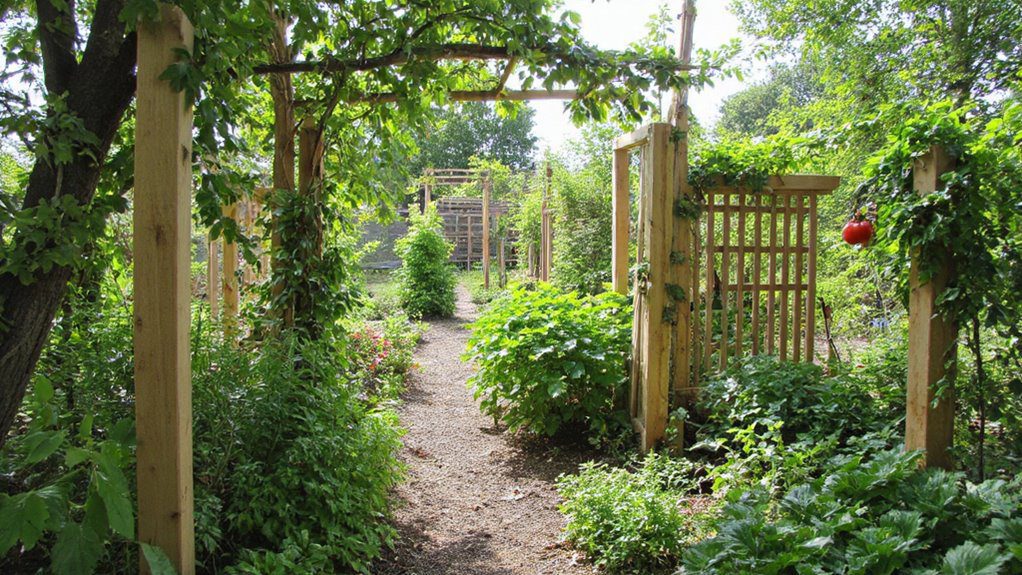
Since garden needs often change, I find modular enclosures offer unmatched flexibility and ease of expansion.
Using galvanized steel or recycled materials, I customize configurations with prefabricated kits or metal raised beds. These allow quick assembly, pest protection via mesh screens, and geometric layouts.
Adding sections or moving components adapts space efficiently, ensuring durability, cost-effectiveness, and long-term sustainability in enclosed vegetable gardening.
Using Internal Supports for Raised Bed Stability

Because raised beds bear significant soil weight and environmental stress, installing internal supports is essential for maintaining their structural integrity.
I recommend vertical 2x4s at corners combined with cross-bracing to prevent bowing. Use durable, rot-resistant materials like cedar or galvanized metal.
Anchor supports deeply, especially in soft soils or windy areas, ensuring the bed remains stable and resists collapse over time.
DIY Enclosure Projects for Customizable Gardens
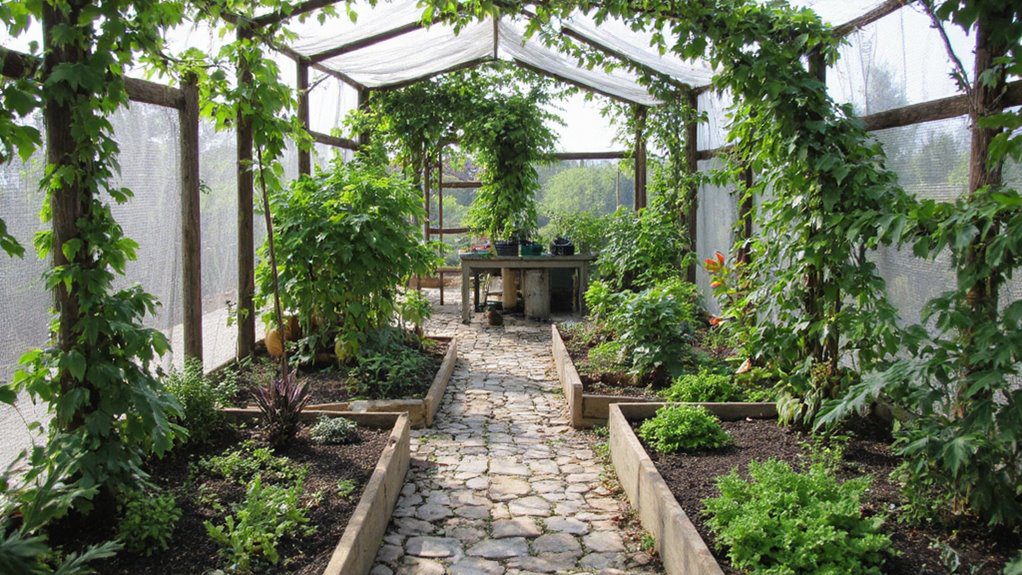
After securing your raised beds with sturdy internal supports, the next step is to consider enclosing your garden to customize and protect it further.
I recommend using cedar frames with corner bracing for durability, attaching wire mesh to deter pests, and adding a hinged door for access.
Level the ground before installation and apply sealant to extend wood life, tailoring design to your space and climate.