

When I started my home vegetable garden, I quickly realized that maximizing space and soil quality was crucial for success. Whether you have a sprawling yard or just a small balcony, there are effective methods like container gardening, vertical setups, or even keyhole designs that can transform your growing experience. I’ve found that choosing the right approach not only boosts yields but also simplifies maintenance. Let me share some practical ideas that might change how you think about your garden.
Container Vegetable Gardening
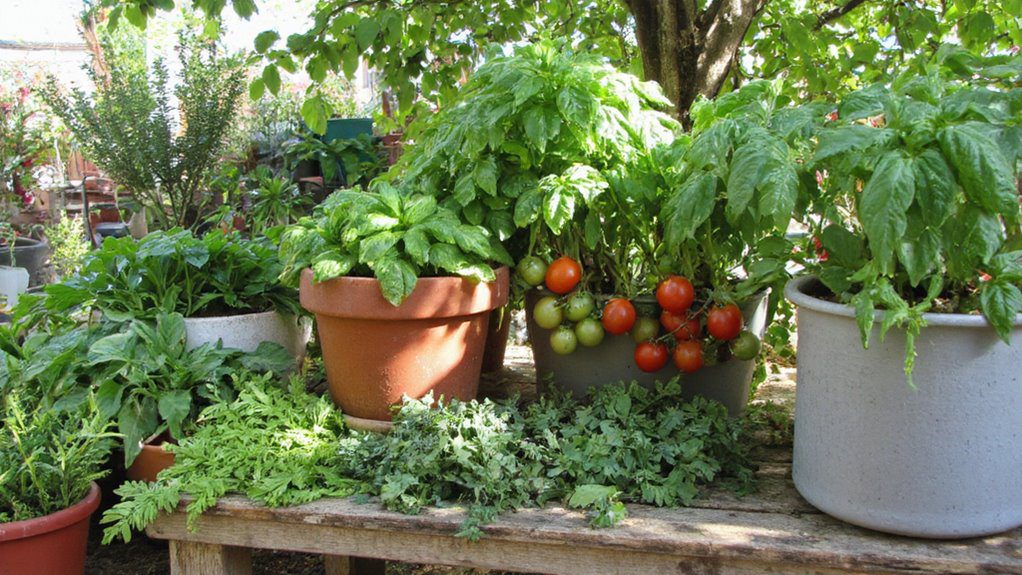
When starting container vegetable gardening, choosing the right container is crucial.
I recommend food-safe materials like clay, plastic, or fabric grow bags.
Size matters—a minimum depth of 6-12 inches supports root growth, but volume is key.
Ensure adequate drainage with multiple holes to prevent waterlogging.
Larger containers retain moisture better, reducing watering frequency, which helps maintain healthy plants efficiently.
Raised Bed Gardening
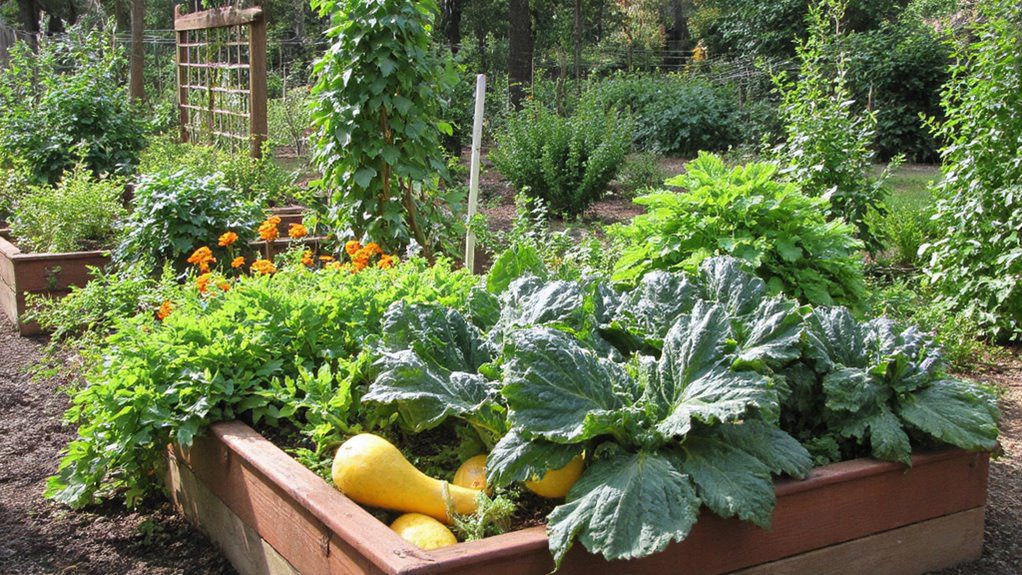
Raised bed gardening offers five key advantages that can transform your vegetable growing experience.
It solves poor soil problems, improves drainage, warms soil early, reduces compaction, and enhances accessibility.
Build beds 4-5 feet wide with rot-resistant lumber, 12-18 inches deep, and fill with a balanced mix of topsoil, compost, and sand.
Position in full sun and mulch to conserve moisture.
Vertical Vegetable Gardening
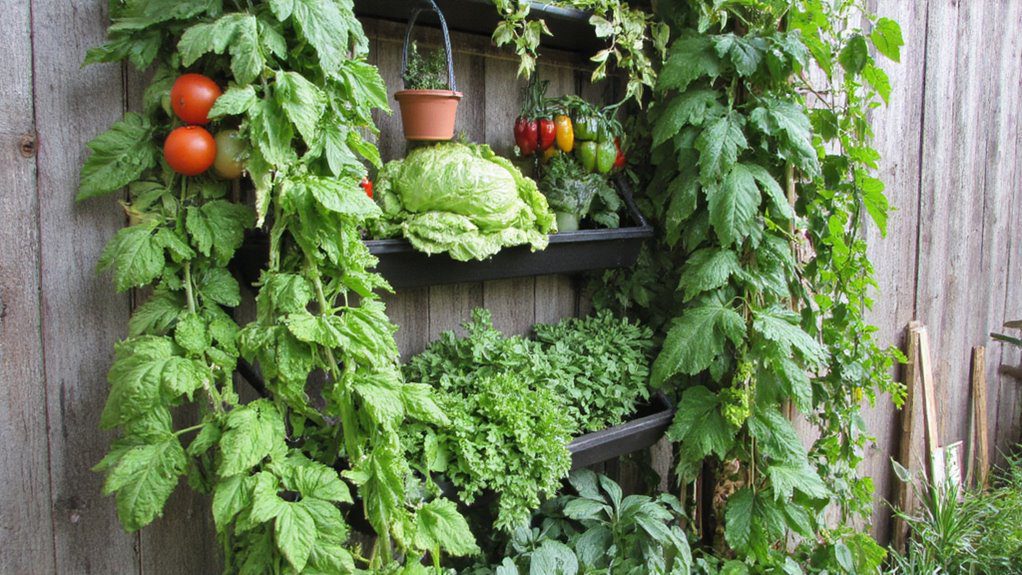
Although space might be limited, vertical vegetable gardening lets you maximize every inch by growing upward instead of outward.
I recommend sturdy trellises or wall-mounted planters for vining crops like pole beans and cucumbers. Ensure your supports are well anchored and placed in full sun.
This method improves air circulation, reduces pests, and simplifies harvesting—ideal for small patios or balconies.
Square Foot Gardening
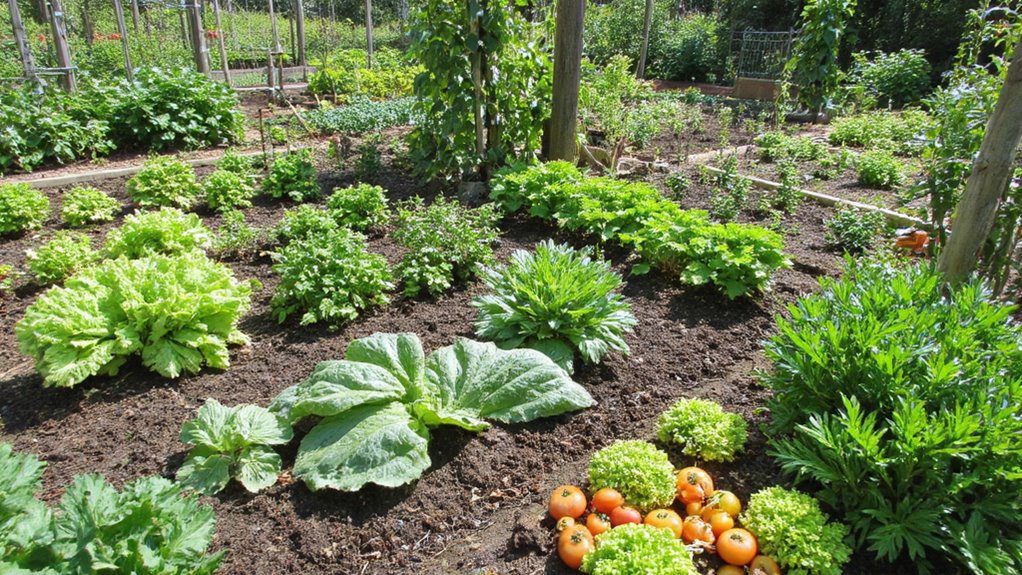
Square Foot Gardening offers a smart, efficient way to grow a diverse vegetable garden in a limited space.
I recommend building a 4×4-foot raised bed filled with Mel’s Mix—peat moss, vermiculite, and compost.
Divide it into 1-foot squares, planting 1 to 16 plants per square based on size.
Keep taller plants north to avoid shading and water efficiently with drip irrigation.
Companion Planting Strategies
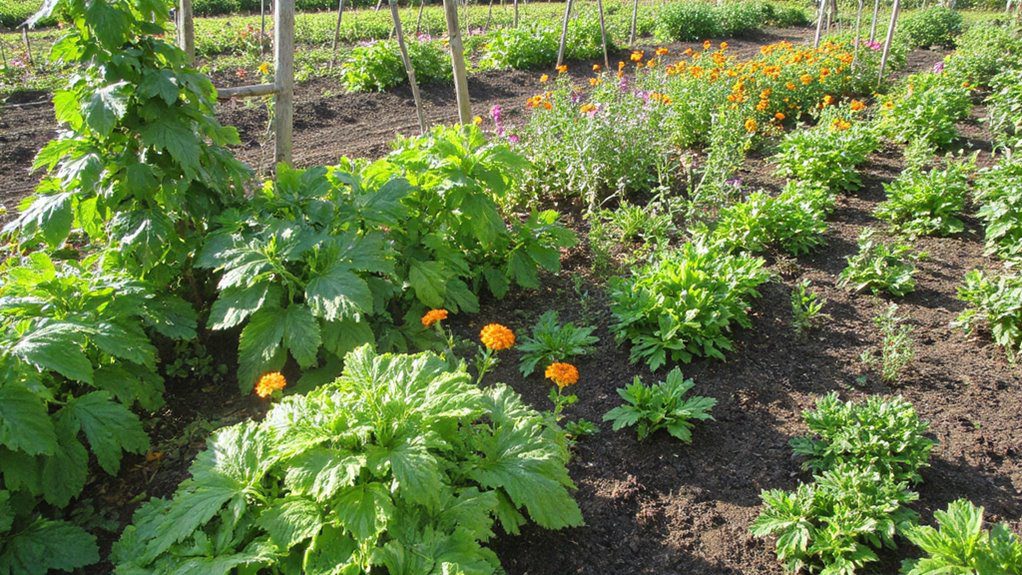
Maximizing the productivity of your 4×4 raised bed goes beyond layout and soil mix; it also involves choosing plants that work well together.
Companion planting boosts growth, deters pests, and optimizes space. Pair nitrogen-fixing beans with corn for support and soil health. Use basil near tomatoes to repel hornworms.
Avoid overcrowding and plants with allelopathic effects to ensure harmony and yield.
Hydroponic Vegetable Gardening
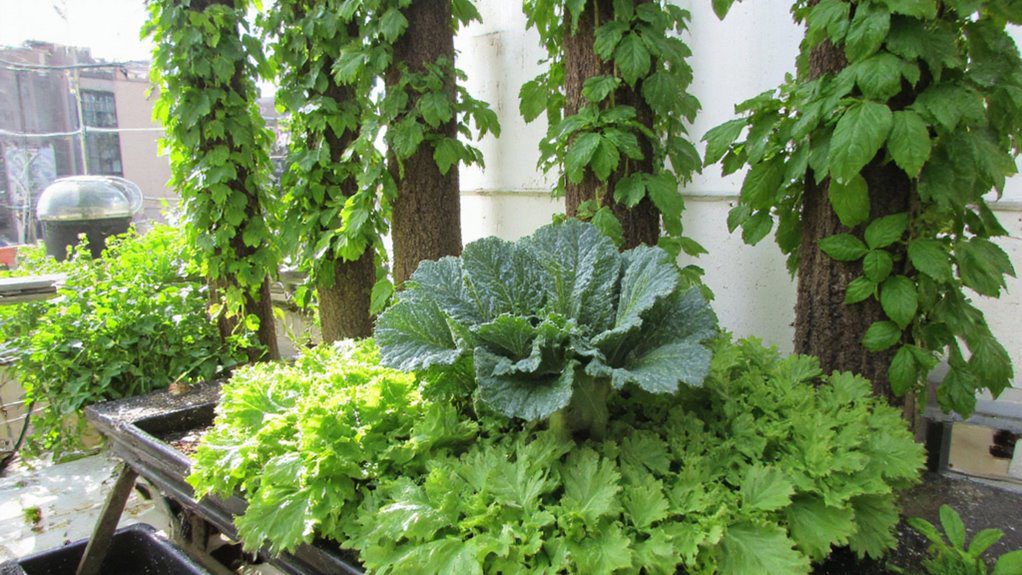
When you switch to hydroponic vegetable gardening, you’ll find a method that grows plants without soil by delivering nutrients directly through water.
Choose systems like Deep Water Culture or Ebb and Flow for versatility.
Monitor pH (5.5-6.5) and oxygenate roots to prevent suffocation.
Start with leafy greens or herbs indoors using LED lights for year-round, space-efficient, and pest-free growth.
Aquaponic Garden Systems
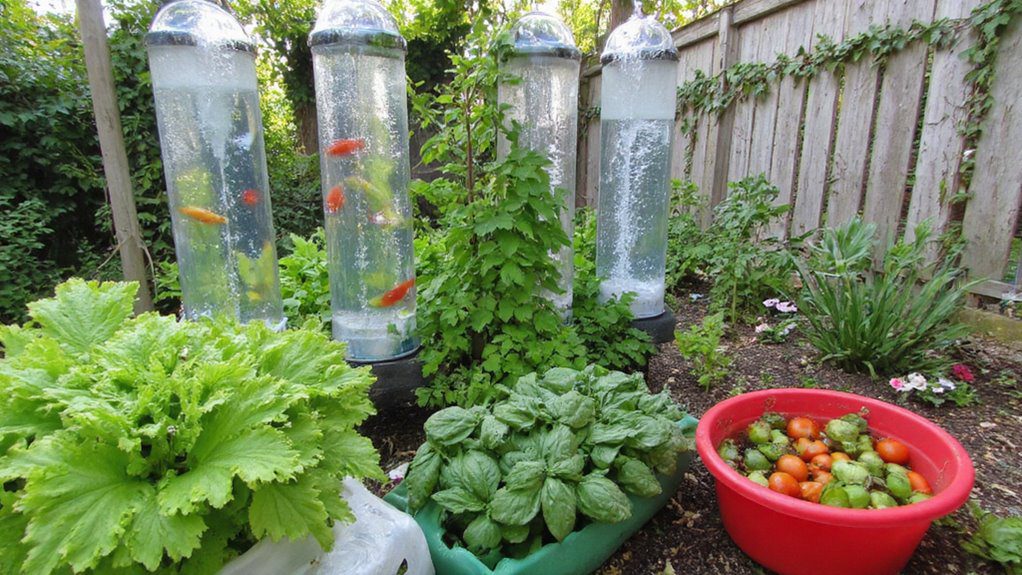
Though aquaponics might seem complex at first, I’ve found it to be one of the most efficient ways to grow vegetables and raise fish simultaneously.
Start with a sturdy fish tank and a media-based grow bed for easy filtration. Maintain water circulation with a pump, ensure proper aeration, and monitor bacteria converting fish waste into plant nutrients.
This closed-loop system saves water and boosts productivity.
Straw Bale Gardening
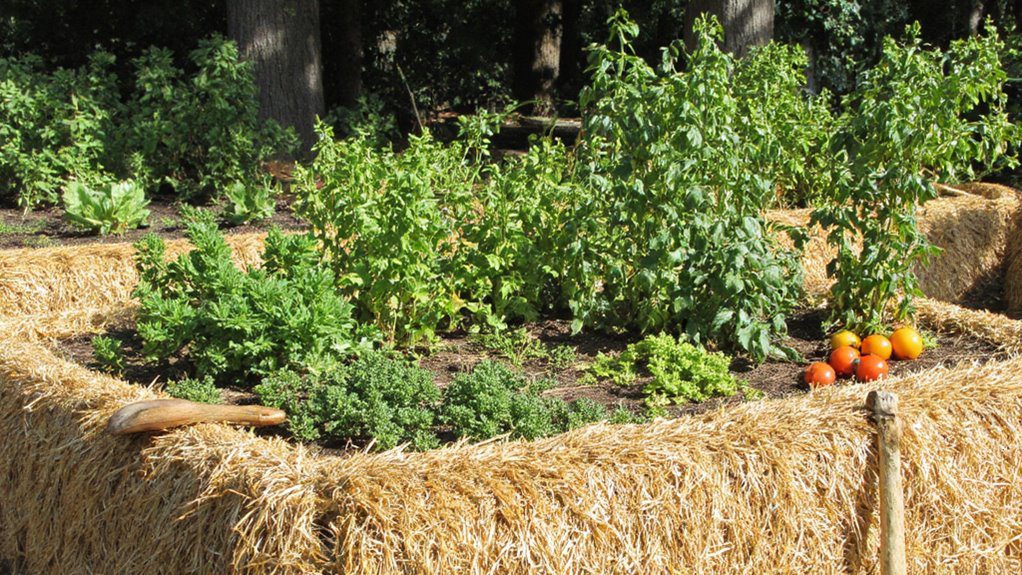
Straw bale gardening offers a straightforward and efficient way to grow vegetables using straw bales as both containers and growing medium.
I recommend wheat straw bales, placed cut side up in full sun, and conditioned with water plus nitrogen fertilizer over 10–18 days. This creates warm, nutrient-rich compost inside, supporting healthy roots with minimal soil.
Regular watering and fertilizing during the season are essential.
Lasagna Gardening Technique

If you enjoyed the simplicity of straw bale gardening, you’ll appreciate the efficiency of lasagna gardening—a no-dig, layered approach that builds fertile beds right on top of your existing soil.
Start with wet cardboard to suppress weeds, then alternate thick brown layers with thinner green ones.
Keep layers moist and allow 6-12 months for decomposition, or add compost and topsoil for quicker planting.
Keyhole Garden Design
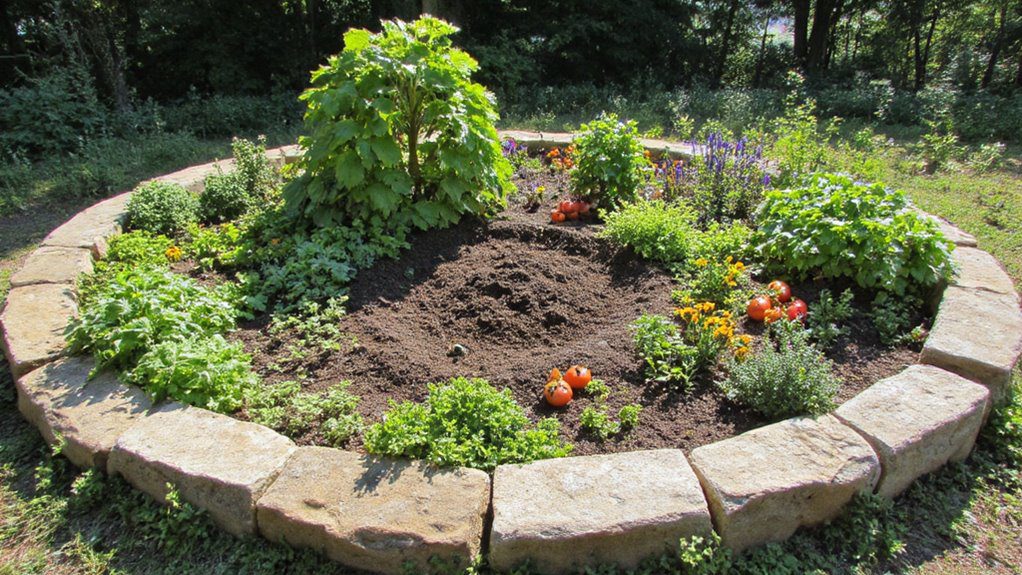
A keyhole garden offers an innovative raised-bed design that maximizes space, conserves water, and simplifies maintenance.
Its circular shape with a central compost basket feeds nutrients and moisture directly to plants.
Build with layered materials and sturdy walls for moisture retention.
Access the bed easily via the keyhole indentation.
Regularly add kitchen scraps to the compost for continuous fertility and water efficiency.
Indoor Herb Gardens
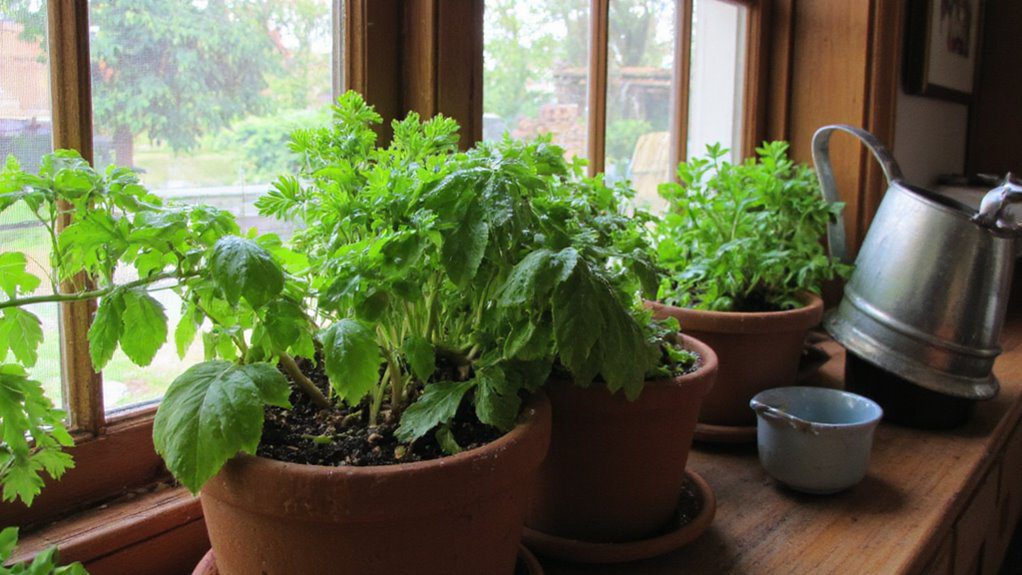
While keyhole gardens excel outdoors by optimizing space and resources, bringing fresh herbs inside offers unique advantages that fit different lifestyles and environments.
Choose containers with drainage, place them by south-facing windows or use LED grow lights, and water only when soil is dry.
Starting with nursery plants speeds growth.
Regular feeding and pest checks keep your indoor herb garden thriving year-round.
Balcony and Patio Garden Ideas
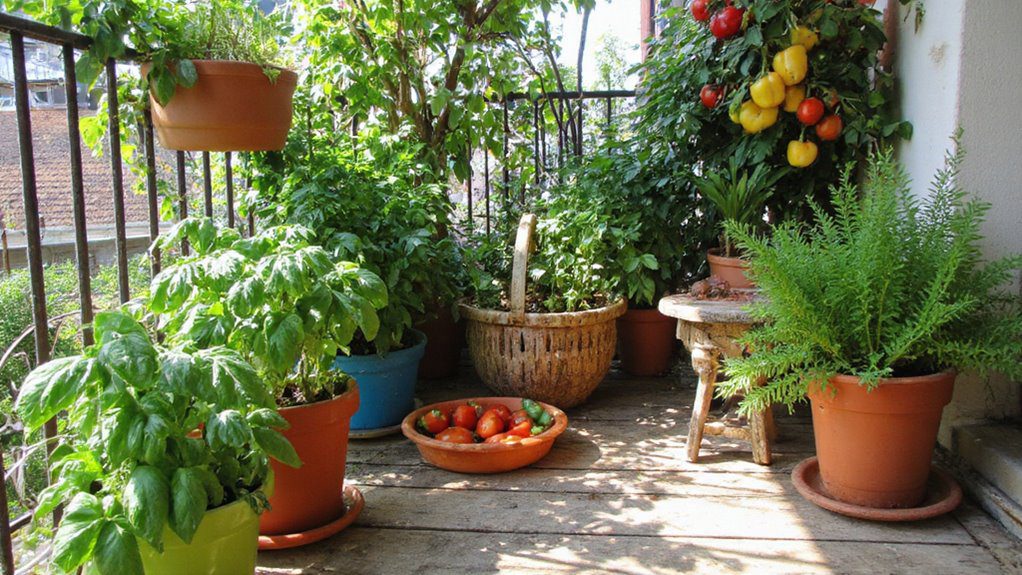
Many gardeners underestimate the potential of balcony and patio spaces, but with the right container choices and layout strategies, these areas can yield impressive vegetable harvests.
I recommend lightweight containers with drainage, vertical supports like trellises, and self-watering pots.
Choose compact vegetable varieties, arrange plants by height, and ensure 6-8 hours of sun.
Regular watering and fertilizing keep plants thriving in limited space.
Using Recycled Materials for Garden Beds
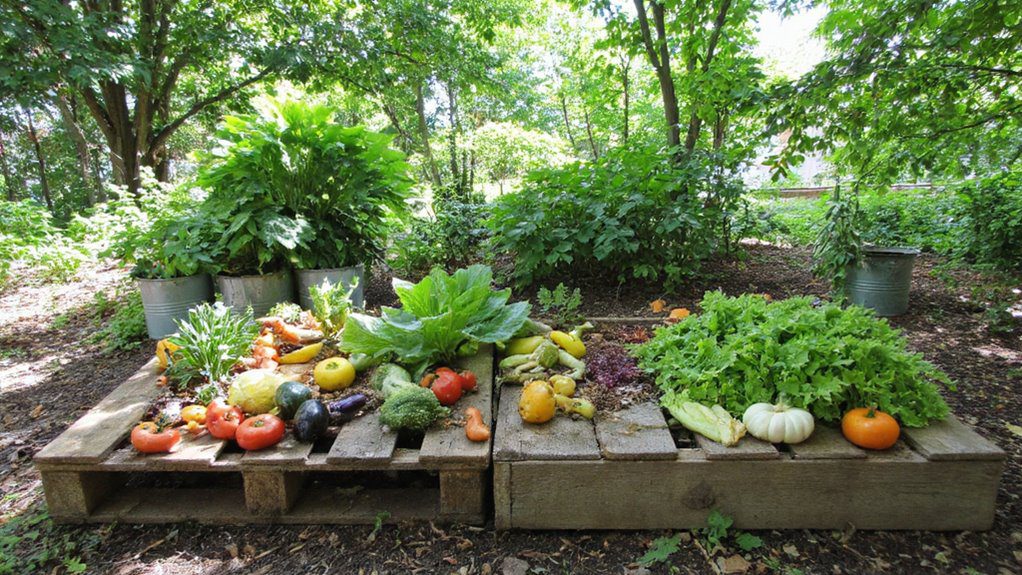
Balcony and patio gardens offer limited space, so maximizing resources becomes a smart strategy.
I recommend using recycled materials like untreated wood pallets, concrete blocks, or reclaimed lumber for garden beds. They’re cost-effective, eco-friendly, and durable if chosen wisely.
Avoid chemically treated wood to prevent leaching. Line beds when needed, and balance aesthetics with practicality for long-lasting, safe vegetable growth.