
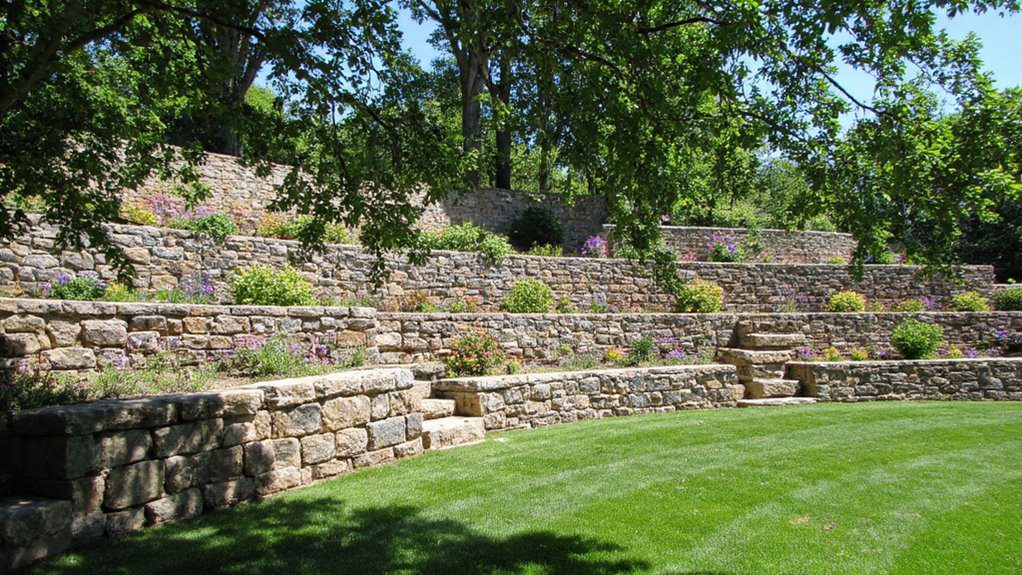
When it comes to shaping outdoor spaces, choosing the right retaining wall is more than just selecting a barrier—it’s about balancing form and function. I’ve found that each type, from natural stone to reinforced concrete, offers unique structural benefits and aesthetic qualities. Understanding these options can transform a simple slope into a striking landscape feature. But which wall suits your soil conditions and design goals best? Let’s explore the possibilities.
Natural Stone Retaining Walls
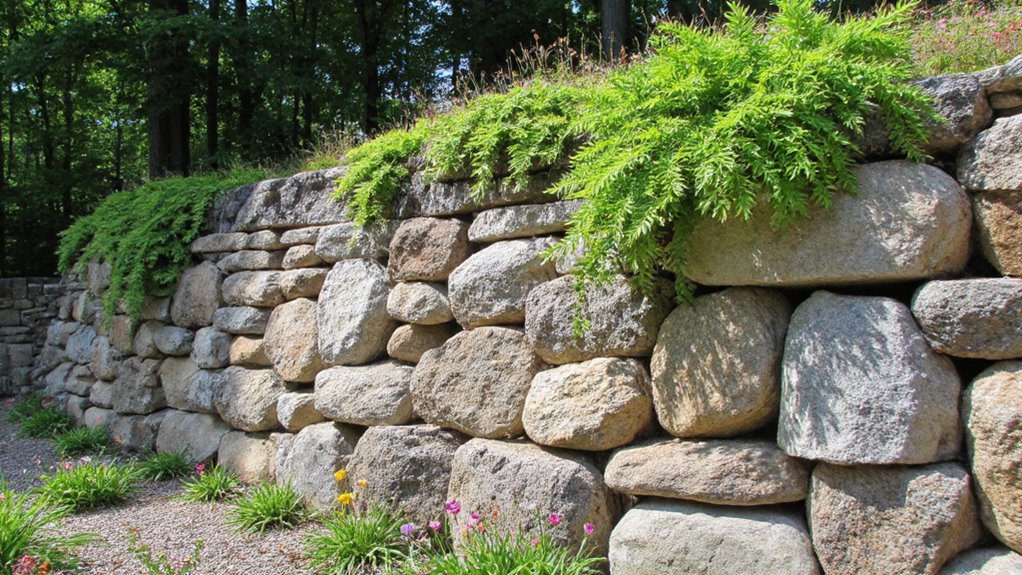
Although many believe natural stone retaining walls are purely decorative, I’ve found they serve critical structural functions in landscaping.
These walls expertly manage soil pressure and prevent erosion while offering durability unmatched by synthetic materials. Their interlocking stones provide stability through precise placement and natural friction, combining aesthetic appeal with essential, long-lasting support for terraced landscapes and sloped terrains.
Concrete Block Retaining Walls
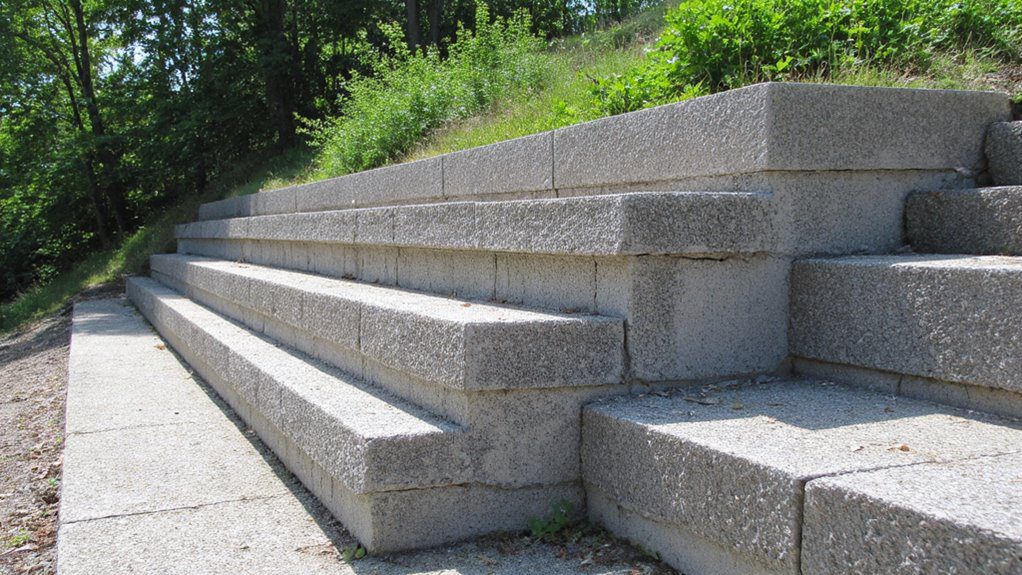
Concrete block retaining walls offer a versatile and reliable solution for managing soil and shaping landscapes.
I appreciate their modular design, which simplifies construction and ensures structural integrity.
These blocks withstand significant loads and resist weathering, making them durable.
Their clean lines and uniform texture deliver a modern aesthetic, allowing me to create precise, functional terraces that enhance both form and function in outdoor spaces.
Timber Retaining Walls

Timber retaining walls provide a natural and warm alternative for landscape stabilization.
I appreciate their ease of installation and adaptability to various terrains. Using treated timber ensures durability against moisture and insects, maintaining structural integrity over time.
While timber offers aesthetic appeal and cost-effectiveness, it requires proper drainage and maintenance to prevent decay and prolong functionality within the landscape design.
Gabion Retaining Walls
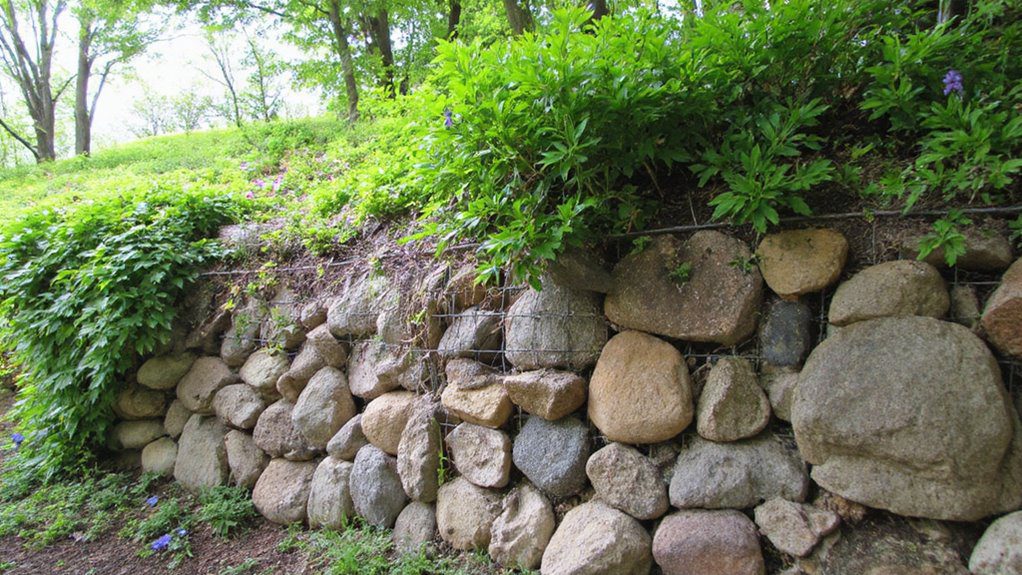
While timber retaining walls blend naturally into landscapes, gabion retaining walls offer a distinctly different approach by combining strength with transparency.
Constructed from wire mesh cages filled with stones, gabions provide exceptional durability and drainage. Their modular design adapts to uneven terrain, creating visually striking, permeable structures that resist erosion while integrating seamlessly into natural surroundings.
Brick Retaining Walls
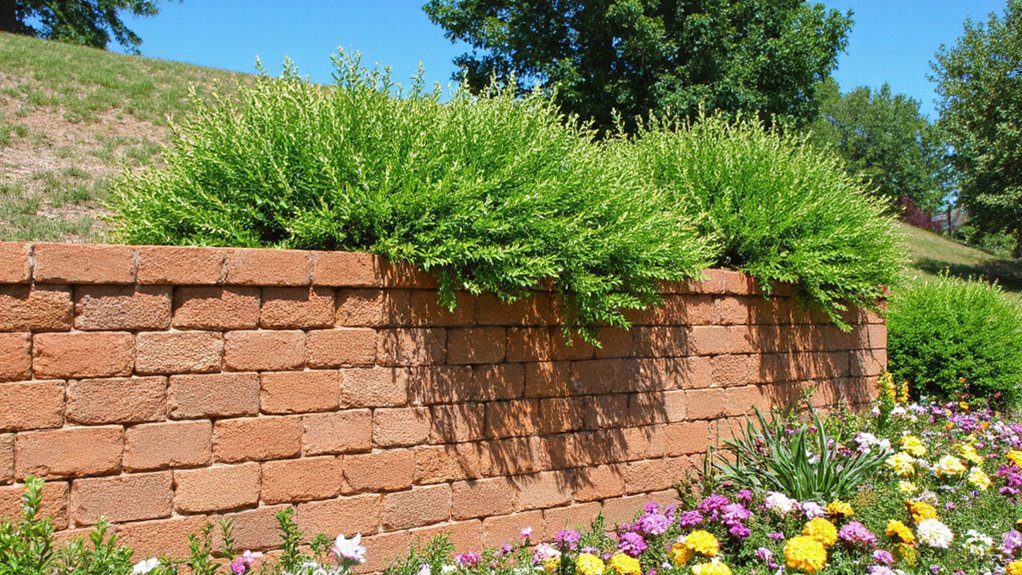
Brick retaining walls combine classic aesthetics with structural reliability, making them a popular choice for many landscaping projects.
I appreciate their modular design, which allows precise alignment and uniform load distribution.
Proper mortar application and drainage integration are essential to prevent water pressure buildup.
These walls offer a refined, timeless look while effectively stabilizing soil on slopes or terraces without compromising durability or function.
Boulders and Rock Retaining Walls
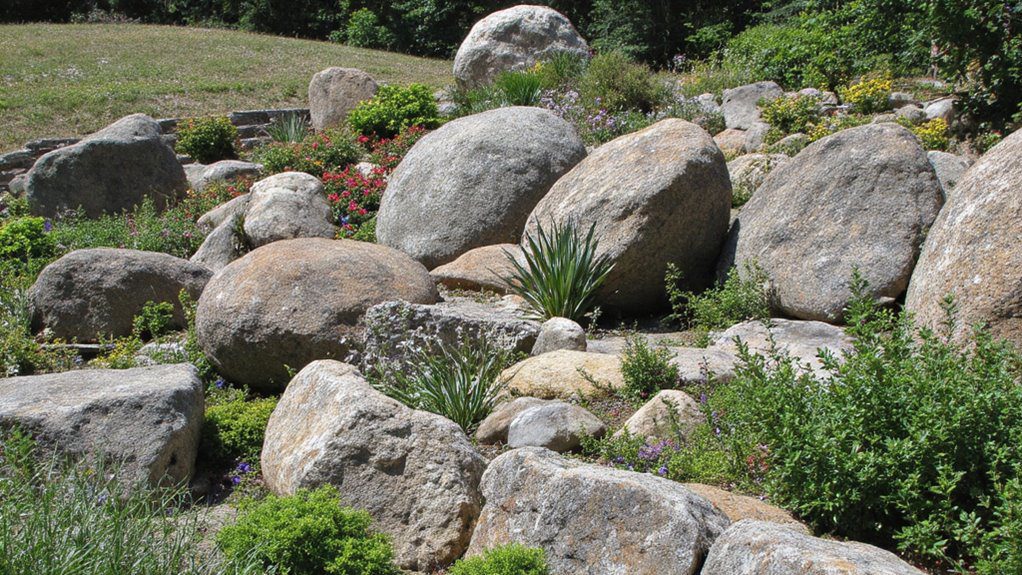
When you choose boulders and rock for retaining walls, you’re selecting a natural material that offers both strength and visual impact.
These walls rely on the mass and interlocking of irregular stones to resist soil pressure. Proper placement and drainage are critical to ensure stability and longevity.
Their rugged texture adds organic character, blending seamlessly with natural landscapes.
Segmental Retaining Walls

Although segmental retaining walls don’t use mortar, they achieve remarkable strength through carefully engineered interlocking concrete units.
These modular blocks distribute loads efficiently, resisting soil pressure without rigid bonding. Their design allows flexibility, adapting to slight ground movement while maintaining stability.
I appreciate their clean lines and versatility, making them ideal for both functional support and refined landscaping aesthetics.
Reinforced Concrete Retaining Walls
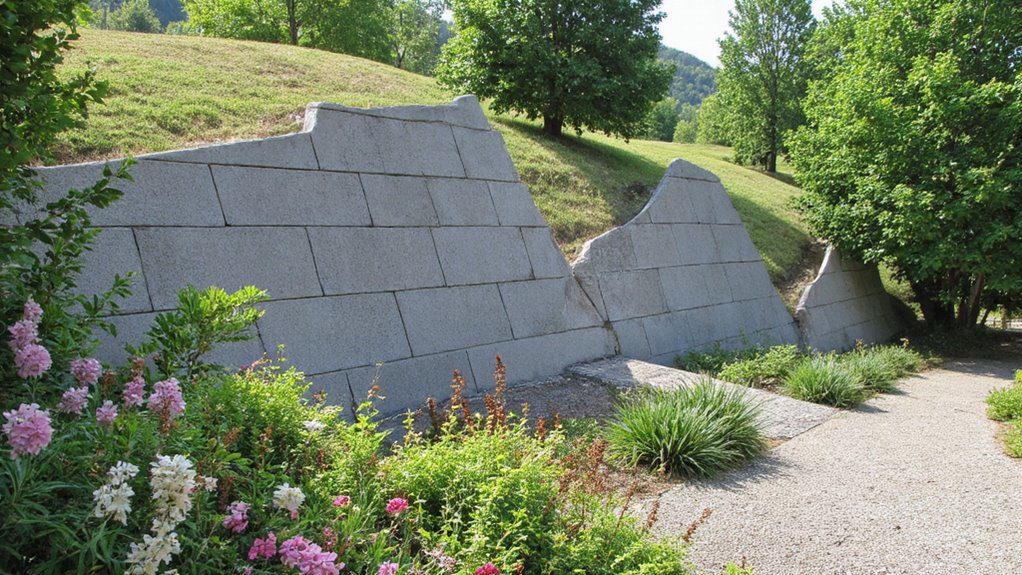
Since reinforced concrete retaining walls rely on steel reinforcement embedded within the concrete, they offer exceptional strength and durability against lateral earth pressures.
I appreciate how their rigid structure allows for precise engineering in challenging landscapes. These walls resist cracking and deformation effectively, providing long-lasting stability.
Their smooth, clean lines also contribute aesthetically, blending functionality with a minimalist design that complements various landscaping styles seamlessly.
Living Retaining Walls

While reinforced concrete walls provide unmatched rigidity, living retaining walls introduce a dynamic approach by integrating vegetation directly into the structure.
These walls combine soil, plants, and structural support, enhancing erosion control and aesthetics simultaneously. Their design requires careful selection of plant species and irrigation systems to maintain structural integrity and healthy growth, creating a sustainable, visually appealing solution that harmonizes with natural surroundings.
Poured Concrete Retaining Walls
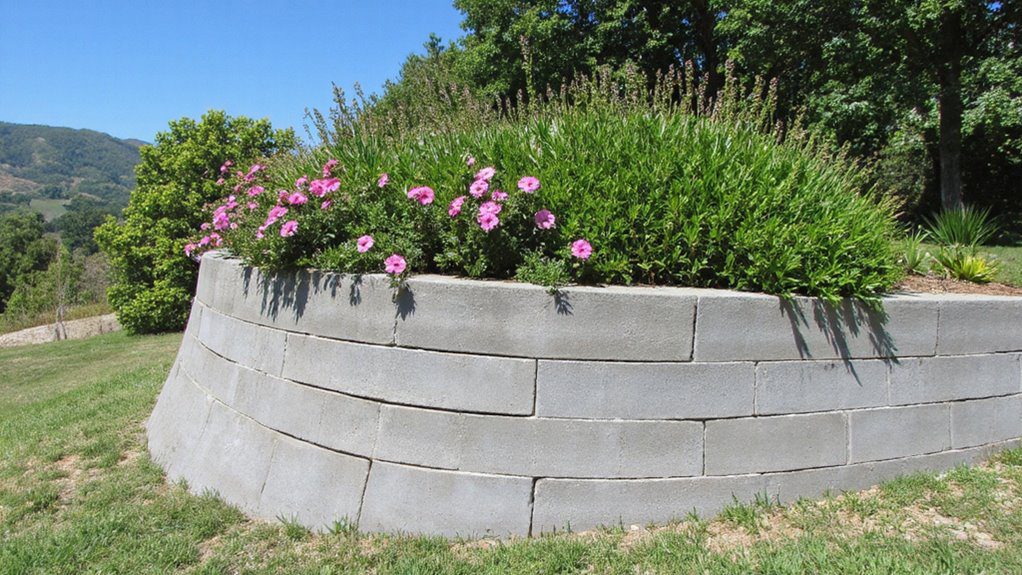
When you choose poured concrete retaining walls, you get a solution that offers exceptional strength and durability for various landscaping projects.
These walls provide uniformity and can be molded to precise specifications, ensuring stability against soil pressure. Their smooth finish complements modern aesthetics, and their monolithic structure minimizes potential failure points, making them a reliable choice for long-term landscape support.
Hybrid Retaining Walls
Hybrid retaining walls combine the best features of multiple materials to achieve both structural integrity and visual appeal.
Although often considered innovative, not all hybrid designs meet practical standards.
It’s crucial to evaluate material compatibility and load requirements carefully.
I recommend consulting a structural engineer to ensure your hybrid wall performs reliably while enhancing your landscape’s aesthetic harmony.