
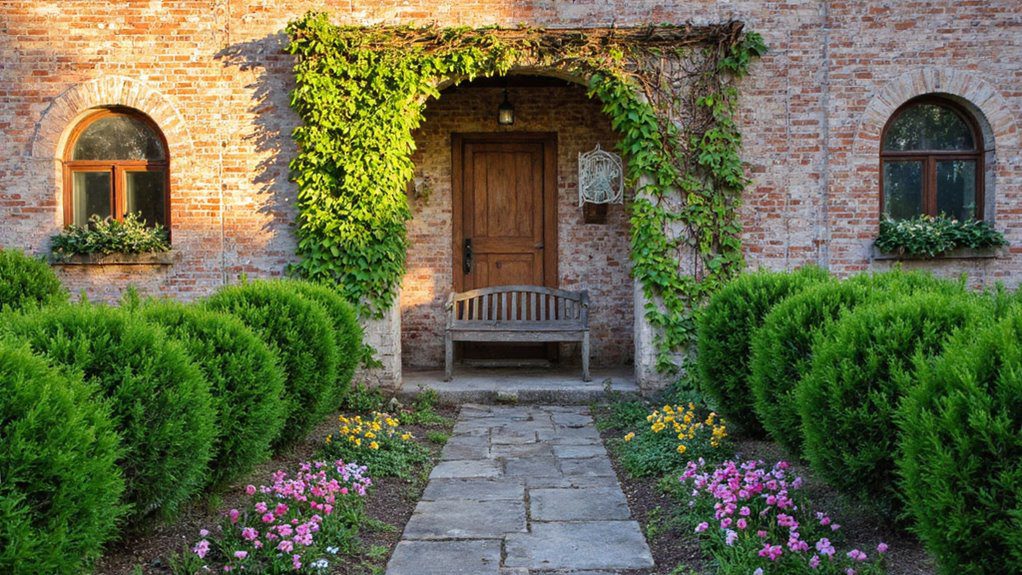
When designing front entry landscaping, I focus on balancing form and function through thoughtful plant placement and material choices. Symmetry can create a formal feel, but strategic asymmetry often brings more natural appeal. Combining colorful flower beds with textured shrubs and a defined pathway sets a welcoming tone, while layered lighting enhances both safety and ambiance. Yet, the real challenge lies in integrating these elements seamlessly to complement your home’s architecture—something I’m eager to explore further with you.
Use Symmetrical Plantings for Balance

Although many assume symmetrical plantings create balance, I’ve found that rigid symmetry often limits creativity and can feel artificial.
Instead, I prefer asymmetrical arrangements that achieve visual harmony through varied plant heights, textures, and colors.
This approach enhances depth and natural flow, creating a more inviting, dynamic front entry that complements architectural features without sacrificing balance or cohesion.
Incorporate a Pathway With Decorative Stones
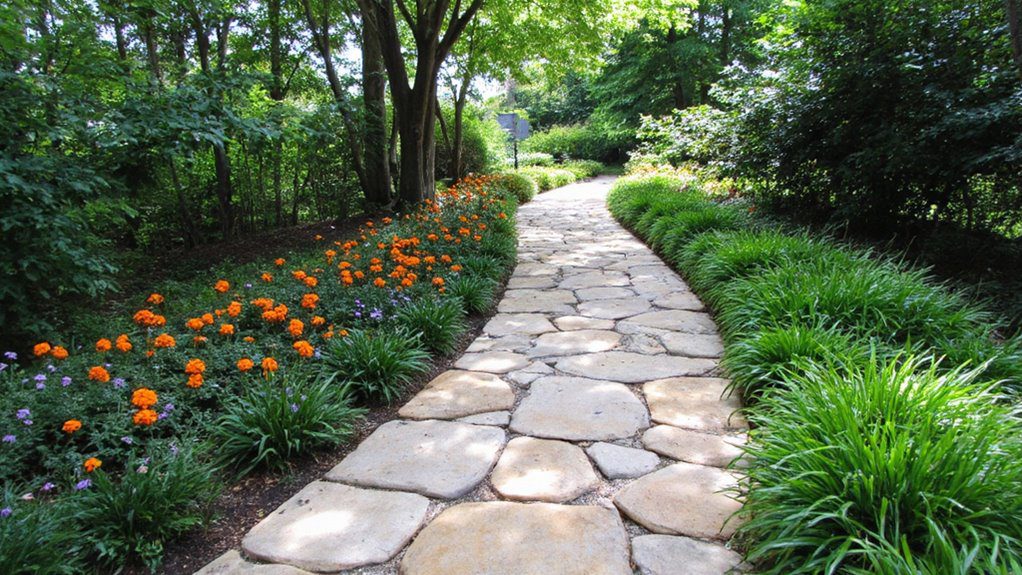
While asymmetrical plantings bring life and character to a front entry, the pathway often serves as the guiding element that ties everything together.
Incorporating decorative stones creates a durable, low-maintenance surface that enhances texture and visual interest. Choose stones with complementary colors and consistent sizes, and arrange them precisely to ensure smooth footing and an elegant, cohesive transition from sidewalk to door.
Add Colorful Flower Beds Near the Door

Three carefully selected flower beds can transform your front entry into a vibrant focal point that warmly welcomes guests.
I recommend choosing plants with complementary bloom times and colors to ensure continuous visual interest.
Position beds symmetrically near the door, using well-drained soil and organic mulch to promote healthy growth.
This precise placement enhances curb appeal while framing the entrance elegantly.
Install Outdoor Lighting for Ambiance
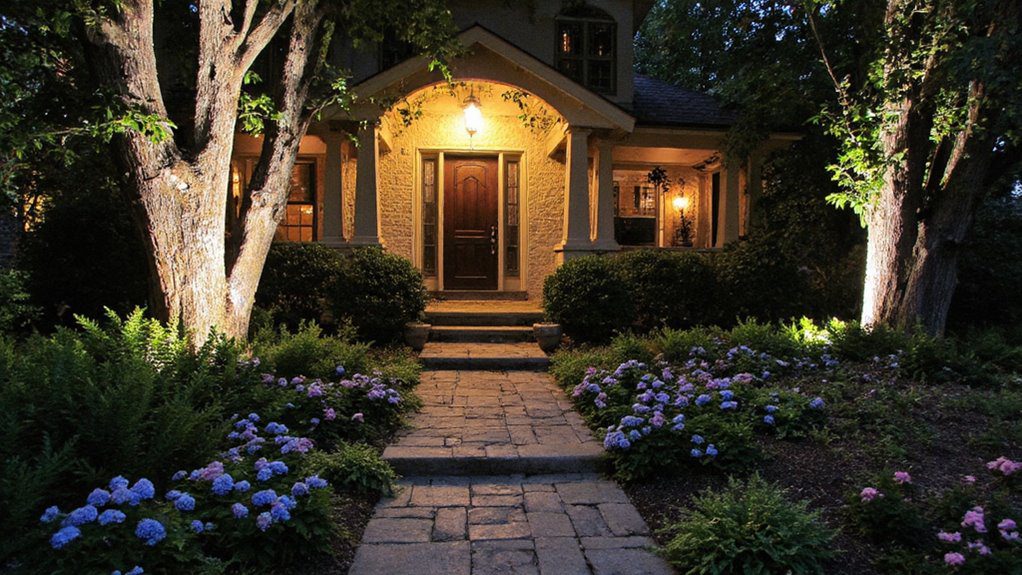
When I install outdoor lighting for ambiance, I focus on layering different light sources to create depth and highlight architectural features.
I use low-voltage LED fixtures for energy efficiency and precise illumination, placing path lights to guide visitors subtly.
Accent lights emphasize textures and entry details, while soft uplights add warmth, ensuring the front entry feels inviting without overwhelming brightness.
Frame the Entry With Tall Shrubs or Trees

I choose tall shrubs or trees carefully to frame the entry, sculpting a natural gateway that directs attention and adds vertical interest.
Selecting species with complementary foliage and growth habits ensures balance and harmony. Proper spacing and pruning maintain clear sightlines and structural definition, enhancing curb appeal while providing subtle enclosure without overwhelming the doorway’s architectural features.
This technique anchors the entry visually and functionally.
Place Potted Plants on Either Side of the Door

Beyond framing the entry with tall shrubs or trees, placing potted plants on either side of the door adds a refined layer of symmetry and texture.
I choose containers that complement the door’s material and color, ensuring proportional scale. Consistent pot style enhances balance, while carefully selected plants soften architectural lines, creating a welcoming transition from exterior to interior.
Use a Mix of Textures and Heights in Plants
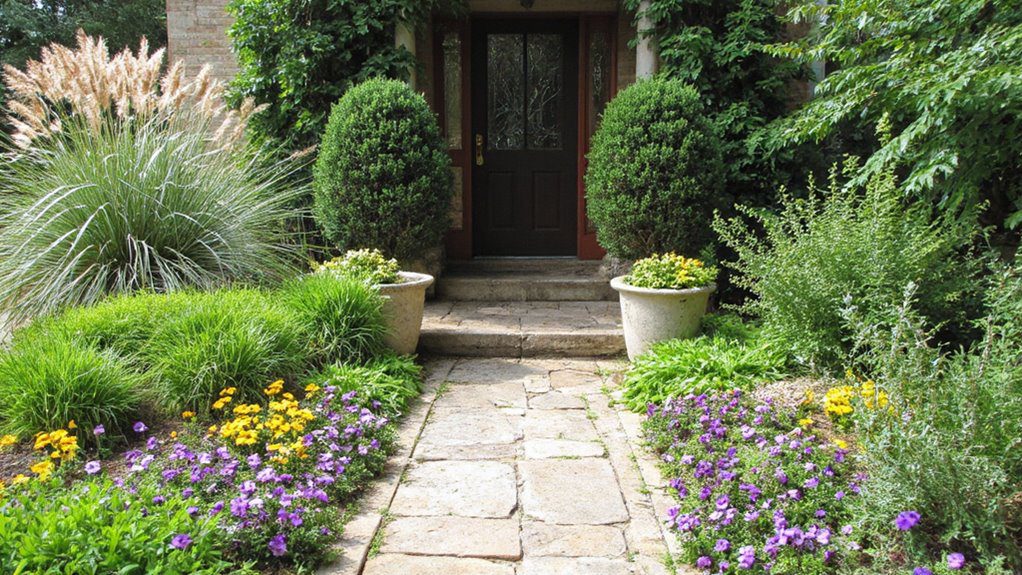
Although it might seem straightforward, combining plants with varied textures and heights demands careful selection to achieve visual harmony.
I choose coarse-leafed shrubs alongside fine, feathery grasses, layering taller plants at the back and shorter ones in front.
This contrast creates depth and guides the eye naturally, enhancing the front entry’s aesthetic appeal without overcrowding or visual chaos.
Create a Small Garden Bench Area

Balancing plant textures and heights sets the stage for introducing a small garden bench area that complements the greenery without overpowering it.
I position the bench on a stable, level surface, using durable materials like teak or metal. Surrounding it with low-growing shrubs maintains openness while providing subtle enclosure, creating an inviting, harmonious focal point that enhances the front entry’s visual appeal and functionality.
Incorporate Seasonal Decorations

When I add seasonal decorations to front entry landscaping, I focus on selecting elements that enhance the existing design without cluttering the space.
I choose colors and textures that complement the plant palette, ensuring balance and harmony.
I also prioritize durable materials suitable for weather conditions, placing decorations strategically to maintain clean lines and preserve the overall visual flow of the entryway.
Use Mulch to Define Planting Areas

Since defining planting areas clearly enhances both the functionality and appearance of your front entry, I rely on mulch to create crisp boundaries that highlight each plant grouping.
Mulch suppresses weeds, retains soil moisture, and provides a uniform texture that contrasts with foliage.
I choose organic mulch for its natural decomposition, which enriches soil structure, promoting healthier root systems and a polished, cohesive landscape design.
Add a Water Feature for Tranquility

Although adding a water feature may not be essential, I find that it significantly enhances the tranquility of a front entry.
Incorporating elements like a small fountain or pond introduces soothing sounds and reflective surfaces.
Selecting materials with clean lines and integrating subtle lighting creates a serene focal point, balancing aesthetics with functionality and elevating the overall sensory experience of the landscape.