

When I approach garden landscape design, I focus on balancing aesthetics with functionality. From arranging vibrant flower beds to integrating curved stone pathways, each element contributes to a cohesive outdoor space. Thoughtful inclusion of water features or vertical gardens can transform the environment, while sustainable choices like native plants add longevity. I find that subtle lighting and edible plants often complete the picture. These ideas shape a garden that’s both inviting and practical, but there’s more to consider.
Colorful Flower Bed Arrangements

When designing colorful flower bed arrangements, I focus on selecting plant species with complementary bloom times and contrasting foliage textures to ensure year-round visual interest.
I carefully analyze soil pH, sunlight exposure, and moisture levels, choosing perennials and annuals that harmonize in height and color intensity.
This method creates dynamic, layered compositions that evolve beautifully through seasons, maintaining balanced aesthetics and ecological health.
Curved Stone Pathways

Although curved stone pathways demand careful planning and precise execution, I find they add a natural flow and elegance to any garden layout.
Selecting durable, irregularly shaped stones enhances organic appeal, while properly grading the base ensures stability and drainage.
I carefully arrange stones to complement surrounding plants, creating seamless transitions that invite exploration and enrich the garden’s overall aesthetic harmony.
Raised Garden Beds
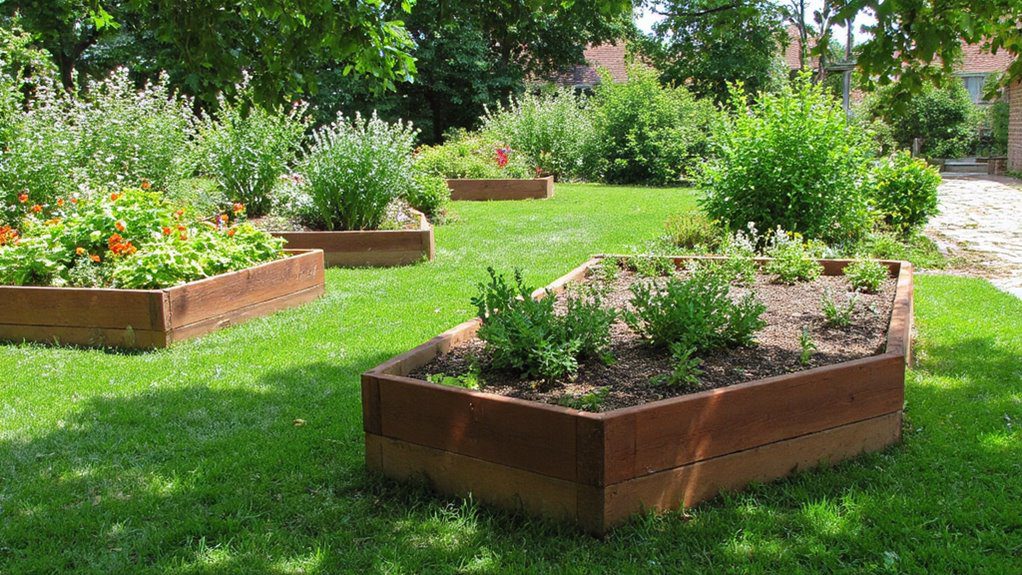
Three key benefits make raised garden beds an essential feature in modern landscape design.
They improve soil drainage, allow precise control over soil composition, and enhance accessibility for maintenance.
Constructed with durable materials, their clean lines and defined structure add architectural interest, creating a visually balanced and functional garden space that integrates seamlessly with other landscape elements.
Water Features and Ponds
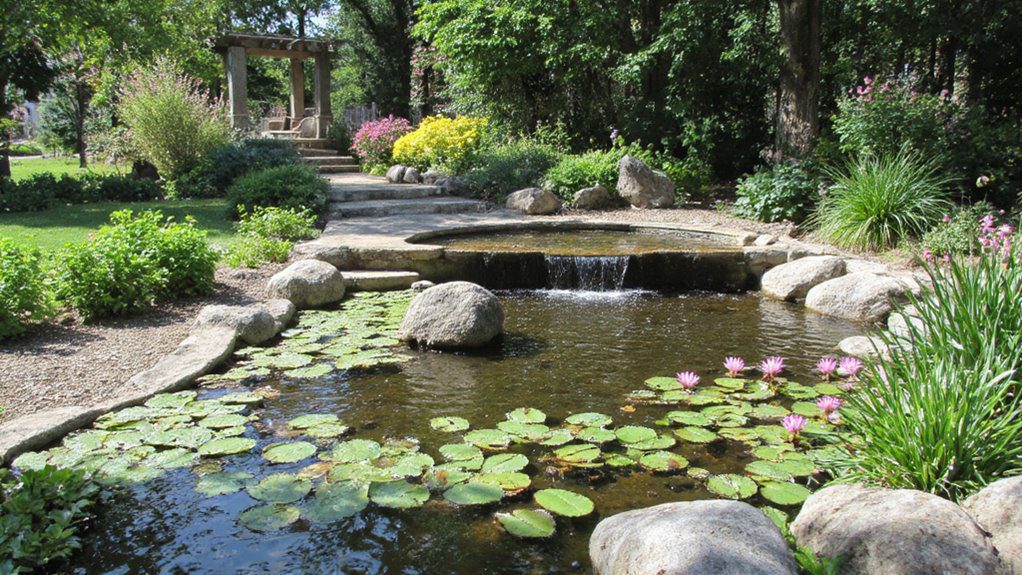
Incorporating water features and ponds transforms a garden into a dynamic landscape that engages multiple senses.
I carefully select materials and pump systems to balance flow and stillness, ensuring sound complements visual appeal.
Thoughtful placement optimizes natural light and shade, supporting aquatic plants and wildlife.
Precision in design enhances tranquility, making water elements focal points that enrich overall garden harmony.
Vertical Gardens and Trellises
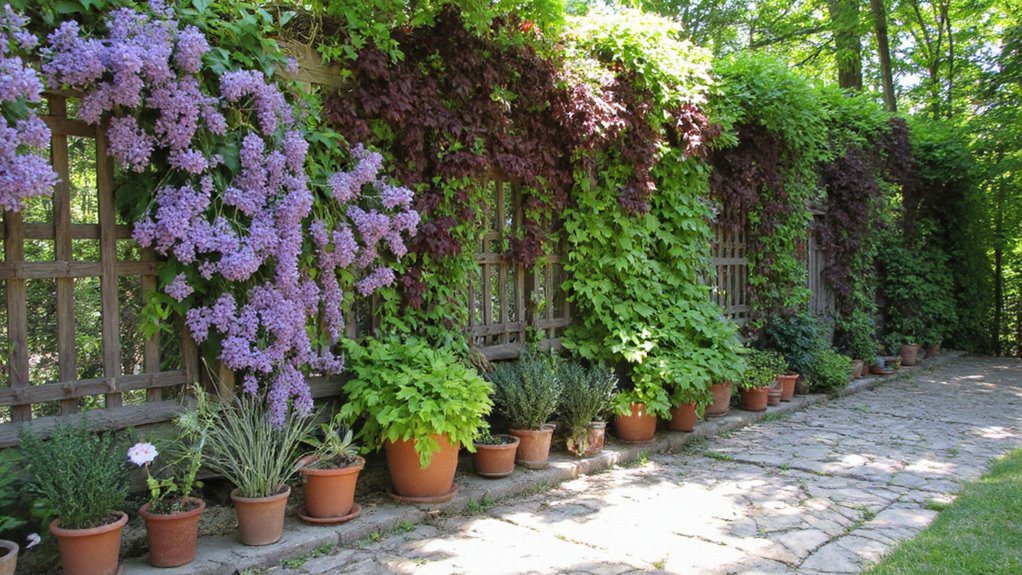
When I design vertical gardens and trellises, I focus on selecting structures that maximize both space efficiency and plant health.
I choose durable materials that support climbing plants while ensuring adequate airflow and sunlight exposure. Precise placement prevents overcrowding, promoting healthy growth.
Integrating modular panels allows flexibility in design, creating visually striking, functional green walls that enhance any garden’s vertical dimension.
Outdoor Seating Areas

Beyond vertical elements like trellises, outdoor seating areas anchor a garden’s usability and comfort.
I focus on durable, weather-resistant materials like teak or wrought iron, ensuring longevity. Proper placement maximizes views and sunlight while considering wind protection.
Integrating built-in benches or modular furniture enhances flexibility, creating inviting, functional spaces that harmonize with surrounding plantings and hardscape elements for seamless aesthetic flow.
Native Plant Landscaping
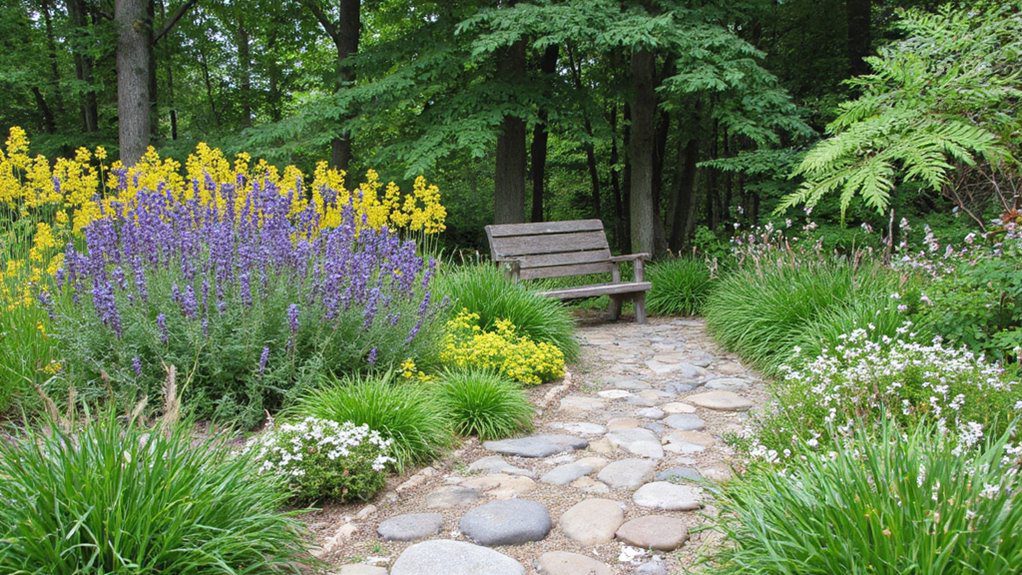
Three key advantages make native plant landscaping a smart choice for sustainable garden design.
Native species adapt naturally to local soil, climate, and pests, reducing maintenance and irrigation needs.
They support biodiversity by providing essential habitats for pollinators.
Additionally, their deep root systems enhance soil structure and prevent erosion, creating a resilient, eco-friendly garden that blends aesthetics with ecological function seamlessly.
Rock Gardens and Xeriscaping
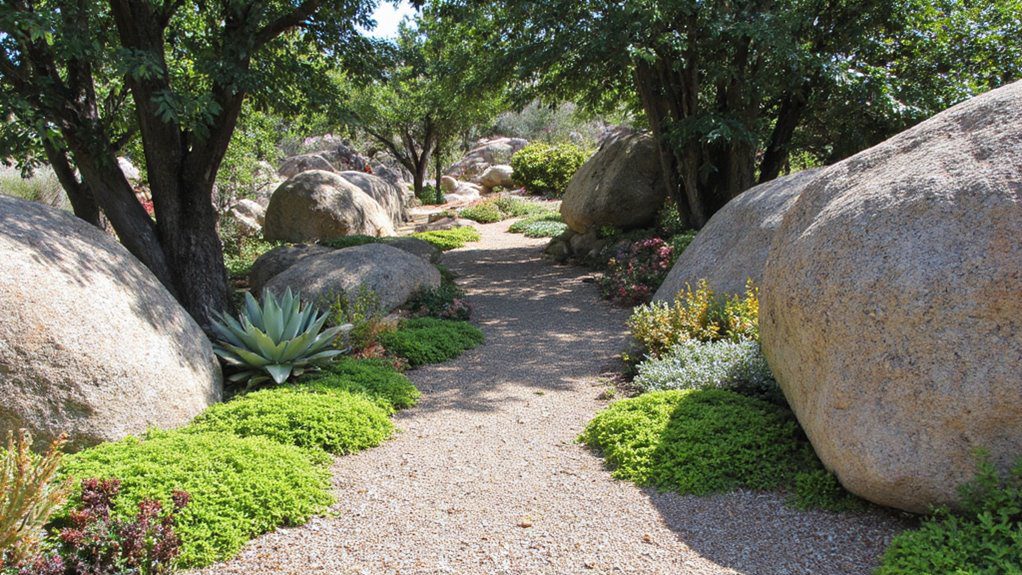
Although rock gardens and xeriscaping often get lumped together, they each offer unique strategies for creating low-maintenance, water-efficient landscapes.
Rock gardens use carefully placed stones and drought-tolerant plants to mimic natural alpine environments.
Xeriscaping emphasizes soil improvement, mulching, and native xerophytes to minimize irrigation.
Both demand precise planning to balance texture, color, and drainage, ensuring sustainable, visually striking designs.
Garden Lighting Solutions
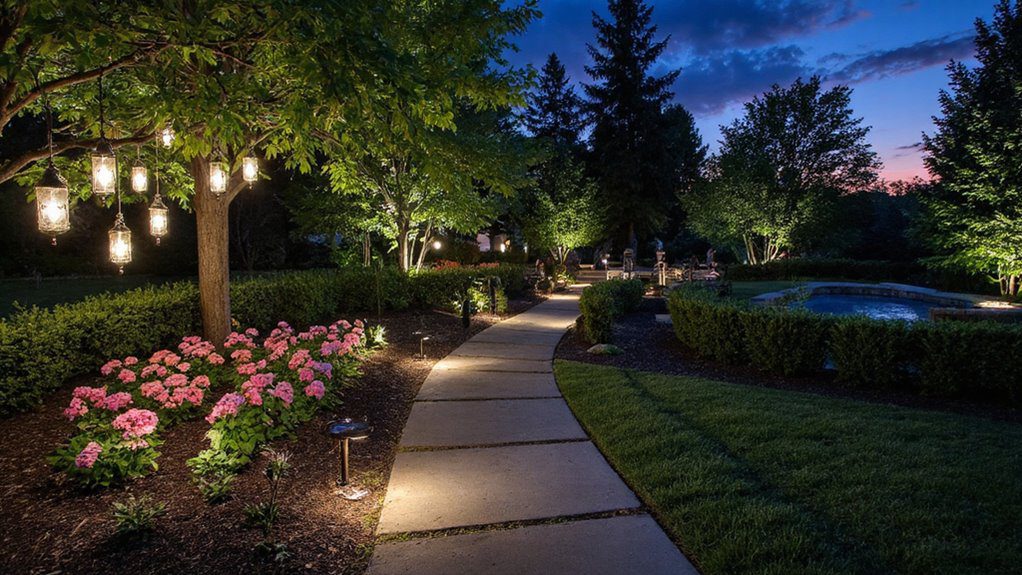
How can the right lighting transform your garden’s atmosphere and functionality?
I focus on layering ambient, task, and accent lights to highlight textures and pathways.
Using LED fixtures with adjustable color temperatures enhances plant colors and creates depth.
Strategically placed low-voltage lights improve safety without overwhelming the natural beauty, making the garden inviting and visually dynamic after dark.
Edible Garden Spaces
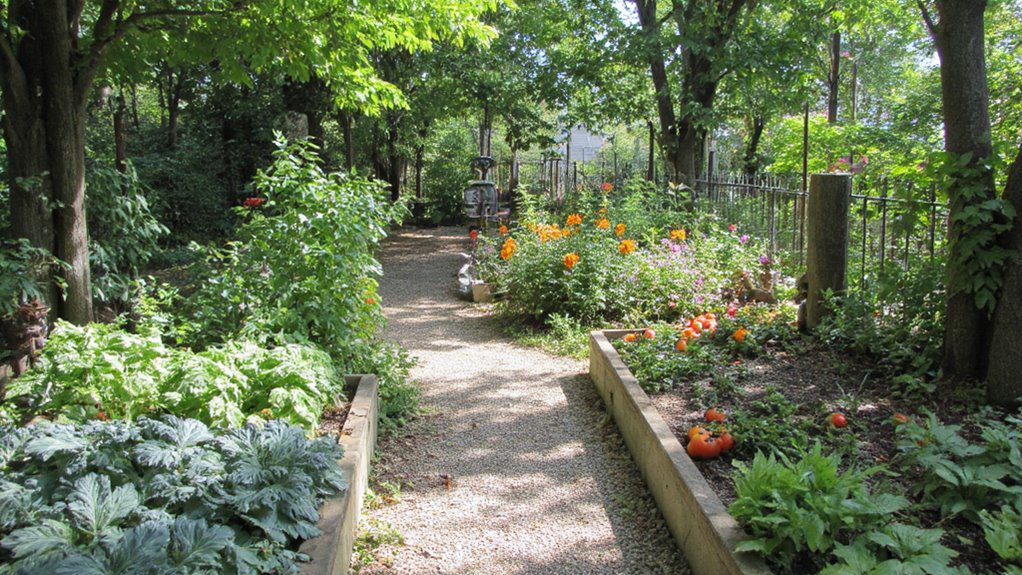
When designing edible garden spaces, I prioritize integrating functionality with visual appeal to create a seamless blend of beauty and productivity.
I carefully select nutrient-rich soil and arrange plants to optimize sunlight and airflow. Structured beds and companion planting enhance growth while maintaining aesthetic balance.
This approach ensures a sustainable, visually engaging garden that yields fresh produce without sacrificing design integrity.
Seasonal Container Gardens
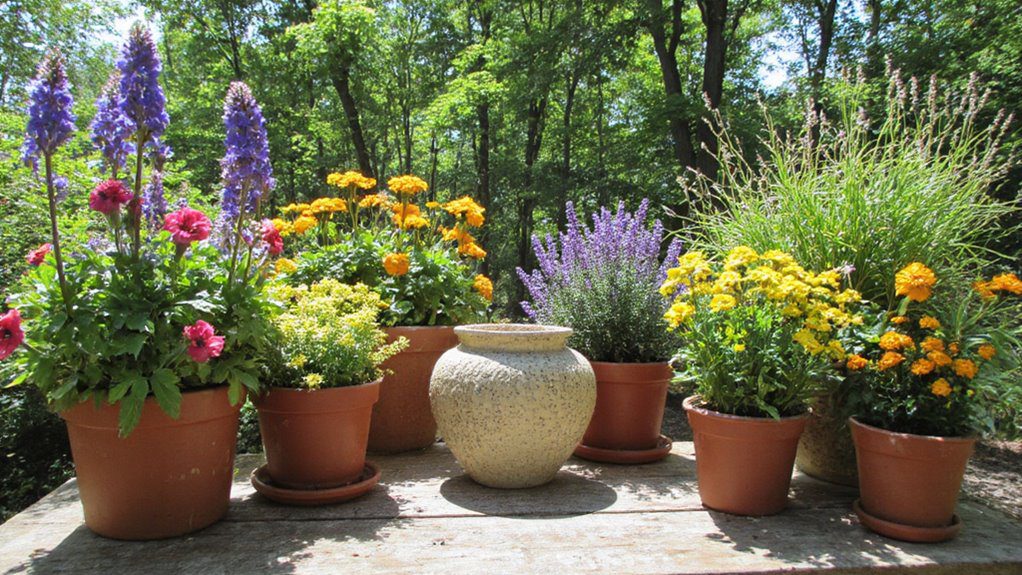
Since seasonal container gardens offer flexibility, I focus on selecting containers that balance form and function to complement various plant types and seasonal changes.
I prioritize materials with proper drainage and insulation, ensuring root health across temperatures.
Choosing neutral tones or subtle textures allows foliage and blooms to stand out, creating a dynamic, visually appealing arrangement that effortlessly adapts throughout the year.