

To keep your soil moist, start by using mulch effectively. It reduces water evaporation, enriches soil, and suppresses weeds. Implementing drip irrigation delivers moisture directly to plant roots, cutting water usage by about 50% and can be automated with timers. Install ollas, which gradually seep water into the soil, ensuring consistent moisture and reducing workload. Mix in absorbent materials like coconut coir or water-absorbent crystals to enhance the soil’s capacity to retain water. Lastly, collecting and using rainwater promotes plant health and prevents soil degradation. Each method supports a robust, efficient garden environment, offering deeper insights into water conservation techniques.
1. Utilizing Mulch Effectively

To effectively retain soil moisture, consider using mulch, as it significantly reduces water evaporation and enriches soil structure. When you apply a layer of mulch, you’re essentially creating a barrier between the soil and the air, minimizing moisture loss that occurs due to evaporation. This technique isn’t only beneficial for keeping soil moist but also for maintaining even soil temperatures, which promotes healthier plant roots.
Utilizing organic mulches such as compost, bark, or straw adds valuable organic matter to the soil. This matter gradually breaks down, thereby improving soil structure and enhancing water retention. The improvement in soil conditions facilitates better root growth and water infiltration, making your watering efforts more efficient and effective. By choosing to use mulch, you’re also suppressing weed growth, which competes with plants for water, further ensuring that moisture remains available to your plants.
Inorganic mulches, like gravel, though less beneficial for soil structure, still aid in retaining moisture by shielding the soil from direct sunlight.
Regardless of the type, ensuring a consistent layer of mulch can radically improve water retention and reduce the frequency of watering needed. Start by spreading a 2-3 inch layer around plants, careful not to smother them, to maximize retaining moisture and enhancing soil conditions.
2. Implementing Drip Irrigation
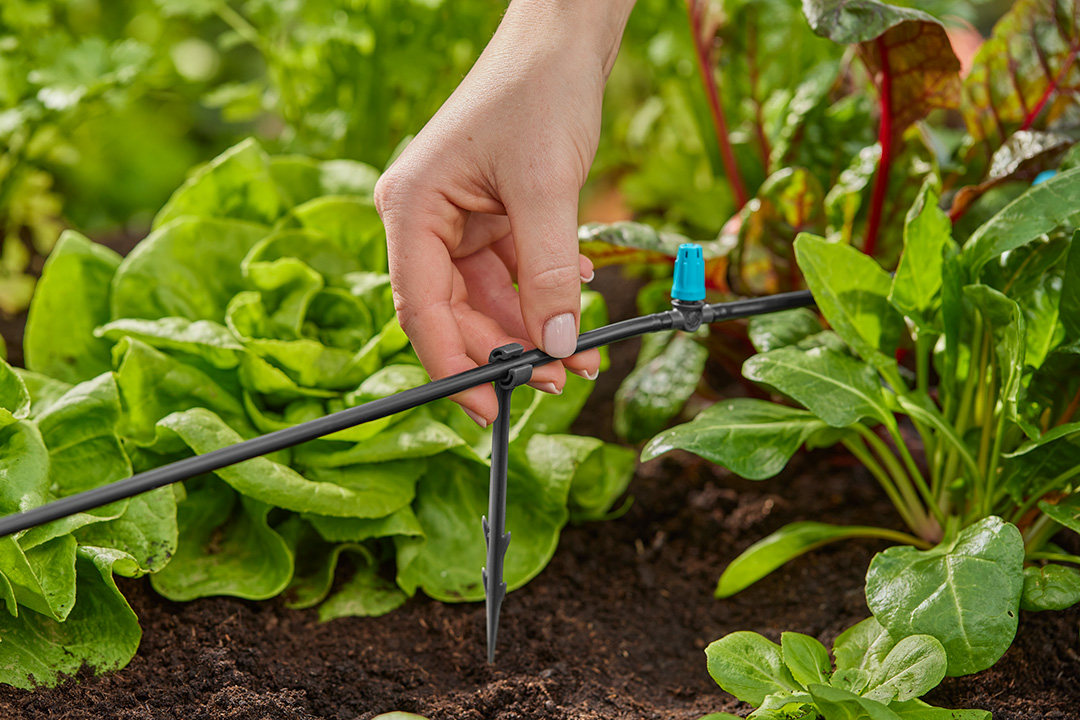
While mulching plays a significant role in moisture retention, implementing a drip irrigation system further enhances your garden’s water efficiency by delivering moisture directly to the plant roots. Drip irrigation systems, by design, target the root zone, ensuring that water isn’t wasted through evaporation or runoff, which is common in traditional watering methods. This precision not only helps in maintaining optimal moisture in the soil but also contributes to improving soil structure and nutrient distribution.
When you use drip irrigation, you’re equipped to provide a slow, steady stream of water that improves the water retention capacity of the soil. This method is particularly effective in reducing the amount of water you use, which can save up to 50% compared to conventional methods. Additionally, by keeping moisture levels consistent, drip irrigation helps in regulating soil temperature, creating a stable environment for root development.
To maximize the benefits of drip irrigation, consider automating your system with timers. This ensures regular watering without the need for manual intervention, making your gardening efforts more efficient and less labor-intensive. By directly watering plants at their roots with these systems, you enhance growth while conservatively using water resources, aligning with sustainable gardening practices.
3. Installing Ollas for Irrigation

Incorporating ollas into your garden ensures efficient irrigation by allowing water to seep slowly into the soil, directly hydrating plant roots and minimizing wastage. These unglazed clay pots, when buried among your plants, act as reservoirs that deliver moisture directly to the root zone. This method not only streamlines water use but also fosters deeper root growth and healthier plants.
Ollas provide a consistent level of moisture, crucial for maintaining soil hydration without the need for frequent watering. This slow release mechanism helps in reducing evaporation and runoff, key factors in maximizing water conservation. By maintaining an optimal moisture balance in the soil, ollas prevent the common pitfalls of both overwatering and underwatering.
Moreover, the use of ollas is particularly beneficial in areas prone to water scarcity. Their efficiency in water delivery makes them an ideal choice for such regions, ensuring that plants receive the necessary hydration with minimal water input. The sustainability of this irrigation method not only conserves water but also reduces your workload, as it diminishes the need for regular watering.
Implementing ollas in your gardening practices represents a smart, sustainable approach to managing soil moisture and plant health. Through their use, you’re investing in a method that supports both water conservation and efficient plant hydration.
4. Mixing Absorbent Materials
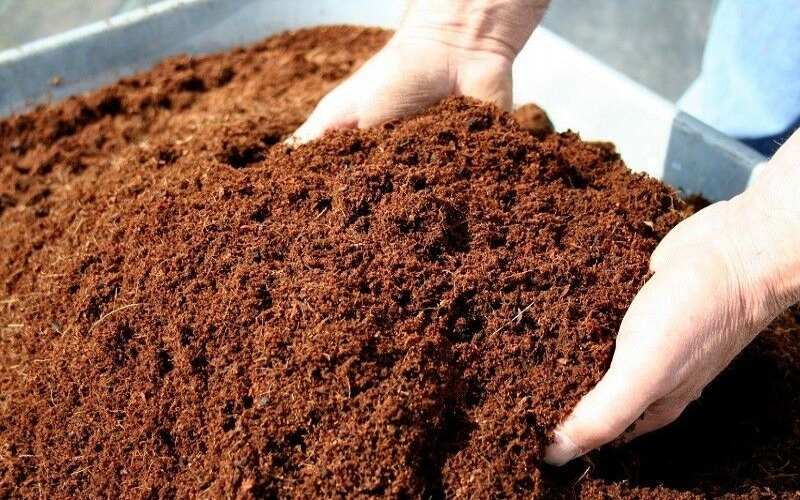
After discussing the benefits of ollas, let’s explore how mixing absorbent materials like coconut coir or water-absorbent crystals into your soil can further enhance moisture retention. These materials are key in boosting soil’s ability to retain water, crucial for healthy plant growth.
Coconut coir, derived from the husks of coconuts, is a sustainable material that significantly increases the water-holding capacity of soil. Its fibrous nature allows it to absorb moisture up to ten times its weight, providing a consistent water supply to plant roots without becoming waterlogged. This attribute makes it an ideal choice for maintaining soil moisture in dry conditions.
Water-absorbent crystals, another innovative option, work by trapping excess water and then releasing it gradually. This ensures that plants receive a steady moisture level, even in the absence of regular watering. The integration of these crystals can be particularly beneficial during hot spells or in sandy soils, where water tends to drain away quickly.
5. Collecting and Using Rainwater

Collecting rainwater offers a sustainable solution for your garden’s irrigation needs, ensuring that plants thrive with minimal environmental impact. By setting up systems such as rain barrels, cisterns, and rain gardens, you’re engaging in eco-friendly practices that not only benefit your garden but also contribute to water conservation on a broader scale.
Rainwater harvesting taps into a sustainable water source that’s typically free from the chemicals and additives found in municipal water supplies. This purity makes collected rainwater particularly beneficial for promoting healthy plant growth. The absence of salts and heavy minerals in rainwater can prevent soil degradation and buildup that often comes from tap water, thus maintaining the soil’s integrity and moisture retention capabilities.
Using rain barrels is a straightforward method where you capture rainwater from rooftops through gutters that direct the water into storage containers.
Cisterns offer a larger-scale collection system, suitable for extensive gardens or multi-use properties.
Alternatively, integrating rain gardens into your landscape allows rainwater to be absorbed directly into the ground, replenishing groundwater supplies while beautifying your surroundings.