
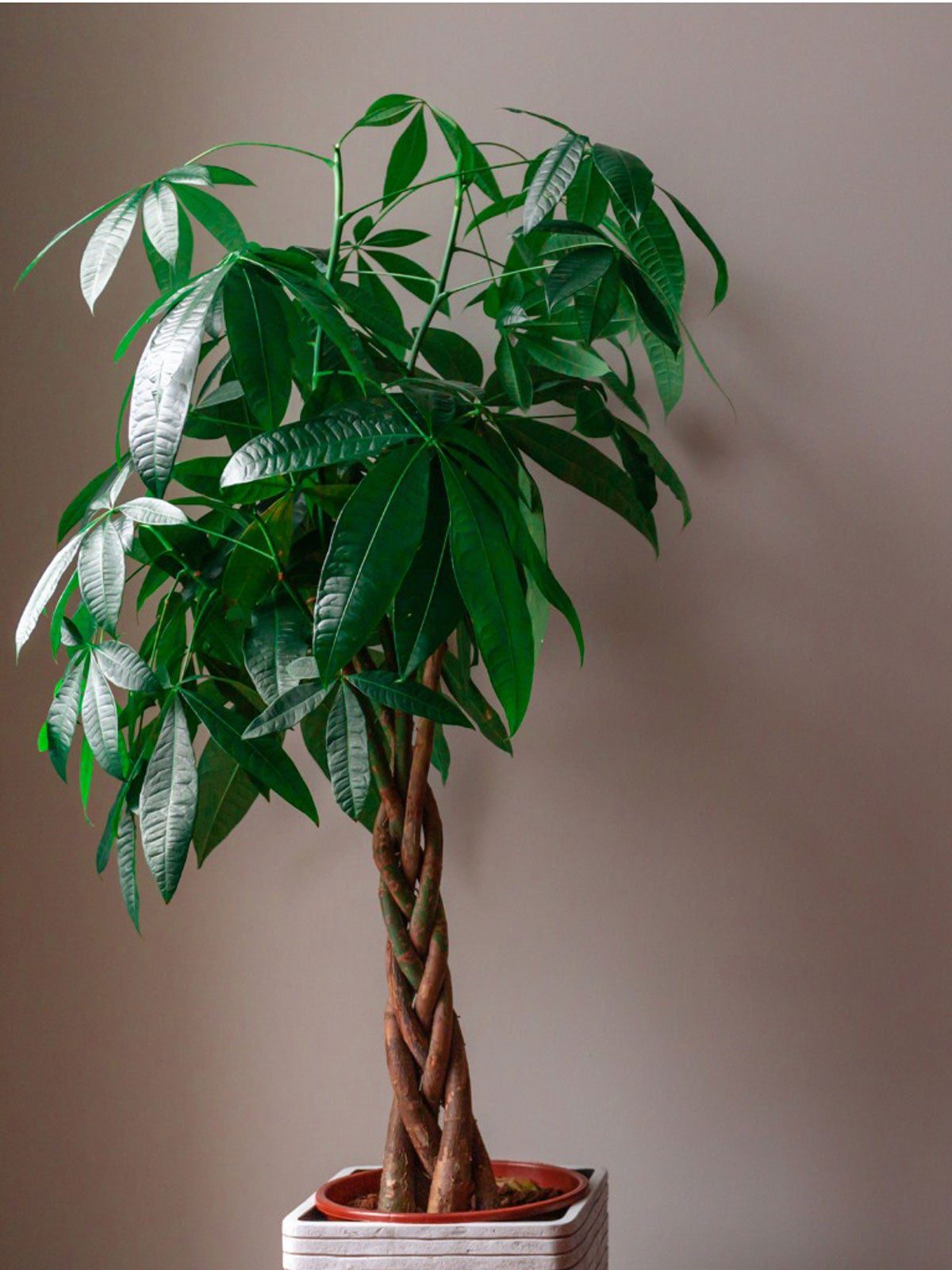
Money trees can reach up to 24 inches in height yearly indoors, with a typical indoor range of 6 to 8 feet. In their natural habitat, they have the potential to grow as tall as 60 feet. These trees are usually sold with braided trunks, featuring 3, 5, or 7 stems, and can be shaped through proper care and bonsai techniques to maintain a compact size. Factors like light, temperature, humidity, and pruning impact their size. Adequate care is crucial for their growth. Remember, each aspect influences how big your money tree can become.
Money Tree Growth Potential
Money trees have the potential to grow rapidly, reaching up to 24 inches in height annually when grown indoors. When cultivated indoors, these plants typically reach a height of 6-8 feet, significantly shorter than their potential height of 60 feet in their natural habitat. Money trees are often sold with braided trunks, featuring 3, 5, or 7 stems, adding to their aesthetic appeal.
Despite their natural growth potential, money trees can be managed to stay small through proper care and training techniques. With the art of bonsai, these plants can be pruned and shaped to maintain a compact size, making them an excellent choice for those looking for a smaller indoor tree. By controlling their growth through pruning and training, money trees can thrive in smaller spaces while adding a touch of nature’s beauty to your home. Mastering the art of bonsai can help you keep your money tree at a size that suits your living space and aesthetic preferences.
Factors Affecting Money Tree Size
To understand the factors influencing the size of your money tree, consider key growth elements such as light, temperature, humidity, soil quality, and your overall plant care routine. These factors can either promote or limit the growth potential of your money tree, affecting its final size. By controlling these environmental influences and incorporating proper pruning techniques, you can manage the size and shape of your money tree effectively.
Key Growth Factors
Factors influencing the size of a money tree include environmental conditions, pruning techniques, and the plant’s overall health and care regimen. Money trees grown indoors with braided trunks typically reach heights of up to 7 feet, while outdoor specimens can soar to 30 feet. The size of a money tree is often constrained by indoor growth conditions, such as available space and container size. These plants are highly adaptable and can be shaped into bonsai forms to control their size and shape effectively. The number of stems and leaves on a money tree also plays a significant role in determining its overall size and appearance. Interestingly, having seven leaves on a stem is believed to bring luck and prosperity, adding a touch of symbolism to the plant’s growth factors. By carefully considering these elements, you can optimize the growth and size of your money tree to suit your preferences and space constraints.
Size Limitations
A significant aspect influencing the size of a money tree is the interplay of various environmental factors and care practices. When considering the growth limitations of a money tree, factors such as lighting, temperature, humidity, and pruning play crucial roles. Here are some key points to understand how these factors affect the size of your money tree:
- Ceiling Height: Indoors, the height of a money tree can be limited by the ceiling height, typically reaching up to 7 feet.
- Outdoor Growth: When planted outdoors in the ground, money trees have the potential to grow up to an impressive 30 feet in height.
- Lighting: Adequate light is essential for proper growth, influencing the size of the money tree.
- Temperature and Humidity: Maintaining optimal temperature and humidity levels can impact the overall size and health of the tree.
- Pruning for Size Control: Regular pruning can help manage the size and shape of the money tree, making it suitable for various indoor settings.
Environmental Influence
Environmental conditions such as light, temperature, and humidity play a critical role in determining the size of a money tree. Adequate light is essential for the photosynthesis process, which is crucial for the tree’s growth. Placing your money tree in a spot with bright, indirect light can help it reach its full size potential. Temperature also plays a significant role, with ideal conditions falling between 65-75°F. Consistent temperatures within this range can contribute to optimal growth for your money tree.
Moreover, high humidity levels can positively influence the size of your money tree. Money trees thrive in environments with high humidity, mimicking their natural habitat. By maintaining high humidity levels, you can support healthy growth and potentially larger leaf sizes on your money tree. Monitoring and adjusting these environmental factors to create an ideal growing environment are key to maximizing the size of your money tree.
Indoor Vs. Outdoor Growth
When choosing between indoor and outdoor growth for your money tree, consider that the location significantly impacts its potential size. Money trees indoors require ample light for proper growth, while outdoor trees must adapt to varying temperature conditions. Understanding these factors will help you create the optimal environment for your money tree’s development.
Location Impacts Growth
Growing a money tree indoors or outdoors significantly impacts its growth potential and overall size. When considering the location impact on money tree growth, there are key differences between indoor and outdoor settings:
- Indoor Growth: Money trees grown indoors typically reach heights of up to 7 feet, featuring braided trunks with 3 to 5 stems. Their growth is often limited by space constraints, making them popular decorative houseplants.
- Outdoor Settings: In outdoor environments, money trees can soar to impressive heights of up to 30 feet, showcasing their full height potential. The adaptability of money trees allows them to adjust their growth to thrive in suitable outdoor conditions.
Understanding the location impact on money tree growth is crucial for determining the ultimate size and potential of these fascinating plants. Whether indoors or outdoors, money trees demonstrate their ability to adapt and flourish, providing a unique and visually appealing addition to any space.
Light Needs for Tree
For optimal growth, money trees require a minimum of 6 hours of bright to medium indirect sunlight daily. Indoor specimens can thrive under fluorescent light if natural light is insufficient, ensuring proper lighting for leaf development. Outdoors, money trees can tolerate direct sunlight, which is beneficial for their overall health and growth. Adequate light is crucial for the development of healthy leaves and to prevent leggy growth.
Providing the right amount of light is essential to maintain the well-being of your money tree. Insufficient light can lead to stunted growth, yellowing leaves, and a weakened plant overall. On the other hand, too much direct sunlight, especially for indoor trees, can cause leaf burn and other damage. Understanding the light needs of your money tree and adjusting its environment accordingly will help promote optimal growth and ensure a thriving plant for years to come.
Temperature Considerations for Growth
Money trees exhibit distinct temperature requirements that influence their growth differently when cultivated indoors versus outdoors. In indoor environments, money trees thrive in mild temperatures ranging between 65-75°F, making them well-suited for stable indoor conditions. However, when grown outdoors, it is crucial to ensure that nighttime temperatures do not drop below 50°F to prevent any potential damage. Gradual acclimation of indoor money trees to outdoor conditions over a two-week period is recommended to avoid shock from sudden temperature changes. Optimal growth for money trees in outdoor settings is achieved when they are placed in spots with dappled light and some direct sunlight.
- Money trees prefer mild temperatures between 65-75°F.
- Ensure nighttime temperatures outdoors do not fall below 50°F.
- Gradually acclimate indoor money trees to outdoor conditions over two weeks.
- Optimal growth for outdoor money trees includes dappled light and some direct sunlight.
Height and Trunk Characteristics
When assessing the height and trunk characteristics of money trees, it is important to note their potential indoor and outdoor growth capabilities, as well as the distinctive braided trunks commonly associated with this plant species. Money trees can grow up to 7 feet tall indoors, making them suitable for various indoor spaces. These trees are often sold with braided trunks consisting of 3 to 5 separate trees, enhancing their unique appearance. In their natural outdoor environment, money trees can reach heights of up to 30 feet, showcasing their impressive potential for growth. The braided trunks of money trees are a result of manual braiding when the plants are young, creating an aesthetic appeal that many find appealing. Money trees exhibit surprising height potential, adapting well to different environments and spaces while maintaining their distinctive characteristics. Whether indoors or outdoors, these trees can add a touch of nature and elegance to any setting.

Growth Requirements Overview
What are the essential growth requirements for cultivating thriving money trees? To ensure your money tree flourishes, consider the following key factors:
- Pot Size: Choose a pot that allows for proper drainage and is 1-2 inches larger in diameter than the root ball.
- Indoor Height: Money trees can reach heights of 6-8 feet when grown indoors.
- Annual Growth: Expect your indoor money tree to grow up to 24 inches in height each year.
- Indoor Growth: Provide ample sunlight and maintain consistent watering to support healthy indoor growth.
- Indoor Braided Trunks: Money trees are commonly sold with braided trunks featuring 3, 5, or 7 stems, a result of manual braiding during their early stages.
Adapting to Different Environments
To successfully adapt money trees to different environments, ensure consistent monitoring of light exposure and watering schedules. Money trees are known for their adaptability, making them suitable for a variety of indoor spaces. Their braided trunks, typically consisting of four to five separate trees, add to their unique appearance and make them a popular choice for indoor settings. Indoors, money trees can grow up to 7 feet tall, showcasing their impressive growth potential even in limited spaces. In outdoor settings, these versatile plants can reach heights of up to 30 feet, demonstrating their ability to thrive in different conditions. Whether placed indoors or outdoors, money trees can adapt well as long as they receive adequate light and water. Their resilience and ability to flourish in various environments make them a favored choice for plant enthusiasts looking to add a touch of greenery to their surroundings.
Pruning and Braiding Techniques
To maintain the health and aesthetic appeal of your money tree, it is important to understand proper pruning and braiding techniques. Here are some key tips to help you care for your money tree effectively:
- Pruning: Regularly prune your money tree to remove any unhealthy or leggy stems. This practice not only promotes new growth but also helps maintain the desired shape of the plant.
- Braiding: Use braiding techniques on young money trees to create decorative trunks with 3, 5, or 7 stems. Gently intertwine the stems while they are flexible, and they will continue growing in that braided pattern as the plant matures.
- Control Size: Pruning and braiding can help control the size of your money tree, preventing it from growing too large or becoming unruly.
- Enhance Aesthetic Appeal: By employing proper pruning and braiding techniques, you can enhance the overall aesthetic appeal of your money tree while ensuring its healthy growth.
- Maintain Shape: Regular maintenance through pruning and braiding ensures that your money tree maintains its desired shape, making it a visually pleasing addition to your space.
Propagation and Repotting Tips
When propagating your money tree, select a stem with leaves during the spring or summer months for optimal results. Using sterilized sharp scissors, take cuttings and place them in water to encourage root growth. Repot the propagated money tree cuttings with plant food and maintain moist soil for healthy growth. For braiding money tree trunks, gently intertwine them and secure at the top until the desired braid is achieved. Regular pruning with sharp shears helps maintain the shape and health of money trees by removing unwanted leaves and stems.
| Propagation and Repotting Tips | ||
|---|---|---|
| Propagation | Repotting | Additional Tips |
| Select stem with leaves | Repot cuttings with plant food | Regular pruning for shape |
| Use sharp scissors for cuttings | Maintain moist soil | Braid trunks gently |
| Place cuttings in water | Encourage root growth | Remove unwanted leaves |
| Optimal time: spring or summer | Secure braids at the top | Keep soil moist |