

To build a dragon fruit trellis effectively, gather redwood fence posts, cedar two by fours, and essential tools like screws and a circular saw. Choose a sunny, wind-protected spot, and measure space considering plant needs. Cut wood precisely and make holes for stability using correct drilling techniques. Assemble the vertical posts and crossbeams securely, anchoring the structure well. Then, plant your dragon fruit in a 20-gallon pot with a bamboo trellis for support. Focus on watering, soil quality, and sunlight for growth. Follow these steps for a successful dragon fruit trellis that yields abundant fruit.
Materials Needed
For building a sturdy dragon fruit trellis, you will need specific materials to ensure stability and longevity. The first thing to consider is using black plastic nursery pots with a minimum size of 20 gallons. These pots provide ample space for the dragon fruit plant to grow and anchor the trellis securely. Make sure to invest in redwood fence posts as they are sturdy and durable, ideal for constructing the frame of the trellis. Additionally, cedar two by fours are essential for providing extra stability and support to the trellis structure, ensuring it can withstand the weight of the growing dragon fruit plant.
A lot of people opt for these materials due to their reliability and longevity in supporting the trellis. Essential tools for construction include screws, drills, and a circular saw to assemble the trellis securely. Choosing the right materials is crucial in ensuring the success of your dragon fruit trellis project, as they play a significant role in the overall durability and functionality of the structure.
Choosing the Right Location
Selecting the ideal location plays a crucial role in the successful cultivation of dragon fruit on your trellis. To ensure optimal growth and fruit production, choose a spot with full sun exposure. Dragon fruit plants thrive in sunlight, so a location that receives at least 6-8 hours of sunlight daily is ideal. Additionally, protect your trellis from strong winds to prevent damage to the plant and structure. Consider the space required for a mature dragon fruit plant when selecting the location to avoid overcrowding and ensure proper growth.
It’s essential to avoid areas with excessive moisture or standing water to prevent root rot, which can be detrimental to the plant’s health. Lastly, place the trellis in a convenient spot that allows easy access for maintenance tasks like pruning and harvesting. This will make caring for your dragon fruit plant more manageable and enjoyable. By carefully choosing the right location for your dragon fruit trellis, you set the foundation for a successful and thriving plant.
Measuring the Space
Measure the space where you plan to install your dragon fruit trellis to ensure optimal growth conditions for your plant. Start by assessing the sunlight requirements in the chosen location. Dragon fruit plants thrive in full sun, so select a spot that receives at least six hours of direct sunlight daily. Consider the maintenance access needed for your trellis. Ensure there is enough space around the trellis for you to easily prune, water, and harvest the fruit. Additionally, factor in weight considerations when measuring the space. A mature dragon fruit plant can be heavy, especially when laden with fruit. Make sure the area can support the weight of the plant and the trellis structure without risk of toppling over. By taking these measurements into account, you can create a suitable environment for your dragon fruit plant to grow healthily and produce abundant fruit.
Cutting Wood Pieces
To construct the dragon fruit trellis, start by cutting the redwood fence posts and cedar two by fours to specific measurements as required by the design. When selecting the wood, opt for straight pieces free of defects to ensure stability in the trellis. Using a circular saw is recommended for precise cuts. Remember to prioritize safety by wearing appropriate gear such as goggles and gloves. Before cutting, measure twice to avoid errors and ensure the pieces fit together seamlessly.
When cutting the wood, pay attention to the cutting techniques. Keep a steady hand while guiding the saw along the marked lines to maintain accuracy. Take your time to prevent splintering and jagged edges. Once the pieces are cut, lightly sand the edges to remove any roughness and splinters, providing a smooth finish that’s safe to handle. Following these cutting techniques and safety precautions will help you prepare the wood pieces effectively for building the dragon fruit trellis.
Drilling Holes
Wondering how to ensure secure attachment of wood pieces for your dragon fruit trellis construction? When drilling holes for your trellis project, it’s essential to use the right drill techniques and consider the type of wood you are working with. Pilot holes play a crucial role in preventing wood splitting when screws are inserted. Make sure to drill the pilot holes straight and at the appropriate depth for a sturdy connection. Here are some construction tips to guide you through the process:
| Drill Techniques | Wood Types |
|---|---|
| Adjust drill speed and pressure based on wood type | Choose a wood that is sturdy and durable for longevity |
| Double-check alignment before drilling pilot holes | Avoid using softwoods that may splinter easily |
Additionally, when it comes to screw insertion, be mindful of the pilot hole depth to ensure a snug fit. Always perform an alignment check before drilling to guarantee precise placement and a stable trellis structure. By following these steps and considering the wood type, you can create a reliable dragon fruit trellis.
Assembling the Base
To assemble the base of your dragon fruit trellis, you should start by selecting sturdy cedar wood for durability. Measure and cut 10-inch pieces for the bottom base, ensuring they are level for stability. Secure the pieces using screws and a drill to create a pinwheel design that evenly distributes weight and prevents toppling.
Base Material Selection
For assembling the base of your dragon fruit trellis, carefully select black plastic nursery pots of at least 20 gallons for stability. The base stability is crucial to support the trellis as the dragon fruit plant grows. Opt for durable materials like redwood fence posts and cedar two by fours to ensure longevity and sturdiness. Using sturdy materials will prevent the base from deteriorating over time and provide a secure foundation for your trellis.
Choosing pots with a minimum size of 20 gallons ensures that they can hold the weight of the trellis and the growing plant without toppling over. The larger pot size also allows for better stability and root growth for the dragon fruit plant. When selecting materials, prioritize durability to withstand outdoor conditions and the weight of the trellis structure. By using high-quality materials and the right pot size, you can create a stable and reliable base for your dragon fruit trellis.
Measuring and Cutting
When assembling the base for your dragon fruit trellis, start by measuring and cutting 10-inch pieces of cedar two by fours for the bottom base. To ensure precision cuts, use a circular saw with a sharp blade. Prioritize safety by wearing appropriate gear and following proper cutting techniques. Measure twice and cut once to avoid errors, utilizing measuring tools like a tape measure or carpenter’s square for accuracy. When cutting, maintain a steady hand and guide the saw along the marked lines smoothly. It’s crucial to make clean and straight cuts to guarantee the pieces fit together seamlessly. Once the cuts are made, drill pilot holes into the base pieces before attaching them with screws for added strength. By employing these accuracy techniques and safety tips, you’ll craft a sturdy bottom base that forms the foundation of your dragon fruit trellis.
Securing the Structure
Secure the cedar two by fours together at the base with screws to create a stable and level pinwheel foundation for your dragon fruit trellis. Cut the cedar two by fours into 10-inch pieces, then arrange and attach them in a pinwheel pattern. This design not only enhances the aesthetic appeal but also plays a crucial role in distributing the weight of the trellis evenly. To ensure maximum stability, anchor the base securely to the pot using appropriate anchoring methods. The bottom base must be level to prevent any wobbling or tipping over, especially as the dragon fruit plant grows and becomes heavier. By carefully considering weight distribution strategies and implementing proper anchoring techniques, you can guarantee a sturdy foundation for your trellis. Remember, a well-secured base is essential for the overall stability and longevity of your dragon fruit trellis.

Attaching the Side Supports
Attach the side supports by measuring and cutting them to match the trellis frame’s height, ensuring they are positioned equidistantly from the center for optimal plant growth. Angle the side supports appropriately to facilitate vertical growth of the dragon fruit plant. Use stability screws to firmly attach the side supports to the frame, providing essential support for the plant as it grows.
When cutting the side supports, make sure they align perfectly with the height of the trellis frame to maintain stability and uniformity. Placing them equidistantly from the center will allow the dragon fruit plant to grow evenly and avoid overcrowding. By angling the side supports, you create a structure that encourages vertical growth, enabling the plant to thrive and produce fruit efficiently.
Secure the side supports to the frame using stability screws to prevent any wobbling or instability. A solid attachment ensures that the trellis can support the weight of the plant as it grows, promoting healthy vertical growth. Properly attached side supports are crucial for the overall stability and success of your dragon fruit trellis.
Installing the Vertical Posts
To begin installing the vertical posts for your dragon fruit trellis, dig holes 2 feet deep and 3 feet apart in your designated area. Ensure the holes are evenly spaced for proper support. Place redwood fence posts in the holes, making sure they are aligned vertically. Check that the posts are straight and level using a spirit level or by eye before filling the holes with soil. Once the posts are in position, compact the soil around them firmly to enhance stability. Soil compaction is crucial to prevent the posts from shifting over time, providing a sturdy foundation for your trellis. Regularly check the stability of the posts by gently pushing or pulling on them to ensure they remain secure. The vertical posts play a critical role in supporting the weight of the dragon fruit vines, so taking the time to align them correctly and compact the soil around them will contribute to the overall durability of your trellis structure.
Adding Crossbeams
Position the crossbeams horizontally along the vertical posts to enhance the trellis’s overall stability and weight distribution. Crossbeams play a crucial role in providing crossbeam stability, ensuring that the weight of the dragon fruit plant is evenly distributed across the trellis. You can attach the crossbeams to the vertical posts using screws or nails, securing them firmly in place. The number of crossbeams needed will depend on the specific design of your trellis, with regular intervals along the height of the structure being common.
| Crossbeam Number | Position on Vertical Posts | Attachment Method |
|---|---|---|
| 1 | Bottom | Screws |
| 2 | Middle | Nails |
| 3 | Top | Screws |
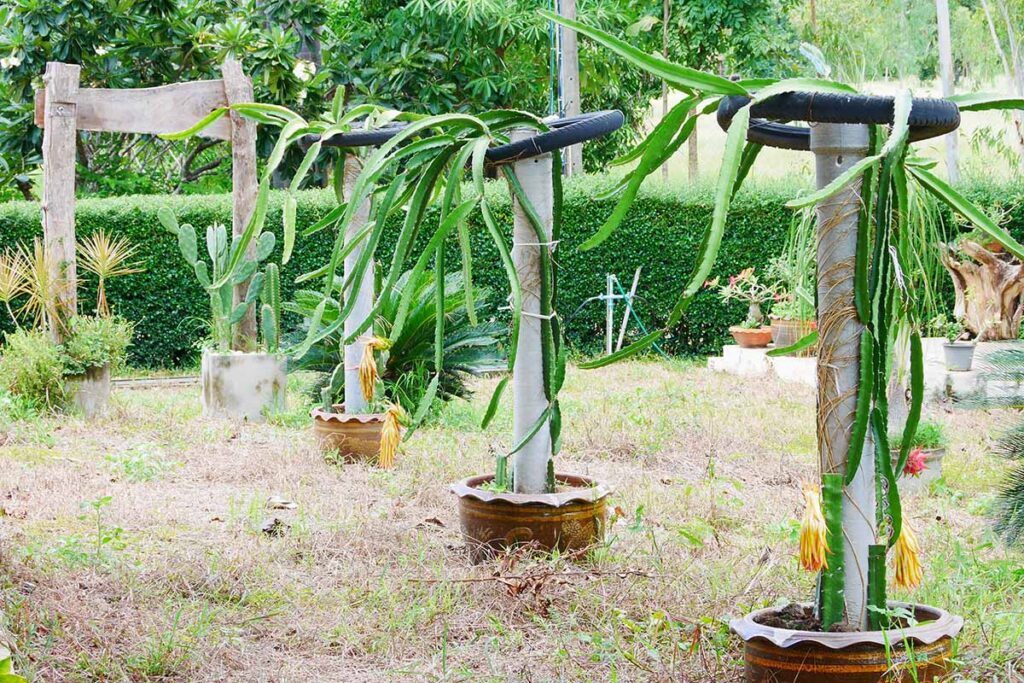
Securing the Structure
To ensure the stability and durability of your dragon fruit trellis, it is crucial to anchor it securely to the ground or a stable surface. Use screws to connect all components tightly, and regularly check for any loose connections that need tightening. Consider adding extra bracing if your location is prone to strong winds to maintain the structure’s integrity and support the weight of the growing plants.
Anchor the Trellis
For a sturdy dragon fruit trellis, ensure you securely anchor the structure using screws or concrete anchors to prevent toppling in strong winds or as the plant grows heavier. Proper anchoring is essential to maintain stability and support the weight of the growing plant. Start by selecting a location with good sun exposure and proper drainage for optimal growth. Use screws to attach the trellis firmly to the ground or a stable surface. In windy areas, consider using concrete anchors or stakes for added stability.
Regularly check the anchoring points and reinforce them as needed to ensure the trellis remains secure over time. As the dragon fruit plant grows, it will become heavier, putting more strain on the structure. By anchoring the trellis securely from the beginning, you can prevent any potential issues with instability as the plant matures. Taking these steps will help you create a durable trellis that can support the dragon fruit plant effectively.
Secure With Ties
When securing the dragon fruit plant to the trellis with ties, it is important to use soft nursery tape to avoid causing damage while providing adequate support for growth. Soft nursery tape is gentle on the plant but strong enough to hold it securely. Tie options include Velcro ties, twist ties, or strips of fabric. When tying, ensure the ties are firm to support the plant’s weight but not so tight that they constrict growth. Tying techniques like creating figure-eight loops around the plant and trellis can distribute the pressure evenly.
Regularly check the ties to prevent them from digging into the plant as it grows. Adjust the ties as needed to accommodate the plant’s vertical growth. Proper maintenance of ties will help the dragon fruit plant grow vertically and prevent it from toppling over. By using suitable ties and following proper techniques, you can ensure your dragon fruit plant thrives on the trellis.
Planting Dragon Fruit
Begin by placing the dragon fruit cutting in a 20-gallon pot without roots to initiate the planting process. This step is crucial for establishing a strong foundation for your dragon fruit plant. When planting, ensure to insert a bamboo trellis into the pot to provide the necessary support for the growing plant. Use nursery tape to secure the cutting to the trellis, promoting upward growth. Position the cutting correctly against the trellis to encourage vertical development and prevent bending or breakage. It’s important to repeat this planting process for additional dragon fruit cuttings in separate pots to create a comprehensive trellis setup.
For optimal growth, focus on watering techniques and soil quality. Dragon fruit thrives in well-draining soil that is slightly acidic. Ensure the soil is consistently moist but not waterlogged. Implement pest control measures and fertilization to support healthy growth. Dragon fruit plants require ample sunlight exposure to flourish; position them in a location with at least six hours of sunlight daily to promote robust growth patterns.