
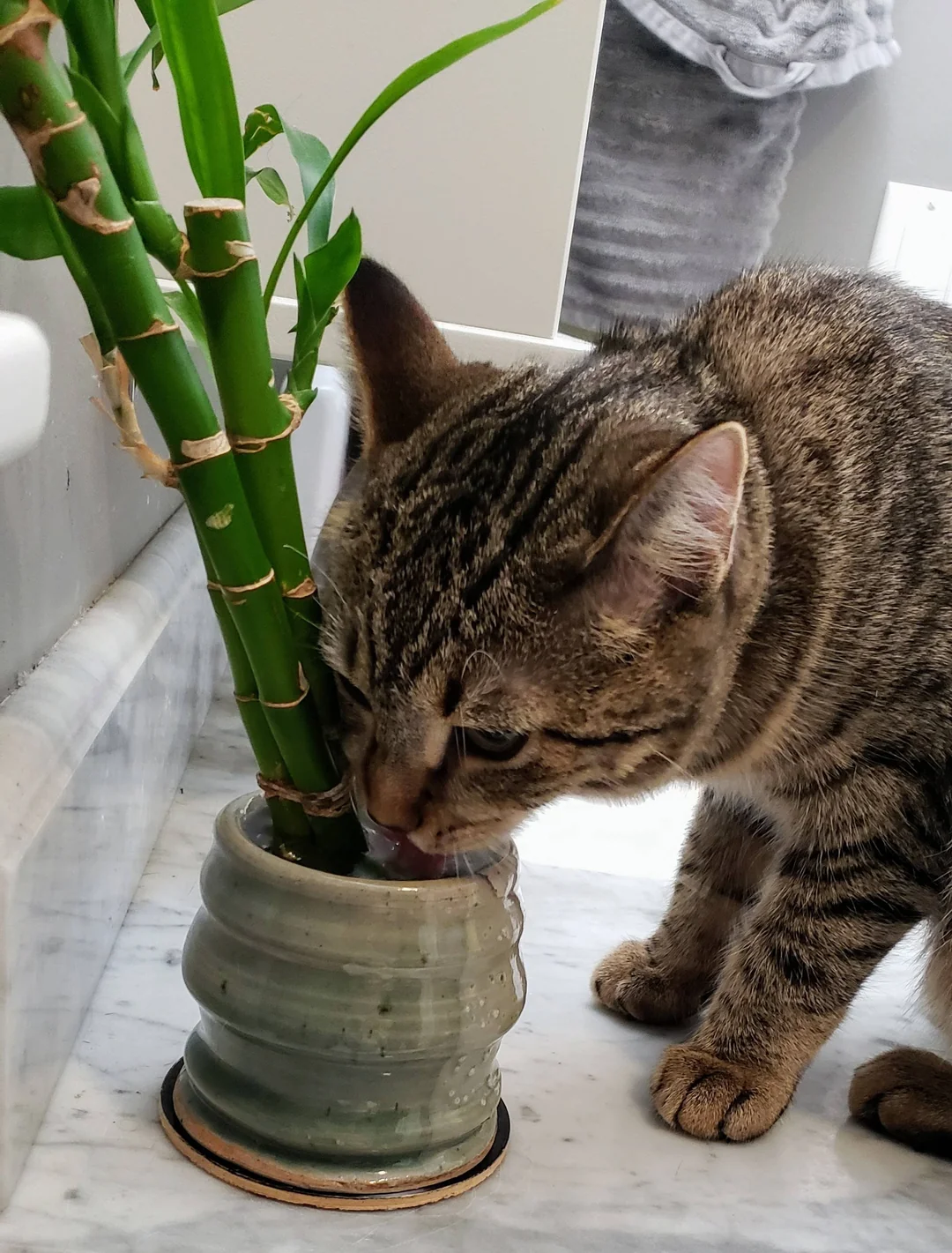
If your cat is drinking plant water, be aware of potential health risks like exposure to chemicals and toxicity concerns. Cats are often attracted to plant water due to its stagnant appeal and unusual taste. To prevent issues, keep plant saucers out of reach, use pet-safe fertilizers, and clean saucers regularly. Monitor your cat’s behavior and ensure fresh water availability. Safety measures include strategic plant placement, selecting pet-safe products, and watching for changes like decreased appetite. By promoting hydration with multiple water bowls and fountains, you can keep your feline friend healthy and hydrated.
Risks of Cat Drinking Plant Water
Drinking water from plant saucers can potentially expose your beloved feline to harmful fertilizers and chemicals, posing serious risks to their health. Cats are curious creatures, and the allure of plant water may seem harmless, but the consequences can be severe. Even though immediate symptoms of ingesting plant water may not always be visible in cats, it is essential to remain vigilant. Monitoring your cat’s behavior after they have drunk plant water is crucial for early detection of any issues that may arise.
If you notice your cat drinking from plant saucers, it is advisable to contact a veterinarian promptly for advice on potential risks and preventive measures. Veterinarians can offer guidance on ways to mitigate the dangers associated with cats consuming plant water. Preventing access to plant saucers and opting for pet-safe fertilizers are effective strategies to reduce the risks of cats ingesting harmful substances. Your cat’s well-being is paramount, so taking proactive steps to safeguard them from these risks is key.
Common Reasons for Plant Water Attraction
Cats are often drawn to plant water due to its stagnant nature, unusual taste, or the presence of minerals. The water in plant saucers can be enticing to cats because of its different flavor profile compared to their regular water source. Additionally, the stagnant water may pique their curiosity as they naturally gravitate towards exploring their surroundings. However, it’s crucial to note that plant saucer water can harbor debris, fertilizer residue, and bacteria, posing potential health risks to cats.
To prevent this attraction, consider using pet-safe fertilizers to eliminate harmful chemicals in the plant water. Monitoring your cat’s behavior and limiting access to plant saucers are also effective prevention strategies. By taking these precautions, you can reduce the chances of your feline friend ingesting harmful substances and experiencing digestive issues, dehydration, or toxicity risks associated with drinking plant water. Stay vigilant and prioritize your cat’s well-being to ensure a safe environment free from potential hazards.
Potential Health Issues for Cats
When your cat consumes plant saucer water, it can lead to stomach discomfort and potential digestive issues. Keeping an eye out for symptoms like loose stools and monitoring their behavior closely is crucial to ensure their well-being. Remember to take preventive measures to avoid such health risks and provide a safe environment for your feline companion.
Health Risks From Plants
Ingesting water from plant saucers may pose potential health risks for your feline companions, leading to gastrointestinal irritation. When cats consume water from plant saucers, they might ingest debris or residues, causing temporary digestive issues such as loose stools. While many fertilizers, like Osmocote, become less toxic once diluted in water, the risk of irritation remains. It’s essential to note that cats may not immediately show symptoms after such incidents, making monitoring crucial. Observing your cat for any changes in behavior or signs of discomfort is vital post-exposure to plant saucer water to ensure early detection of any health issues. By staying vigilant and seeking prompt veterinary care if needed, you can help mitigate the potential risks associated with cats drinking water from plant saucers. Remember, your cat’s well-being is a top priority, so taking preventive measures and being proactive can make a significant difference in their health.
Symptoms to Watch
Watching for specific symptoms can help you identify potential health issues in your feline companion who may have ingested water from plant saucers. If your cat has drunk water from plant saucers, be vigilant for signs such as vomiting, diarrhea, drooling, lethargy, or loss of appetite. These symptoms could indicate gastrointestinal upset or other health problems. Additionally, increased thirst, unexplained weight loss, or changes in behavior might point towards underlying health issues that need attention. Remember, some immediate symptoms may not be visible right away, making consistent monitoring crucial. Regularly scheduled vet check-ups can also aid in detecting any potential health concerns early on. By staying alert to these symptoms and seeking prompt veterinary care when needed, you can help ensure your cat’s well-being and prevent any complications arising from drinking plant water.
Preventive Care Measures
To safeguard your feline companion’s well-being, proactive preventive care measures are essential for addressing potential health issues associated with cats drinking plant water. Ensuring a safe environment and taking steps to prevent health risks can go a long way in keeping your cat healthy. Here are three key preventive care measures to consider:
- Regular Veterinary Check-ups: Schedule routine check-ups with your vet to monitor your cat’s overall health and catch any potential issues early on.
- Provide Fresh Water: Ensure your cat has access to clean, fresh water at all times to discourage them from seeking alternative sources like plant water.
- Cat-Friendly Plants: Select cat-safe plants for your home to minimize the risk of toxicity if your cat does decide to drink from them.
Toxicity Concerns With Plant Water
Be mindful of potential toxicity concerns associated with plant water, as it may contain harmful fertilizers that can cause gastrointestinal irritation in cats. These fertilizers are designed to help plants grow but can be harmful if ingested by pets. While immediate symptoms of ingesting plant water may not always be visible in cats, it’s essential to monitor your cat’s behavior closely after they have drunk from plant saucers.
If you suspect that your cat has ingested plant water containing harmful fertilizers, contact a veterinarian for guidance on potential risks and next steps. It’s crucial to act promptly to prevent any serious health issues from developing. To reduce the risk of toxicity in cats, consider implementing preventive measures such as keeping plant saucers out of reach and using pet-safe fertilizers for your plants. By taking these precautions, you can help safeguard your feline friend from potential harm associated with plant water toxicity.
Prevention Strategies and Tips
Wondering how you can protect your feline friend from potential harm associated with plant water toxicity? Here are some prevention strategies and tips to ensure your cat’s safety:
- Keep plant saucers out of reach: By placing plant saucers in elevated areas or using protective covers, you can prevent your cat from accessing potentially harmful water sources.
- Use pet-safe fertilizers: Opt for non-toxic fertilizers and natural remedies to reduce the risks of ingestion if your cat does come into contact with plant water.
- Regularly clean plant saucers: By cleaning plant saucers frequently, you can avoid stagnant water accumulation, reducing the chances of your cat getting sick from contaminated water.
Plant Water Alternatives for Cats
You can provide your cat with cat fountains or multiple clean water bowls as safe alternatives to plant water. Cat fountains offer running water that can attract cats and promote hydration, keeping them away from potentially harmful plant saucer water. By offering appealing water sources, you can help your feline friend stay hydrated and prevent any health issues related to drinking plant water.
Cat-Safe Water Sources
If your cat shows a preference for plant water, consider providing cat-safe alternatives to ensure proper hydration and health. Here are some options to encourage your feline friend to drink from suitable sources:
- Cat Water Bowls: Ensure you have clean, easily accessible water bowls placed in various locations around your home to encourage regular drinking.
- Running Water Sources: Cats are often drawn to running water, so consider investing in a cat fountain or leaving a faucet dripping slightly to pique their interest.
- Cat Fountains: Cat fountains mimic the appeal of fresh, flowing water, enticing cats to drink more and stay hydrated throughout the day.
Hydration Options for Felines
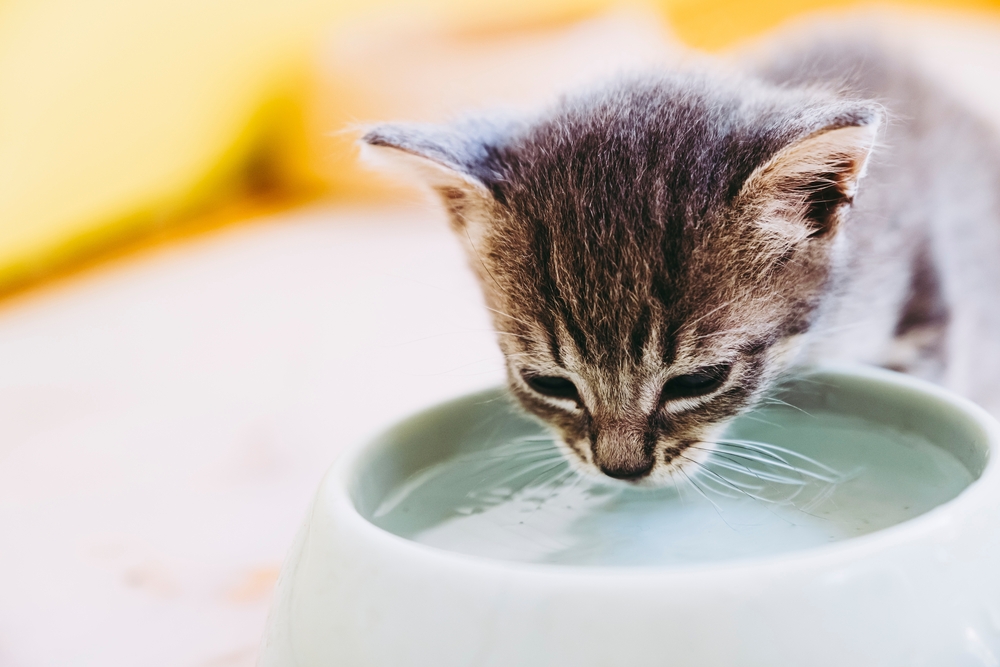
To cater to your cat’s hydration needs and encourage proper water intake, exploring plant water alternatives can provide beneficial options for feline health and well-being. Cat fountains are a great way to entice your cat to drink more water due to the flowing water mimicking a natural water source. Wet cat food is another excellent hydration option as it contains higher water content compared to dry food, supporting your cat’s overall water intake. Consider creating a cat-friendly water garden with safe plants like wheatgrass to engage your cat in drinking more water while adding a touch of nature to their environment. Additionally, placing multiple water bowls around your house can cater to your cat’s preference for diverse drinking sources, ensuring they have easy access to water wherever they are. Monitoring your cat’s drinking behavior is crucial as changes could indicate specific nutrient preferences or underlying health issues, emphasizing the importance of providing suitable hydration options.
Safety Measures for Houseplants
Implementing safety measures for houseplants is crucial to protect your feline companions from potential harm. To ensure the well-being of your cats around houseplants, consider the following preventive measures:
- Place houseplants strategically: Keep houseplants in areas that are inaccessible to your cats to prevent them from drinking water from plant saucers, which may contain harmful substances.
- Choose pet-safe products: Opt for pet-safe fertilizers and natural remedies for your houseplants to reduce the risk of toxicity to your furry friends.
- Maintain cleanliness: Regularly clean plant saucers to avoid stagnant water accumulation, as this can be a health hazard to cats if ingested.
Monitoring Cat’s Water Intake
When ensuring the well-being of your feline companions, one important aspect to consider is monitoring your cat’s water intake to maintain their hydration levels. Monitoring your cat’s water intake is crucial for their overall health. Keep a close eye on how much water your cat drinks daily, aiming for around 200 ml to ensure they stay hydrated. Any significant changes in their water consumption could indicate underlying health issues that may require veterinary attention. To effectively track your cat’s water intake, consider creating a water log or schedule. By monitoring their hydration levels closely, you can proactively address any issues that may arise and ensure your cat remains healthy and hydrated. Remember, staying vigilant about your cat’s water intake is a simple yet essential way to safeguard their well-being.
Behavioral Changes to Watch For
Watch for signs of gastrointestinal upset, such as vomiting or diarrhea, in your cat after consuming plant water. It’s essential to pay attention to any behavioral changes your cat may exhibit, as they can indicate a negative reaction to the plant saucer water. Look out for signs like lethargy, decreased appetite, or unusual drinking patterns, which might suggest that your cat is experiencing discomfort. Remember that immediate symptoms may not always be visible, so it’s crucial to observe your cat closely for any unusual behaviors.
Here are some key points to consider:
- Monitor your cat for any signs of gastrointestinal upset, such as vomiting or diarrhea.
- Pay attention to behavioral changes like lethargy, decreased appetite, or unusual drinking patterns.
- If you notice any concerning changes in your cat’s behavior after drinking from plant saucers, contact a veterinarian promptly.
Take proactive steps to prevent future incidents by keeping plant saucers out of reach and ensuring your plants are fertilized with pet-safe products. Your cat’s health and well-being should always be a top priority.
Promoting Cat Hydration at Home
To ensure your cat stays hydrated, consider placing water bowls in various locations around your home to cater to their drinking preferences. Additionally, interactive water sources like fountains or dripping faucets can entice your cat to drink more water. By providing these options, you can promote your cat’s hydration and overall well-being.
Water Bowl Placement
Placing water bowls away from your cat’s food areas can effectively encourage increased hydration levels throughout the day. Cats have a natural instinct to hunt for their food and water sources, so separating these areas can mimic their instinctual behavior and promote more frequent water intake. To further enhance your cat’s hydration habits, consider the following tips:
- Provide multiple water bowl options: Cats may have preferences for where they drink water, so offering choices in different locations around your home can cater to their individual tastes.
- Change water daily: Fresh water is more appealing to cats and can encourage them to drink more. Regularly changing the water in their bowls ensures cleanliness and a fresh water supply.
- Consider using water fountains: Some cats are attracted to running water sources, so a water fountain may pique their interest and encourage increased water consumption.
Interactive Water Sources
Consider offering your feline friend interactive water sources like cat fountains to promote hydration and cater to their preference for running water. Cats often show a preference for running water sources like sinks, faucets, and specifically designed cat fountains over stagnant water in bowls. These interactive options can stimulate your cat’s interest in drinking water, ultimately leading to better hydration.
Introducing multiple water sources, including cat fountains, at various locations in your home can cater to your cat’s desire for diverse drinking options. Cat fountains, in particular, can entice your cat to drink more water by providing a continuous flow that mimics the appeal of running water. To ensure your cat remains interested and hydrated, it’s essential to regularly clean and maintain these hydration sources, especially the cat fountain, to uphold water quality.