
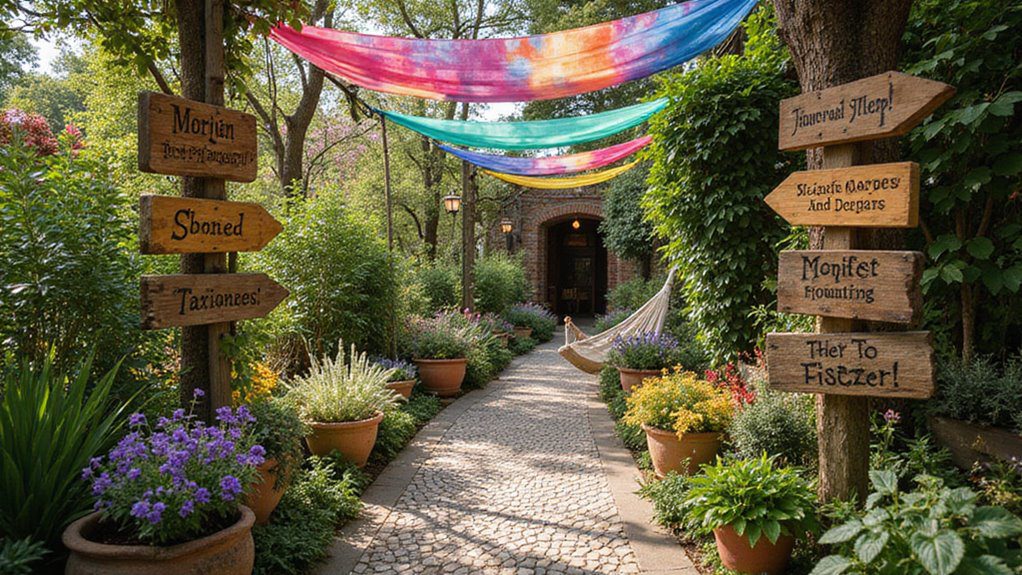
I’ve always found that a garden should feel like a personal sanctuary, a place where nature and creativity come alive. Hippie-inspired gardens offer a unique blend of vibrant wildflowers, cozy nooks, and earthy textures that invite you to slow down and connect. If you’re looking to transform your outdoor space into a colorful, relaxed haven with practical touches, these 13 ideas might just inspire your next project—and there’s more to explore beyond the basics.
Embrace Wildflower Meadows for Natural Beauty
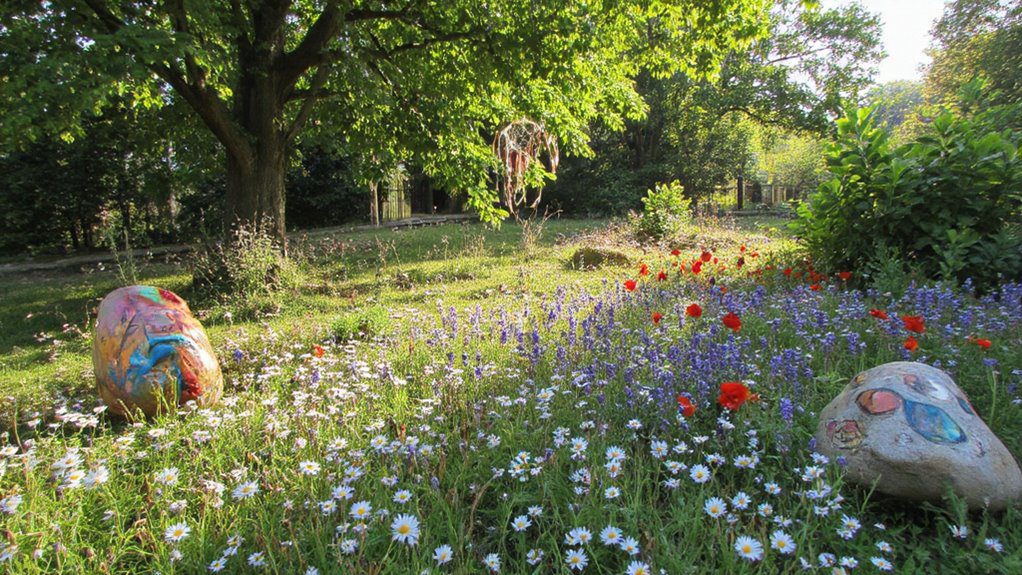
When you choose to embrace wildflower meadows in your garden, you invite a vibrant tapestry of colors and textures that change with the seasons, creating a natural beauty that’s both effortless and captivating.
These meadows support diverse species—from bees to butterflies—while improving soil stability and water absorption.
Selecting low-fertility soil and sowing in spring or autumn ensures thriving, sustainable growth year after year.
Create Cozy Nooks With Hammocks and Floor Cushions
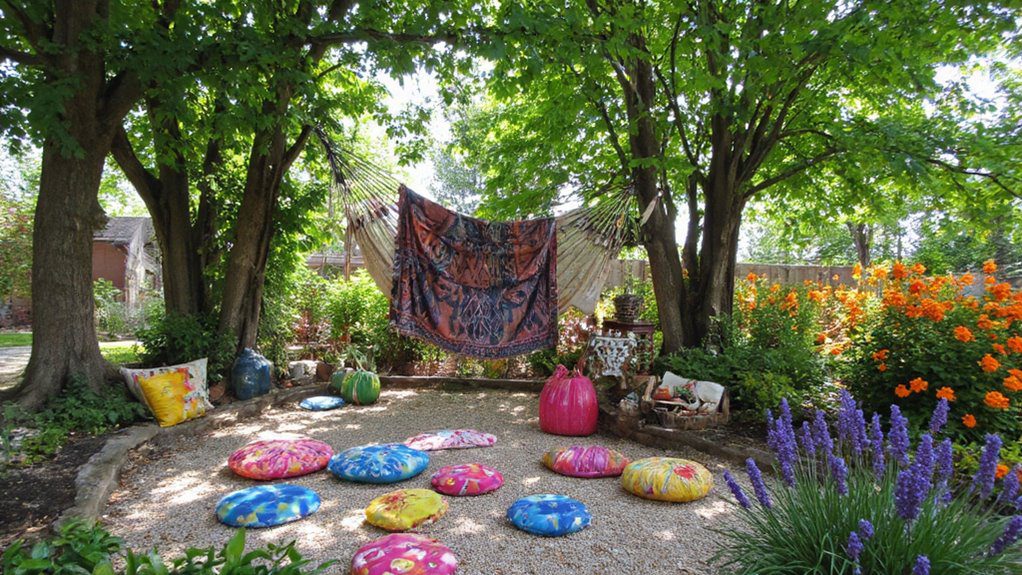
Although finding the perfect spot for a hammock requires some thought, I’ve discovered that balancing sun and shade near tranquil features like ponds or fountains creates an inviting retreat.
I choose durable, weatherproof hammocks secured to sturdy trees or pergolas, then surround the area with layered floor cushions in vibrant, outdoor fabrics and textures—creating a cozy, boho nook perfect for lounging or reading.
Incorporate Meditation Mazes and Winding Paths

Creating cozy nooks with hammocks and cushions sets the perfect mood for relaxation, but I’ve found that adding meditation mazes and winding paths brings a deeper sense of calm and reflection to a hippie garden.
Carefully designed labyrinths with smooth curves invite mindful walking, while materials like stones and herbs define paths. They transform the space into a tranquil journey, encouraging contemplation and connection with nature.
Use Vertical Gardens With Succulent Walls and Macramé Hangers

Since space is often limited in hippie gardens, I’ve found that vertical gardens combine beauty and function perfectly.
I build succulent walls with sturdy wooden frames lined for waterproofing, filling them with well-draining soil and colorful succulents.
Then, I hang individual pots in handmade macramé holders, adding textured knots and natural fibers that complement the boho vibe while saving space beautifully and practically.
Build Pergolas and Bamboo Screens With Fabric Drapes
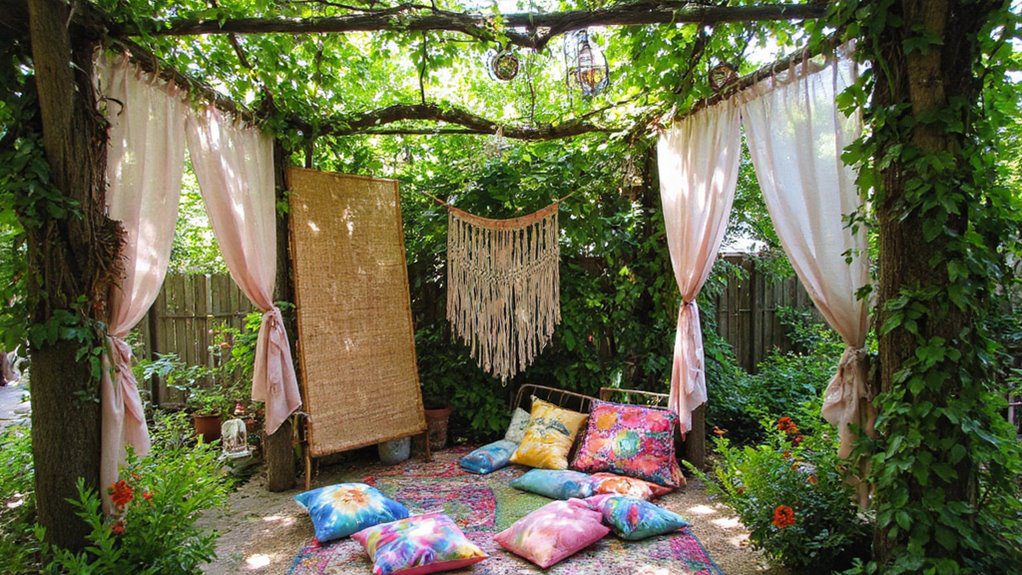
When I build pergolas and bamboo screens in my hippie garden, I focus on combining natural materials with soft fabric drapes to craft a serene, inviting retreat.
I anchor wooden posts securely, attach bamboo screening to sturdy frames, then hang sheer curtains on tension wires or rods.
Tiebacks keep fabrics in place, enhancing privacy and creating a cozy, cabana-like vibe perfect for relaxation.
Plant Aromatic Herbs Like Lavender, Patchouli, and Mint
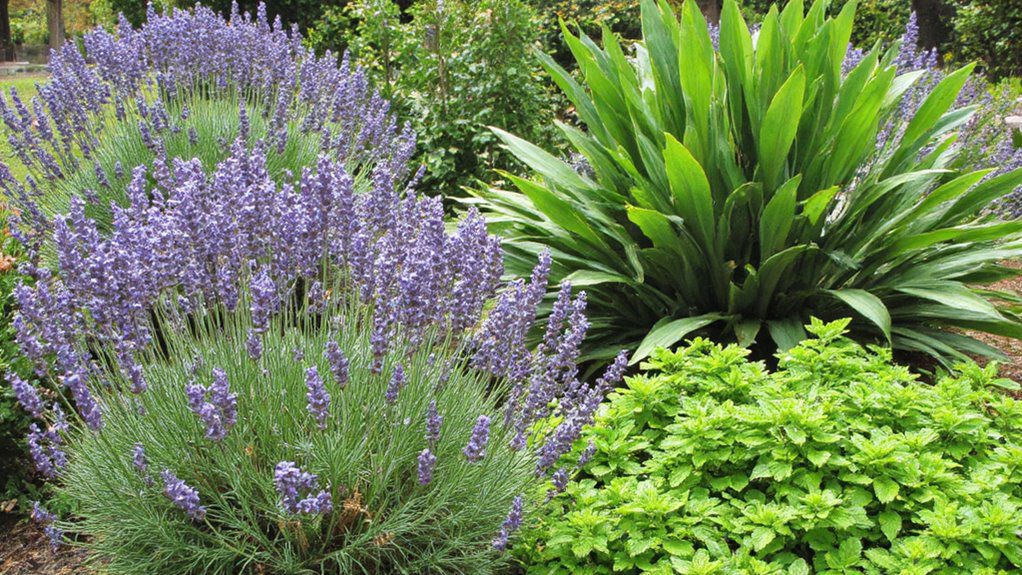
Aromatic herbs like lavender, patchouli, and mint form the fragrant foundation of my hippie garden, infusing the space with calming, uplifting scents that soothe the mind and spirit.
I plant lavender in sunny, alkaline soil, patchouli in warm, moist spots, and keep mint in containers to control its spread.
Regular pruning and mindful watering keep these aromatic treasures thriving.
Mix Edible Landscaping With Vegetables, Fruits, and Flowers
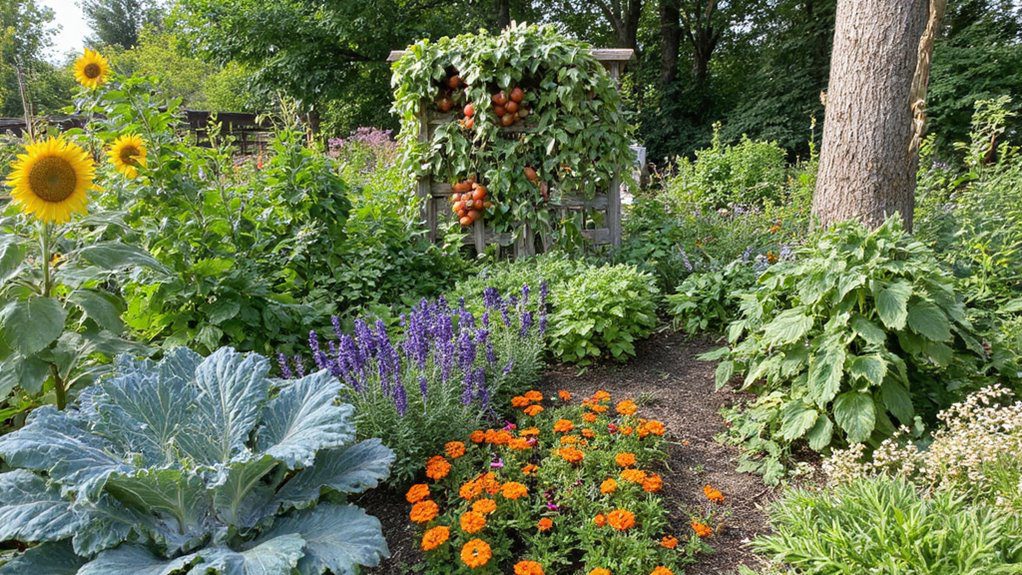
Blending vegetables, fruits, and flowers into your garden elevates both its beauty and productivity.
I arrange plants by light and water needs, using kale’s ruffled leaves or dwarf fruit trees for structure.
Companion planting attracts pollinators and deters pests naturally, reducing chemicals.
This mix maximizes space, offers year-round interest, and creates a vibrant, sustainable landscape that’s as practical as it’s stunning.
Add Vintage and Repurposed Decorative Elements
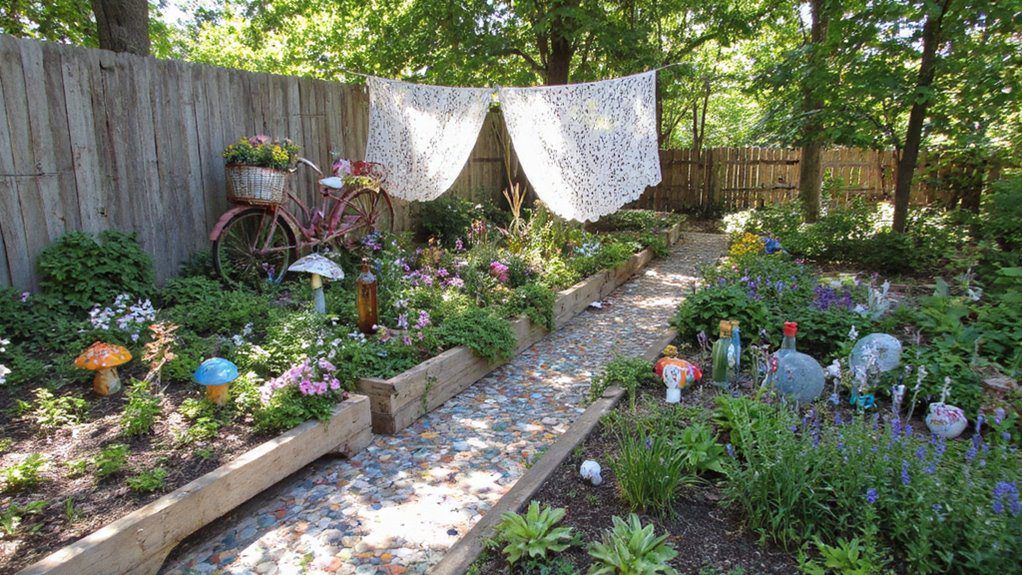
To complement the lively mix of vegetables, fruits, and flowers in your garden, I like incorporating vintage and repurposed decorative elements that add character and charm.
I use old bathtubs as raised beds, antique tools as accents, and weathered ladders for tiered plants.
Galvanized buckets become planters, while rusty gates serve as trellises, all blending practicality with nostalgic beauty.
Design Mosaic Paths and Painted Rock Art

When I plan my garden paths, I love creating mosaic designs that turn simple walkways into vibrant, artistic expressions.
I use broken tiles or colorful pebbles pressed into mortar on sturdy paving stones, then grout carefully for lasting beauty.
Painted rocks add charm—clean, smooth stones become garden markers or mandalas with acrylic paint, sealed for weather resistance, blending art seamlessly into nature.
Install Water Features Such as Bird Baths and Small Ponds

Although water features might seem like a big project, I find that installing bird baths and small ponds transforms a garden into a lively, soothing sanctuary.
I choose natural materials like stone bowls, place baths near shrubs for safety, and use rainwater in ponds with gravel slopes for wildlife access.
Regular maintenance keeps water fresh, inviting diverse birds and beneficial insects to thrive.
Use Colorful Textiles Including Rugs, Throws, and Tapestries

After adding water features that bring life and sound to your garden, I like to layer in colorful textiles to soften the space and inject vibrant personality.
Outdoor rugs define lounging areas with eclectic patterns, while weather-resistant throws and cushions add comfort and texture.
Hanging lightweight tapestries creates cozy nooks and privacy, making the garden feel like a vivid, inviting retreat.
Set up Ambient Lighting With Lanterns and String Lights
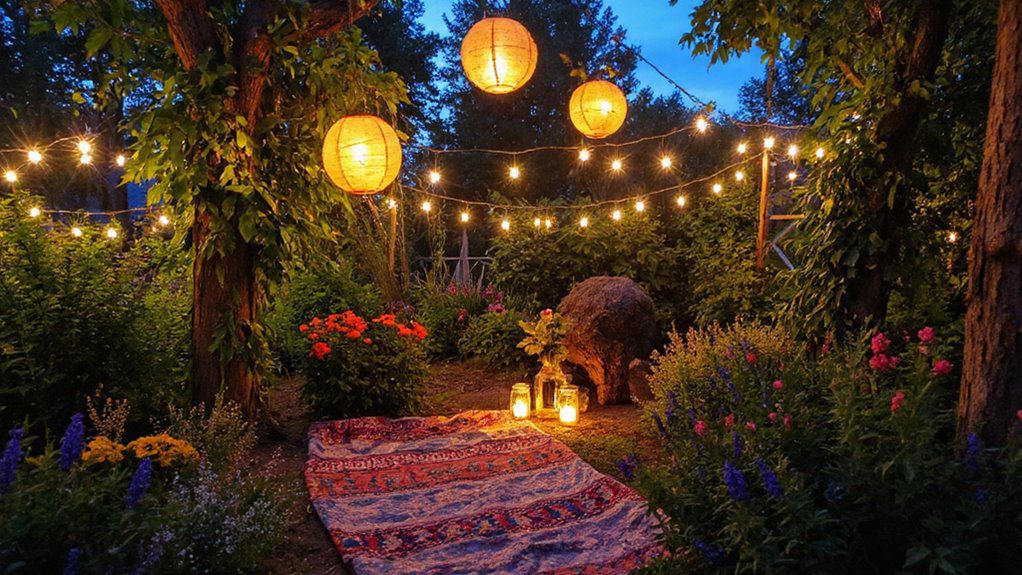
How can you transform your garden into a magical evening retreat?
I start by layering warm white string lights—fairy and globe bulbs—draped over pergolas and woven through branches.
Then, I add handcrafted lanterns made from bamboo and metal, placing some inside jars for a soft glow.
Using solar-powered LEDs ensures safety and eco-friendliness while creating cozy, inviting ambiance throughout the space.
Practice Sustainable Gardening With Composting and Rainwater Harvesting
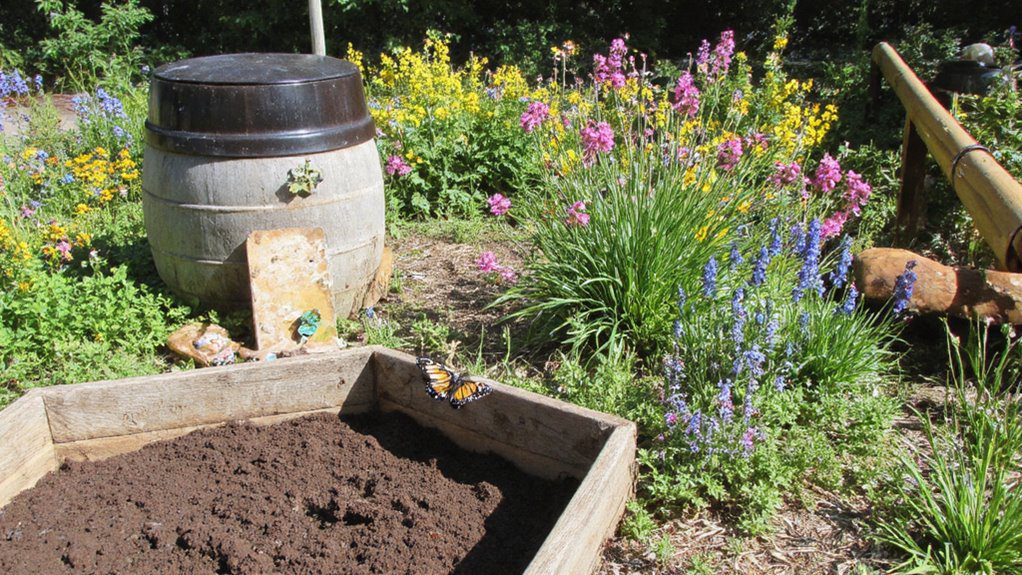
Two simple practices can transform your garden into a thriving, eco-friendly oasis: composting and rainwater harvesting.
I enrich my soil naturally with nutrient-rich compost, boosting water retention and inviting beneficial organisms.
Collecting rainwater reduces waste and nurtures plants with soft, chemical-free water.
Together, they create a sustainable, self-sufficient garden that’s both beautiful and environmentally responsible.