
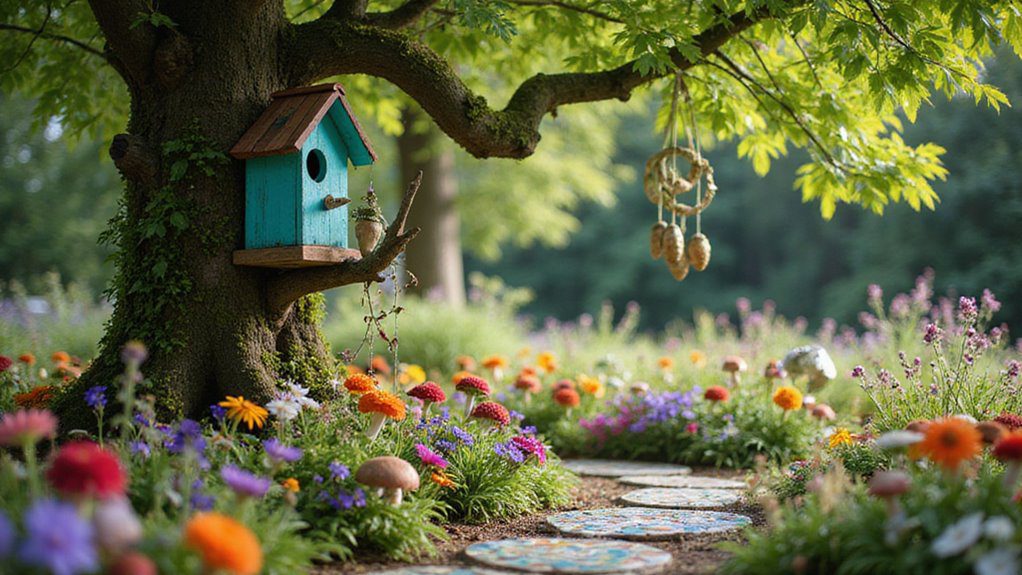
I’ve always believed a garden should be more than just plants—it should tell a story, spark curiosity, and invite a smile. That’s why I’m drawn to whimsical touches that transform ordinary spaces into something truly special. From repurposed teacups to glowing fairy lights tucked among foliage, these ideas blend creativity with practicality. If you’re looking to add personality and charm to your outdoor space, there are a few clever approaches worth considering.
Upcycled Teacup Planters for Succulents

Anyone who loves both gardening and charming décor will appreciate the unique appeal of upcycled teacup planters for succulents.
I source teacups from thrift stores or use inherited sets, favoring mismatched styles for character.
After thorough cleaning, I secure cups to saucers using strong adhesive, ensuring stability.
This foundation supports small succulents beautifully, combining elegance with practical plant care.
Vintage Ladder Trellises and Plant Stands

When I come across vintage wooden ladders that are no longer fit for climbing, I see them as perfect candidates for adding vertical charm to my garden.
I transform step ladders into tiered plant stands and lean extension ladders as trellises, supporting climbing vines and vegetables.
With simple modifications—adding shelves or wire mesh—they become striking, functional displays that blend rustic appeal with garden whimsy.
Painted Tire Tiered Planters
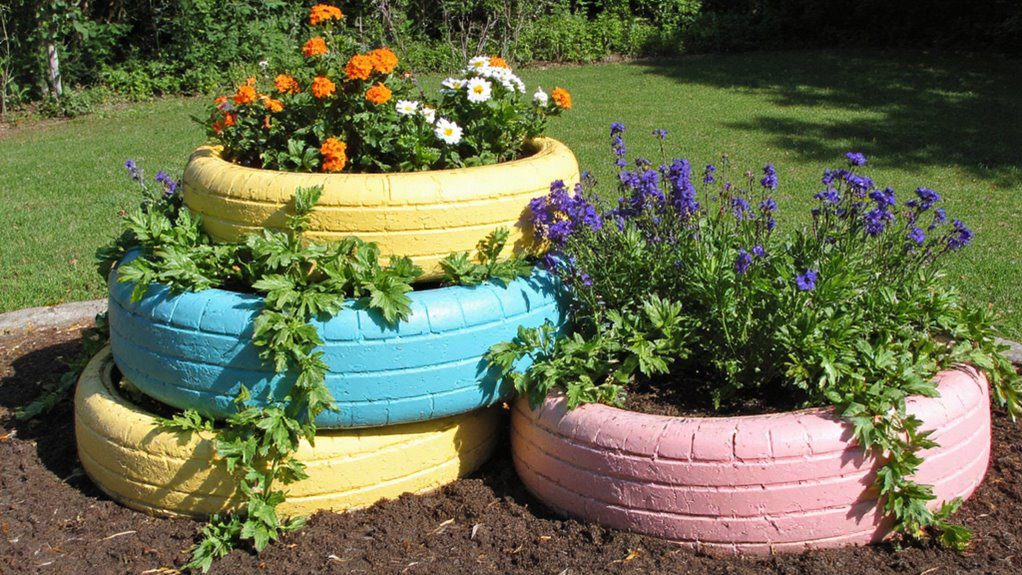
Beyond repurposing vintage ladders, I’ve found that old tires offer a unique, colorful way to add height and personality to garden beds.
After thorough cleaning and priming, I paint them in light, durable outdoor colors to reduce heat absorption.
Drilling drainage holes and stacking tires securely creates tiered planters perfect for heat-tolerant, non-edible plants, balancing whimsy with safety and environmental care.
Mosaic Pathways With Broken Pottery and Glass

Although creating mosaic pathways might seem daunting at first, I’ve found it to be a rewarding way to infuse garden paths with vibrant color and texture using broken pottery and glass.
I carefully break tesserae, set them in thin-set mortar on concrete pavers, then grout with outdoor sanded cement. The result is a durable, eco-friendly path that adds unique charm and lasting beauty to my garden.
Whimsical Planters From Unusual Containers

Since gardening offers endless opportunities for creativity, I love transforming everyday items into whimsical planters that add personality and charm to my outdoor space.
Old teapots, rain boots, or enamelware make delightful containers, each with unique drainage solutions.
I’ve even repurposed vintage drawers and galvanized buckets, combining function with rustic appeal to create captivating, unexpected planting vessels.
Creating Miniature Fairy Garden Scenes
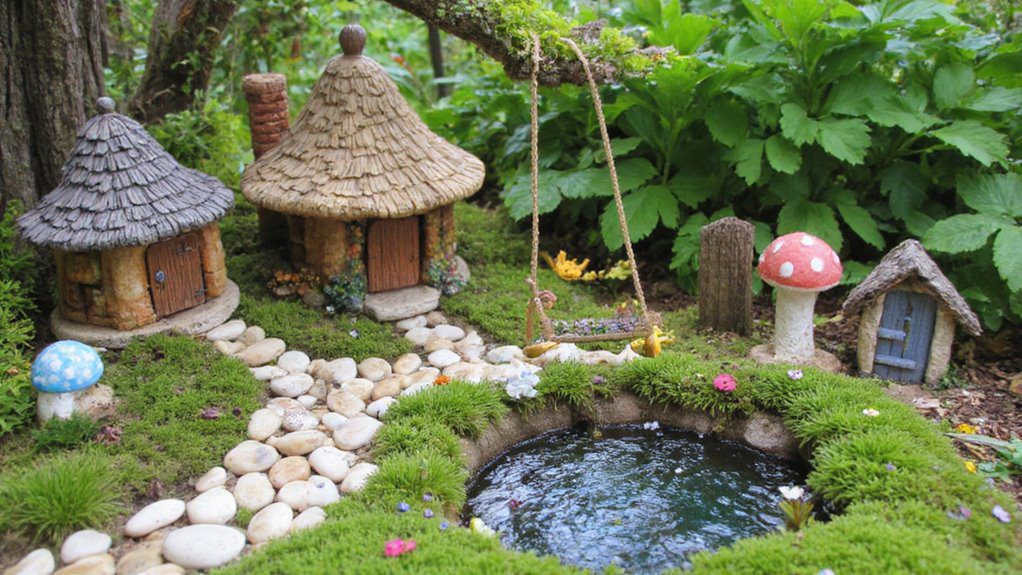
When I create miniature fairy garden scenes, I carefully plan the layout to bring a whimsical world to life on a small scale.
I map out “rooms” with multi-level pots, arrange dwarf plants and tiny pathways, then add miniature houses, furniture, and figurines.
Considering scale ensures harmony, while themed accessories amplify enchantment, turning my garden into a detailed, magical vignette.
Incorporating Natural Elements in Tiny Gardens

Bringing a fairy garden to life is more than just miniature houses and figurines—it’s about weaving natural elements into the design to create an immersive, living scene.
I love using vertical planters and trellises to maximize space, integrating stones for texture, and adding native plants for authenticity.
Combining wood and water features enriches both structure and vitality, enhancing every tiny corner.
Designing Playful Pathways With Pebbles and Wood Slices
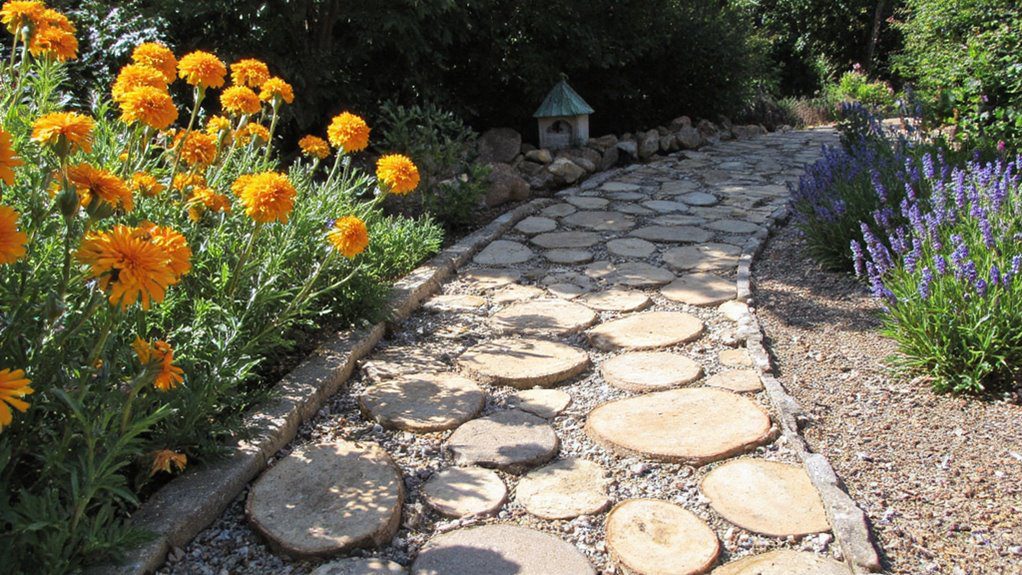
Although pathways might seem like simple connectors in your garden, I find they offer a wonderful opportunity to infuse whimsy and texture with pebbles and wood slices.
I choose cedar slices, sealed for durability, arranging varied sizes in playful patterns. Filling gaps with smooth pebbles ensures stability and drainage, while edging keeps everything neat.
This blend creates a charming, tactile journey through your garden space.
Assembling Garden Art From Found Objects
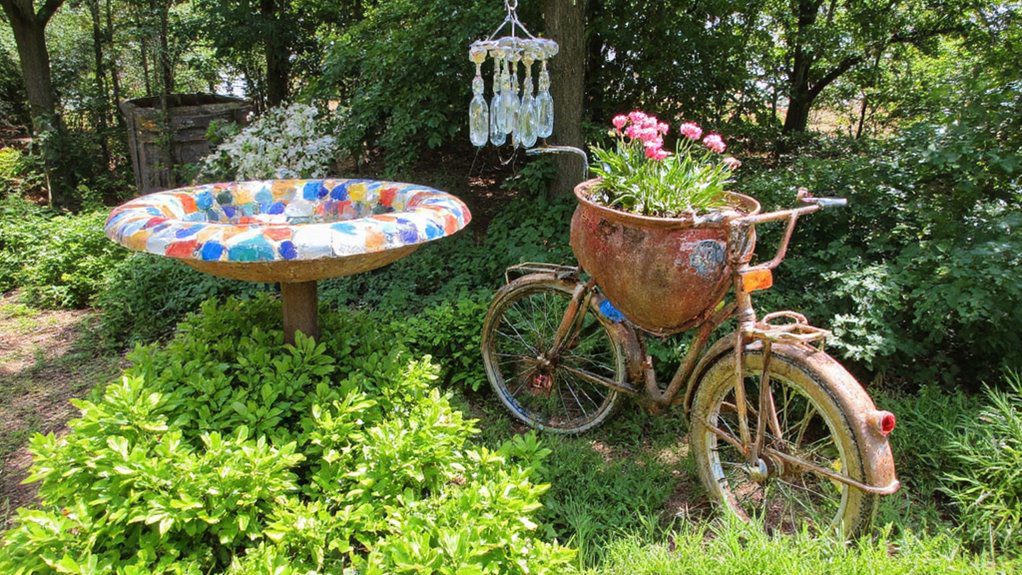
Since creativity thrives on resourcefulness, I often turn to found objects to craft unique garden art that tells a story.
I source weather-resistant materials like scrap metal, glass, and wood from salvage shops or around the house.
Combining them with screws, bolts, or strong adhesives, I experiment with arrangements to ensure durability and visual appeal before final assembly.
Crafting DIY Outdoor Sculptures
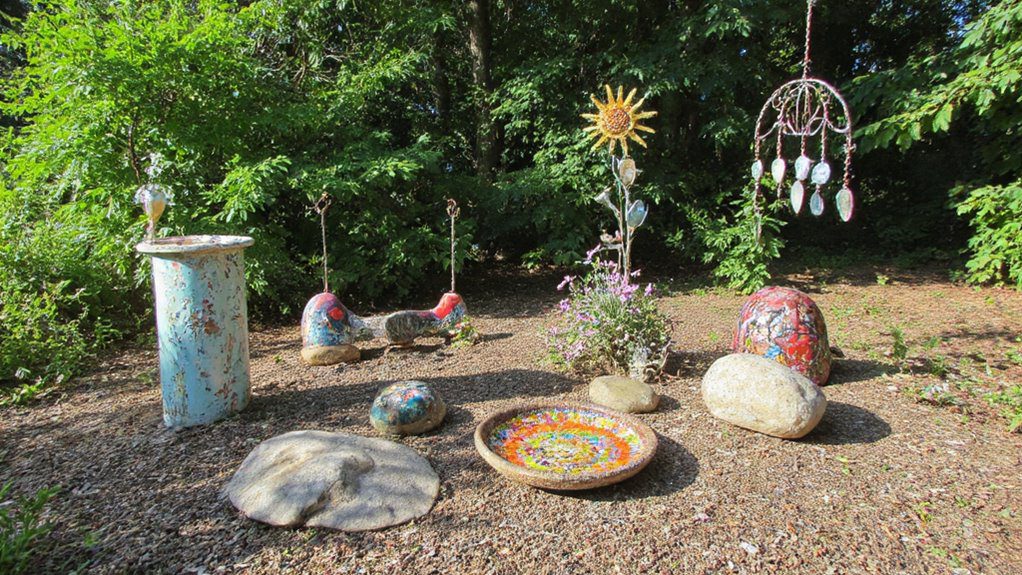
When I set out to craft DIY outdoor sculptures, I focus on selecting materials and techniques that withstand the elements while allowing creative expression.
I build sturdy wire armatures, then apply concrete mixes or papercrete for texture and form. Sealing and curing are essential for durability.
Layering and hand-shaping let me capture fine details, creating weatherproof, lasting garden art.
Vertical Gardens Using Pallets and Stacked Containers
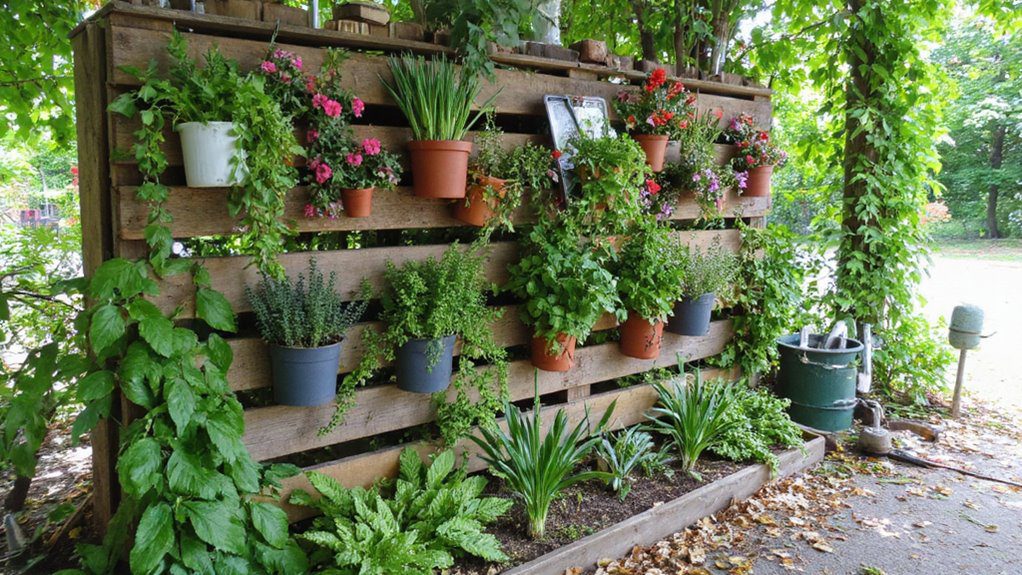
Crafting outdoor sculptures taught me the value of blending creativity with practical durability, a mindset that also guides my approach to vertical gardening.
Using heat-treated pallets, I create soil pockets lined with fabric, perfect for herbs and succulents.
Stacked containers, arranged by size and filled with varied plants, maximize space while ensuring stability.
Both methods save space, reduce weeds, and offer charming, accessible green walls.
Magical Lighting With String and Fairy Lights
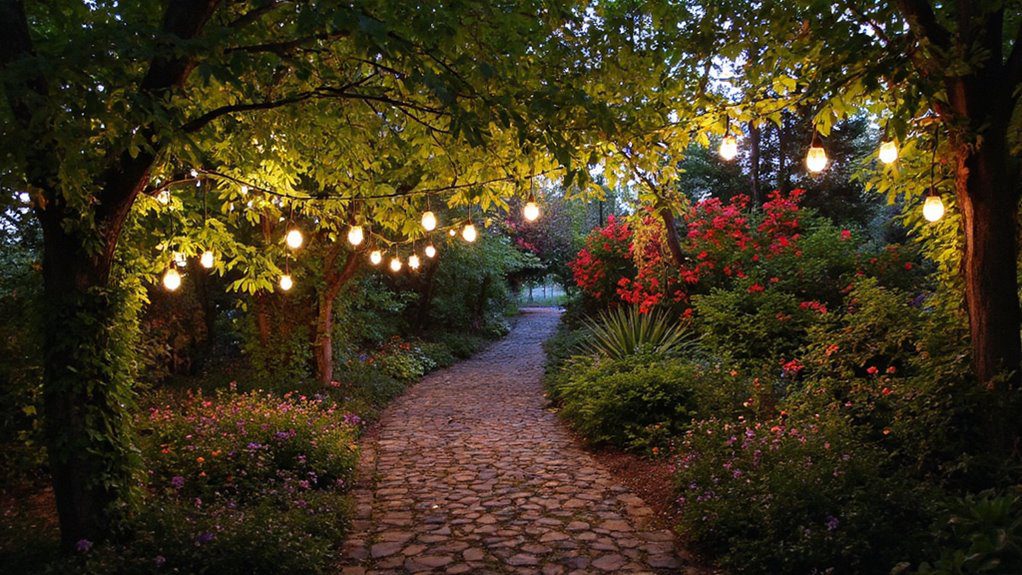
Although lighting can often be an afterthought in garden design, I’ve found that string and fairy lights transform outdoor spaces into magical retreats after dusk.
Draping them over pergolas or wrapping tree branches creates enchantment, while placing fairy lights inside Mason jars adds charm.
Choosing energy-efficient LEDs and ensuring outdoor-rated cords guarantees safety and lasting sparkle in every corner of your garden.
Winding Paths and Hidden Garden Retreats
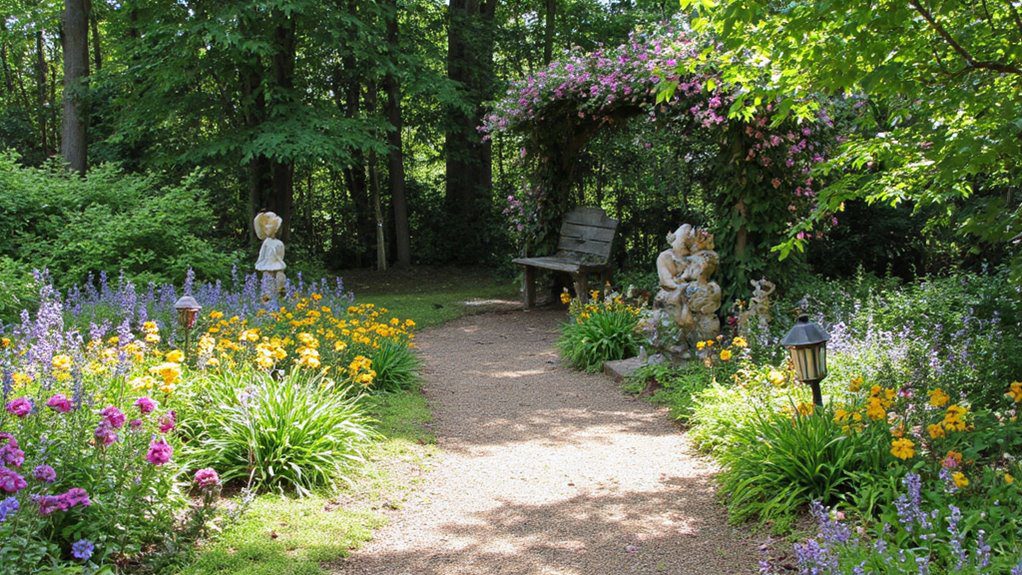
Lighting sets the mood, but winding paths invite you to explore deeper into your garden’s secrets.
I design curved paths using natural stone or stepping stones, weaving them around trees and beds to create mystery and soften hardscape edges.
Hidden retreats emerge behind arbors and dense planting, where secluded benches offer tranquil escapes framed by layered screens, inviting quiet reflection and whimsical discovery.