

When I design outdoor spaces, I focus on balance between structure and natural beauty. Whether it’s a formal garden with precise geometry or a modern minimalist landscape with clean lines, each idea shapes how you experience your garden. I’ve found that combining elements like vertical gardening or edible plants not only enhances aesthetics but also functionality. There are subtle techniques that can transform your garden beyond the usual—techniques worth considering carefully.
Formal Garden Layouts for Elegant Spaces
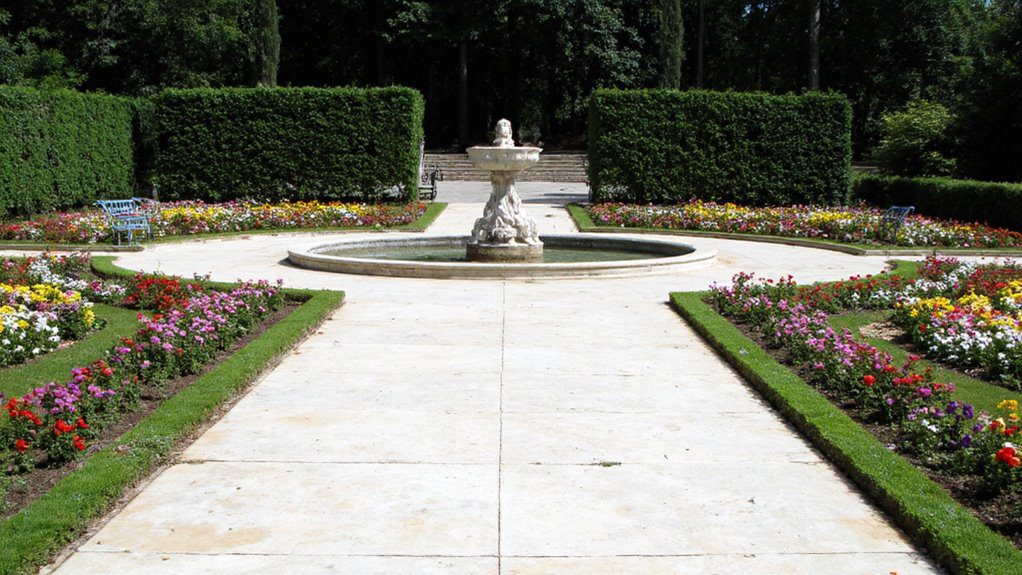
Although creating a formal garden demands meticulous planning, I find its emphasis on symmetry, clear structure, and geometric precision incredibly rewarding.
I design using axial layouts, geometric beds like parterres, and green walls to enclose spaces. Straight pathways create visual axes, while repetition of shapes ensures cohesion.
This approach conveys elegance and sophistication, especially when viewed from terraces or windows.
Creating a Relaxed Cottage Garden Atmosphere
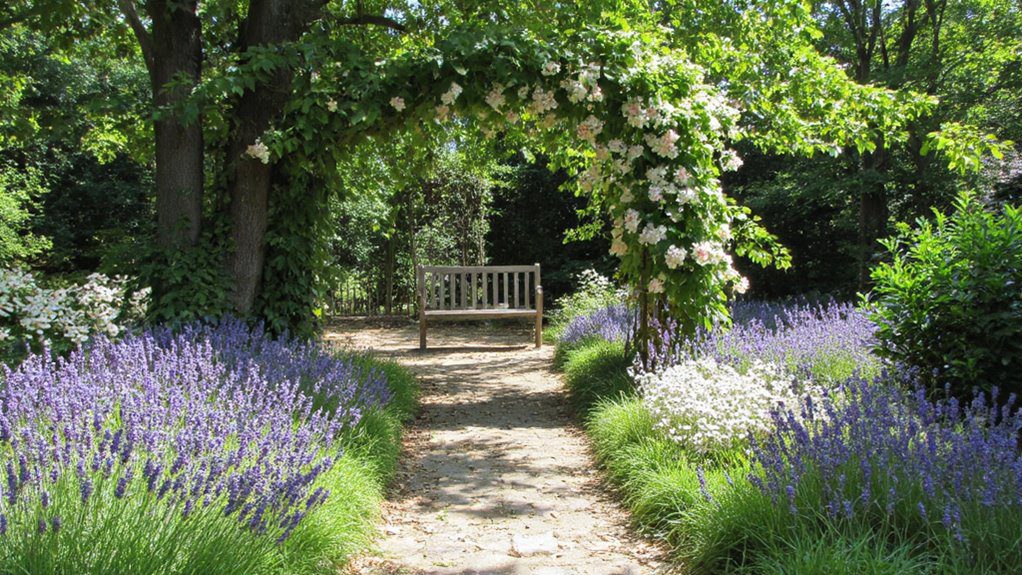
Moving from the structured elegance of formal gardens, I embrace a more relaxed approach when creating a cottage garden atmosphere.
I favor winding brick paths, dense layering of fragrant roses, lavender, and climbing clematis, and rustic wooden arbors.
Mixing pastel flowers with edible herbs, I craft cozy nooks surrounded by natural textures, promoting a charming, effortless, and wildlife-friendly retreat.
Designing a Modern Minimalist Landscape

When I design a modern minimalist landscape, I focus on the principle that less is more, stripping away unnecessary elements to highlight simplicity and functionality.
I use clean lines, geometric shapes, and neutral palettes. Materials like concrete and wood unify spaces, while low-maintenance plants with architectural forms create balance.
Negative space enhances tranquility, emphasizing harmony and sustainable elegance throughout the design.
Embracing Naturalistic and Prairie Styles
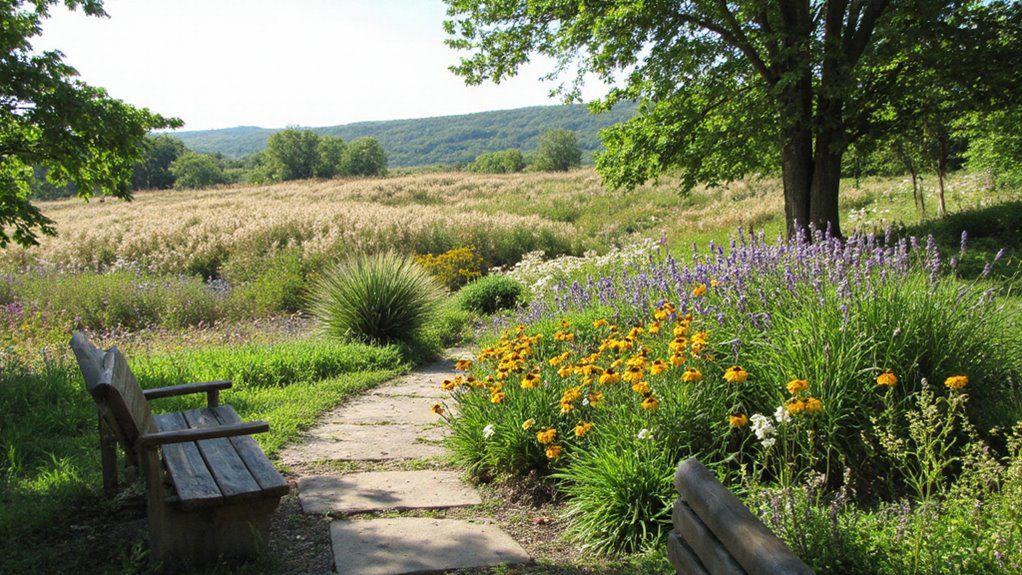
Since I aim to create landscapes that resonate with their natural surroundings, embracing naturalistic and prairie styles offers a compelling approach grounded in ecological function and biodiversity.
I prioritize native grasses like Little Bluestem, layered with flowering forbs, arranging plants in drifts for a seamless, open feel. This method enhances soil health, supports pollinators, and ensures year-round visual interest with minimal maintenance.
Incorporating Vertical Gardening Techniques
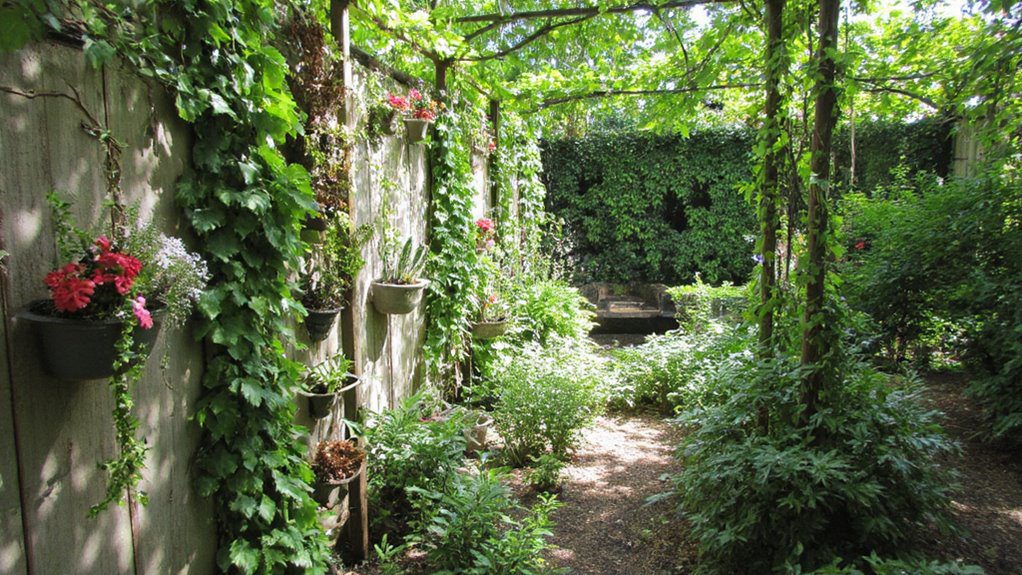
Vertical gardening transforms limited spaces into lush, productive environments by utilizing walls, fences, and other vertical surfaces to grow a variety of plants.
I employ modular green walls, trellises, and pocket planters to maximize space, selecting sun-loving herbs and shade-tolerant ferns accordingly.
Repurposed pallets and hanging baskets add aesthetic and functional layers, enhancing airflow and reducing disease risks while optimizing plant health and yield.
Using Native Plants for Sustainable Gardens

Although native plants often go unnoticed, I’ve found they form the backbone of truly sustainable gardens by supporting local biodiversity and ecosystem functions.
Their deep roots stabilize soil, enhance water retention, and reduce irrigation needs.
Native species promote complex food webs, support pollinators, and improve soil health through nutrient cycling—creating resilient, eco-friendly landscapes that conserve resources and bolster urban ecosystems.
Low-Maintenance Plant Choices for Busy Gardeners
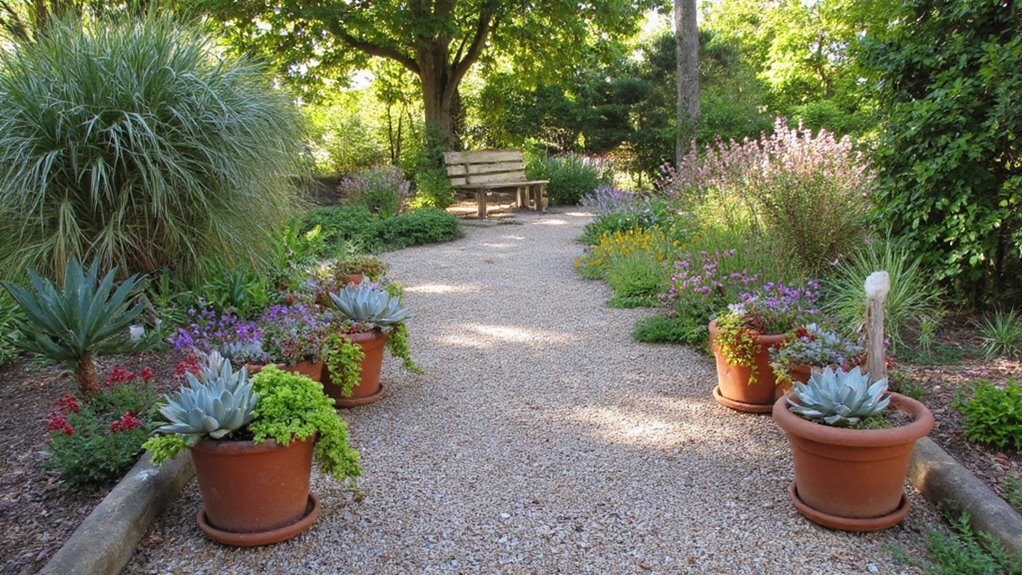
When your schedule leaves little time for garden upkeep, choosing low-maintenance plants can transform your outdoor space into a vibrant, thriving retreat with minimal effort.
I rely on drought-tolerant succulents like Sedum, hardy shrubs such as Boxwood, long-blooming perennials like Echinacea, and easy-care groundcovers like Ajuga.
These selections ensure year-round structure, color, and texture while minimizing water, pruning, and replanting needs.
Enhancing Small Gardens With Container Planting
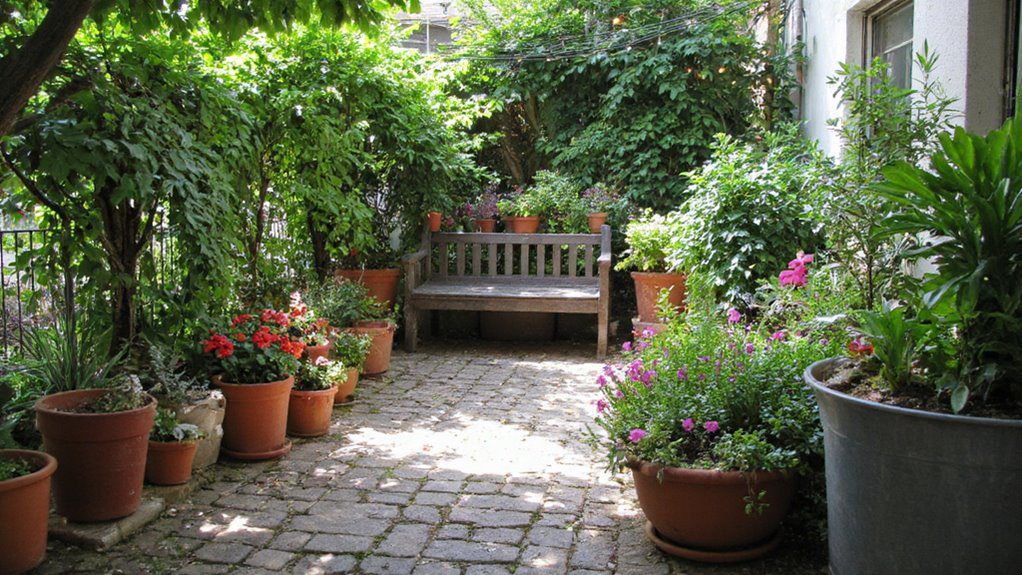
Expanding your garden’s appeal doesn’t always require more ground space; container planting offers a precise way to amplify greenery in compact areas.
I select containers by material and size, ensuring proper drainage and root room. Vertical systems and tiered stands optimize space, while the “thriller, filler, spiller” approach balances form and function.
High-quality potting mix and strategic placement enhance growth and aesthetic impact.
Water-Wise Landscaping for Drought-Resilient Gardens
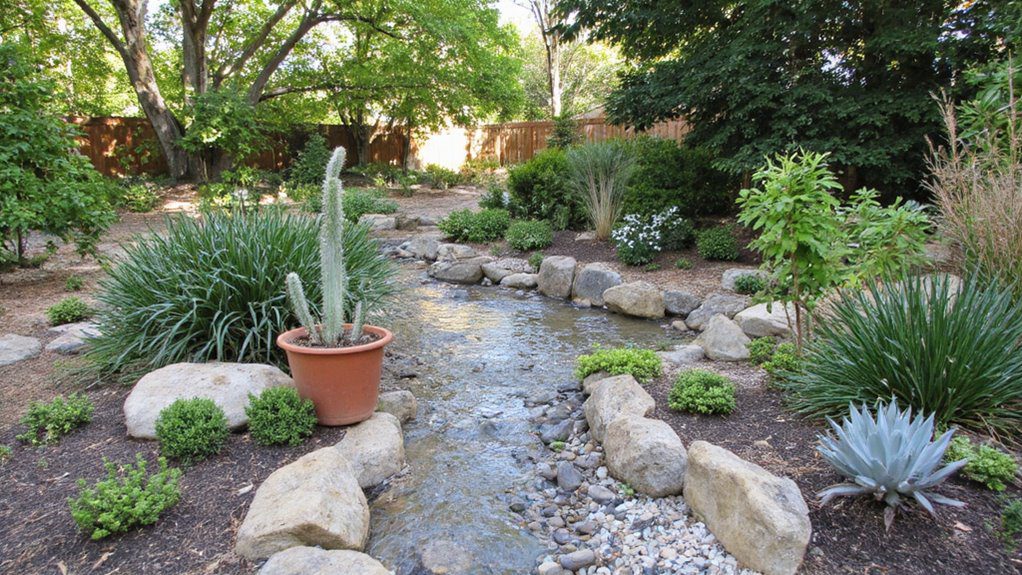
Since water scarcity challenges gardeners worldwide, adopting water-wise landscaping techniques has become essential for creating drought-resilient gardens.
I improve soil with organic matter to enhance water retention, group drought-tolerant natives using hydrozoning, and apply 2-4 inches of mulch to reduce evaporation.
Efficient drip irrigation, timed early mornings, promotes deep roots, while minimizing turf and incorporating permeable hardscaping conserves precious water effectively.
Adding Color and Texture to Your Garden Design
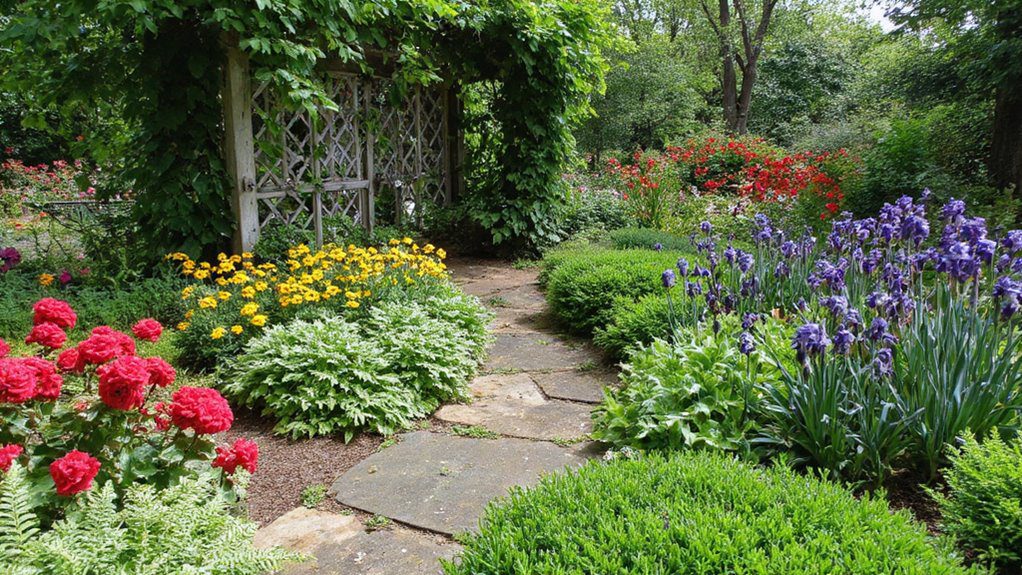
Although water-wise landscaping forms the foundation of a resilient garden, adding deliberate color and texture elevates the design into a compelling sensory experience.
I strategically blend warm and cool hues using color theory, layering diverse foliage tones—burgundy, chartreuse, silver—and contrasting textures like fine ferns with coarse hostas.
Incorporating colorful containers and textured bark further enriches visual complexity without overwhelming the composition.
Utilizing Hardscaping to Reduce Lawn Areas
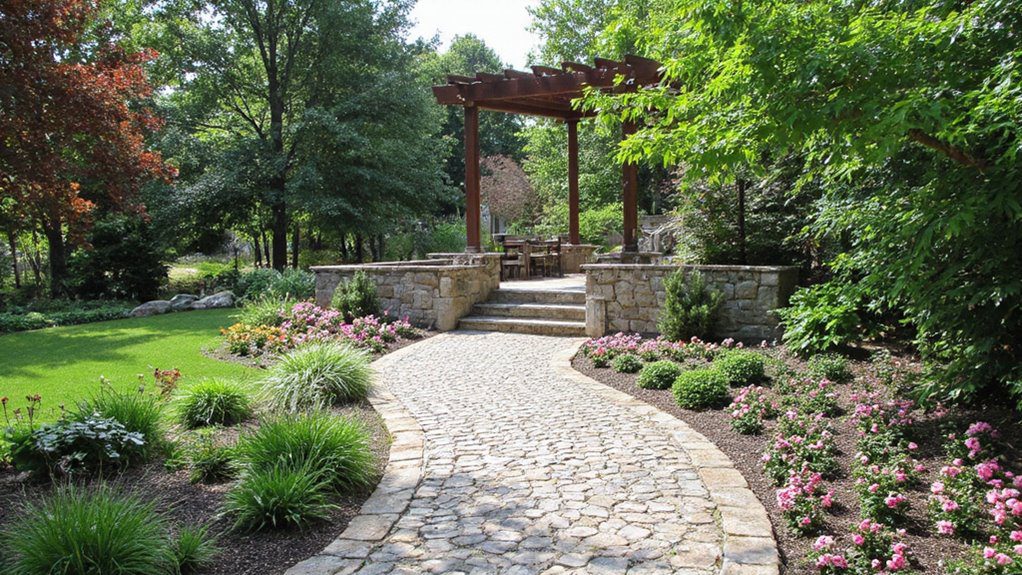
While vibrant plants add life and texture to a garden, balancing greenery with hardscape elements can greatly enhance both form and function.
I recommend reducing lawn areas by incorporating patios, walkways, and retaining walls using durable materials like stone or permeable pavers.
This approach conserves water, lowers maintenance, and creates defined, multi-functional spaces that elevate aesthetics and property value effectively.
Designing Edible Gardens With Aesthetic Appeal
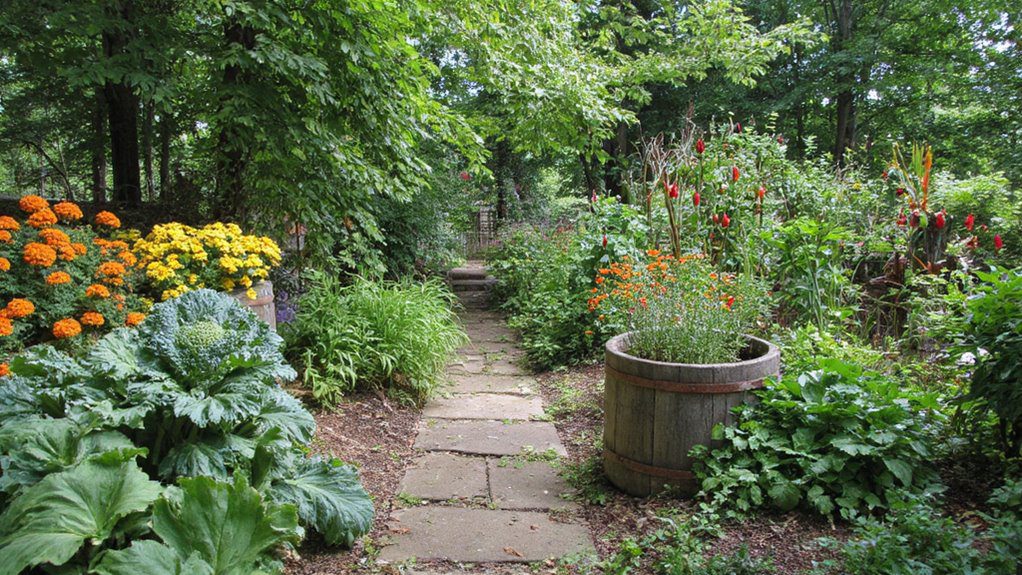
When you blend edible plants seamlessly into your garden’s design, you unlock a harmonious balance of beauty and productivity that elevates the entire landscape.
I select vibrant varieties like ‘Bright Lights’ Swiss chard and espalier fruit trees, layering textures and colors.
Strategic placement, vertical supports, and companion planting ensure aesthetic appeal while maximizing yield and seasonal interest throughout the space.
Crafting Personalized Garden Spaces With Unique Features

Since every garden reflects its creator, crafting personalized spaces with unique features transforms ordinary landscapes into intimate retreats.
I integrate structural elements like pergolas for definition, use vertical trellises to maximize space, and add water features for tranquility.
Carefully chosen colors, textures, and bespoke decor—like upcycled planters or custom stones—enhance sensory appeal and manifest my garden’s distinct personality.