

When planning a vegetable garden, the layout you choose can make all the difference in productivity and ease of maintenance. I’ve found that selecting the right design depends on your space, soil, and how you want to work with your plants. From raised beds to vertical structures, each option offers unique benefits. Before you settle on a plan, consider these 13 distinct layouts that could transform how you grow your vegetables.
Raised Bed Garden Layout

When planning a raised bed garden layout, I always start by carefully selecting the site to ensure it gets at least six hours of direct sunlight daily and has easy access to water.
I avoid low, wet areas to guarantee good drainage, choose a level spot near the house for convenience, and prefer a south-facing location away from structures to maximize sunlight exposure.
Square Foot Gardening Design

Although traditional row gardening works well for large spaces, I prefer Square Foot Gardening (SFG) because it maximizes yield in minimal space by dividing the garden into manageable 1-foot squares.
Using a 4×4 raised bed and Mel’s Mix soil, I organize crops by size and spacing within a grid, ensuring efficient planting, reduced weeding, and simpler maintenance for a productive, compact garden.
Traditional Row Garden Setup

Square Foot Gardening offers a compact, efficient way to grow in limited space, but for larger plots, I often turn to the traditional row garden setup.
It requires thorough soil prep and north-south row orientation to maximize sun exposure. I space plants closely within rows, maintaining wide paths for easy access, cultivation, and adequate air circulation, which helps prevent disease and supports large crops.
Container Garden Arrangement
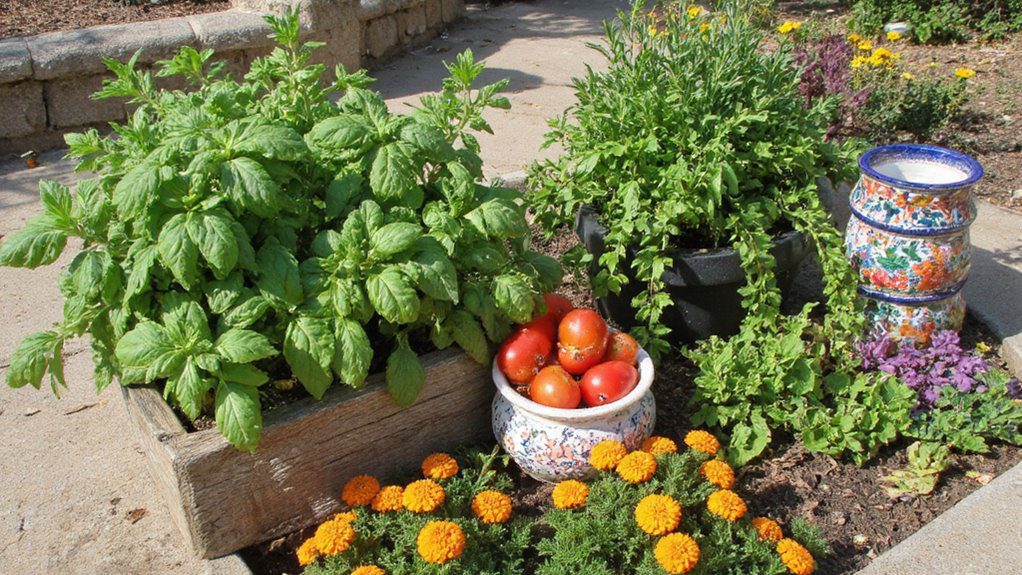
Since space often limits traditional gardening methods, container gardens offer a versatile solution that adapts to almost any environment, from balconies to patios.
I group pots by size and height to create focal points, using lightweight containers for mobility. Mixing vegetables, herbs, and flowers enhances growth and aesthetics.
Positioning containers near access points simplifies care, while tiered stands optimize limited space efficiently.
Vertical Gardening Structure
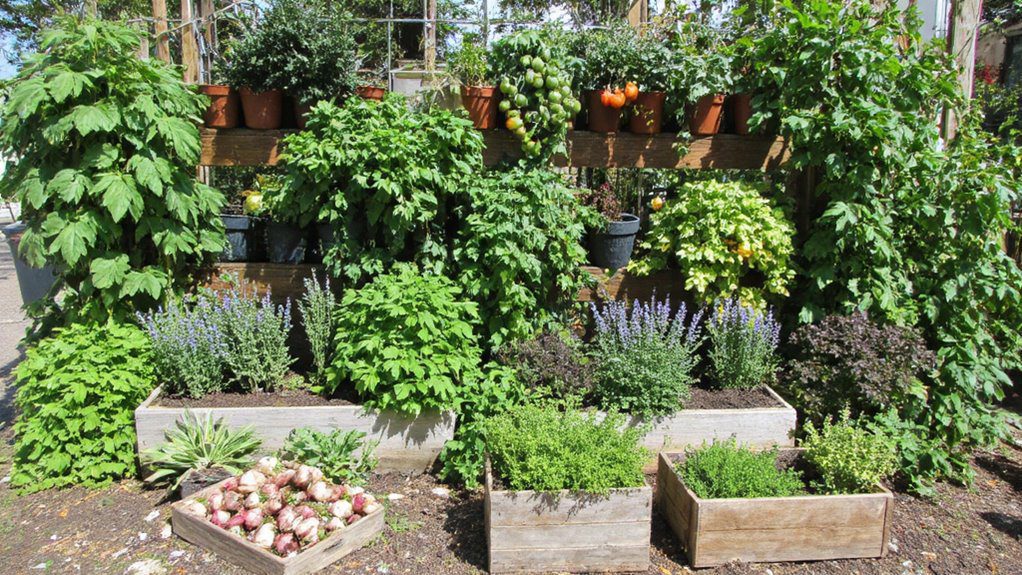
Container gardening has taught me how valuable vertical space can be when horizontal area runs short.
Vertical gardening structures—like green walls, trellises, freestanding towers, or DIY pocket planters—maximize space, improve air circulation, and reduce pests.
Choosing sturdy materials and appropriate plants, such as pole beans or herbs, ensures healthy growth.
These structures boost yield and accessibility, making small gardens remarkably productive and efficient.
Border Garden Layout

When you want to make the most of narrow or overlooked spaces, a border garden layout offers a smart and attractive solution.
Placing beds along fences or driveways maximizes limited space while preserving lawn areas. I recommend edging for clear boundaries and arranging tall plants at the back, smaller ones upfront.
This layout integrates seamlessly, prevents weed encroachment, and suits beginners perfectly.
Twin Raised Bed Configuration
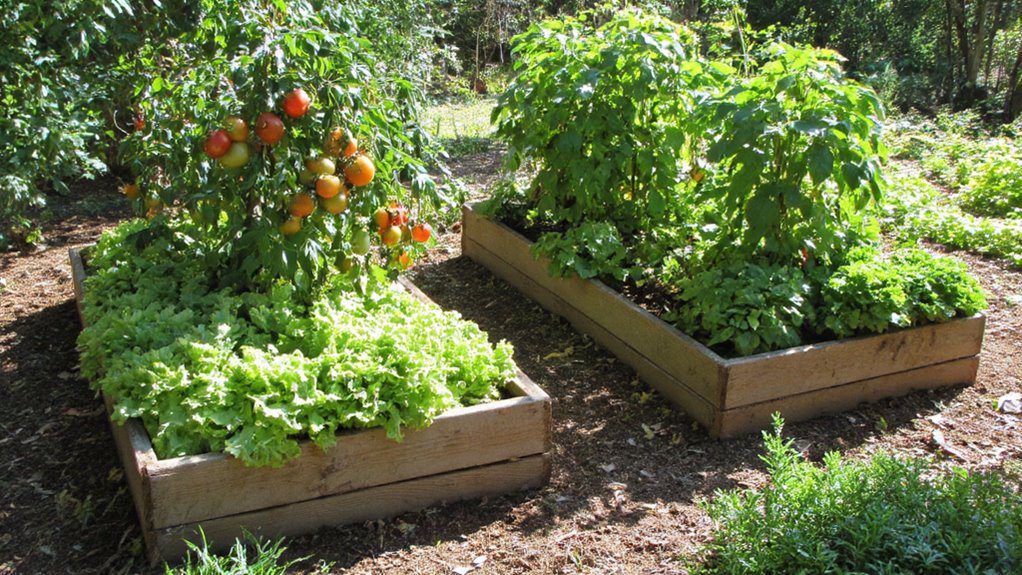
Moving from border gardens that make the most of narrow spaces, twin raised bed configurations offer a structured and balanced option for larger yards.
I recommend two identical beds, 3-4 feet wide, placed parallel with a 2-3 foot path between.
Adding arch trellises maximizes vertical space.
This setup improves accessibility, drainage, and pest control while creating a visually pleasing, symmetrical garden space.
Trio Raised Bed Design
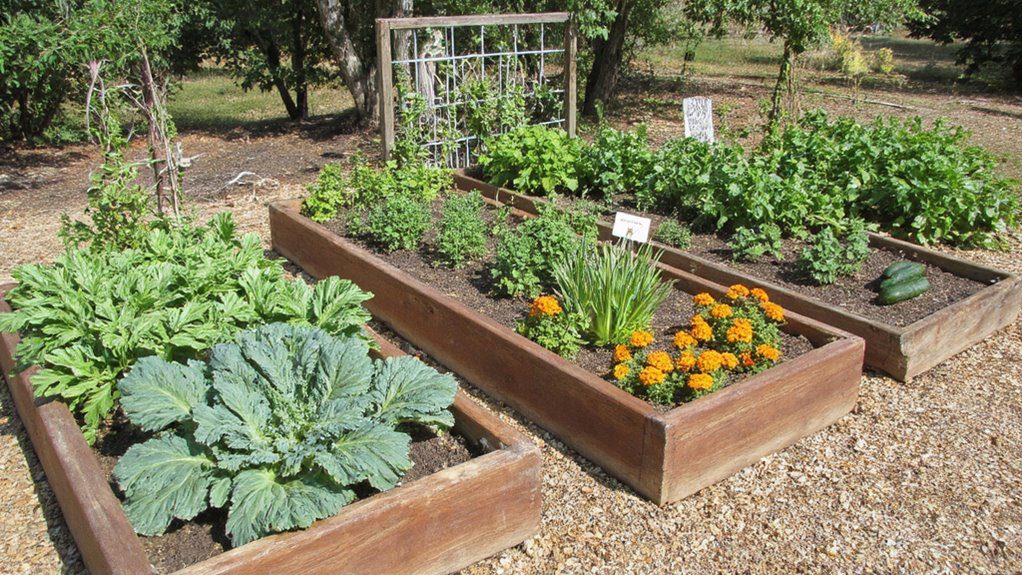
A trio of raised beds offers a versatile and efficient way to maximize your garden space, especially in long, narrow yards or curved areas.
Arrange beds linearly or circularly with 2+ feet between for access. Use widths up to 5 feet if reachable from all sides.
Incorporate trellises for vertical growth, enhancing space and visual appeal while supporting vining plants like beans and cucumbers.
Four-Garden Classic Layout

Although many garden layouts exist, I find the Four-Garden Classic Layout stands out for its symmetry and efficiency.
It uses four equal beds arranged in a grid with intersecting paths, optimizing access and crop rotation. Ideal for a 15×15-foot space, this design supports diverse planting groups, reduces pest issues, and simplifies maintenance with clear, accessible pathways.
Four-Square Garden Plan

The Four-Square Garden Plan divides your growing space into four distinct beds, separated by intersecting paths that meet at the center.
This layout simplifies crop rotation, improves soil health, and aids pest control. Paths offer easy access, while grouping similar plants per square optimizes growth.
Enclosures and optional central focal points enhance structure, making it practical and organized for any vegetable gardener.
Formal Potager Garden Design

Five centuries of tradition inform the formal potager garden design, which masterfully combines food production with ornamental elegance.
I focus on symmetrical, geometric beds framed by low hedges and defined paths. Raised beds and vertical trellises add structure, while a central focal point anchors the space.
Mixing edibles with flowers ensures year-round beauty and productivity in a contained, orderly layout.
Mixed Layout Combining Raised Beds and Vertical Gardening
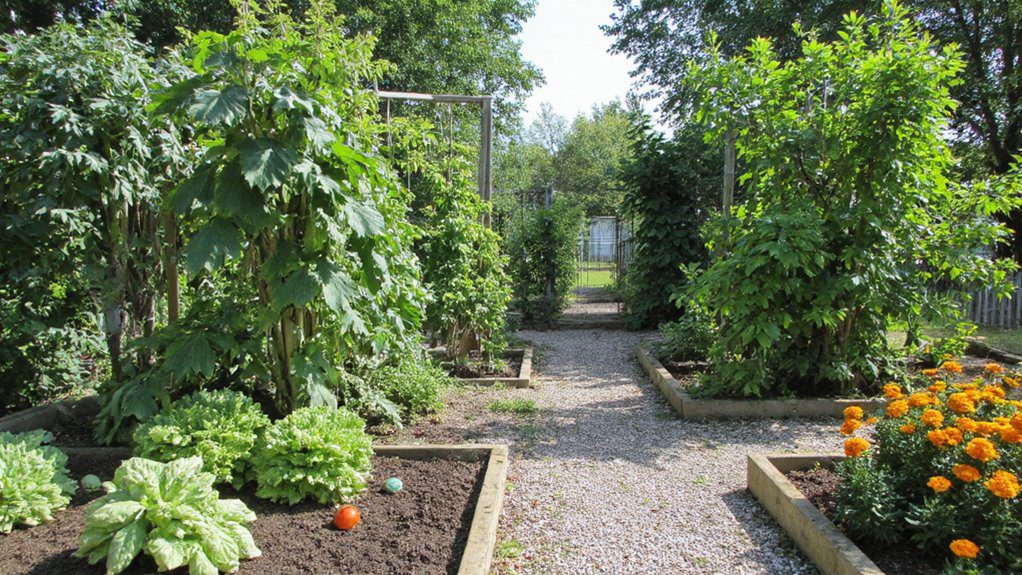
Building on the structured elegance of a formal potager, I find that combining raised beds with vertical gardening transforms any space into a powerhouse of productivity and design.
Integrating trellises with raised beds maximizes space, improves air circulation, and eases maintenance. Positioning climbers strategically prevents shading.
Using quality soil and durable materials ensures plant health and long-lasting structure, boosting yields efficiently.
Accessible Garden Layout for Limited Mobility

Although designing an accessible garden requires careful planning, it’s entirely possible to create a beautiful, productive space that welcomes gardeners with limited mobility.
I focus on wide, stable paths with gentle curves, raised beds at 24-36 inches for easy reach, and integrated seating for rest.
Adding handrails, smooth transitions, and sensory landmarks enhances safety and navigation, ensuring an inclusive, enjoyable gardening experience.