

You just moved in, your neighbors are 20 feet away, and you can see directly into each other’s kitchens. Fences help, but they max out at 6 feet in most municipalities. Trees grow taller, block more, and add value to your property. The trick is choosing species that grow fast now but won’t become maintenance nightmares later. Here are the best options ranked by growth speed, with honest pros and cons.
Thuja Green Giant Arborvitae

Growth rate: 3–5 feet per year. Mature height: 40–60 feet. Zones 5–9. This is the most recommended privacy tree by landscapers for good reason—it’s fast, dense, evergreen, and low-maintenance. Once established, Green Giants form a solid wall of dark green foliage that blocks views year-round. Space them 5–6 feet apart for a continuous screen within 3–4 years. They’re resistant to deer, drought-tolerant once established, and rarely troubled by pests. The main drawback: they get very tall. If you need a shorter screen, choose ‘Emerald Green’ arborvitae instead (12–15 feet mature).
Leyland Cypress
Growth rate: 3–4 feet per year. Mature height: 40–60 feet. Zones 6–10. Leyland cypress grows into a dense, feathery wall of blue-green foliage. It’s salt-tolerant (good for coastal yards) and handles heat well. Space 6–8 feet apart. The honest downside: Leylands are susceptible to Seiridium canker and bagworms in humid climates. They also have shallow root systems that can topple in ice storms. Best suited for the Southeast and coastal areas where arborvitae struggles with heat.
Nellie Stevens Holly

Growth rate: 2–3 feet per year. Mature height: 15–25 feet. Zones 6–9. If you want privacy with a bonus, Nellie Stevens produces red berries in winter that attract birds. The glossy dark-green foliage is evergreen and dense enough to block views completely. It tolerates shade better than most privacy trees, making it ideal for north-facing property lines. Space 5–6 feet apart. It’s also one of the few privacy options that doesn’t need full sun.
Eastern Red Cedar

Growth rate: 2–3 feet per year. Mature height: 30–40 feet. Zones 2–9. A native juniper (not actually a cedar) that thrives in poor soil, drought, wind, and cold. It’s the toughest privacy tree on this list. Eastern red cedar grows in conditions where other trees fail—rocky soil, exposed hillsides, clay hardpan. The trade-off is slower growth than Thuja or Leyland, but it requires virtually zero maintenance once established. Blue-gray berries feed birds all winter.
Clumping Bamboo
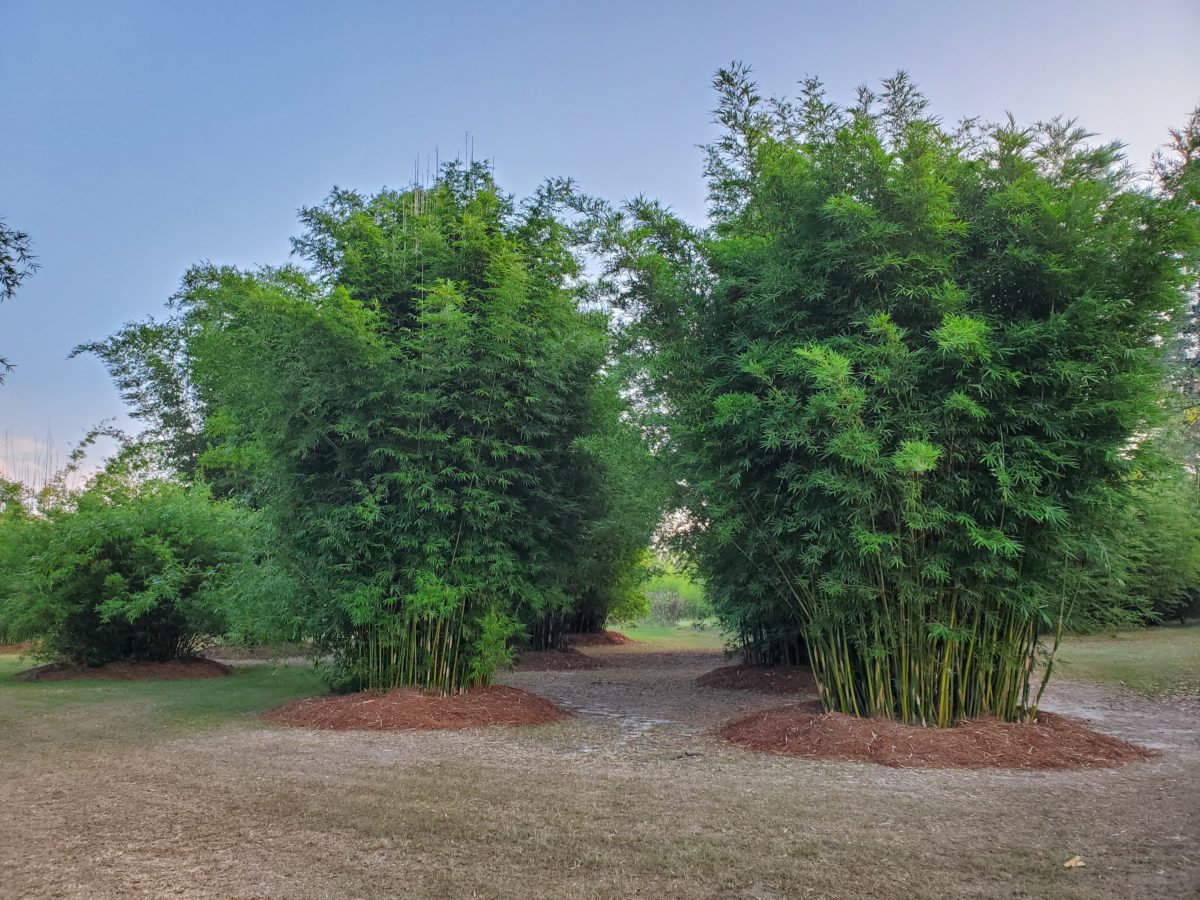
Growth rate: 3–5 feet per year (some species faster). Mature height: 15–30 feet depending on species. Zones 5–10 (varies by species). Clumping bamboo creates an exotic, dense privacy screen quickly. Unlike running bamboo (which is invasive and spreads aggressively), clumping types like Bambusa multiplex or Fargesia stay in a tight footprint. They’re excellent for narrow side yards where a tree canopy would be too wide. Important: always verify you’re buying clumping, not running bamboo. Running bamboo can spread 15+ feet per year underground and is almost impossible to eradicate once established.
Hybrid Poplar
:max_bytes(150000):strip_icc()/6734182241_45f92ac341_k-c04a90f4b0c64bf58bcfe2ac65c81cd0.jpg)
Growth rate: 5–8 feet per year. Mature height: 40–50 feet. Zones 3–8. The fastest conventional tree on this list. Hybrid poplars grow so fast you can watch them change week to week. However, speed comes at a cost—they’re brittle (branches break in storms), short-lived (20–30 years), and their aggressive roots can invade sewer lines and foundations. Use them as a temporary screen while slower, better trees (oaks, maples) mature behind them. Plant them at least 30 feet from structures and utility lines.
Tall Ornamental Grasses as Fast Screens

Not trees, but worth mentioning: tall ornamental grasses like Miscanthus giganteus (12–14 feet), ‘Karl Foerster’ feather reed grass (5–6 feet), or switchgrass (6–8 feet) create privacy screens in a single growing season from division. They die back in winter (no year-round screening unless you leave the dried stalks standing), but they grow from bare ground to full height every spring. Perfect for renters, seasonal screening, or fast privacy while young trees grow.
Spacing and Planting Tips
- Stagger your rows: For a thick screen faster, plant in a double staggered row (zigzag pattern) with trees offset. This fills gaps within 2 years instead of 4.
- Don’t plant on the property line: Set trees 3–4 feet inside your property line so branches don’t cross onto your neighbor’s side (which they can legally trim).
- Water heavily the first year: Fast growth depends on consistent moisture. Water deeply twice a week for the first growing season. A soaker hose on a timer makes this effortless.
- Mulch 3 inches deep: A ring of mulch 3–4 feet wide around each tree retains moisture and suppresses grass that competes for water and nutrients.
- Don’t top your trees: Topping (cutting the leader) ruins the tree’s form and stimulates weak, bushy regrowth. If you need a shorter tree, choose a shorter species from the start.