

Owls exhibit varying leg lengths among species. The Eurasian Eagle-owl possesses the longest legs, measuring up to 15 inches, highlighting the diversity in owl leg sizes. These legs serve multiple functions in hunting and flight, with adaptations tailored for silent, swift, and precise movements. The structure of owl legs, such as long shins and zygodactyl toes, aid in efficient prey capture and navigation. Notably, the Great Horned Owl’s long legs provide a strategic advantage in hunting. If you explore further, you will learn about the intricate adaptations and significance of owl legs in their survival and thriving in diverse habitats.
Owl Leg Anatomy

How are owl legs anatomically structured to support their hunting and flight capabilities? Owl legs, despite appearing long due to feather coverage, are actually well-adapted for power and prey capture. The feathered legs of owls serve multiple purposes, not only concealing their true length but also aiding in keeping the birds warm during night hunting activities. These legs play a vital role in the silent flight capabilities of owls, contributing to their stealth while hunting. The structure of owl legs is crucial for their efficient hunting techniques, allowing them to grasp prey with precision and power. The anatomy of owl legs showcases a remarkable adaptation to their predatory lifestyle, emphasizing strength and agility in both hunting and flight. Through their specialized leg structure, owls have honed their abilities to become effective and silent nocturnal hunters.
Owl Leg Length Comparison

Owls exhibit varying leg lengths across different species, with some displaying longer legs relative to their body size. For instance, the Eurasian Eagle-owl boasts the longest legs among owls, measuring up to 15 inches (38 centimeters). Conversely, owls dwelling in forests tend to have shorter legs, a trait that aids in maneuverability within dense vegetation during hunting. The length of owl legs is a critical factor influencing their hunting strategies and overall survival in their respective habitats. These adaptations are tailored to meet the specific demands of their environments and prey. Notably, the ratios of leg length in owls vary significantly based on factors such as the type of habitat they inhabit, their hunting techniques, and the adaptations they have developed over time. Understanding the nuances of owl leg length provides valuable insights into the intricate relationship between form and function in these fascinating birds of prey.
Functions of Owl Legs
The functions of owl legs encompass a specialized design tailored for efficient hunting and perching activities. Owls have long, thin legs that play a crucial role in their survival adaptations. These thin legs aid in weight distribution, allowing for balanced flight and facilitating precise hunting maneuvers. The leg structure of owls is meticulously designed to support their hunting prowess, with short thighs and tucked-in knees providing stability during perching and long shins and ankles aiding in silent flight.
To further understand the functions of owl legs, let’s delve into the table below:
| Aspect | Function |
|---|---|
| Long, thin legs | Aid in weight distribution for balanced flight and efficient hunting |
| Short thighs | Provide stability during perching activities |
| Tucked-in knees | Enhance agility and maneuverability while hunting |
| Long shins and ankles | Facilitate silent flight, crucial for surprising prey |
The intricate design of owl legs underscores their role in the overall hunting and survival strategy of these majestic birds.

Owl Leg Adaptations
With a specialized design tailored for hunting and perching, owl legs exhibit remarkable adaptations that enhance their agility and hunting prowess. Great Horned Owls, for instance, have long legs that provide them with a strategic advantage when capturing prey. These long legs are essential for swift movements and precise strikes during hunting. Additionally, the talons at the end of their legs are sharp and powerful, aiding in grasping and immobilizing prey effectively.
The leg structure of owls is intricately designed to support their predatory lifestyle. Their zygodactyl arrangement of four toes allows them to firmly grip onto prey, ensuring a secure hold during the hunt. Moreover, the high placement of their knees and strong, thin legs contribute to their exceptional hunting skills. These adaptations enable owls to navigate various terrains with ease and swiftly capture prey, showcasing the efficiency and effectiveness of their leg structure in the wild.
Owl Leg Structure
Adapted for flight and hunting, owl legs exhibit a unique structure featuring a short femur and long shin bones. These long, thin legs provide owls with the agility and strength necessary for their nocturnal predatory lifestyle. The short femur allows for powerful take-offs and quick aerial maneuvers, while the elongated shin bones contribute to the owl’s silent flight by reducing noise production.
Owls’ leg structure is crucial for their hunting success. The length and thinness of their legs aid in capturing prey with precision and efficiency. Additionally, the specialized zygodactyl toes enable owls to grasp and hold onto their victims securely. These adaptations make owls formidable hunters in various habitats.
Feathers covering their legs serve multiple purposes, including insulation and protection. This feathering helps maintain their body temperature during cold nights and shields them from potential injuries while hunting in dense vegetation. The varying leg length ratios among owl species reflect adaptations to their specific hunting techniques and environments.
Owl Leg Features
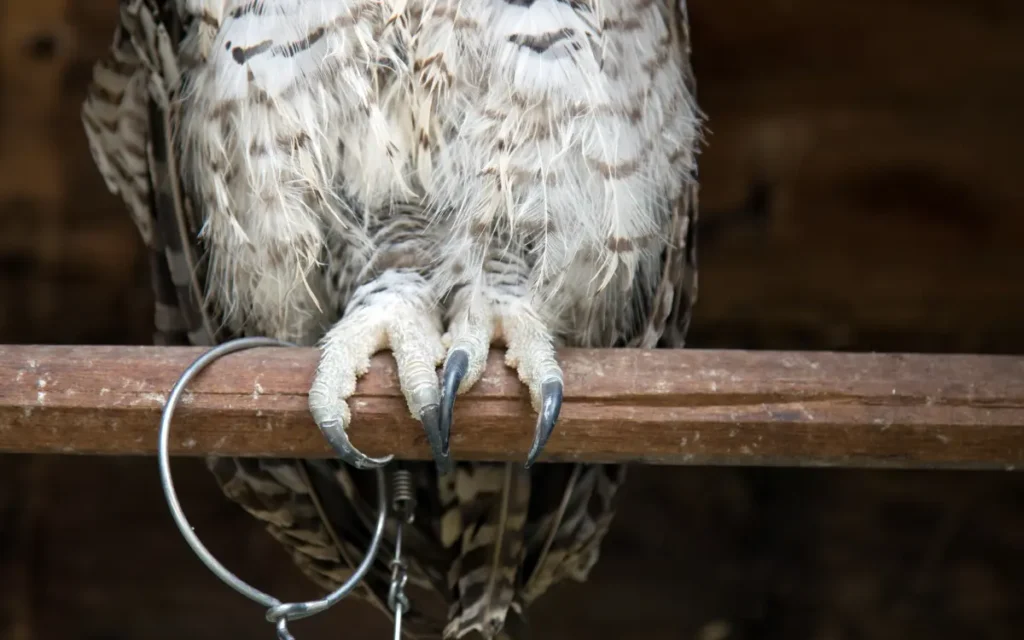
Owls exhibit unique leg features that play a crucial role in their hunting and flying abilities. Their long legs, often concealed by feathers, provide insulation and protection. These thin and elongated legs aid in weight distribution, contributing to balanced flight. Additionally, owl legs are adapted for hunting, with strong talons that allow them to grip and kill prey effectively. The long legs of owls also assist in silent flight and perching, essential for their predatory behavior. The structure of owl legs reflects their natural history and their adaptation to various habitats.
| Owl Leg Features | Description |
|---|---|
| Long Legs | Provide insulation and balance for flight |
| Thin and Elongated | Aid in weight distribution and silent flight |
| Strong Talons | Essential for gripping and killing prey |
| Adaptation to Habitats | Reflects their hunting behavior and environment |
Understanding these leg features gives insight into the remarkable capabilities of owls in the wild.
Owl Leg Characteristics
Owl leg characteristics encompass their long and thin structure, specifically designed to optimize flight and hunting capabilities. Owls have evolved unique leg features that play a crucial role in their survival and hunting prowess:
- Long Legs: Owls possess elongated legs that aid in perching, launching into flight, and capturing prey with precision.
- Thin Legs: The slender legs of owls are designed to reduce weight, allowing for swift and silent movements during hunting expeditions.
- Sharp Talons: Owls boast powerful legs with sharp talons that enable them to grasp and immobilize prey effectively.
These leg characteristics are essential for owls’ predatory lifestyle, providing them with the agility and strength needed to thrive in diverse habitats. Additionally, the feathered covering on their legs serves as insulation, keeping them warm during cold nights of hunting. Owls demonstrate a remarkable adaptation in their leg features, showcasing the intricate balance between form and function in the natural world.

Owl Leg Behavior
The hunting and perching behaviors of owls are intricately intertwined with the unique characteristics of their legs. Owls have long legs that are specially adapted for their hunting techniques and survival in the wild. These leg adaptations allow owls to excel in capturing prey efficiently and silently. When hunting, owls utilize their legs to lock onto perches or prey, showcasing their remarkable agility and precision. The length and thinness of their legs aid in perching on branches or swooping down on unsuspecting prey with minimal sound, contributing to their success as nocturnal predators.
Moreover, owl leg behavior is essential for their survival in diverse habitats. The ability to navigate various terrains and swiftly catch prey is crucial for their existence in the wild. By understanding and studying owl leg behavior, researchers can gain valuable insights into how these birds interact with their environment, ultimately aiding in conservation efforts to protect owl populations and preserve their natural ecosystems.
Owl Leg Importance
Adaptations in the leg structure of owls play a crucial role in their hunting efficiency and survival in the wild. The long, thin legs of owls are not only essential for hunting but also aid in their ability to perch and navigate through their environment. Here are some key points to consider regarding the importance of owl legs:
- Owl legs have evolved to be long and thin, enabling silent flight, a skill vital for their hunting success.
- The specialized leg structure of owls allows them to grasp and immobilize prey effectively, showcasing their adaptation for efficient hunting techniques.
- Understanding the significance of owl legs is essential for conservation efforts aimed at safeguarding their habitats and ensuring the preservation of owl populations in the wild.
These adaptations in owl legs not only contribute to their effectiveness as hunters but also demonstrate the intricate ways in which these creatures have evolved to thrive in their ecosystems.
Owl Leg Hunting Techniques

Within the realm of owl predation, the utilization of their long legs is a key component in executing successful hunting strategies. Owls rely on their legs equipped with sharp talons to grab and pin down prey effectively. The length of their legs plays a crucial role in the owl’s feet-first hunting technique, enabling precise and rapid attacks. Strong legs empower owls to deliver forceful blows, aiding in subduing and killing prey swiftly.
During hunting maneuvers, owl legs are instrumental in maintaining balance, allowing for agile and silent approaches towards unsuspecting prey. The combination of long legs and powerful talons provides owls with the essential tools for a successful hunt. The length of their legs also grants owls a favorable attack angle, enhancing their hunting prowess.
In the intricate dance of predator and prey, owl legs serve as a vital weapon in the owl’s hunting arsenal, ensuring efficient and effective capture of their intended targets.
Owl Leg Perching Abilities
With their long legs specially adapted for gripping and stability, owls exhibit remarkable perching abilities on various elevated surfaces. Owls utilize their leg features to maintain balance and stability while perched, allowing them to stay in position for extended periods. The gripping capability of their legs enables owls to securely hold onto branches and navigate effortlessly through their forest habitats.
- Owls’ perching abilities are enhanced by their long legs, providing them with the stability needed to perch at different heights and angles.
- The balance that owl legs offer allows these birds to remain steady while scanning for prey or resting on tree branches.
- Gripping is a crucial function of owl legs, enabling them to hold onto various types of surfaces securely, even in adverse weather conditions.
Owl Leg Warmth Regulation
Feathering their legs for insulation, owls employ a sophisticated mechanism to regulate warmth in cold environments. The presence of feathers on their legs is crucial for thermoregulation, particularly when hunting at night in chilly conditions. These feathered legs act as a barrier against heat loss, providing essential warmth required for the owl’s nocturnal activities.
The thick plumage on owl legs serves as a reliable source of insulation, enabling the birds to maintain their body temperature effectively. This insulation is especially beneficial during silent flight and while perched in low temperatures. Owls heavily rely on their feathered legs to stay warm and ensure optimal functioning in cold climates. By utilizing this unique adaptation, owls can conserve heat and energy, allowing them to thrive in diverse environments. The feathered legs play a vital role in the owl’s ability to regulate warmth, essential for their survival during night hunting expeditions.
Owl Leg Mobility
Owls’ long, thin legs are specifically designed to provide exceptional mobility for hunting and perching, contributing significantly to their predatory prowess. These legs are not merely appendages but finely tuned instruments that enable owls to navigate their environment with precision and speed.
- Efficient Hunting: The long legs of owls allow them to swiftly and silently approach their prey, helping them capture meals with incredible accuracy.
- Secure Perching: Owls rely on their legs to perch in various habitats, from dense forests to open fields, ensuring they have stable vantage points for hunting.
- Swift Flight Support: The leg structure of owls aids in their swift flight, providing balance and agility as they soar through the air in pursuit of prey.
In essence, the intricate design of owl legs plays a vital role in their survival and predatory behavior, showcasing how evolution has crafted these birds for unparalleled efficiency in the art of hunting and perching.

Owl Leg Surprises
Surprisingly, the long and slender legs of owls, typically concealed beneath their fluffy plumage, often catch observers off guard with their unexpected length and delicacy. These skinny legs are a result of a unique anatomical structure, where short thighs lead to long, slender bones that form the lower leg. The legs are made for specific purposes, such as hunting and perching, showcasing the remarkable adaptations of these birds of prey. The exposure of owl legs can elicit amusement, with some likening them to human legs due to their elongated appearance. This unexpected aspect of owls has sparked discussions about wildlife conservation and the importance of protecting their habitats. In cases of owl rehabilitation, training involving jesses on their legs and careful handling for medical purposes may be necessary to ensure their well-being. Overall, the surprising nature of owl legs provides a fascinating insight into the intricate adaptations of these majestic creatures.