
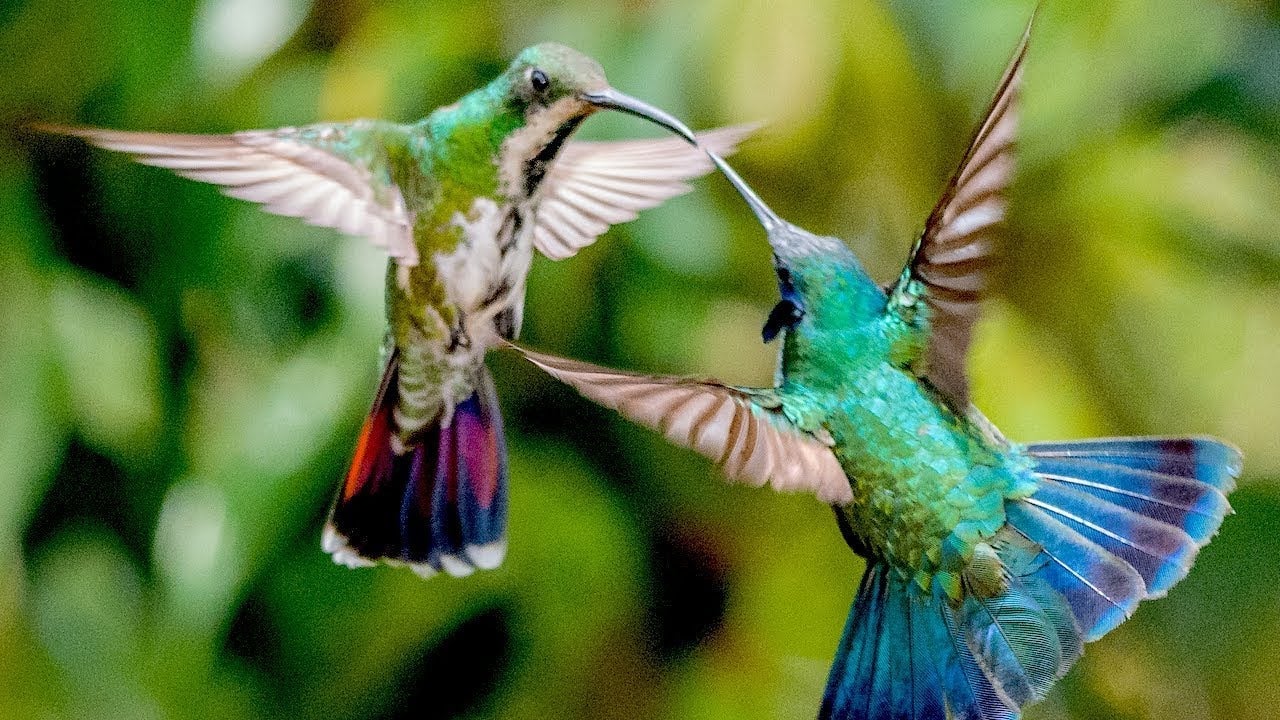
Hummingbirds do not open their beaks traditionally since their upper and lower mandibles are fused without movable parts. This unique anatomy allows for specialized nectar retrieval and insect catching. Their beaks are long and slender, perfect for reaching deep into flowers. The design aids in precise feeding and reduces energy expenditure. Additionally, stiff keratin coverings and serrated edges help guide their tongues efficiently. By not opening their beaks, hummingbirds optimize their feeding process for maximum efficiency. This specialized adaptation showcases their efficient feeding strategy. If you explore further, you’ll discover more about the fascinating hummingbird beaks.
Hummingbird Beak Anatomy
How is the anatomy of a hummingbird beak uniquely adapted for efficient nectar retrieval? Hummingbirds possess long, slender beaks perfectly suited for reaching the nectar hidden deep within the tubular flowers they feed on. Unlike other birds, their beaks lack separate upper and lower mandibles and do not open in the traditional sense. The stiff keratin covering and serrated edges of their beaks play a vital role in guiding their long tongues to the nectar efficiently. This specialized beak structure allows hummingbirds to use their long tongues to lap up nectar rapidly, enabling fast and efficient nectar retrieval with minimal energy expenditure. While some species exhibit unique adaptations such as serrated edges or tooth-like projections on their beaks, the fundamental design remains static, with no moving parts. Such precise adaptations in hummingbird beak anatomy highlight the remarkable efficiency and effectiveness of these tiny birds in obtaining the energy they need to thrive.
Structure of Hummingbird Beaks
The structure of hummingbird beaks features fused upper and lower mandibles, devoid of movable parts, emphasizing efficiency in nectar retrieval. These beaks are long and slender, allowing hummingbirds to reach deep into tubular flowers to lap up nectar. Additionally, the beaks are well-adapted for catching insects, providing a versatile tool for their diet.
To further understand the unique structure of hummingbird beaks, let’s explore the following table:
| Feature | Description |
|---|---|
| Shape | Long and slender, ideal for accessing nectar in tubular flowers |
| Mobility | Fused upper and lower mandibles with no movable parts |
| Function | Efficiently catch insects and lap up nectar with minimal energy expenditure |
The stiff keratin coverings and serrated edges of hummingbird beaks play a crucial role in guiding their specialized tongues to collect nectar effectively. This non-opening design not only aids in precise feeding but also reduces the risk of nectar leaks, highlighting the remarkable adaptation of hummingbirds for nectar consumption.
Mechanism of Hummingbird Beaks
Hummingbird beaks’ mechanism of non-opening design with fused mandibles optimizes efficiency in nectar retrieval and insect catching, showcasing specialized adaptations for their feeding behaviors. Unlike many bird species, hummingbird beaks do not open due to the absence of movable parts and the fusion of their upper and lower mandibles. This unique shape of hummingbird beaks is specialized for reaching deep into tubular flowers to access nectar, their primary food source. The non-opening beak of hummingbirds allows for swift feeding with minimal movements, reducing the risk of nectar spills. This design also aids in catching small insects, another essential component of their diet. While exceptions like the saw-billed hermit or tooth-billed hummingbird exhibit specialized adaptations, most hummingbird species feature non-opening beaks that enhance their foraging efficiency. By evolving this streamlined and unhinged beak structure, hummingbirds have optimized their feeding mechanisms to thrive in their nectar-rich environments.
Functionality of Hummingbird Beaks
Utilizing their specialized beak structure, hummingbirds efficiently extract nectar from deep within flowers, showcasing a unique feeding mechanism optimized for their ecological niche. The functionality of hummingbird beaks allows them to take advantage of their non-opening design, which is specifically adapted for nectar retrieval. With their long, slender shape and slight downward curve, these beaks are perfectly suited for probing flowers with precision.
Hummingbird beaks lack separate upper and lower mandibles, featuring a stiff keratin covering with serrated edges that guide their specialized tongues to the nectar source. This design not only aids in efficient nectar extraction but also minimizes energy expenditure during feeding. By maintaining a fixed beak structure, hummingbirds streamline their feeding process, ensuring they can access the vital nutrients they need without unnecessary movements.
In essence, the functionality of hummingbird beaks is intricately linked to their foraging behavior, enabling these remarkable birds to thrive in their environment by efficiently extracting nectar from flowers with remarkable precision.

Adaptation of Hummingbird Beaks
With their specialized structure optimized for nectar extraction, hummingbird beaks exhibit remarkable adaptations for efficient feeding. These beaks, which do not open due to the fusion of their upper and lower mandibles, are finely tuned for accessing the sweet nectar hidden within tubular flowers. The long, slender shape of their beaks allows hummingbirds to reach deep into flowers to obtain food with precision. The stiff keratin covering and serrated edges of their beaks play a crucial role in guiding their specialized tongues to extract nectar effectively.
Hummingbirds have evolved non-opening beaks that provide numerous advantages. This unique adaptation enables faster feeding, reduces energy expenditure, and enhances resistance to wear and tear. While some species have specific bill adaptations tailored to their feeding habits, all hummingbirds share the common trait of lacking fully hinged beaks seen in other avian groups. This specialized beak structure has allowed hummingbirds to thrive and diversify in their nectar-rich environments.
Evolution of Hummingbird Beaks
Throughout the evolutionary history of hummingbirds, the development of their beaks has been a remarkable example of specialized adaptation for nectar feeding. Beak evolution in hummingbirds has been heavily influenced by genetic factors and shaped by environmental pressures and selective forces. The unique structure of hummingbird beaks, with fused upper and lower mandibles, has provided adaptive advantages for their nectar-feeding lifestyle. This non-opening design is a result of evolutionary constraints that have favored precision in nectar retrieval.
| Factors influencing Beak Evolution | Examples |
|---|---|
| Genetic influences | – Development of specialized beak shapes and sizes |
| Environmental factors | – Availability of nectar food sources |
| Selective pressures | – Competition for nectar resources |
| Adaptive advantages | – Efficient nectar extraction mechanisms |
| Evolutionary constraints | – Limitations on beak mobility for other functions |
The evolution of hummingbird beaks showcases how the intricate interplay between genetic predispositions and environmental demands has led to the specialized feeding adaptations seen in these remarkable birds.
Specialization of Hummingbird Beaks
During the specialized evolution of hummingbird beaks, their unique structures have become finely tuned for efficient nectar extraction from tubular flowers. The beak flexibility and feeding efficiency of hummingbirds are remarkable evolutionary advantages that play a crucial role in their specialized adaptation and feeding behavior. Hummingbirds’ long, slender beaks with a slight downward curve allow them to reach deep into tubular flowers to access nectar. Unlike other birds, hummingbirds lack separate upper and lower mandibles and movable parts in their beaks. Instead, the stiff keratin covering and serrated edges of their beaks guide their tongues to nectar without the need for opening. This non-opening structure offers multiple benefits, including faster feeding, reduced energy expenditure, and increased resistance to wear. These specialized features have enabled hummingbirds to thrive as nectar feeders, showcasing the remarkable efficiency and effectiveness of their unique beak adaptations.
Unique Features of Hummingbird Beaks
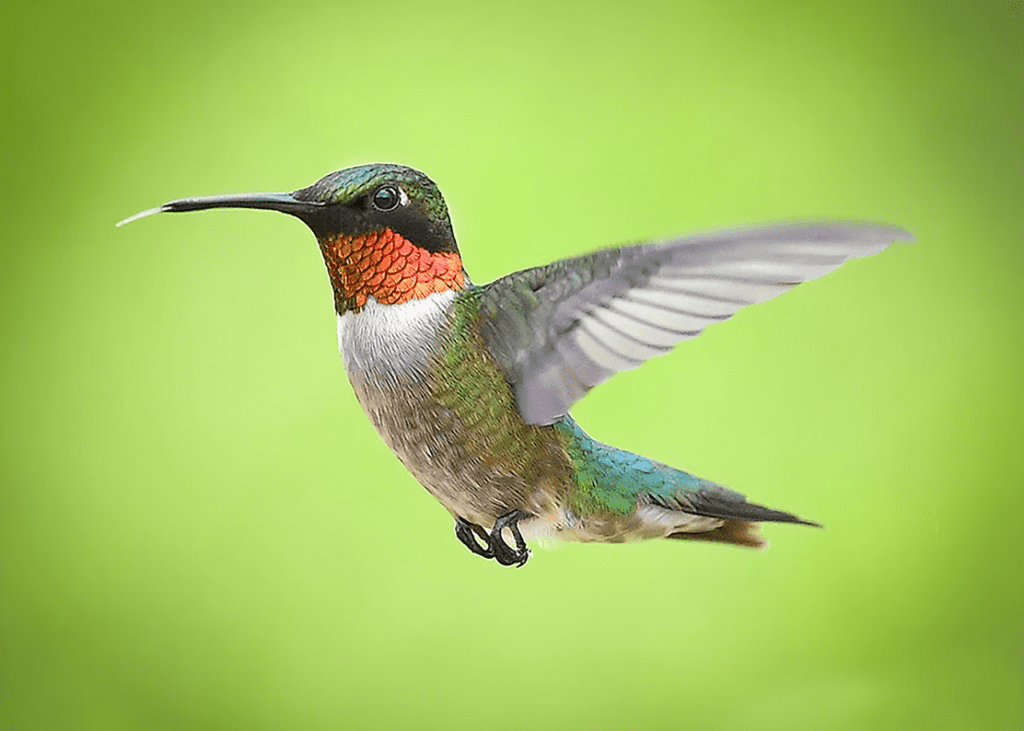
Hummingbird beaks possess unique structural features that set them apart from other bird species, particularly in their specialized adaptations for nectar feeding. These beaks lack the ability to open due to fused upper and lower mandibles, a feature not commonly found in birds. The long and slender shape of hummingbird beaks plays a crucial role in their feeding efficiency, allowing them to reach deep into tubular flowers to access nectar. Additionally, the serrated edges on their beaks serve a specific purpose, guiding their specialized tongues to extract nectar effectively. Unlike birds with movable beaks for food handling, hummingbirds have evolved non-opening beaks that are finely tuned for nectar consumption.
Some exceptional hummingbird species, such as the saw-billed hermit and tooth-billed hummingbird, have further specialized adaptations on their beaks for specific feeding purposes. These unique features highlight the remarkable diversity and evolutionary adaptations that hummingbirds have developed to thrive in their nectar-rich environments.
Benefits of Fused Hummingbird Beaks
Fused hummingbird beaks provide significant advantages in efficiently extracting nectar from flowers due to their specialized structure and functionality. These beaks enhance energy efficiency by reducing the energy needed for feeding. With their non-opening design, hummingbirds can access nectar swiftly with minimal movements, allowing for quicker feeding sessions. The stiff keratin covering and serrated edges of the fused beaks play a crucial role in guiding the hummingbird’s tongue to the nectar efficiently, further aiding in nectar retrieval.
Moreover, the wear-resistant nature of fused hummingbird beaks contributes to their longevity and functionality. This wear resistance not only ensures the durability of the beak but also minimizes the risk of nectar leaks during feeding. The fused design of hummingbird beaks, therefore, not only optimizes energy usage and feeding speed but also provides a reliable mechanism for nectar retrieval, reducing unnecessary movements and enhancing overall feeding efficiency.
Nectar Extraction by Hummingbird Beaks
Efficiently extracting nectar from flowers, hummingbird beaks boast a specialized design that aids in swift and precise nectar retrieval. Their beaks lack the typical moving parts found in other bird species, instead featuring fused upper and lower mandibles. This unique structure allows hummingbirds to efficiently access nectar without the need for an opening mechanism, contributing to their foraging strategy. The long and slender shape of their beaks is specifically adapted for reaching deep into tubular flowers, where the sweet nectar is located. This beak design is crucial for their nectar efficiency, as it enables them to extract the maximum amount of energy-rich nectar with each feeding. The function of their non-opening beaks not only enhances their feeding speed but also minimizes energy expenditure and wear over time. This specialized adaptation showcases how hummingbird beaks have evolved for optimal flower specialization and effective nectar extraction.
Comparison With Other Bird Beaks
When comparing hummingbird beaks to those of other bird species, it becomes evident that the specialized design of hummingbird beaks sets them apart in terms of feeding mechanisms and adaptations for nectar extraction. Beak diversity among birds is vast, with species like finches, raptors, and toucans showcasing unique beak shapes tailored to their specific diets and feeding behaviors. Unlike these birds, hummingbirds possess fused upper and lower mandibles, which enable them to efficiently retrieve nectar without the need for moving parts. This evolutionary adaptation contributes to the exceptional feeding adaptations seen in hummingbirds.
The beak structure of exceptional hummingbird species such as the saw-billed hermit or tooth-billed hummingbird further underscores the remarkable diversity and specialization within hummingbird beaks. The non-opening nature of hummingbird beaks offers advantages such as quicker feeding, lower energy expenditure, and increased durability against wear. These evolutionary comparisons highlight the unique niche that hummingbirds occupy in the avian world, showcasing their specialized adaptations for nectar extraction and feeding efficiency.

Feeding Behavior of Hummingbirds
Hummingbirds exhibit a unique feeding behavior characterized by their specialized beak structure and efficient nectar retrieval mechanism. Their long, slender beaks, lacking movable parts, are perfectly adapted for reaching deep into flowers to access nectar. This design, with fused upper and lower mandibles, enables these tiny birds to efficiently extract nectar without the need for opening their beaks like other bird species. The stiff keratin coverings and serrated edges of hummingbird beaks play a crucial role in guiding their specialized tongues to the nectar source, minimizing the potential for leaks during feeding. This non-opening beak design allows hummingbirds to feed rapidly with minimal movements, showcasing their remarkable feeding efficiency. Additionally, various hummingbird species have specific adaptations on their beaks, such as serrations or tooth-like projections, to aid in distinct foraging techniques tailored to their ecological niche. Their feeding behavior is finely tuned to maximize nectar consumption while minimizing energy expenditure, highlighting the remarkable evolutionary adaptations of these fascinating birds.
Role in Pollination by Hummingbirds
The specialized beak structure of hummingbirds not only facilitates efficient nectar retrieval but also plays a vital role in pollination by enabling these tiny birds to transfer pollen between flowers as they feed on nectar. Hummingbirds exhibit remarkable beak flexibility, allowing them to access nectar from a variety of flower shapes and sizes. This adaptability contributes to their pollination efficiency, as they can visit a wide range of floral species.
Furthermore, the precision of beak closure in hummingbirds is essential for effective nectar extraction without causing damage to the delicate flower structures. The intricate design of their beaks ensures that they can access the nectar while inadvertently coming into contact with pollen, facilitating cross-pollination among flowers.
The coevolution between hummingbirds and flowers has led to specific beak adaptations that enhance flower compatibility, ensuring successful pollination. These adaptations not only benefit the hummingbirds by providing a food source but also play a crucial role in maintaining the reproductive cycles of various plant species, thus contributing to overall ecosystem biodiversity.
Conservation of Hummingbird Beaks
Preservation efforts for the unique anatomy and specialized adaptations of hummingbird beaks are integral to safeguarding their crucial role in ecosystem balance and biodiversity. Conservation strategies aimed at beak preservation involve a deep understanding of hummingbird beak research and scientific advancements. By focusing on beak adaptation and its evolutionary significance, conservationists can ensure the long-term survival of these remarkable avian species.
Scientific advancements in the field of hummingbird beak research have shed light on the intricate structures that enable these birds to thrive. Conservation efforts now prioritize the protection of these specialized beaks, which play a vital role in pollination and feeding. By identifying key areas where hummingbirds are most at risk and implementing targeted conservation strategies, researchers can help safeguard the delicate balance of ecosystems that rely on these remarkable birds.