

Yes, bees have an impressive ability to hear music, particularly responding to sound frequencies ranging from 250-500 Hz. Their sensitivity to these frequencies plays a significant role in their social interactions and survival within the hive. Bees can be drawn to specific music frequencies, impacting their behavior and communication. The intricate auditory senses of bees allow them to detect and differentiate various frequencies, with the 250-500 Hz range being most appealing to them. This preference for certain music frequencies showcases the unique hearing abilities of bees and how sound influences their behaviors in different environments.
Bees’ Perception of Sound

Bees possess the ability to detect sound frequencies up to 500 Hz, with a particular preference for frequencies falling within the range of 250-500 Hz. This sensitivity to sound is vital for their communication within the hive. Through mechanisms like the waggle dance, bees convey information about food sources, hive locations, and potential threats. Climate change is a factor that could impact these communication channels, as alterations in temperature and weather patterns might affect the transmission of sound waves in the environment where bees forage and live.
In addition to their communication methods, bees may also respond to music based on the frequencies and vibrations produced. Experiments using tuning forks have allowed researchers to explore how bees perceive and react to different sound stimuli. Understanding bees’ perception of sound can provide insights into how they navigate their surroundings, locate resources, and coordinate their activities within the hive. This intricate auditory system showcases the remarkable abilities of these tiny yet complex creatures.
Vibrations in the Hive

The vibrations within the hive play a crucial role in facilitating communication and coordination among its inhabitants. Honey bees have evolved a sophisticated system of using vibrations to convey information, with frequencies around 250 oscillations per second (250Hz). These vibrations are essential for bees to communicate about food sources, potential threats, or even to coordinate activities within the hive.
When bees produce sound during their waggle dance, they are essentially creating vibrations that other bees can sense through their bodies. This form of communication is vital for transferring knowledge about the location of food sources. The ability to sense and interpret these vibrations allows bees to make collective decisions for the benefit of the entire colony.
Through experiments like the tuning fork method, researchers and visitors can explore the intricate world of bee communication through vibrations. Understanding the role of vibrations in the hive provides valuable insights into the complex social structure and organization of honey bee colonies.
The Waggle Dance Communication
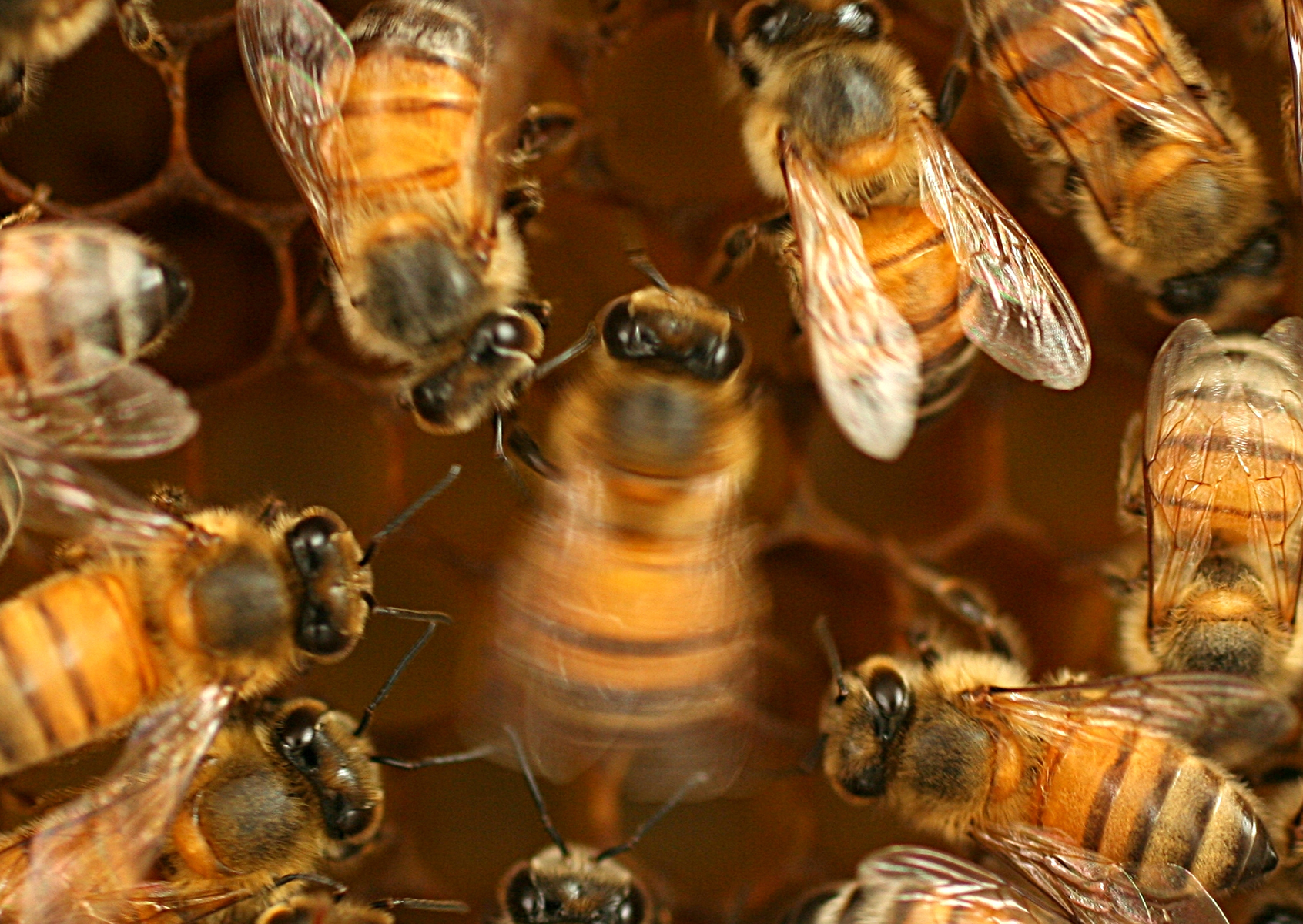
Within the intricate world of honey bee communication, the waggle dance serves as a fundamental method for sharing vital information about food sources. This dance plays a crucial role in bee navigation, as it provides precise details about the location of food sources. When a forager bee returns to the hive after discovering a food source, it performs the waggle dance to communicate the direction and distance of the food to other worker bees. By decoding the movements and vibrations of the waggle dance, bees can effectively locate and exploit these food sources.
The waggle dance is essential for hive coordination, as it allows bees to work together to collect resources efficiently. Through this intricate form of communication, bees can share important information with their fellow hive members, ensuring that all bees are aware of the available food sources. This coordination enhances the overall productivity of the hive and contributes to its success in foraging activities.
Sensitivity to Frequencies
In the realm of honey bee behavior, their sensitivity to frequencies, particularly in the range of 250-500 Hz, plays a pivotal role in various aspects of communication and orientation within the hive. Bees’ sensory perception of these specific frequencies enables them to interpret and respond to acoustic communication effectively. Here are key points to consider:
- Frequency Range: Bees can detect sound frequencies up to 500 Hz, with the most sensitive range being 250-500 Hz. This range is crucial for their communication and navigation within the hive.
- Sensory Perception: Bees have a remarkable ability to perceive and differentiate between various frequencies within this range, allowing them to decode important signals from their environment.
- Acoustic Communication: Sound, particularly in the 250-500 Hz range, serves as a primary medium for bees to convey information such as the location of food sources through dances and vibrations.
Understanding bees’ sensitivity to specific frequencies sheds light on how they utilize sound for essential hive activities and interactions.
Sound Detection Mechanisms

Detecting sound relies on intricate mechanisms that bees possess to navigate their environment and communicate effectively. Bees’ auditory senses are finely tuned, allowing them to receive sound frequencies up to 500 Hz. This sensitivity enables them to perceive music and vibrations in their surroundings. Sound reception plays a crucial role in their communication, with methods like the waggle dance utilizing vibrations and sound to convey information within the hive. Interestingly, bees are particularly attracted to music within the 250-500 Hz range, aligning with their natural ability to detect such frequencies. By playing specific tunes falling within this range, it is possible to potentially attract bees to a garden or a specific area. This showcases the bees’ advanced sound detection mechanisms and their unique capacity to respond to music in their environment. Their evolution has equipped them with the ability to sense and react to sound, highlighting their remarkable skills in detecting music and vibrations.
Tuning Fork Experiment

Employing a tuning fork allows for a hands-on exploration of how bees perceive and respond to specific frequencies, such as the buzzing sound they generate at around 250 oscillations per second. Through this experiment, you can delve into the intricacies of bees’ frequency response and their unique sensory perception. Here’s what you can learn:
- Frequency Response: By observing how bees react to different frequencies, you can gain insights into the range of vibrations they are attuned to and how this influences their behavior.
- Acoustic Communication: The tuning fork experiment sheds light on how bees use sound as a form of communication, such as in their waggle dance, highlighting the importance of acoustic signals in their social interactions.
- Sensory Perception: This hands-on activity demonstrates how bees not only hear but also feel sound vibrations, showcasing their remarkable ability to perceive the world acoustically and respond to auditory stimuli in a unique way.
Bees’ Unique Hearing Abilities
Exploring bees’ unique hearing abilities reveals their remarkable sensitivity to specific sound frequencies crucial for communication and navigation within the hive. Bees possess a sophisticated system for sound recognition, with the capability to detect frequencies up to 500 Hz. This acute hearing is essential for their acoustic communication, allowing them to convey information vital for hive activities. Bees’ ability to appreciate music, particularly in the frequency range of 250-500 Hz, showcases their intricate auditory perception.
Acoustic communication in bees involves various sounds and vibrations, such as the famous waggle dance used to communicate the location of food sources. These vibrations are picked up by specialized hairs on the bees’ bodies, enabling them to interpret and respond to auditory cues effectively. This unique hearing mechanism plays a crucial role in their social interactions and overall survival within the ecosystem. Understanding the intricate nature of bees’ hearing abilities provides insight into the sophisticated ways they navigate their environment and communicate with their fellow hive members.

Music and Bee Behavior
Bees’ response to specific frequencies found in music can offer insights into their behavioral tendencies and interactions with their environment. When considering the impact of music on bee behavior, several key points emerge:
- Musical preferences, behavioral changes: Bees are drawn to frequencies akin to their buzzing sounds, suggesting that certain types of music could influence their actions and responses within the hive environment.
- Sound therapy, hive interaction: The use of music, particularly with frequencies that resonate with bees, could potentially be explored as a form of sound therapy to positively affect hive dynamics and interactions among colony members.
- Harmonic resonance, foraging patterns: Music that aligns with harmonic resonance frequencies of bees might have implications for their foraging patterns, potentially enhancing their efficiency or altering their routes based on the sounds they detect.
Considering these aspects, the relationship between music and bee behavior opens up intriguing possibilities for further research and applications in beekeeping practices.
Bee Responses to Audio Stimuli
Bees exhibit distinct responses to various audio stimuli, showcasing their sensitivity to sound frequencies and the potential influence of music on their behavior. These tiny creatures can detect sound frequencies up to 500 Hz, with a particular attraction to music falling within the 250-500 Hz range. Interestingly, music that mimics the vibrations found within the hive can effectively draw bees to specific locations. Communication among bees heavily relies on vibrations and sound, such as the famous bee dance used to convey important information about food sources. The influence of sound on bees goes beyond mere attraction, as specific tunes or genres of music can impact their behavior and interactions within the hive. Sound plays a crucial role in bee foraging behavior and social interactions, highlighting the intricate ways in which these creatures respond to auditory cues to navigate their environment and communicate effectively through hive vibrations and other sound signals.
Implications for Beekeeping Practices
The integration of music in beekeeping practices presents an intriguing avenue for enhancing hive management techniques and promoting bee well-being. When considering the implications for beekeeping practices, it is crucial to delve into the concept of hive harmony, musical hives, and melodic beekeeping:
- Hive Harmony: Utilizing music within beekeeping practices can contribute to maintaining a harmonious environment within the hive. The calming effect of certain frequencies can help reduce stress levels among bees, leading to more peaceful interactions and potentially increased productivity.
- Musical Hives: Creating musical hives where specific genres or frequencies are played consistently can establish a unique atmosphere that may positively influence bee behavior. This approach could be particularly beneficial during critical hive management tasks, such as inspections or honey harvesting.
- Melodic Beekeeping: Embracing the concept of melodic beekeeping involves incorporating music strategically to enhance bee well-being and overall hive health. By understanding how different types of music impact bees, beekeepers can tailor their practices to create a more conducive and harmonious environment for their colonies.