

To trigger blooming in your Philodendron plant, ensure bright, indirect light exposure to aid in photosynthesis. Maintain a cozy temperature range of 65-80°F and keep humidity levels above 60%. Use a phosphorus-rich fertilizer like 10-15-10 N-P-K ratio during active growing seasons. Prune regularly to redirect energy towards blooming by removing dead growth. Create a natural blooming environment by adjusting light and humidity. Monitor for budding, visible spathes, and promptly trim spent flowers. Consistent care with stable light, temperature, and humidity levels will promote successful blooming. Mastering these factors will help your plant bloom beautifully.
Optimizing Light Exposure for Blooms

To optimize blooming in your philodendron flowers, focus on providing bright, indirect light while avoiding direct sunlight to prevent leaf damage and stress on the plant. Position your philodendron near windows with sheer curtains to filter the light, ensuring it receives the right amount of intensity without the harmful effects of direct sun exposure. Indirect light is essential for philodendrons as it helps in the efficient photosynthesis process, aiding in the production of energy needed for blooming.
Additionally, maintaining the appropriate phosphorus content in the soil is crucial for the development of vibrant blooms in philodendrons. Phosphorus plays a significant role in energy transfer and flower formation. Adequate levels of phosphorus support healthy root development and encourage the plant to allocate energy towards blooming. When combined with the correct light exposure, the phosphorus content in the soil contributes to robust flower production in your philodendron.
Maintaining Ideal Temperature and Humidity
Maintaining ideal temperature and humidity is crucial for optimizing blooming in philodendron flowers. To encourage philodendron bloom, aim for a temperature range between 65-80°F (18-27°C). Philodendrons thrive in humidity levels of 60% or higher, which is essential for promoting flowering. Utilizing a humidifier or a pebble tray can aid in increasing humidity around the plant, creating a favorable environment for philodendron blooms. Monitoring humidity levels using a hygrometer ensures precision in maintaining the optimal conditions for flowering. Mimicking the plant’s native tropics by providing cozy temperatures and high humidity levels fosters successful philodendron flowering. Remember, these factors play a significant role in plant growth and blooming. Additionally, consider adjusting your fertilization routine to include a higher phosphorus content to further support healthy blooming in philodendrons. By carefully managing temperature, humidity, and nutrients, you can enhance the likelihood of your philodendron producing vibrant and beautiful flowers.

Understanding Nutritional Requirements
A phosphorus-rich fertilizer is a critical component in meeting the nutritional requirements necessary for stimulating blooming in Philodendron flowers. Philodendrons require a balanced N-P-K ratio, with a higher phosphorus content compared to nitrogen and potassium, to support flower production. During the active growing season, typically spring and summer, it is crucial to fertilize your Philodendron to provide the necessary nutrients for blooming. Choose a fertilizer specifically formulated for flowering plants with an N-P-K ratio such as 10-15-10 to encourage blooming. Additionally, enriching the soil with organic matter like worm castings can enhance nutrient availability, further supporting blooming. Neem oil can also be beneficial for overall plant health, acting as a natural pesticide and fungicide to protect your Philodendron from pests and diseases that could hinder blooming. Ensuring the soil is well-draining and slightly acidic will help maintain optimal growing conditions for your Philodendron, promoting healthy growth and blooming.
Promoting Bloom Through Pruning

Regularly pruning your Philodendron plant is essential for promoting blooming and maintaining overall plant health. Pruning plays a crucial role in redirecting the plant’s energy towards blooming. By removing dead or excess growth, you encourage the Philodendron to focus its resources on producing vibrant blooms. Strategic pruning done before the growing season can set the stage for an abundant flowering period. This practice helps to maintain the plant’s vigor, ensuring it has the necessary resources for blooming.
Furthermore, pruning is not only about shaping the plant but also about stimulating growth. Removing old, yellowing leaves can stimulate the growth of new shoots, which in turn can lead to an increase in blooming potential. By encouraging the development of new growth through pruning, you are creating an environment where your Philodendron is more likely to produce beautiful and healthy blooms. Remember, a well-pruned Philodendron is a plant primed for blooming success.
Mimicking Natural Blooming Conditions
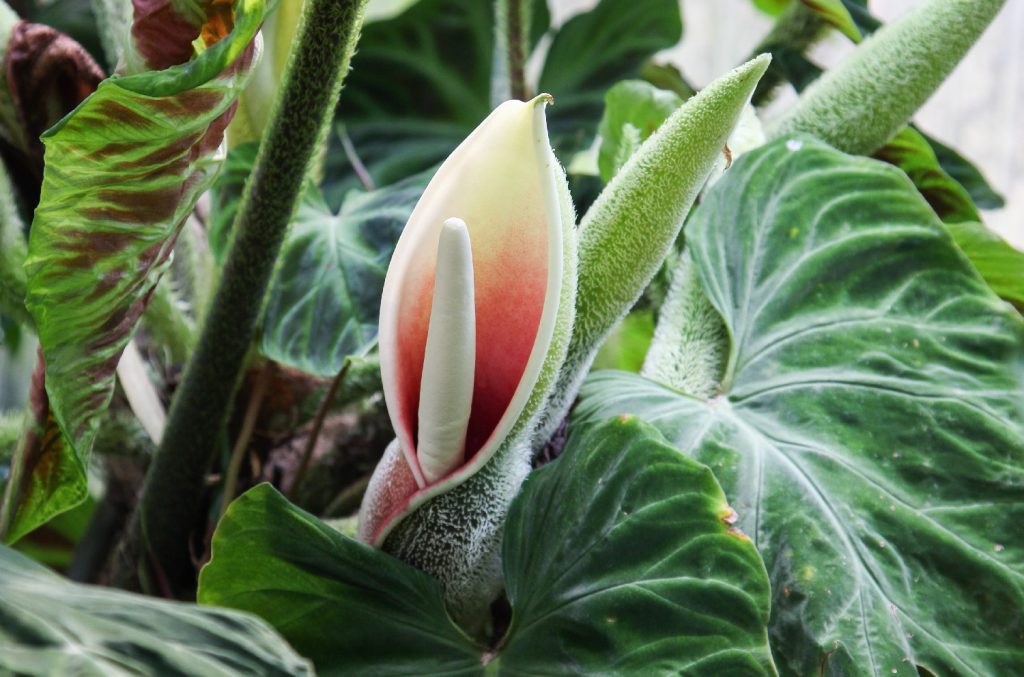
How can you replicate the natural blooming conditions for your Philodendron plant to encourage successful blooming? To achieve optimal growing conditions for your Philodendron’s blooms, it is crucial to mimic its natural environment. Position your plant in an area with bright, indirect light, replicating the dappled sunlight it would receive in its native habitat. Additionally, maintaining cozy daytime temperatures around 70-85°F (21-29°C) and allowing a slight nighttime chill of 60-70°F (15-21°C) can stimulate blooming.
Monitoring humidity levels is also essential for providing optimal growing conditions. Use a hygrometer to ensure humidity levels are between 60-80%, replicating the plant’s native tropical environment. Adjusting light exposure and maintaining consistent humidity levels can help replicate the natural environmental cues that trigger blooming in Philodendrons.
Furthermore, consider the phosphorus content in your plant’s fertilizer. Phosphorus is essential for flower development, so using a fertilizer with a higher phosphorus content can encourage blooming in your Philodendron. By replicating these blooming conditions, you can increase the likelihood of successful blooms on your plant.
Factors Influencing Split Leaf Philodendron Blooms
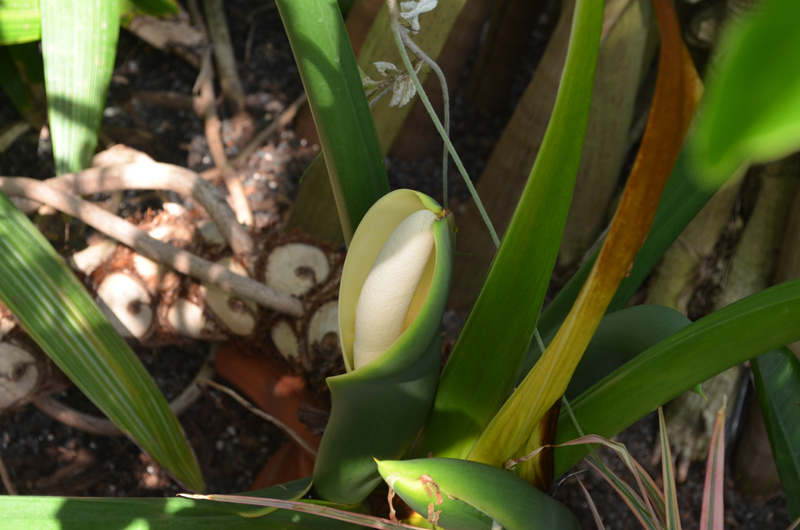
To optimize the blooming potential of your Split Leaf Philodendron, ensuring it receives adequate bright, indirect light is crucial. This plant thrives in consistent temperatures ranging from 65-80°F (18-27°C), which significantly influences its blooming patterns. Additionally, maintaining humidity levels of 60% or higher can play a vital role in promoting flowering in Split Leaf Philodendrons. When considering fertilization, using a fertilizer with higher phosphorus content can enhance the chances of blooms appearing on your plant. Furthermore, strategic pruning during late winter or early spring can help redirect the plant’s energy and stimulate new growth, ultimately leading to an increased likelihood of blooming. Consider incorporating a humidifier to maintain the necessary humidity levels and ensure your Split Leaf Philodendron is positioned in the right light conditions to encourage the development of beautiful blooms.
Techniques to Encourage Blooming
Enhancing the blooming potential of philodendron plants can be achieved through strategic adjustments in lighting, fertilization, pruning, and understanding the plant’s growth cycles. When aiming to encourage blooming in your philodendron, ensure it receives bright, indirect light to mimic its natural habitat. Additionally, using a balanced fertilizer with higher phosphorus content can provide the necessary nutrients to promote flowering. Pruning is essential to redirect the plant’s energy towards new growth and blooming sites. Remember that philodendrons typically bloom once a year during the spring or summer growing season, so patience is key as you wait for the blooms to appear. Focus on nurturing new growth as this is where blooming occurs, and adjust your care routine accordingly.
| Technique | Description | Importance |
|---|---|---|
| Lighting | Provide bright, indirect light to mimic natural conditions and stimulate blooming. | High |
| Fertilizer | Use a balanced fertilizer with higher phosphorus content to encourage flower production. | Medium |
| Pruning | Strategically prune to redirect the plant’s energy towards new growth and blooming sites. | High |
Monitoring and Care During Blooming
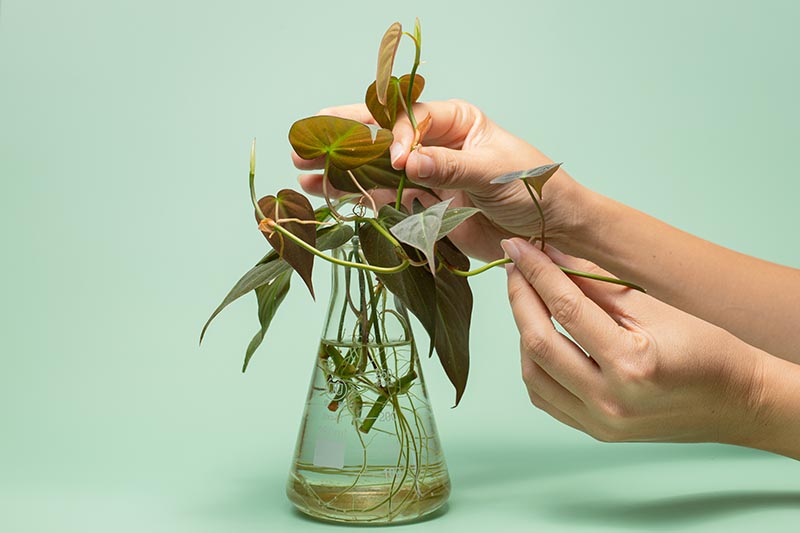
Monitoring the philodendron plant for signs of budding or flowering is crucial during the blooming phase. Look for visible spathes and spadices to indicate that your plant is entering the blooming stage. Once your philodendron has bloomed, it is essential to trim off spent flowers promptly. This practice redirects energy towards new growth and future blooms, ensuring the plant’s vitality. Throughout the blooming period, maintain a consistent watering and fertilization schedule to meet the plant’s nutritional requirements. Additionally, create a stable environment with steady light, temperature, and humidity levels to support optimal blooming success.
Pruning plays a vital role in encouraging flowering and maintaining the plant’s health during and after the blooming phase. Selectively prune any damaged or overgrown parts to promote new growth and prevent disease. By monitoring, trimming, and pruning your philodendron with care during the blooming period, you can help the plant thrive and ensure a beautiful display of flowers.