

Frogs, especially African Clawed Frogs, can harm fishes in various ways. They exhibit hunting behavior towards smaller fish and possess sharp teeth for consumption. When hungry or aggressive, they may eat fish whole, leaving signs like missing eyes or bodies. This risk increases in shared ponds. Frogs can introduce parasites and diseases that weaken fish, necessitating water quality monitoring and quarantine measures. Some frog species display indiscriminate aggression towards fish, leading to injuries or death. Separating frogs and fish prevents harm, ensures specific needs are met, and maintains peaceful coexistence, safeguarding aquatic well-being.
1. Predatory Nature of African Clawed Frogs
African Clawed Frogs exhibit a predatory nature by actively hunting and consuming smaller fish within their reach in aquatic environments. These frogs, with their sharp teeth and wide mouths, are well-equipped for a carnivorous diet. Their predatory behavior poses a significant risk to tank mates, especially fish, that may fall prey to these amphibians. The hunting instincts of African Clawed Frogs can lead to injuries or even death among fish sharing the same tank.
When considering the predatory nature of African Clawed Frogs, it’s essential to acknowledge that they may target slower or injured fish for consumption. Tank setups containing these frogs should be designed with caution to prevent harm to fish.
The presence of African Clawed Frogs in a shared aquatic habitat introduces a dynamic where these creatures actively seek out and consume smaller organisms, showcasing their role as predators within the ecosystem. Understanding and managing this predatory behavior is crucial for maintaining a harmonious environment in a mixed species tank.
2. Risk of Fish Being Eaten
Considering the predatory behavior of frogs, the risk of fish being eaten increases significantly, especially when frogs are hungry or aggressive. Frogs have the ability to kill fish by swallowing them whole if the fish are small enough to fit into the frog’s mouth.
This predatory behavior can result in missing fish within tanks or ponds, indicating potential predation by the frogs. Signs of predation on fish by frogs may include missing eyes or bodies, as frogs typically don’t chew their prey but rather swallow them whole.
In environments such as ponds, where frogs and fish coexist, the risk of fish being eaten by frogs is heightened, particularly when frogs are in an aggressive state. It’s essential to monitor the interactions between frogs and fish closely to prevent potential harm to the fish population in shared habitats.
3. Potential Harm From Parasites and Diseases
Frogs have the potential to pose a threat to fish populations through the introduction of parasites and diseases into shared aquatic environments. When frogs carry parasites or diseases, they can contaminate the water, putting fish at risk.
This contamination can weaken fish immune systems, making them more susceptible to diseases. The spread of harmful pathogens through contaminated water can have detrimental effects on fish health.
To mitigate these risks, it’s essential to monitor water quality regularly and implement quarantine measures to prevent the transmission of parasites and diseases from frogs to fish.
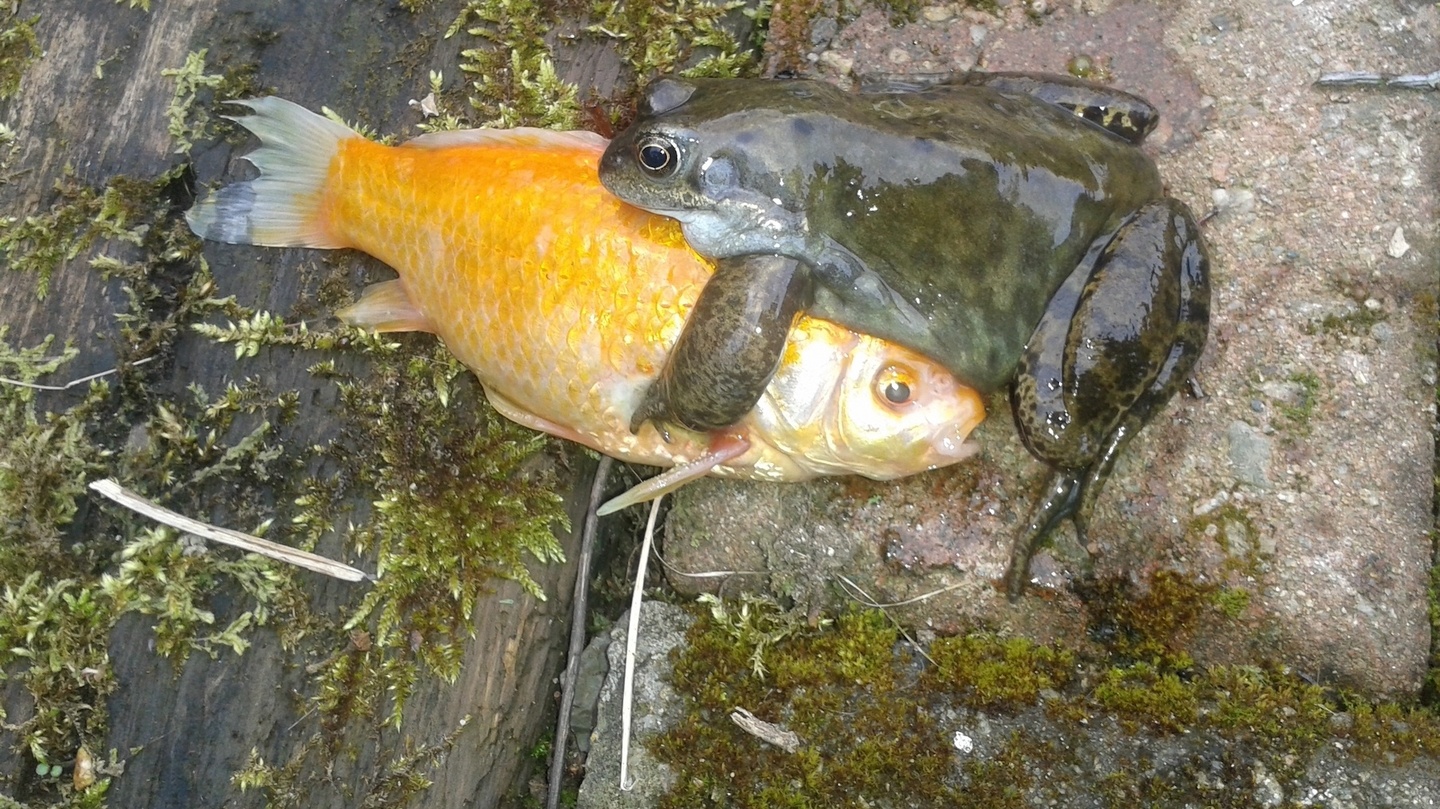
4. Aggressive Behavior Towards Fish
Indiscriminate aggression towards fish by certain frog species can result in serious harm or death to the fish. African Clawed Frogs, known for their predatory nature, may exhibit aggressive behavior towards fish, especially those small enough to be considered prey. This aggression can lead to injury or even the death of the fish sharing a habitat with these frogs.
Understanding the compatibility issues between frogs and fish is crucial to prevent such harm.
To ensure the well-being of both species, it’s highly recommended to keep African Clawed Frogs and fish in separate tanks. By separating them, you can prevent potential conflicts and maintain a harmonious environment for each species. This segregation not only safeguards the fish from falling victim to the predatory instincts of the frogs but also allows both animals to thrive without the risk of harm.
Properly managing the cohabitation of these creatures is essential for creating a safe and healthy ecosystem within your aquatic setup.
5. Benefits of Keeping Frogs and Fish Separate
Separating frogs and fish in distinct habitats is crucial for preventing aggression and ensuring the safety and well-being of both species. When considering the benefits of keeping frogs and fish apart, the following points are essential to bear in mind:
- Preventing Aggression: By housing frogs and fish in separate tanks, you significantly reduce the risk of aggressive interactions that could harm either species.
- Individual Care Requirements: Providing distinct environments allows you to cater to the specific needs of frogs and fish, ensuring their optimal health and development.
- Harmonious Tank Environment: Keeping frogs and fish apart promotes a peaceful coexistence within each habitat, fostering a stress-free environment for both animals.
- Harm Prevention: Separating these species minimizes the chances of potential injuries or predation, safeguarding the overall well-being of the aquatic inhabitants.
Conclusion
In conclusion, it’s important to consider the potential risks of keeping African Clawed Frogs with fish in the same tank.
With their predatory nature, risk of fish being eaten, potential harm from parasites and diseases, aggressive behavior towards fish, and the benefits of keeping frogs and fish separate, it’s advisable to keep these species separate to ensure the well-being of both.