

Discover Alabama’s 8 amazing woodpeckers! From the tiny Downy Woodpecker, with its black and white plumage and red spot, to the mighty Pileated Woodpecker, boasting a striking red crest. The Hairy Woodpecker, known for its vibrant red head, and the ground-hopping Northern Flicker with its unique markings. Explore the adaptable Red-bellied Woodpecker with zebra-like barring. Don’t forget the Yellow-bellied Sapsucker, the stunning Red-headed Woodpecker, and the endangered Red-cockaded Woodpecker. Each with distinct features and habitats throughout Alabama’s diverse landscapes, awaiting your discovery.
1. Downy Woodpecker

The Downy Woodpecker, the smallest and most common woodpecker species in Alabama, is known for its distinctive black and white plumage pattern. These striking birds have a black back with white spots, complemented by a white belly and white wing markings. Males sport a small red spot on the back of their heads, a feature absent in females.
Found in deciduous forests, Downy Woodpeckers are frequent visitors to backyard feeders, where they feed on insects, seeds, and suet. Their adaptability to human environments has made them a familiar sight to many birdwatchers in Alabama. With over 100,000 eBird checklists documenting sightings of Downy Woodpeckers in the state, it is evident that these woodpeckers are not only abundant but also widely distributed. Keep your eyes peeled for these charming birds with their classic black and white pattern and distinctive red spot, as they flit among the trees or explore your feeder setup.
2. Hairy Woodpecker
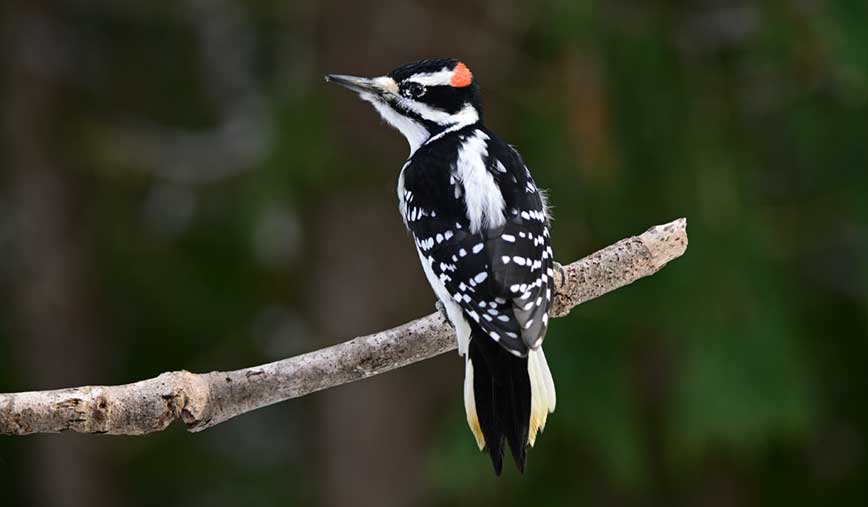
Explore the medium-sized Hairy Woodpecker, distinguished by its black and white body and distinctive long chisel-like beak. Male Hairy Woodpeckers sport a vibrant red patch on their heads, a key characteristic aiding in their identification. These birds are often spotted near backyard bird feeders, as they are drawn to suet and sunflower seeds. In their natural habitat of forests with large trees, Hairy Woodpeckers use their strong beaks to excavate wood in search of insects, their primary food source. The loud drumming and unique calls of Hairy Woodpeckers serve as forms of communication within the species, aiding in territory defense and attracting mates. Next time you catch a glimpse of a Hairy Woodpecker, observe its striking black and white plumage, listen for its distinct calls, and appreciate its role in the ecosystem as a skilled insect hunter and communicator.
3. Northern Flicker
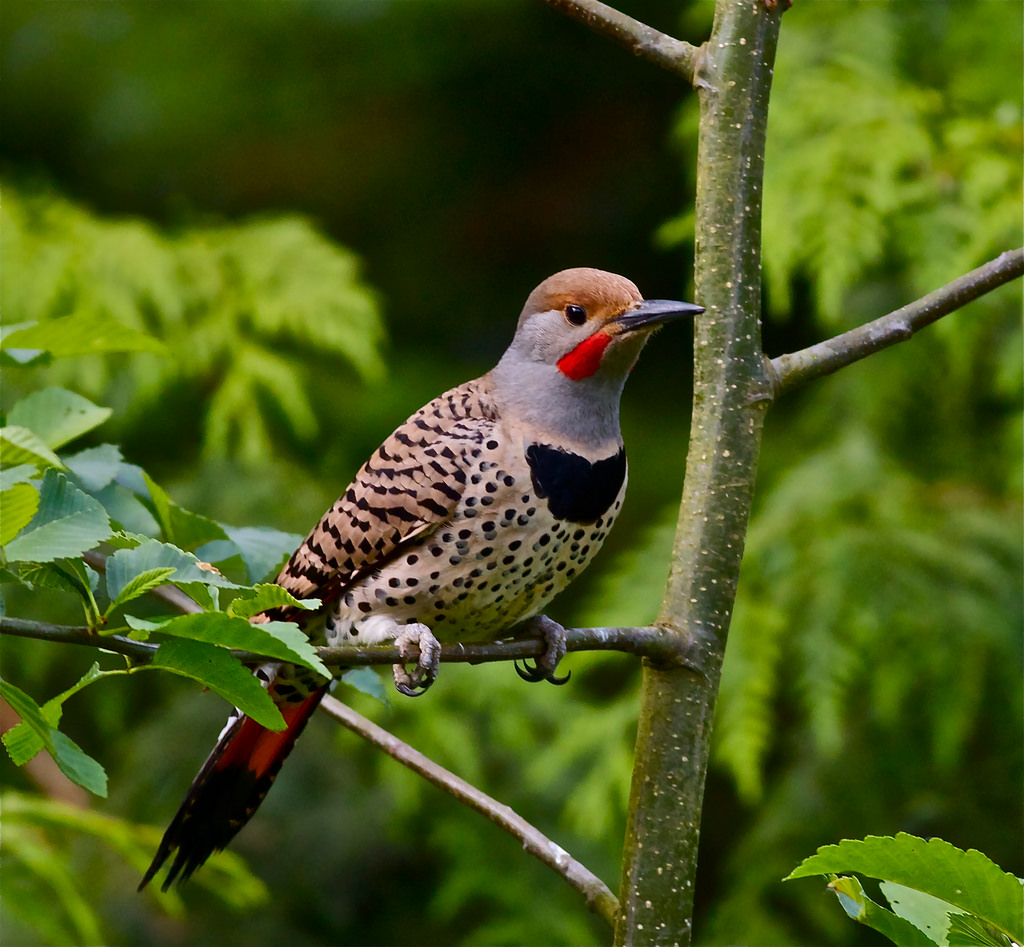
Fairly large and distinct in appearance, Northern Flickers found in Alabama exhibit unique characteristics that set them apart from other woodpecker species. These birds, comparable in size to American Robins, boast a striking black bib, a vibrant red patch on their head, and eye-catching yellow feathers under their wings. What truly distinguishes Northern Flickers is their ground-hopping behavior, a foraging technique uncommon among woodpeckers. Often found on the forest floor in open wooded areas, these birds use their strong bills to probe for ants, beetles, and other insects.
During the summer months in Alabama, the numbers of Northern Flickers decrease as some individuals may migrate to other regions. Despite this seasonal fluctuation, their presence remains significant in the state’s avian landscape. Observing Northern Flickers can be a rewarding experience for birdwatchers, given their unique appearance and behavior within their habitat.
4. Pileated Woodpecker

Comparable in size to a crow, the Pileated Woodpecker stands out as the largest woodpecker species in Alabama, measuring approximately 16.5 inches in length. These majestic birds are easily recognizable by their striking black and white plumage, accented with a vibrant red crest atop their heads. Pileated Woodpeckers are nonmigratory, preferring to inhabit dense forested areas across the state where they can find suitable nesting sites.
Their loud, distinctive calls, often likened to maniacal laughter, echo through the woods, making them a unique and easily identifiable presence in Alabama’s ecosystems. Apart from their vocalizations, Pileated Woodpeckers play a crucial role in the environment by excavating large cavities in trees. These cavities provide nesting sites not only for themselves but also for a variety of other wildlife species, showcasing the importance of these impressive woodpeckers in maintaining biodiversity within Alabama’s forests.
5. Red-bellied Woodpecker
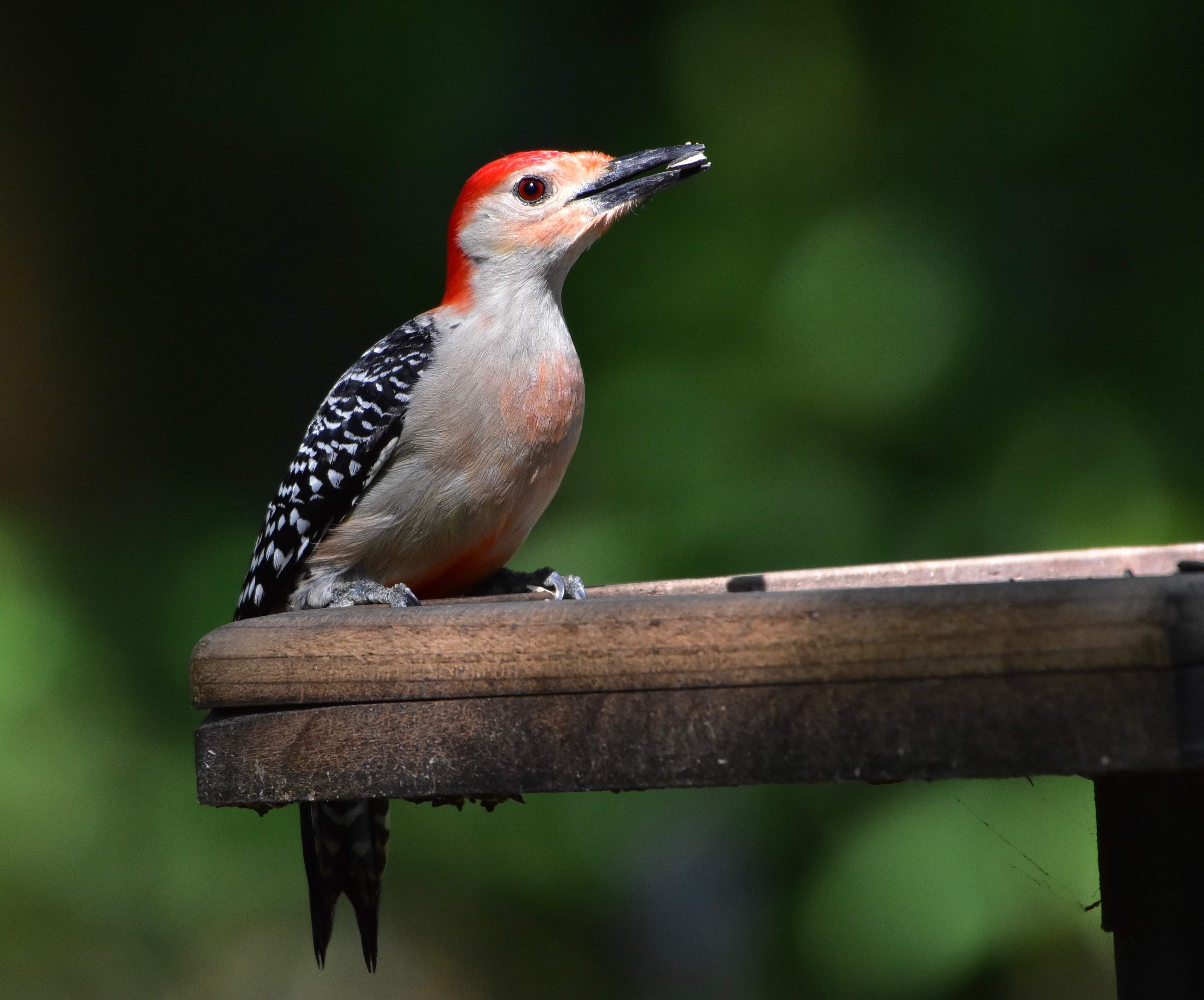
The Red-bellied Woodpecker, commonly found in Alabama’s loblolly pine forests and Appalachian foothills, is one of the most common woodpecker species in the state. Males sport a striking entirely red hood, contrasting with the females that exhibit a more subtle red patch on the back of their heads. These woodpeckers are prevalent in Alabama, adapting well to various habitats, making them frequent visitors to backyards and easily spotted across the region. Red-bellied Woodpeckers are recognized by the zebra-like barring on their backs, adding to their unique appearance. Their loud calls echo through wooded areas, helping in their identification. With an average length of about 9.25 inches and a wingspan of around 16 inches, these medium-sized woodpeckers are a common sight throughout Alabama. Keep an eye out for these captivating birds with their red heads and distinctive facial stripes whenever you’re exploring Alabama’s woodlands.
6. Yellow-bellied Sapsucker

When does the Yellow-bellied Sapsucker typically arrive in Alabama for its migratory stay? The Yellow-bellied Sapsucker usually arrives in Alabama in October to begin its migratory stay, departing the state by April. Here are some key details about this fascinating woodpecker species:
- Distinctive Features: The Yellow-bellied Sapsucker can be easily identified by its white shoulders and the striking red patch on its head, making it a common sight in Alabama during its stay.
- Habitat Preference: These migratory woodpeckers are often found in various wooded habitats across Alabama, where they engage in their characteristic sap-feeding behavior.
- Migratory Behavior: Yellow-bellied Sapsuckers are completely migratory in Alabama, leaving the state during the breeding season and returning the following fall.
- Size: With a wingspan of approximately 16 inches and a body length of 8.5 inches, the Yellow-bellied Sapsucker contributes to the diverse woodpecker population in Alabama, adding a unique touch to the avian landscape.
7. Red-headed Woodpecker
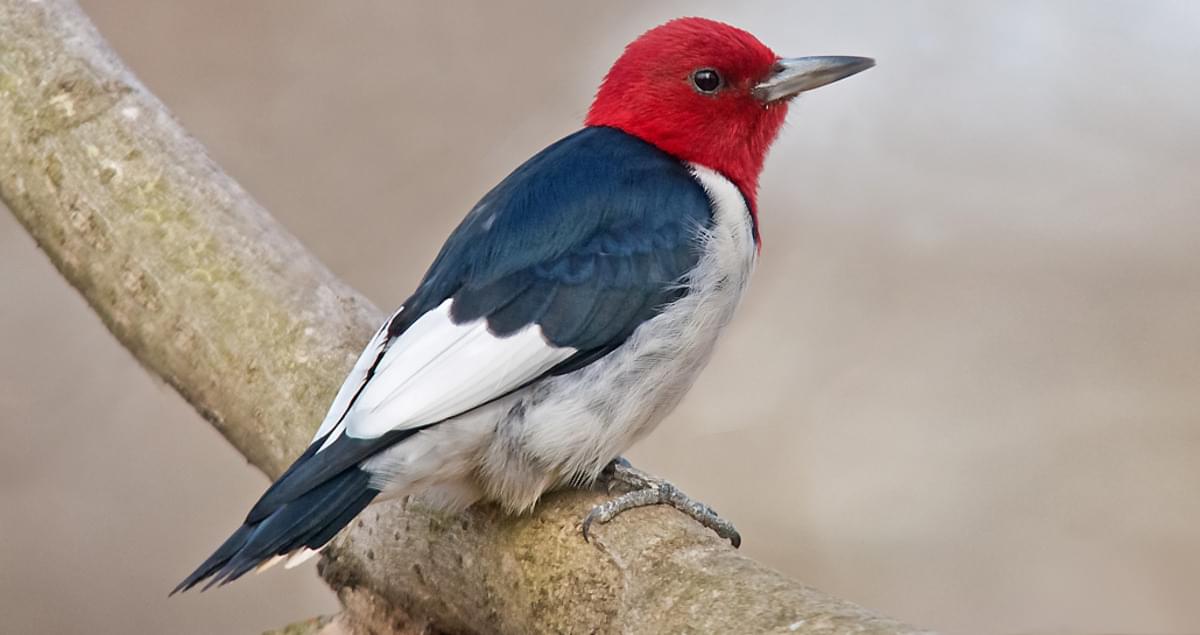
Easily recognized by its vibrant red head and bill, the Red-headed Woodpecker in Alabama stands out as a striking avian species amidst its habitat. This woodpecker, though once a common bird in Alabama, has faced population declines due to habitat loss. Red-headed Woodpeckers are known for their nesting habits, often utilizing dead trees for shelter, emphasizing the importance of preserving their natural habitats. These woodpeckers exhibit unique behavior by storing food like nuts, seeds, or insects in various locations for later consumption. When in their preferred habitats, the Red-headed Woodpecker emits a distinctive shrill call that echoes through the woods.
| Red-headed Woodpeckers in Alabama | Facts |
|---|---|
| Identification | Large red head and bill |
| Nesting behavior | Depend on dead trees |
| Vocalization | Distinctive shrill call |
8. Red-cockaded Woodpecker

Recognizable by its distinctive black and white markings, the Red-cockaded Woodpecker is a smallish species commonly sighted in Alabama. Here are some key facts about these endangered woodpeckers in South Alabama:
- Red-cockaded Woodpeckers are easily identified by the black and white bars on their backs and the large white patches on each side of their heads.
- These woodpeckers exhibit a unique black moustache mark and small black markings on their white underparts.
- One can distinguish Red-cockaded Woodpeckers by observing the mostly white sides of their heads and the absence of a black line extending back from the eye.
- They are highly dependent on specific habitat conditions, preferring open pine forests with mature trees where they excavate small holes for nesting, making these areas crucial for their survival as an endangered species.