

Immerse yourself in Florida’s diverse owl population. Witness the imposing figure of the Great Horned Owl, with its large yellow eyes and ear tufts, ruling the skies. Encounter the petite Eastern Screech Owl, emitting trilling calls that echo through the night. Delight in the quirky Burrowing Owl, residing near human activity with a diet of lizards and insects. Marvel at the Short-Eared Owl’s distinctive appearance, haunting marshlands with its repetitive bark-like call. Engage with the Barred Owl’s mesmerizing ‘who cooks for you’ call in forested sanctuaries. Envision the silent flight of the Barn Owl and the secretive Northern Saw-Whet Owl.
Great Horned Owl
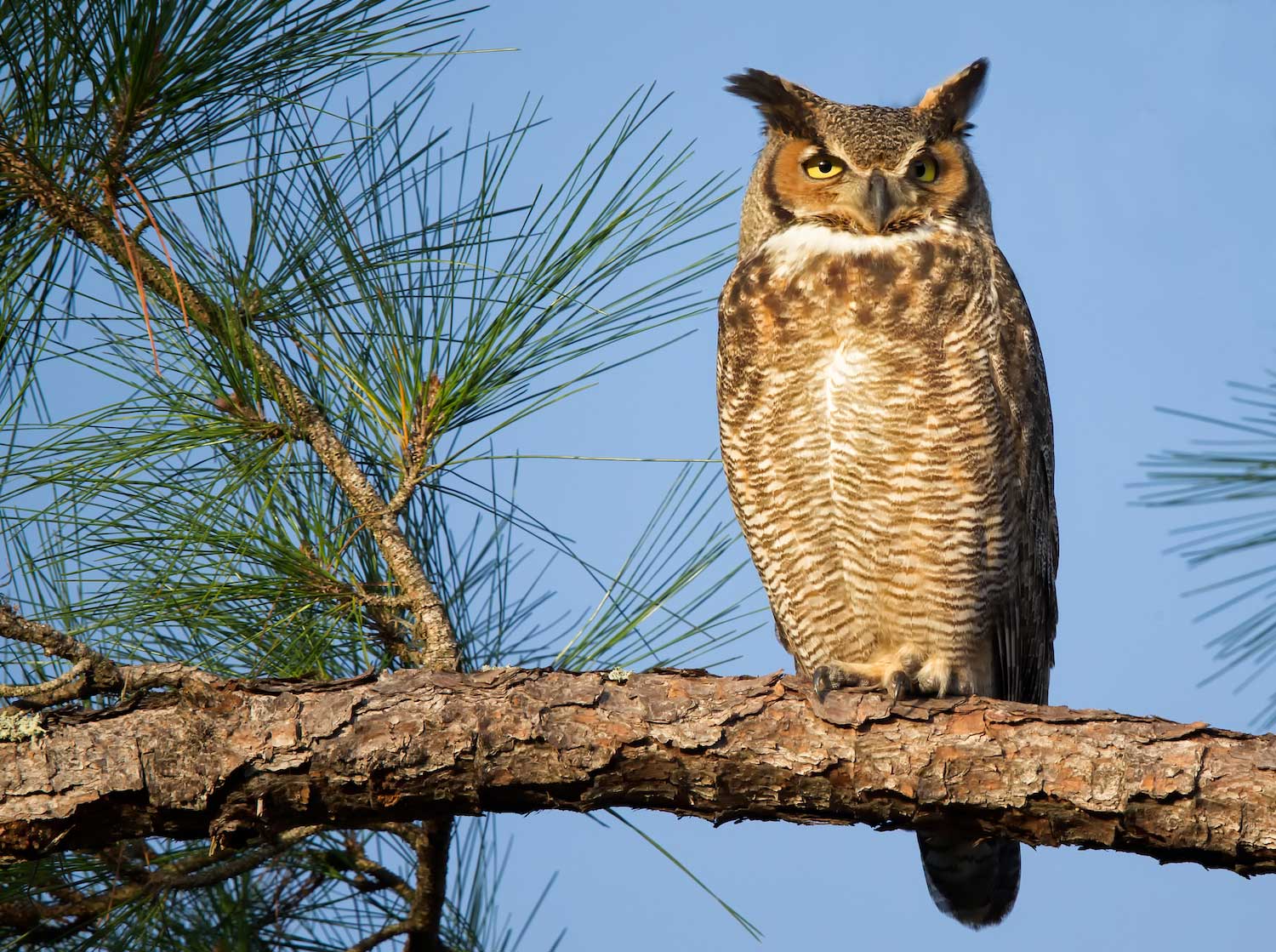
The largest owl species in Florida, the Great Horned Owl, stands out with its impressive size, measuring between 18 to 25 inches in height. These majestic birds are easily identifiable by their prominent ear tufts and striking large yellow eyes, which aid in their nocturnal hunting activities. Great Horned Owls are well-adapted to various habitats, often choosing to nest in tree cavities found in tall trees throughout the state.
One fascinating aspect of these owls is the sexual dimorphism present within the species, where females tend to be larger than males. This difference in size is particularly noticeable when observing a mated pair. In addition to their physical characteristics, Great Horned Owls have a diverse diet, preying on a variety of animals such as rodents, insects, and even other birds. This adaptability in both habitat choice and diet makes them successful predators in Florida’s ecosystems.
Eastern Screech Owl
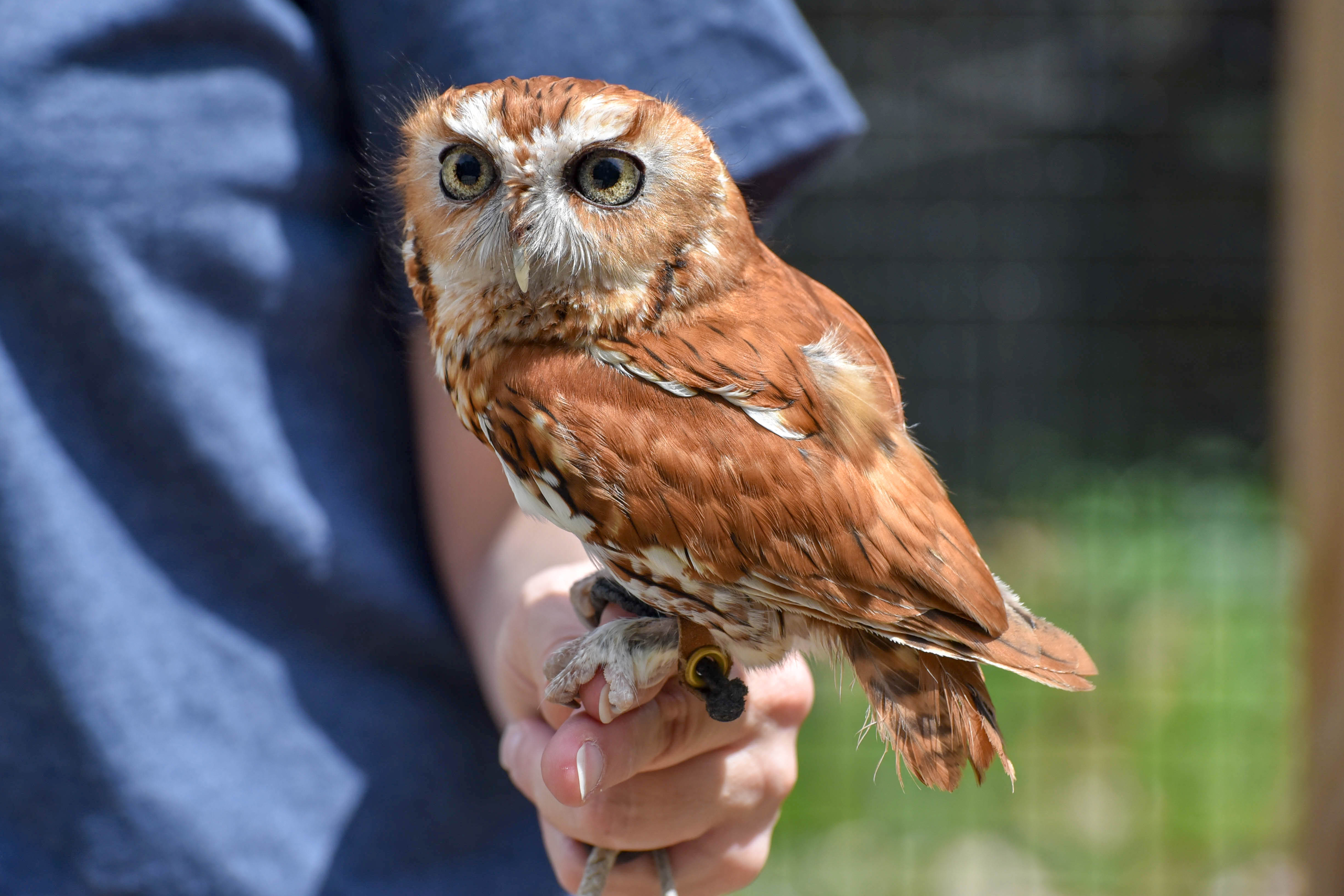
Nestled within Florida’s wooded habitats, the Eastern Screech Owl, a small owl species, showcases a unique blend of size and adaptability. Measuring between 6.5 to 10 inches, weighing 4 to 8 ounces, with a wingspan of 18 to 24 inches, these owls possess remarkable agility in navigating their forested homes.
- Distinct Calls: Eastern Screech Owls are renowned for their trilling and whinnying calls that echo through the night, serving as a signature characteristic of their presence in the woodlands.
- Feeding Habits: These small owls primarily rely on a diet of insects, small mammals, and birds, showcasing their role in the ecosystem as effective hunters that help control populations of these creatures within their habitats.
- Longevity: With a lifespan of up to 14 years in the wild, Eastern Screech Owls demonstrate resilience and survival skills in the intricate balance of Florida’s diverse ecosystems. Their ability to thrive in wooded environments highlights their remarkable adaptability and specialized niche within the local fauna.
Burrowing Owl

Inhabiting open grasslands and showing a preference for nesting in burrows, the Burrowing Owl, a small owl species with distinctive long legs, exhibits a unique ecological niche within Florida’s diverse habitats. These small owls, ranging from 7 to 11 inches in height, have evolved to thrive in the open grasslands, where they construct their nests within burrows. The adaptability of Burrowing Owls is evident in their choice of nesting locations, often found near airports and other human-altered landscapes where the soil is conducive for digging.
Their diet, consisting of lizards, mice, and insects, is a testament to their versatility as hunters, with their foraging activity extending from day to night. Despite challenges posed by noisy environments in human-altered landscapes, Burrowing Owls have demonstrated resilience, successfully coexisting with anthropogenic changes. This adaptability highlights their remarkable ability to adjust to varying conditions, securing their presence in Florida’s ecosystem.
Short-Eared Owl
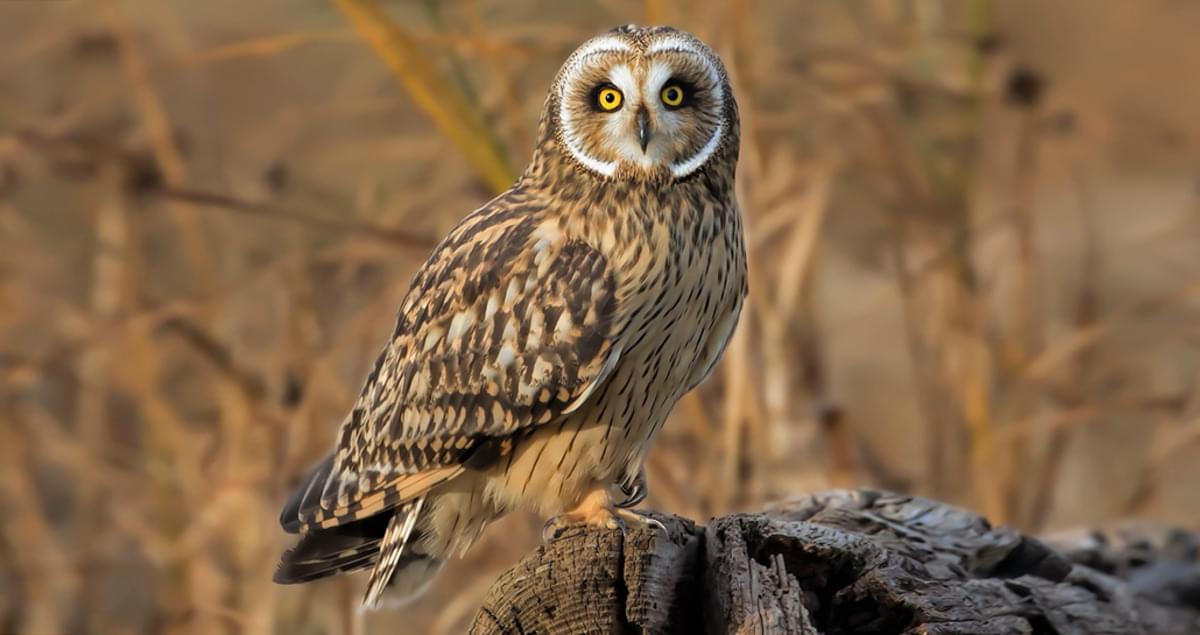
Short-Eared Owls, with their distinctive yellow eyes and short ear tuft, are migratory species that visit Florida during the winter months. These elegant birds of prey are known for their unique features and behaviors:
- Habitat Preferences: Short-Eared Owls prefer habitats with open fields and marshlands where they can hunt for their main prey of small mammals like voles and mice. Their low flight over these areas makes them fascinating to observe as they seek out their next meal.
- Distinctive Appearance: The yellow eyes of Short-Eared Owls stand out against their mottled brown and white plumage. Their short ear tufts, which resemble small tufts of feathers, add to their charm and help identify them from other owl species.
- Vocalizations: While in flight or perched, Short-Eared Owls emit a soft, repetitive bark-like call. This vocalization adds to the ambiance of their presence in the winter landscape of Florida, making them a treat for birdwatchers and nature enthusiasts alike.
Barred Owl
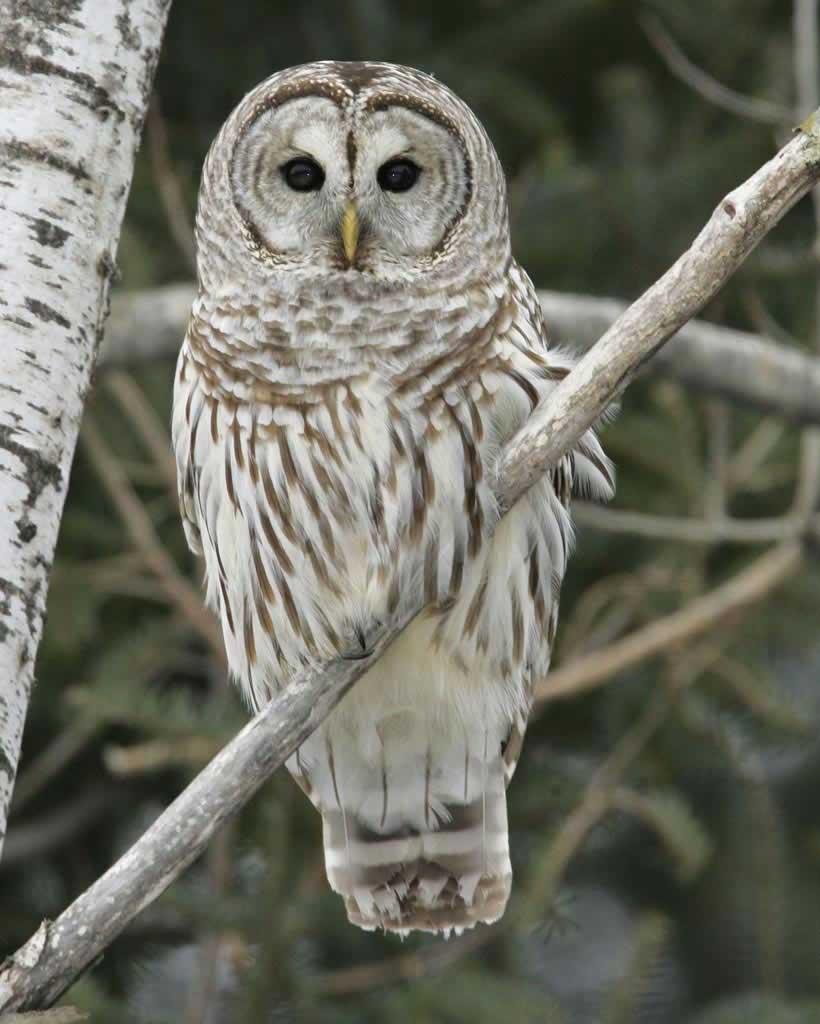
Barred Owls, a prominent species in Florida’s avian landscape, exhibit distinctive physical characteristics and behaviors that set them apart from other owl species in the region. These owls can reach heights of up to 20 inches with impressive wingspans ranging from 38 to 49 inches. Their mottled brown and white plumage provides excellent camouflage in the dense forests they inhabit. Unlike some owl species, barred owls lack ear tufts. One fascinating aspect of barred owls is their regurgitated pellets, containing indigestible remains of their prey such as bones and fur.
In Florida, barred owls are commonly found in mature forests near water sources, where they nest in tree cavities. Their haunting call, described as “who cooks for you, who cooks for you all,” echoes through the woods, adding to the mystique of these nocturnal creatures. Visitors to Florida’s National Parks may be lucky enough to spot a barred owl silently gliding through the trees, a true testament to the natural beauty of the region.
Barn Owl

Among the owl species residing in Florida, the Barn Owl stands out with its heart-shaped face and distinctive mottled tan and grey feathers. These small creatures, measuring around 16 inches tall, are known for their eerie shriek-like call that echoes through the night in the Florida landscape. Here are a few essential points about the Barn Owl:
- Distinctive Appearance: Barn owls in Florida boast a unique appearance with their heart-shaped facial disk that aids in capturing sound and locating prey. Their soft plumage, a mix of tan and grey, provides excellent camouflage in their habitat.
- Habitat and Behavior: These elusive birds often nest in tree cavities, caves, and even abandoned buildings across open habitats in Florida. They are primarily nocturnal, using their keen eyesight and acute hearing to hunt for small mammals like rodents.
- Least Common Species: Despite their striking features and haunting calls, Barn Owls are the least common owl species found in Florida, adding to their mysterious allure in the region.
Northern Saw-Whet Owl
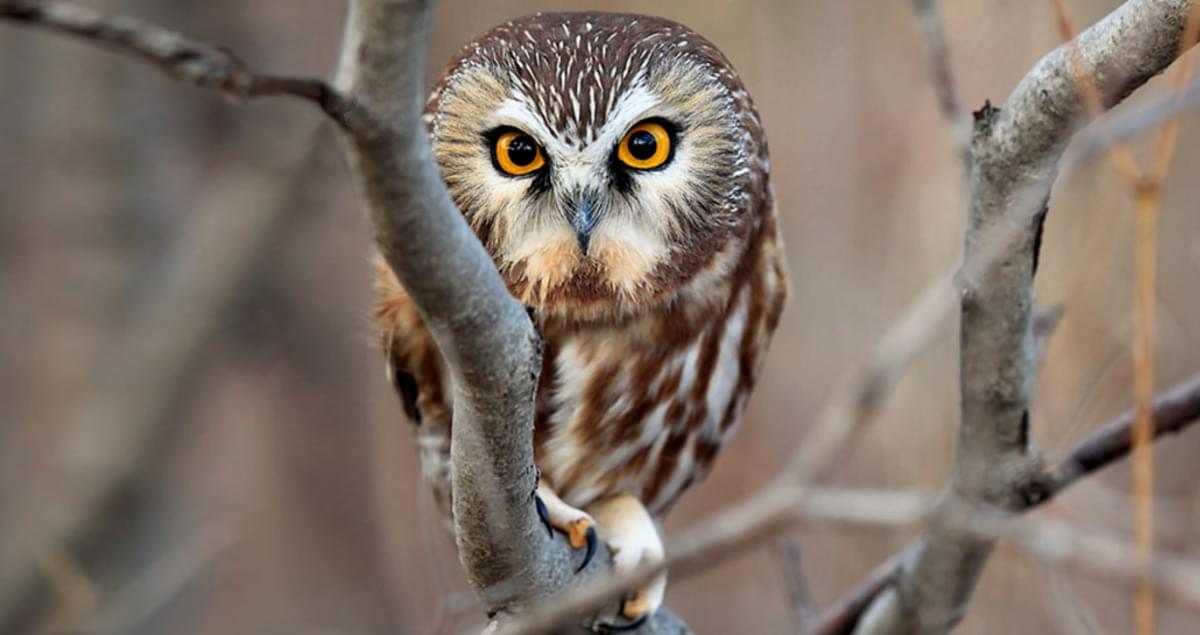
The diminutive size and exceptional hearing abilities of the Northern Saw-Whet Owl in Florida make it a remarkable species for rodent hunting in coniferous forests. This small owl, measuring 7 to 9 inches, relies on its acute auditory senses to locate prey, primarily rodents, within the dense foliage of Florida’s coniferous habitats. Weighing between 2.2 to 5.4 ounces, with a wingspan spanning 17 to 22 inches, these owls exemplify resilience and adaptability, living up to 16 years in captivity. Their unique features and behavior make observing Northern Saw-Whet Owls in the wild a captivating experience, showcasing nature’s intricate adaptations for survival. In Florida’s ecosystem, these owls play a crucial role in controlling rodent populations, maintaining the delicate balance of the food chain in the region’s forests. The Northern Saw-Whet Owl’s ability to thrive in diverse environments underscores its importance in the intricate tapestry of Florida’s wildlife.