

Embark on a hummingbird adventure in Nevada! Encounter Rufous Hummingbirds with copper-orange backs and Black-chinned Hummingbirds with vibrant purple throats. Discover Calliope Hummingbirds migrating to Mexico and Broad-tailed Hummingbirds nesting in cup-shaped nests. Marvel at Anna’s Hummingbirds with unique nesting habits and Costa’s Hummingbirds feeding on desert plants. Witness Allen’s Hummingbirds’ vibrant orange-red throats in coastal environments. Listen to the unique vocalizations of Lucifer Hummingbirds and spot the rare Xantus’s Hummingbirds in southern Nevada. Lastly, discover the largest Blue-throated Hummingbirds known for their iridescent blue throats in sunlight. Explore these mesmerizing species further.
1. Rufous Hummingbird
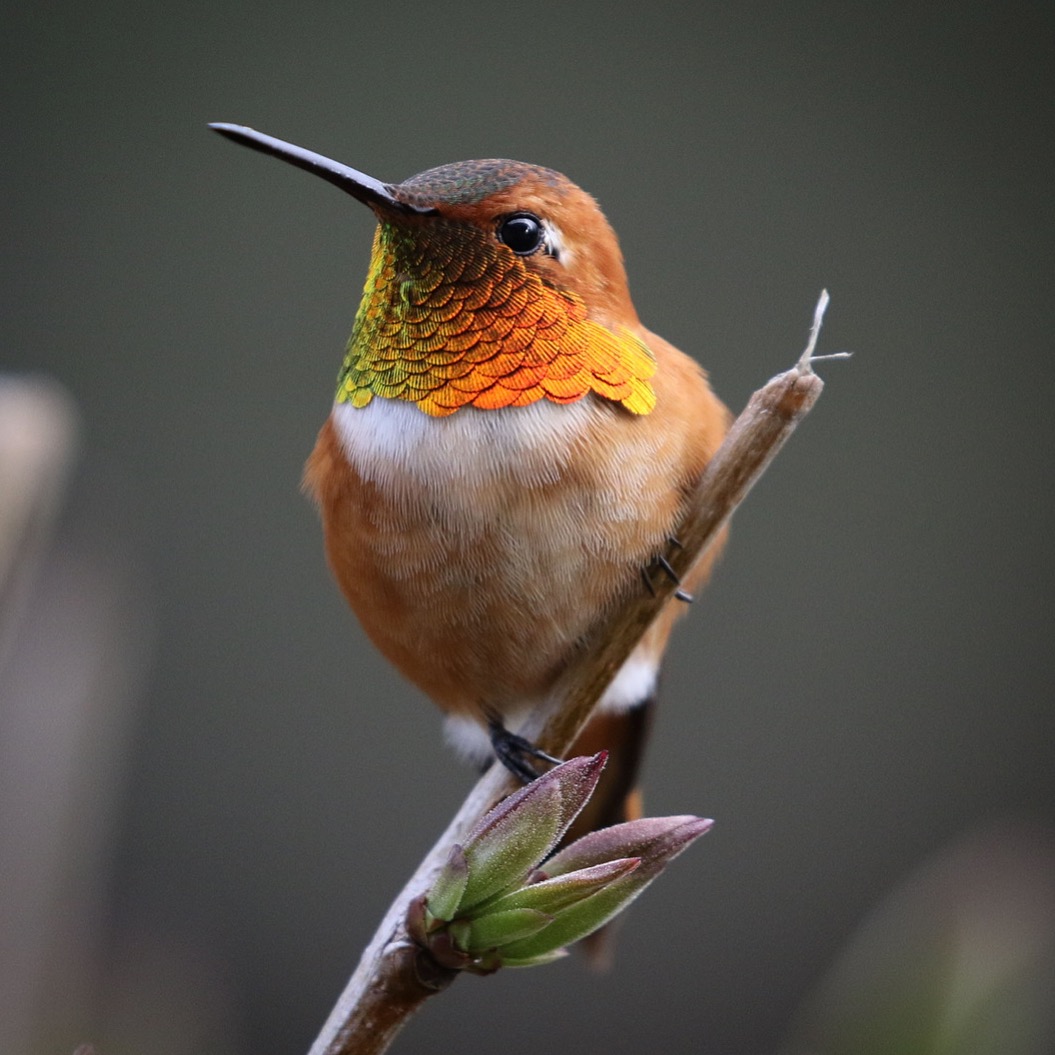
Observing Rufous Hummingbirds in Nevada reveals their distinctive copper-orange backs on males and green crowns on females, showcasing their aggressive behavior towards other hummingbirds at feeders. These feisty birds are best known for their territorial nature, often seen chasing off intruders with swift, darting flights and sharp chirps. To witness their acrobatic displays up close, consider placing your nectar feeders at different heights, as Rufous Hummingbirds prefer feeding at around 10 feet high.
In addition to their striking appearance and assertive demeanor, Rufous Hummingbirds are also famous for their remarkable migration journey. These tiny creatures make one of the longest migratory journeys of any bird species, traveling up to 3,900 miles from Alaska to Mexico. To attract these impressive migrants to your yard, make sure to provide a variety of nectar-rich flowers and multiple feeders to accommodate their energetic feeding habits. Remember, when you hear their distinct chipping sounds or the male’s chu-chu-chu call, be prepared to witness their captivating behaviors and admire their resilience.
2. Black-chinned Hummingbird
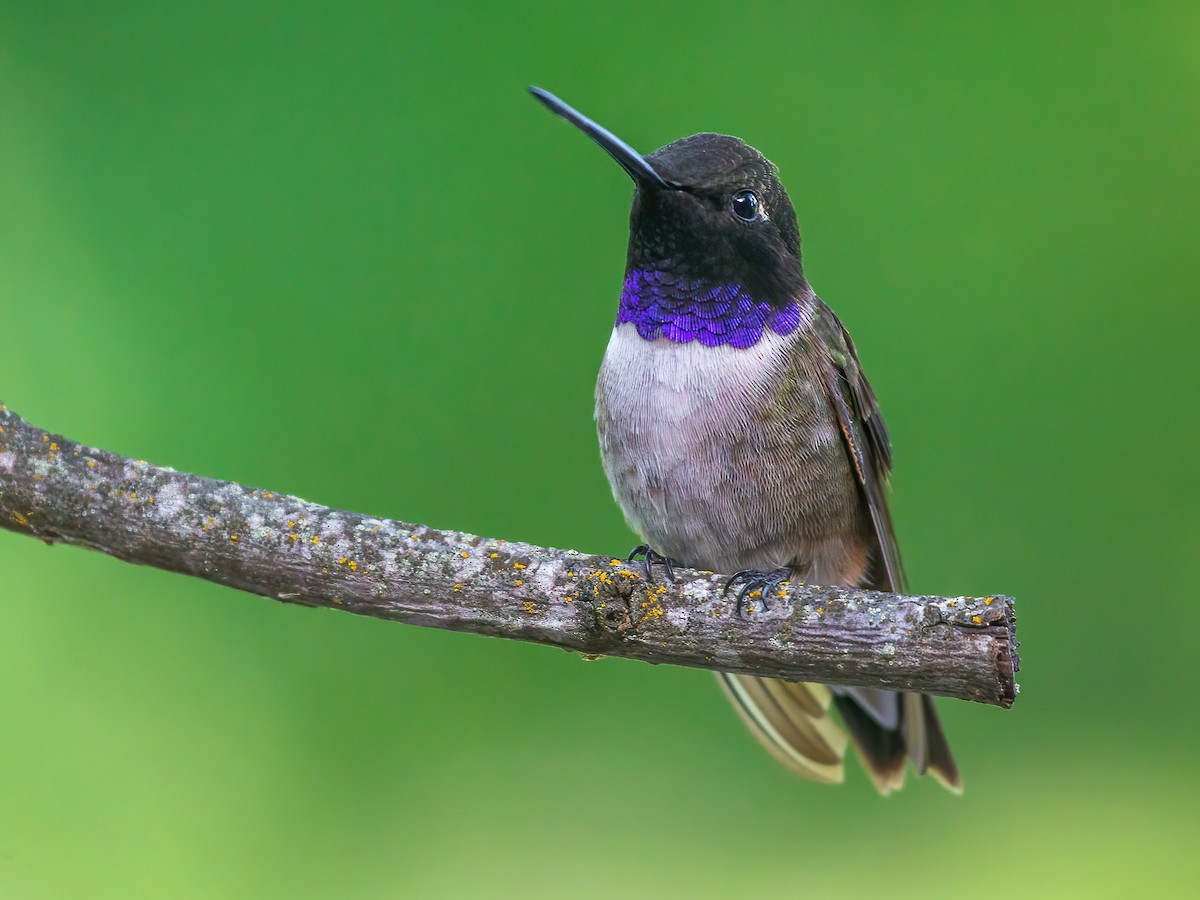
What distinguishes the metallic green Black-chinned Hummingbird in Nevada from other hummingbird species? The Black-chinned Hummingbird stands out with its vibrant metallic green plumage, complemented by a striking purple throat that shimmers in the sunlight. This species showcases sexual dimorphism, where females sport a greenish-grey cap while males emit a distinct hum while in flight. During the summer months, these hummingbirds breed in Nevada, contributing to the local avian population’s diversity. Their petite eggs, resembling the size of a coffee bean, mark the beginning of a new generation. Known for their voracious nectar consumption, Black-chinned Hummingbirds can drink up to three times their body weight in this sugary substance. Remarkably, they exhibit adaptability by switching to insects as a food source when nectar becomes scarce. To witness the beauty and behavior of these enchanting creatures up close, be sure to check specific locations in Nevada or provide your email address for future updates on their whereabouts.
3. Calliope Hummingbird
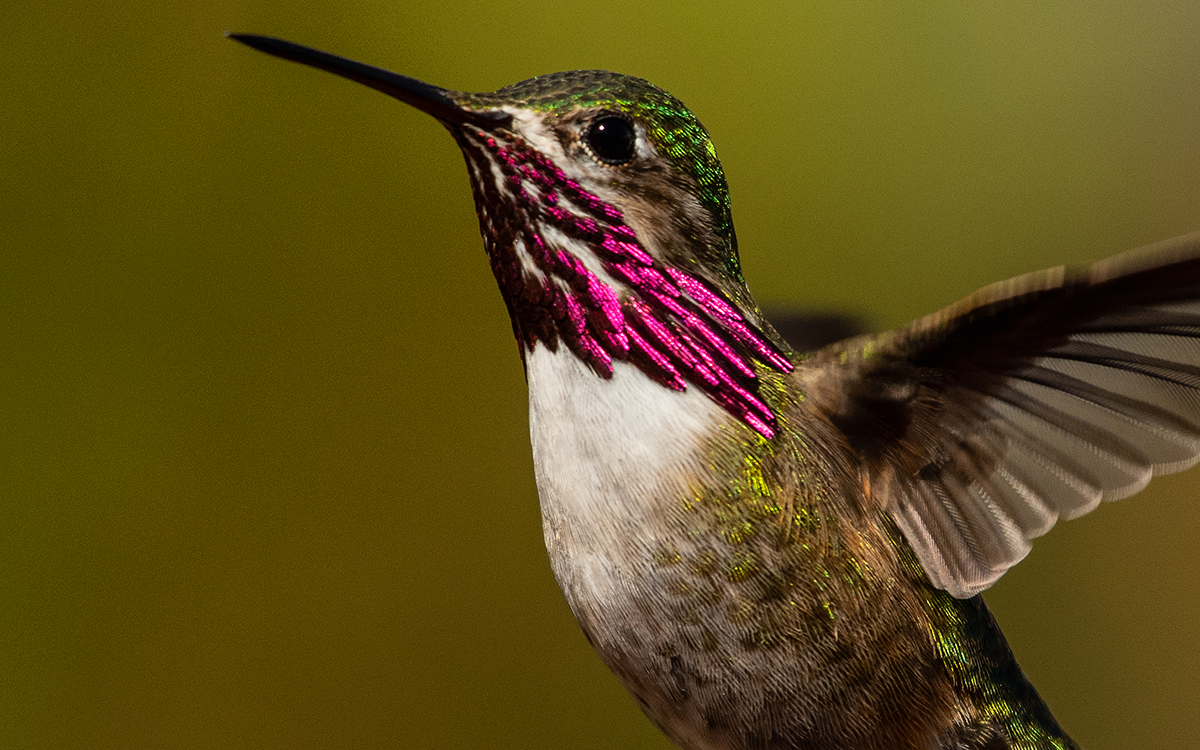
The smallest bird species in Nevada, the Calliope Hummingbird, boasts distinctive long, magenta throat feathers in males. Females can be identified by the dark spots on their throat. These tiny birds exhibit unique mating displays, including U-shaped dives. Calliope Hummingbirds are often mistaken for female Rufous Hummingbirds due to their similar appearance.
| Topics | Calliope Hummingbird |
|---|---|
| Nesting habits | Nest in coniferous forests at high elevations. |
| Migration patterns | Migrate from western U.S. to Mexico for winter. |
| Diet preferences | Feed on nectar, insects, and tree sap. |
| Flower preferences | Prefer red or orange tubular flowers. |
| Conservation status | Least Concern according to the IUCN. |
| Population trends | Stable population, not considered at risk. |
4. Broad-tailed Hummingbird

Characterized by iridescent green backs and vibrant rose-red throat patches in males, Broad-tailed Hummingbirds are fascinating avian species found in the mountainous regions of Nevada. These hummingbirds exhibit unique nesting habits by constructing small cup-shaped nests made of plant down, moss, and spider silk, camouflaging them with lichens for added protection. During the breeding season, females diligently incubate their tiny white eggs, showcasing exceptional parental care.
When it comes to feeding preferences, Broad-tailed Hummingbirds primarily consume nectar from tubular flowers like penstemon and columbine. Their long, slender bills and specialized tongues allow them to extract nectar efficiently. Additionally, they supplement their diet with small insects and spiders for essential proteins and nutrients.
In terms of migratory patterns, Broad-tailed Hummingbirds embark on an impressive journey from their summer breeding grounds in Nevada to wintering grounds in Mexico and Central America. Their migration route often takes them through the Rocky Mountains, where they are commonly spotted during the summer months, highlighting their remarkable endurance and navigational skills.
5. Anna’s Hummingbird

In Nevada, Anna’s Hummingbirds can be observed year-round, displaying distinctive physical features and nesting behaviors. These tiny creatures, with males boasting a striking rose-red crown and gorget, and females adorned with a green crown and speckled throat, are a common sight in the state. Anna’s Hummingbirds are known for their unique nesting habits, crafting cup-shaped nests utilizing plant down and spider silk, typically nestled in trees or shrubs.
When it comes to feeding preferences, Anna’s Hummingbirds primarily consume nectar from flowers, supplementing their diet with small insects. Their ability to hover in mid-air while feeding sets them apart from other bird species. Additionally, these hummingbirds exhibit unique behaviors, emitting distinctive chirping and buzzing sounds during their flight displays. Unlike many migratory birds, Anna’s Hummingbirds opt to stay in Nevada throughout the year, adding to the diverse avian population found in the region.
6. Costa’s Hummingbird

Observing Costa’s Hummingbirds in Nevada reveals their distinctive purple cap and throat, marking their presence in desert habitats with mesquite and saguaro cacti. These petite birds are known for their unique feeding behaviors, primarily feeding on nectar from desert plants. Their migratory patterns lead them to Nevada during specific seasons, adding to the diversity of hummingbird species in the region.
Costa’s Hummingbirds exhibit interesting nesting habits, often selecting well-concealed locations within desert vegetation to build their compact nests. The female constructs the nest using plant fibers and spider silk, creating a secure environment for her eggs.
During migration, Costa’s Hummingbirds travel long distances, relying on the abundance of flowers along their route for sustenance. Their metallic buzzing sound can be heard as they dart between blooms, showcasing their agility and precision in feeding.
7. Allen’s Hummingbird
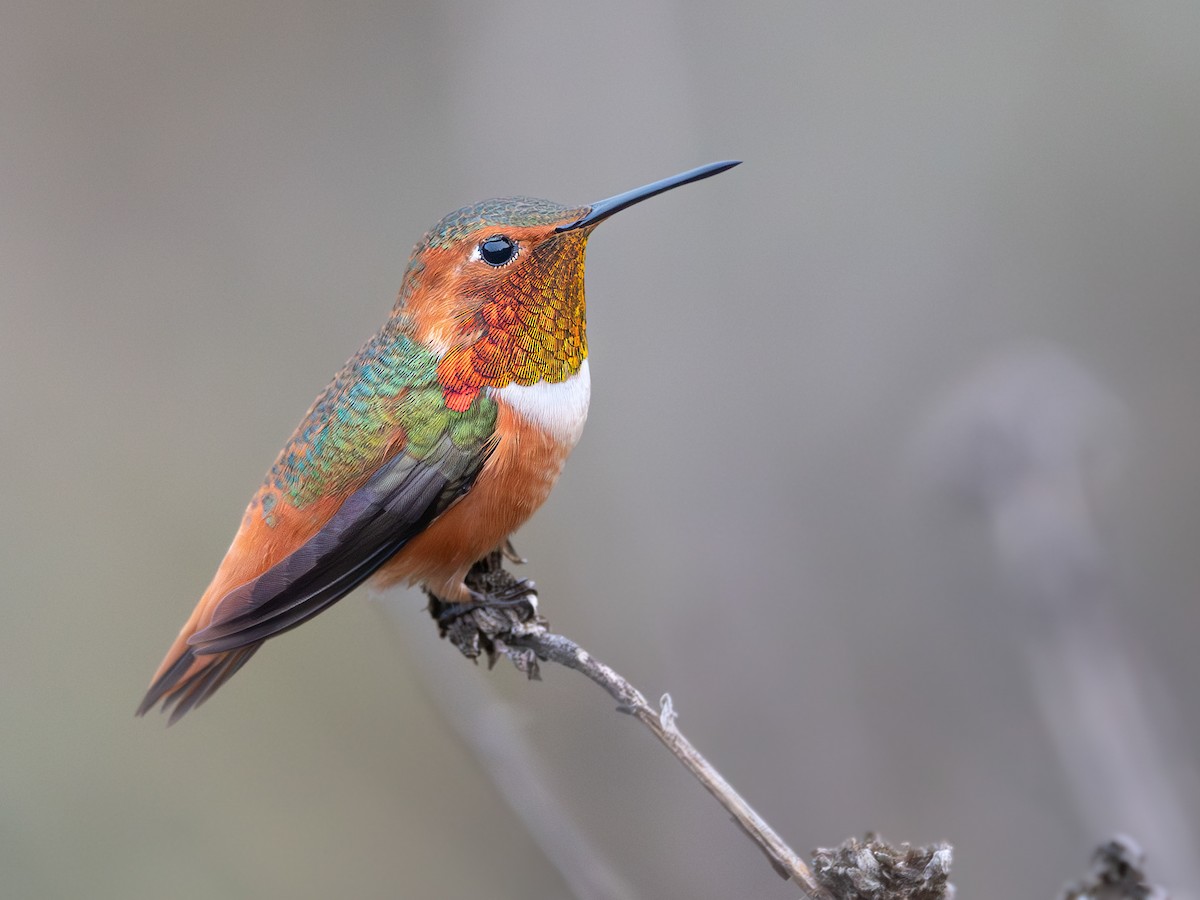
Rarely encountered in Nevada, Allen’s Hummingbirds are distinctive for their vibrant orange-red throats and green backs. Males boast a striking appearance with their brilliant throat coloration, while females exhibit a more subtle green crown and white throat adorned with dusky spots. These hummingbirds undertake impressive migration patterns, flying to Mexico and Central America for the winter months. In terms of breeding habitats, Allen’s Hummingbirds are typically found along the Californian coast, where they seek out coastal environments rich in nectar-producing flowers.
| Attribute | Description |
|---|---|
| Scientific Name | Selasphorus sasin |
| Throat Color (Males) | Vibrant orange-red |
| Throat Color (Females) | White with dusky spots |
| Migration Patterns | Winter in Mexico and Central America |
Conservation efforts for Allen’s Hummingbirds are crucial due to their rarity in Nevada. Monitoring population trends and preserving their coastal habitats are essential for ensuring the continued presence of these stunning birds in the region.
8. Lucifer Hummingbird

Allen’s Hummingbirds are rarely encountered in Nevada, but a notable contrast can be found in the distinctive features of the Lucifer Hummingbird, known for its long, curved bill. This species boasts males with iridescent purple crowns and bright green throats, while females exhibit green crowns and white throats with dark streaks. Here are some key aspects of the Lucifer Hummingbird:
- Vocalization patterns: Lucifer Hummingbirds are known for their unique and melodious vocalizations, which play a crucial role in communication and courtship rituals.
- Territorial behavior: These hummingbirds exhibit intense territoriality, vigorously defending their feeding and nesting areas from intruders, especially during the breeding season.
- Breeding habits: In Nevada’s desert regions, Lucifer Hummingbirds construct small cup-shaped nests using plant fibers, down, and spider silk, where females lay their eggs and care for their young with remarkable dedication.
The Lucifer Hummingbird’s striking appearance and intriguing behaviors make it a fascinating species to observe in the wild.
9. Xantus’s Hummingbird

Xantus’s Hummingbird, a rare species mainly found in the southern part of Nevada, displays distinct characteristics that set it apart in the region’s hummingbird population. These striking birds exhibit iridescent green plumage with a red bill for males, while females boast a green back and white throat. Preferring habitats like coastal sage scrub and oak woodlands for nesting and foraging, Xantus’s Hummingbirds are known for their unique vocalizations, emitting high-pitched squeaks that echo through their territories. Conservation efforts and habitat protection are crucial for safeguarding these birds in their limited range.
During the breeding season, Xantus’s Hummingbirds engage in elaborate mating rituals and courtship displays to attract potential mates. Understanding their migration patterns is essential for their conservation, as these birds undertake long journeys to reach their wintering grounds. Named after the Hungarian zoologist John Xantus, who first documented them in Baja California, these hummingbirds hold a special place in Nevada’s avian diversity.
10. Blue-throated Hummingbird
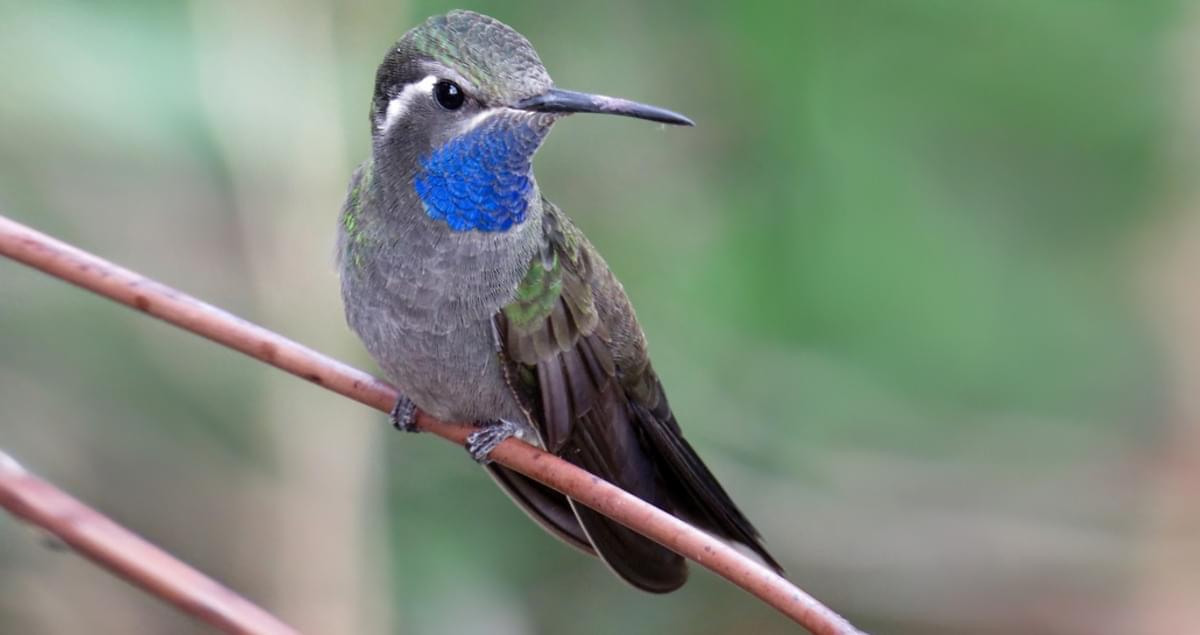
Blue-throated Hummingbirds, the largest hummingbird species in Nevada, are known for their iridescent blue throats that gleam in the sunlight. These magnificent birds can be found in the pine-oak forests of southeastern Nevada, where they exhibit fascinating behaviors and characteristics.
- Conservation Efforts: Due to habitat loss and climate change, conservation efforts are crucial to protect the Blue-throated Hummingbird population in Nevada. Preserving their forested habitats is essential for their survival.
- Unique Nesting Habits: Blue-throated Hummingbirds build their nests on horizontal branches using spider silk, lichens, and plant fibers, camouflaging them with the surrounding environment to avoid predators.
- Migratory Patterns: During the breeding season, Blue-throated Hummingbirds can be found in Nevada, but they migrate to Mexico for the winter, following the blooming of their preferred nectar sources.
- Behavior: These hummingbirds are known for their distinctive buzzing sound while flying, which helps them communicate and establish territories in their mountainous habitats.