

You can discover 13 awesome woodpecker species in Arizona. From the striking Gila Woodpecker with its red cap to the efficient foraging Ladder-backed Woodpecker, each species has unique characteristics. The Acorn Woodpecker creates communal granaries, while the Red-naped Sapsucker feeds on sap with distinctive drumming sounds. Keep an eye out for the rare Williamson’s Sapsucker in coniferous forests. The Hairy Woodpecker thrives in Arizona forests, and the White-headed Woodpecker is known for caching food in bark crevices. Don’t miss the Black-backed Woodpecker and the majestic Gilded Flicker with its golden-yellow underparts.
1. Gila Woodpecker Overview

The Gila Woodpecker, a year-round resident of Arizona and Mexico, is recognized for its unique nesting habits in saguaro cacti. Found predominantly in southeastern Arizona, these woodpeckers exhibit fascinating behaviors. Their diet comprises insects, berries, and cactus fruit, sustaining both adults and nestlings. Males can be identified by their striking red caps, adding a vibrant touch to the desert landscape. Nesting typically involves laying 3 to 5 eggs per clutch, with the possibility of 1 or 2 broods annually. Incubation lasts approximately 13 to 14 days, leading to nestlings fledging around 4 weeks of age. Despite their association with saguaros, Gila Woodpeckers display versatility by utilizing various tree species for nesting, demonstrating adaptability in their habitat choices. Through their distinct behaviors and nesting preferences, these woodpeckers play a crucial role in the ecosystem of the arid regions they inhabit.
2. Ladder-backed Woodpecker Characteristics

How do Ladder-backed Woodpeckers’ physical characteristics aid in their survival in arid environments? Ladder-backed Woodpeckers exhibit several features that help them thrive in the harsh conditions of arid regions like Arizona.
- Nesting habits: These woodpeckers are adept at excavating cavities in cacti, trees, or man-made structures for nesting, providing shelter from the intense heat and limited water sources.
- Feeding behavior: Their diet primarily consists of insects like ants, beetles, and caterpillars, which are abundant even in arid environments. They locate their prey by drumming on trees, showcasing their efficient foraging skills.
- Vocalizations and calls: Ladder-backed Woodpeckers are known for their distinct call, a series of sharp, high-pitched notes. This vocalization likely aids in communication, especially in the vast open spaces characteristic of arid regions.
These specialized characteristics demonstrate how Ladder-backed Woodpeckers have adapted to survive and thrive in the arid landscapes they call home.
3. Arizona’s Acorn Woodpecker Habitat
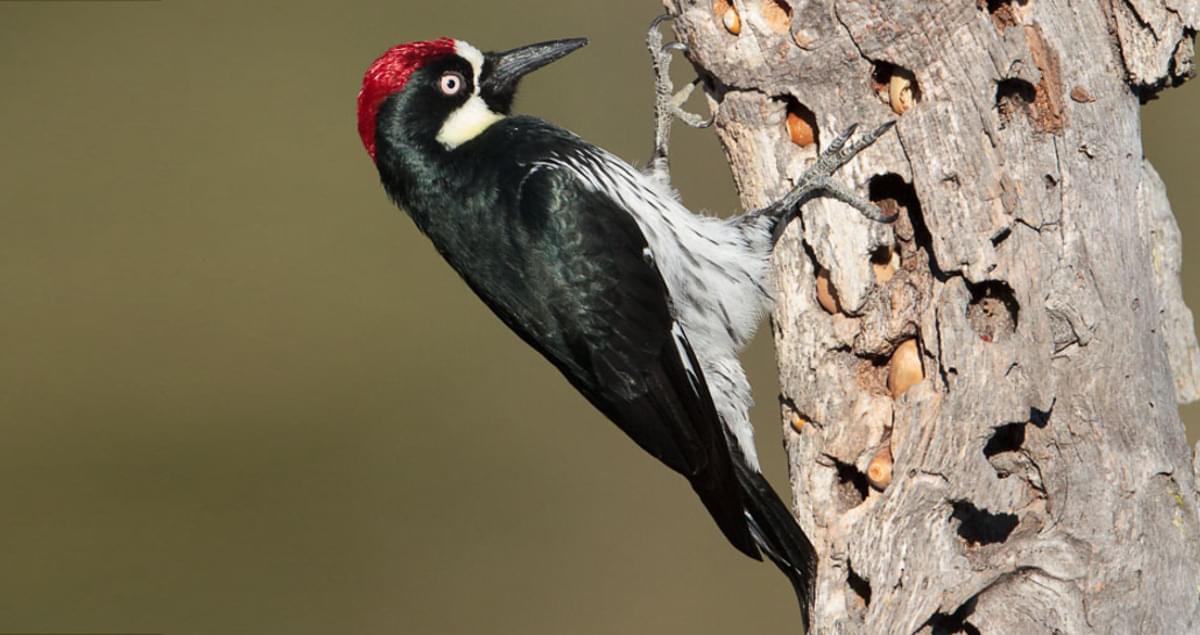
Within the diverse habitats of Arizona, Acorn Woodpeckers establish their presence in oak woodlands, pine-oak forests, and riparian areas. These areas provide the necessary resources for Acorn Woodpeckers to thrive, with oak trees offering a plentiful supply of acorns, a staple in their diet. Acorn Woodpeckers are known for their unique nesting and food storage behaviors. They create communal granaries by drilling holes in trees to store thousands of acorns, ensuring a future food supply. This behavior not only aids in food preservation but also plays a crucial role in Acorn Woodpecker social structure.
Apart from acorns, Acorn Woodpeckers have a diverse diet that includes insects, fruits, and sap, contributing to their adaptability in various habitats. Their social behavior is also notable, often seen in family groups or larger social units. These birds cooperate to defend their territory and food sources, showcasing a complex social structure that enhances their survival in the wild.
4. Red-naped Sapsucker Behavior
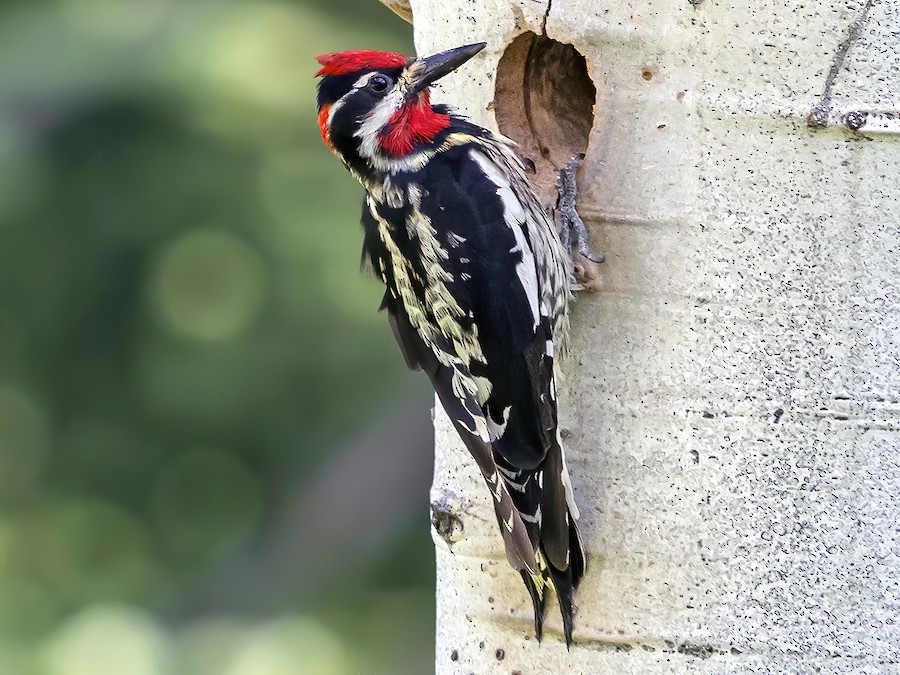
Acorn Woodpeckers’ unique nesting and food storage behaviors contrast with the distinct sap-feeding habits exhibited by Red-naped Sapsuckers. Red-naped Sapsuckers are migratory woodpeckers known for their sap well creation and feeding habits. Here are some key behaviors of Red-naped Sapsuckers:
- Sap well creation, feeding: These woodpeckers create small wells on trees to extract sap, insects, and cambium, providing them with a vital food source.
- Hybridization potential: In areas where their ranges overlap, Red-naped Sapsuckers may hybridize with Yellow-bellied Sapsuckers, leading to interesting genetic interactions.
- Distinctive red patch: The red patch on the nape of their neck serves as a unique identifier, helping birdwatchers differentiate them from other woodpecker species.
- Drumming patterns, identification: Red-naped Sapsuckers have a specific drumming pattern that sets them apart, aiding in their identification and study.
- Seasonal habitat shifts: These woodpeckers breed in coniferous forests during the summer but migrate to more open habitats for the winter, showcasing their adaptable behavior.
5. Williamson’s Sapsucker Distribution

Williamson’s Sapsuckers, predominantly distributed in the western United States, including Arizona, exhibit a preference for coniferous forests and mixed woodlands for nesting and foraging purposes. These woodpeckers are known for their unique drilling behavior, where they create sap wells by drilling multiple rows of evenly spaced holes in trees to feed on sap and insects. When it comes to nesting preferences, Williamson’s Sapsuckers typically choose coniferous trees with softer wood for excavating their nest cavities. For foraging habits, they feed on sap from these wells, as well as insects attracted to the sap. They also consume fruits and berries when available.
| Nesting Preferences | Foraging Habits | Unique Drilling Behavior |
|---|---|---|
| Coniferous forests | Sap feeding | Multiple rows of holes |
| Mixed woodlands | Insect consumption | Evenly spaced holes |
| Soft wood for nest cavities | Fruit and berry diet | Sap well creation |
6. Northern Flicker in Arizona

In Arizona, Northern Flickers can be observed in both the red-shafted and yellow-shafted forms, with the red-shafted variety being more prevalent in the western regions of the state. These woodpeckers have fascinating nesting habits, excavating holes in trees for nesting purposes and sometimes utilizing nest boxes. Northern Flickers exhibit unique drumming behavior, using their bills to create loud sounds on resonant materials like metal gutters or chimneys. Their diet preferences are diverse, encompassing insects, fruits, seeds, and nuts. When foraging, Northern Flickers are often spotted on the ground searching for ants and beetles, utilizing their long, slightly curved bills to probe the soil efficiently.
- Northern Flickers in Arizona can be found in red-shafted and yellow-shafted forms.
- They exhibit drumming behavior using their bills to create loud sounds.
- Their diet includes insects, fruits, seeds, and nuts.
- These woodpeckers are cavity nesters, creating holes in trees for nesting.
- Northern Flickers are commonly seen foraging on the ground for ants and beetles.
7. Lewis’s Woodpecker Features
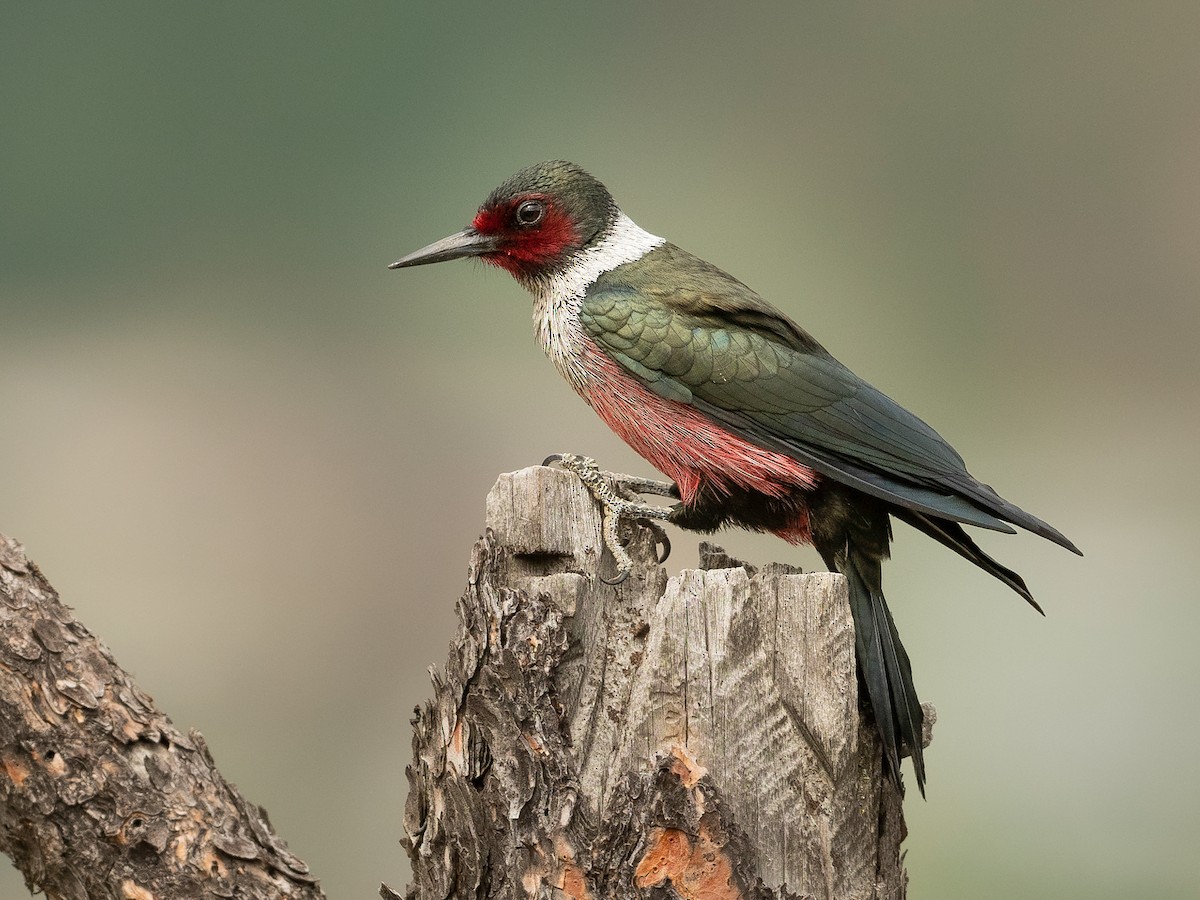
With dark plumage and a distinctive pink belly, Lewis’s Woodpeckers stand out among their woodpecker counterparts. These cavity nesters often utilize old woodpecker cavities or natural tree holes for nesting, showing a preference for secluded areas within open woodlands, burned forests, and orchards in western North America. When it comes to diet preferences, Lewis’s Woodpeckers primarily feed on insects, nuts, and fruits. Their feeding behavior is characterized by their remarkable ability to catch insects in mid-air, showcasing their agility and precision.
In terms of flight characteristics, Lewis’s Woodpeckers exhibit a slow, undulating flight pattern, which adds to their unique charm in the skies. They are also known for their distinctive ‘wing flicking’ behavior during flight. The plumage coloration of these woodpeckers, with their dark overall appearance complemented by a striking pink belly, further sets them apart in their habitat. By combining these features with their nesting habits, diet preferences, feeding behavior, flight characteristics, and habitat selection, Lewis’s Woodpeckers emerge as fascinating and visually appealing birds in the woodpecker family.
8. Yellow-bellied Sapsucker Facts

Yellow-bellied Sapsuckers, a migratory woodpecker species, make their presence known in Arizona during the winter months. These woodpeckers exhibit fascinating behaviors that contribute to the ecosystem’s balance. Here are some key facts about Yellow-bellied Sapsuckers:
- Migration Patterns: Yellow-bellied Sapsuckers travel to Arizona during the winter, where they can be observed in various habitats.
- Feeding Habits: They create sap wells in trees by drilling small holes to access the sap and insects that get trapped in it. This feeding method provides them with essential nutrients.
- Distinctive Appearance: With their black and white striped face pattern, red cap, and yellow belly, these woodpeckers are easily recognizable.
- Behavioral Sounds: Yellow-bellied Sapsuckers are known for their drumming and tapping sounds, which serve as communication signals during courtship and territorial displays.
- Conservation Efforts: Protecting the habitats where Yellow-bellied Sapsuckers reside is crucial for ensuring their survival and preserving the ecosystem’s biodiversity. Conservation efforts focus on maintaining suitable nesting sites and food sources for these woodpeckers.
9. Downy Woodpecker in the State

The Downy Woodpecker, being the smallest and most prevalent woodpecker species in North America, showcases distinctive black and white plumage with a checkered pattern on its wings. When it comes to nesting habits, Downy Woodpeckers typically excavate cavities in dead trees or limbs to create their nests, lining them with wood chips. During mating rituals, males attract females by drumming on resonant surfaces and engaging in displays of head bobbing and wing flicking. Vocalizations and calls play a crucial role in communication for Downy Woodpeckers. Their calls include a sharp “pik” or “whinny,” while drumming is used for territory establishment and courtship. These woodpeckers are known for their agility and can often be seen scaling tree trunks and branches in search of insects. With their adaptable nature, Downy Woodpeckers thrive in various habitats, from forests to urban areas, making them a common sight across North America.
10. Hairy Woodpecker Sightings
Hairy Woodpecker sightings in Arizona are a common occurrence, particularly in forests, woodlands, and suburban areas. These striking woodpeckers boast a distinctive black and white striped back with a white belly, making them easily recognizable in their habitats. When observing these birds, you may notice the following key behaviors:
- Nesting habits: Hairy Woodpeckers are cavity nesters, often selecting dead trees or utilizing artificial nest boxes for breeding purposes.
- Drumming behavior: Known for their drumming behavior, Hairy Woodpeckers create loud, repetitive sounds by pecking on resonant objects. This behavior serves to establish their territory and attract mates.
- Feeding patterns: These woodpeckers primarily feed on insects, using their strong bills to drill into trees in search of prey. Additionally, they supplement their diet with seeds and fruits, showcasing a diverse feeding strategy.
Keep an eye out for these fascinating woodpeckers during your woodland explorations or while enjoying nature in suburban settings.
11. White-headed Woodpecker Spotted
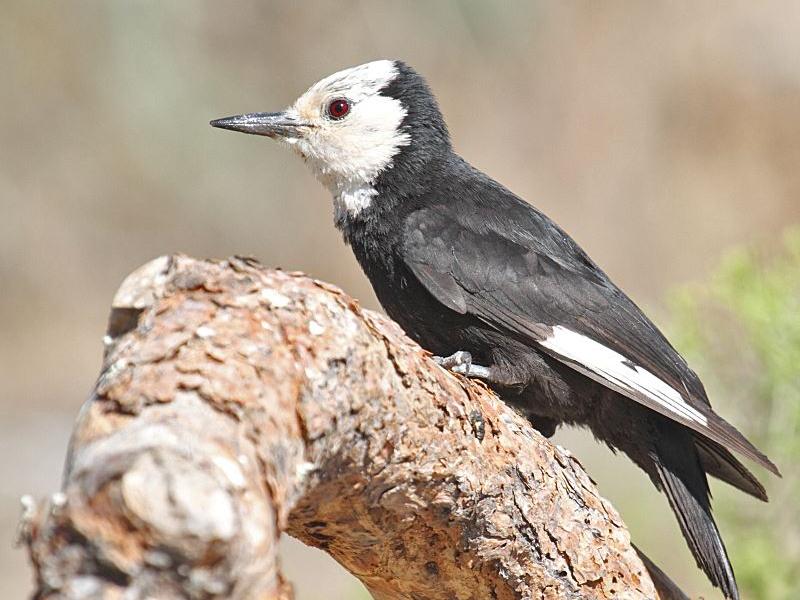
Spotted amidst the coniferous forests of Arizona, the White-headed Woodpecker showcases its striking black and white plumage, particularly its distinctive white head and neck. These woodpeckers exhibit unique behaviors such as caching food, like insects and pine seeds, in bark crevices. Their foraging habits include wedging pine cones into crevices to extract seeds, showcasing their specialized feeding techniques. When it comes to nesting habits, White-headed Woodpeckers typically excavate their nests in dead trees, showing a preference for snags within their forest habitats.
In terms of migration patterns, White-headed Woodpeckers are considered non-migratory residents in their range, including Arizona. However, they may make seasonal movements in response to food availability and environmental conditions. Due to habitat loss and forest management practices, these woodpeckers are classified as a species of conservation concern. Protecting their coniferous forest habitats is crucial to ensure the survival of the White-headed Woodpecker population in Arizona.
12. Arizona’s Black-backed Woodpecker
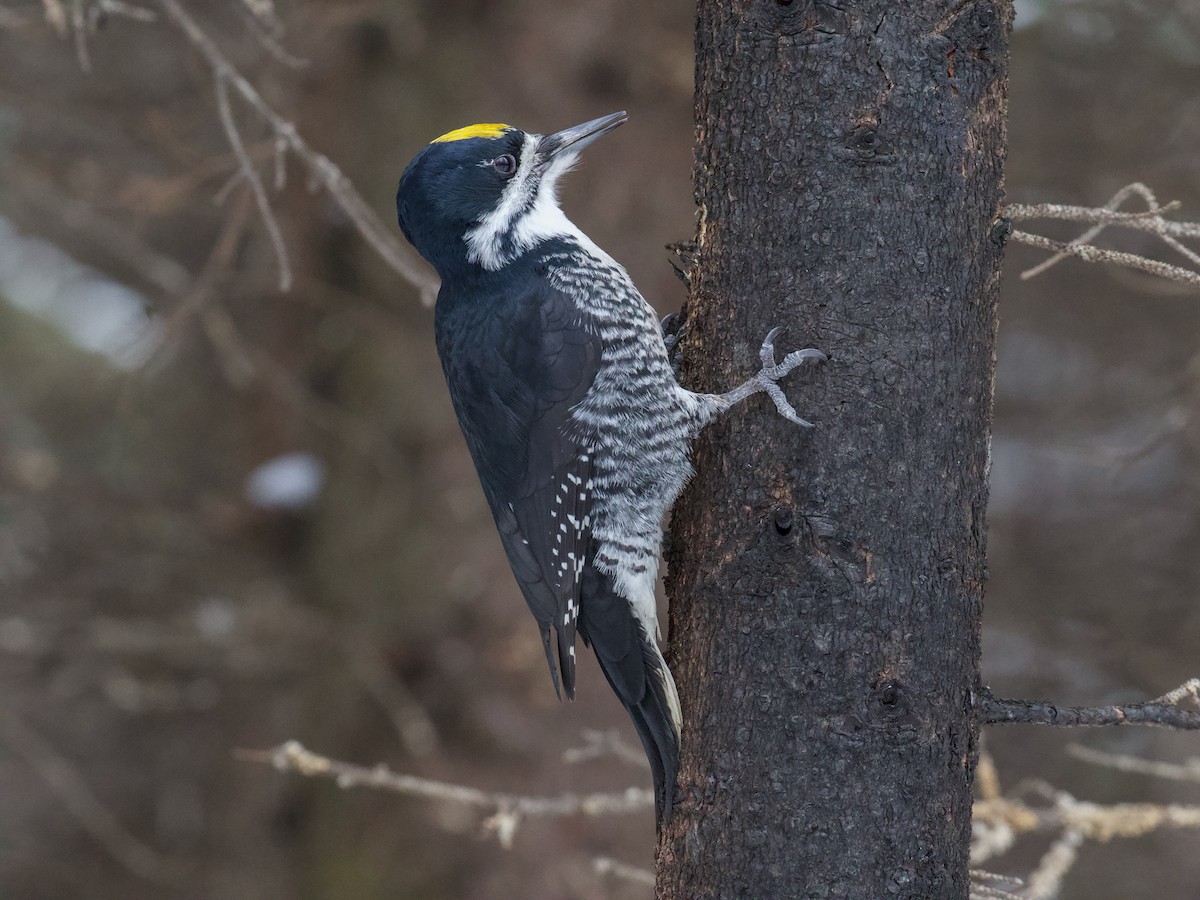
In the coniferous forests of Arizona, where the White-headed Woodpecker thrives, a rare and striking sight can be found in the form of the Black-backed Woodpecker. This woodpecker, with its black back, white underparts, and distinct yellow cap, stands out amidst the trees. Here are some key facts about Arizona’s Black-backed Woodpecker:
- Nesting habits: Black-backed Woodpeckers typically excavate their nests in dead trees, especially those affected by wood-boring beetles, which provide an abundant food source for their young.
- Threats: Habitat loss due to logging and forest fires poses a significant threat to the Black-backed Woodpecker population in Arizona.
- Conservation efforts: Conservation programs aim to protect and restore the coniferous forests where the Black-backed Woodpecker resides, ensuring the preservation of its habitat.
- Range: These woodpeckers are usually found in the higher elevations of Arizona, preferring areas with ample dead trees for foraging and nesting.
- Drumming behavior: Black-backed Woodpeckers are known for their distinctive drumming behavior on trees, a form of communication with other woodpeckers in the area.
13. Gilded Flicker Range

The Gilded Flicker’s range encompasses the southwestern United States, Mexico, and parts of Central America, where it thrives in arid and semi-arid habitats. These woodpeckers are known for their distinctive appearance, with golden-yellow underparts and a black bib on their chest. They are commonly found in deserts, scrublands, and urban areas. Gilded Flickers exhibit interesting migration patterns, with some populations being partially migratory, moving to warmer regions during winter months.
When it comes to breeding habits, Gilded Flickers typically nest in cavities excavated in saguaro cacti or other large cacti. They may lay 4-5 eggs per clutch, and both parents take turns incubating the eggs and feeding the young. Conservation status-wise, the Gilded Flicker is not currently considered threatened. However, habitat loss due to urbanization and agriculture poses a potential risk to their populations, making continued monitoring and conservation efforts essential to ensure their long-term survival.