

Discover Minnesota’s 11 unique owl species! From the camouflage masters like the Eastern Screech-Owl to the impressive aerial hunters like the Great Horned Owl. Hear the haunting hoots of the Barred Owl and witness the silent flight of the Great Gray Owl. Admire the Boreal Owl’s precision in dense forests and the Burrowing Owl’s quirky head-bobbing behavior. Each owl contributes to the ecosystem in its way, showcasing diverse hunting techniques and habitats. Prepare to be captivated by the intricate world of Minnesota’s owls, where each species plays a vital role in the nocturnal tapestry of nature.
1. Barred Owl
Barred Owls, commonly found in Minnesota’s forests and swamps, are non-migratory birds known for their distinctive horizontal stripes on the wings and tail. These markings help in their identification within their habitat. As top predators, Barred Owls play a crucial role in maintaining the balance of their ecosystem by preying on mammals, birds, amphibians, and insects, showcasing their varied diet. Their haunting hoot sounds, often featured in movies and media, add to their mystique in the wilderness of Minnesota. Barred Owls face few natural predators due to their size and predatory skills, further solidifying their position as apex predators in the region. Their adaptability to different environments within Minnesota’s forests and swamps allows them to thrive and continue their reign as one of the most magnificent owl species in the state.
2. Great Horned Owl
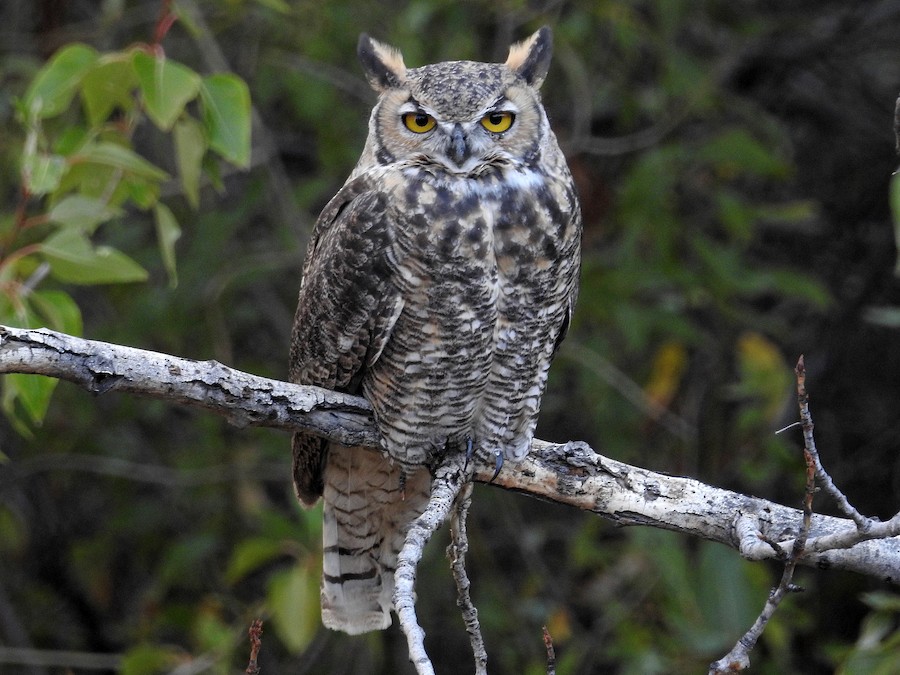
The Great Horned Owl, Minnesota’s largest owl species, boasts impressive physical characteristics that aid in its prowess as a skilled predator in the state’s diverse ecosystems. These majestic creatures exhibit a small, white patch on their throats, contrasting with their predominantly dark brown plumage. Their large, powerful talons and keen eyesight make them formidable hunters, preying on a variety of animals, including rodents, rabbits, and even other avian species like the Northern Hawk Owl. Great Horned Owls are known for their adaptability and can be found nesting in tree cavities or abandoned nests of other large birds. As a nocturnal owl, they are most active during the night, emitting deep hooting calls that resonate through Minnesota’s forests. With a wingspan spanning from 3 to 5 feet, these owls are efficient aerial predators, silently swooping down on unsuspecting prey in the darkness of the night.
3. Snowy Owl
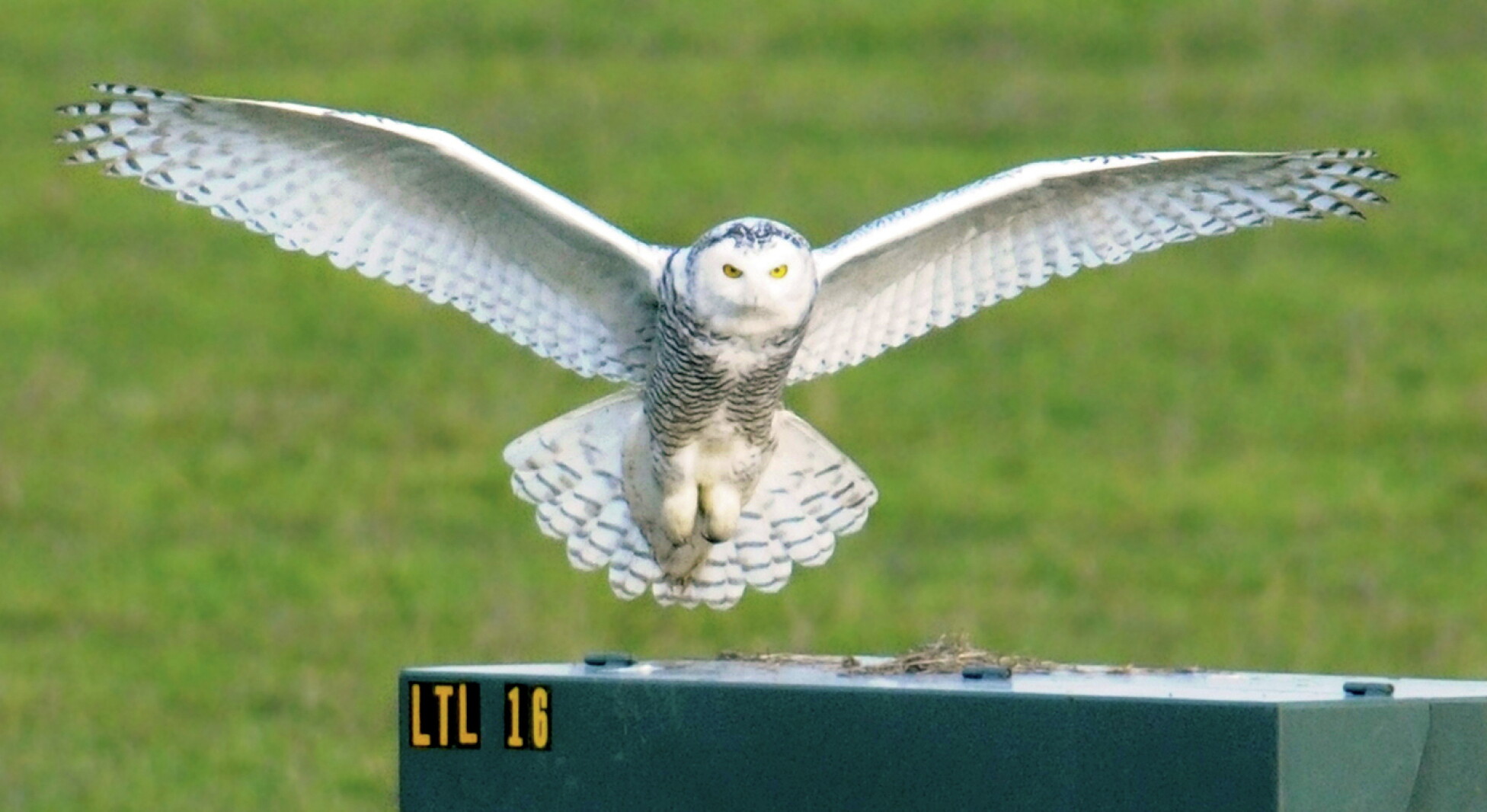
Snowy Owls, characterized by their large size and striking white plumage adorned with distinctive black markings, are a captivating species with unique behaviors and habitats. These majestic owls breed in the Arctic and migrate south, occasionally venturing into Minnesota during winter months. Snowy Owls are known for their preference for lemmings and other small mammals as their primary prey. Unlike many other owl species, Snowy Owls are diurnal hunters, meaning they are active during both day and night, allowing for fascinating observations of their hunting techniques.
| Snowy Owl Facts | Description |
|---|---|
| Appearance | Large white owl with black markings |
| Habitat | Breeds in the Arctic, migrates to Minnesota |
| Prey | Hunt lemmings and small mammals |
| Activity Pattern | Diurnal hunters active during day and night |
| Fascinating Behaviors | Unique hunting techniques make them captivating |
4. Eastern Screech-Owl

With its small size and adaptable nature, the Eastern Screech-Owl, a common owl species in Eastern North America, showcases remarkable survival strategies. These small owls exhibit two distinct color variations, known as the gray morph and the red morph, aiding in their camouflage within diverse environments. The Eastern Screech-Owl, despite its diminutive stature, has a lifespan ranging from 8 to 10 years in the wild.
One of the impressive traits of this species is its ability to thrive in urban landscapes, often choosing parks and neighborhoods as nesting sites. Their diet is varied, encompassing small mammals, insects, reptiles, birds, and fruits, demonstrating their adaptability as versatile hunters. Eastern Screech-Owls are known for their skillful use of camouflage to blend seamlessly into their surroundings, making them elusive and intriguing inhabitants of the Eastern North American forests and urban areas.
5. Northern Saw-whet Owl

Measuring only 18 to 22 cm in size, the Northern Saw-whet Owl is globally recognized as one of the smallest owl species. These small owl species are commonly found in dense coniferous forests, particularly in regions like Minnesota, where they can easily nest in tree cavities or woodpecker holes. One distinctive feature of the Northern Saw-whet Owl is its ‘tooting’ call, resembling the sound of a saw being sharpened, which aids in their identification.
| Northern Saw-whet Owl Facts | |
|---|---|
| Habitat | Coniferous forests |
| Call | Distinctive ‘tooting’ call |
| Breeding Behavior | Multiple mates in a season |
Northern Saw-whet Owls exhibit unique breeding behaviors, often mating with multiple partners within a single breeding season. With a lifespan of up to 7 years, these owls play a crucial role in controlling small mammal populations in their habitats, making them an essential part of the ecosystem in Minnesota.
6. Long-eared Owl
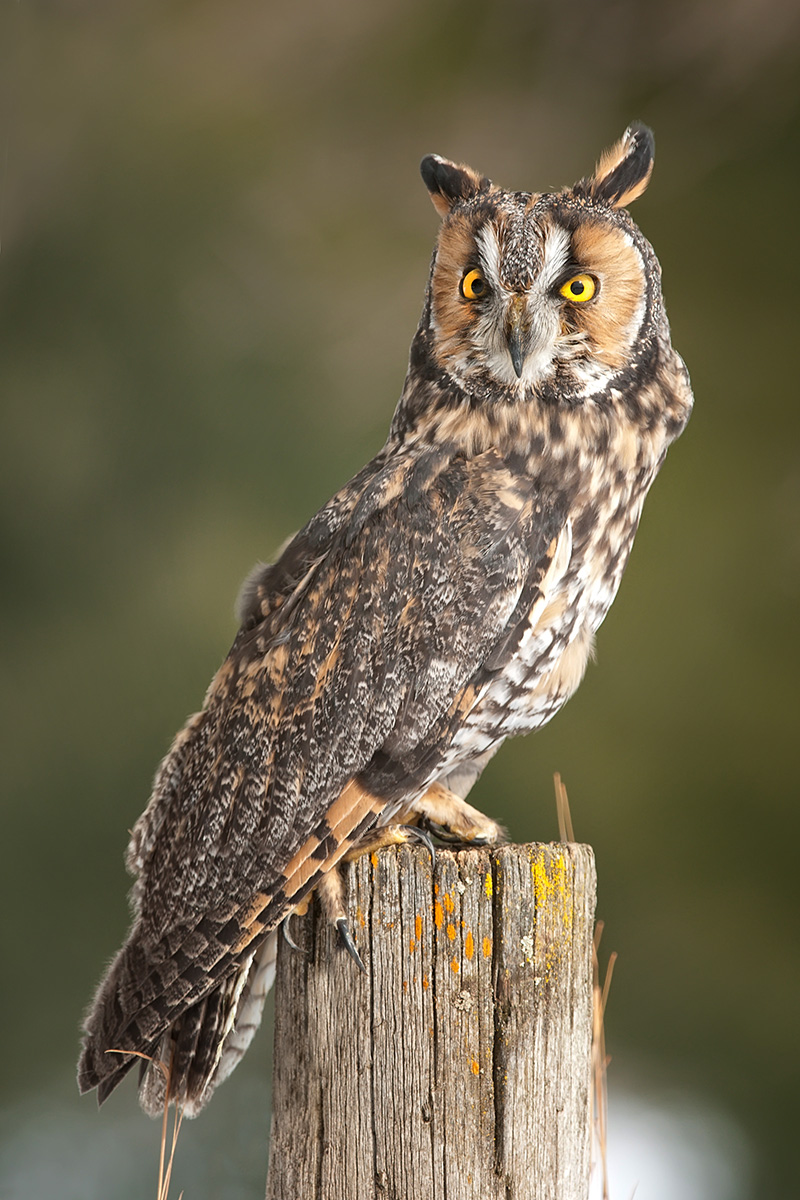
Long-eared Owls, medium-sized nocturnal birds of prey, are characterized by their prominent ear tufts that contribute to their distinctive appearance. These owls are commonly found in dense coniferous forests and woodlands, where they nest in abandoned crow or raptor nests, showcasing their adaptability to existing structures. Long-eared Owls are skilled hunters, preying on small mammals and birds with precision. Their haunting hoots and unique vocalizations add to the mystique surrounding them in the night. When seeking out Long-eared Owls, listen for their distinctive calls echoing through the trees. Observing these owls in their natural habitat provides a glimpse into their secretive and solitary nature. With their sharp talons and keen eyesight, Long-eared Owls navigate the darkness of the night with remarkable prowess, making them a fascinating species to study within the vast ecosystem of Minnesota’s owls.
7. Short-eared Owl
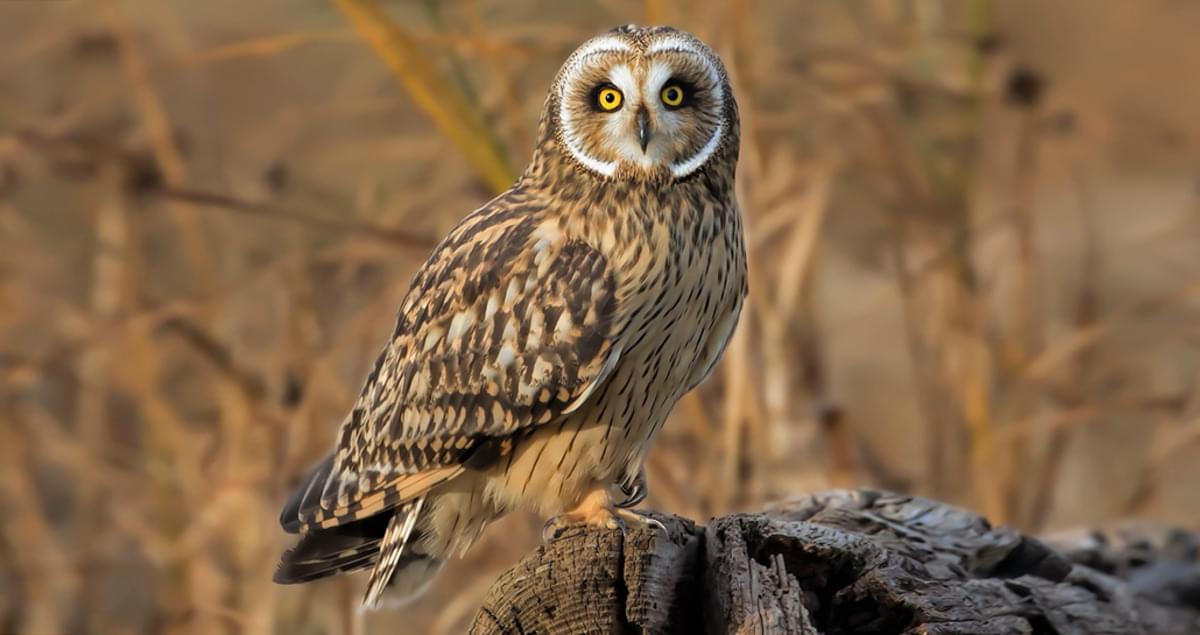
The Short-eared Owl, a diurnal hunter widely distributed across North America, is known for its preference for hunting during the daytime. These owls are specialized hunters, primarily feeding on small mammals like voles and birds in open prairies. Here are some key characteristics of Short-eared Owls:
- Habitat: Short-eared Owls are commonly found in open country areas such as fields and grasslands, where they can easily hunt for their prey.
- Nesting Behavior: Unlike many other owl species, Short-eared Owls nest on the ground, utilizing the grass and shrubs in their habitat for concealment and protection.
- Vocalization: These owls are not very vocal; however, they have a distinctive call that resembles a cat’s meow, which can sometimes be heard during their hunting activities.
With their unique diurnal hunting habits and adaptability to open landscapes, Short-eared Owls play a crucial role in controlling small mammal populations in their ecosystems.
8. Great Gray Owl

Reaching impressive lengths and known for its silent flight, the Great Gray Owl is a majestic bird of prey found in North America’s dense coniferous forests. This owl, residing in Minnesota and other parts of North America, prefers to inhabit dense coniferous forests, where it hunts for small mammals in open areas. The Great Gray Owl’s unique facial disk aids in capturing sound, giving it excellent hearing abilities for locating prey with precision. Unlike some other owl species, it lacks ear-tufts, further distinguishing its appearance. Its large size makes it the largest owl in North America based on length, adding to its grandeur in the wild. The ability to fly silently, combined with its exceptional hearing, makes the Great Gray Owl a formidable hunter in its habitat, showcasing the fascinating adaptations that have allowed it to thrive in the dense forests of the region.
9. Boreal Owl

Measuring between 8 to 10 inches in size, the Boreal Owl is a small owl species known for its preference for dense coniferous forests. These tiny creatures weigh between 5 to 7.5 ounces and boast a wingspan of 20 to 24 inches. Here are some fascinating facts about the Boreal Owl:
- Habitat Preference: Boreal Owls are commonly found residing in dense coniferous forests, where they blend seamlessly with the surroundings due to their cryptic plumage.
- Dietary Habits: These small owl species primarily feed on small mammals such as rodents and birds, hunting under the cover of darkness with silent flight.
- Distinctive Call: One of the most remarkable features of the Boreal Owl is its unique call, often described as resembling the sound of a bouncing ball, making it easily recognizable in the wilderness.
Observing a Boreal Owl in its natural habitat can be a rewarding experience, as these elusive creatures navigate their dense forest homes with precision and grace.
10. Burrowing Owl
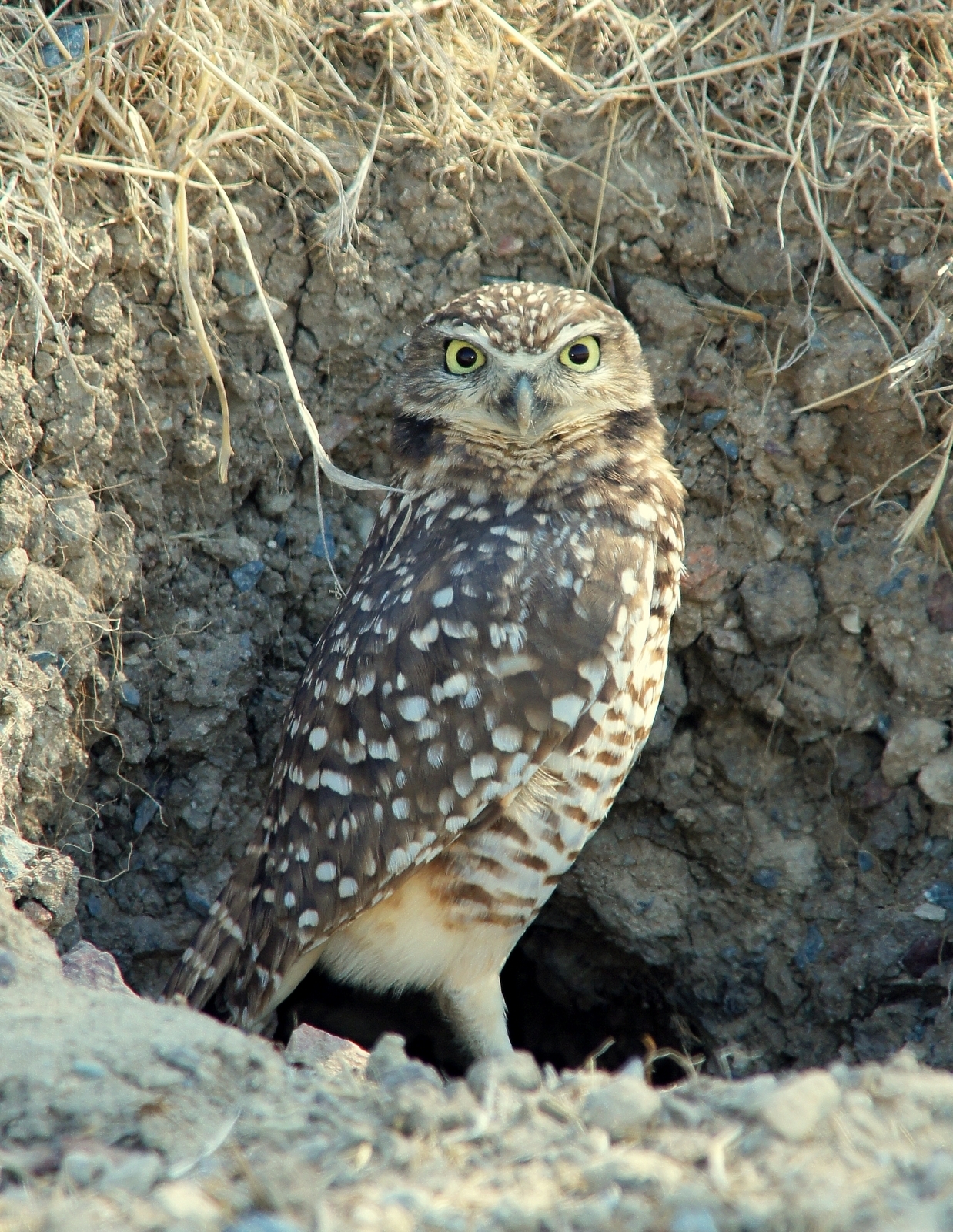
With a distinct nesting behavior and preference for open grasslands, the Burrowing Owl is a small, ground-dwelling species known for its unique characteristics. These diurnal owls are active during the day, unlike many other owl species. They can be found in a variety of habitats, including open grasslands and deserts, where they make their homes in burrows dug by mammals like prairie dogs. Burrowing Owls have a diverse diet that consists of small mammals and insects, which they hunt for both on the ground and in mid-air. Their reliance on burrows for nesting and shelter sets them apart from other owls, showcasing their adaptability to ground-dwelling lifestyles. These owls exhibit fascinating behaviors, such as bobbing their heads and flicking their tails, making them intriguing subjects for observation. The Burrowing Owl’s distinctive appearance and behaviors make it a captivating species to encounter in its natural habitat.
11. Northern Hawk Owl

What unique hunting behavior sets the Northern Hawk Owl apart from traditional owl species? The Northern Hawk Owl exhibits diurnal behavior, hunting during the day, a stark contrast to the nocturnal habits of most owl species. This owl species is not a true owl but belongs to the same family, showcasing distinct characteristics in its hunting techniques.
- The Northern Hawk Owl nests in tree cavities or on broken tree branches within its habitat, providing shelter and protection for its offspring.
- Its diet primarily consists of small mammals and birds, which it hunts with precision in open areas favored for hunting.
- The Northern Hawk Owl’s unique hunting behavior involves actively seeking out prey during daylight hours, using its keen eyesight and silent flight to capture unsuspecting animals.
Intriguingly, the Northern Hawk Owl’s adaptation to diurnal hunting and preference for open spaces make it a fascinating species within the owl family, showcasing evolutionary strategies tailored to its environment.