

I’ve found that designing a productive balcony vegetable garden requires more than just picking plants—it’s about selecting the right containers, optimizing space, and understanding microclimates. Whether you’re working with limited sunlight or tight quarters, choosing compact varieties and creative setups can transform your balcony into a sustainable oasis. But there’s a balance to strike between aesthetics and functionality that many overlook—let me share practical ideas that help you grow efficiently without sacrificing style.
Choosing the Right Vegetables for Balcony Gardens
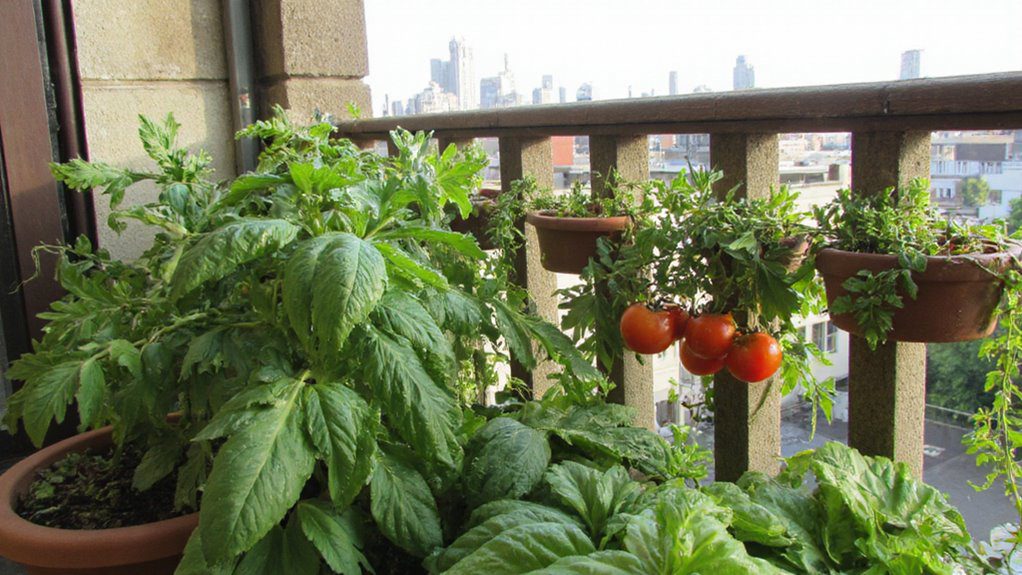
When choosing vegetables for your balcony garden, you’ll want to focus on varieties that not only thrive in containers but also suit your available sunlight and space.
I prioritize compact types like cherry tomatoes and bush peppers, which require 15–30 cm pots and full sun.
Leafy greens fit well in smaller containers with partial shade, ensuring sustainable, efficient use of limited balcony resources.
Growing Quick-Harvest Radishes in Small Pots
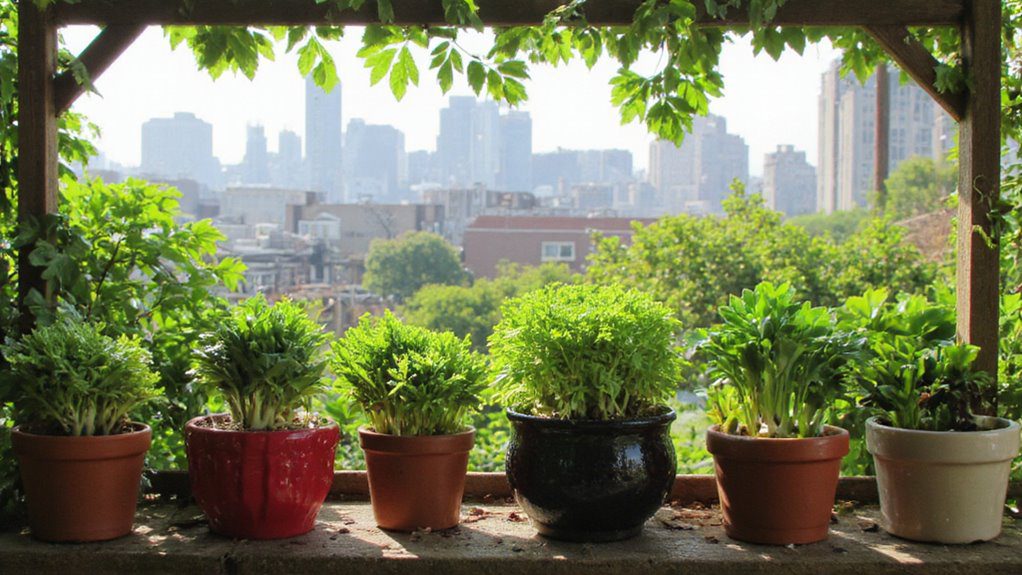
Although space on a balcony can be limited, I find growing quick-harvest radishes in small pots remarkably efficient and rewarding.
Using wide, shallow containers with well-draining organic soil ensures healthy roots. I place them in full sun on my south-facing balcony, watering consistently to maintain moisture.
Choosing fast-growing varieties like Cherry Belle lets me enjoy fresh, sustainable produce in just weeks.
Thriving Peppers in Sunny Balcony Corners
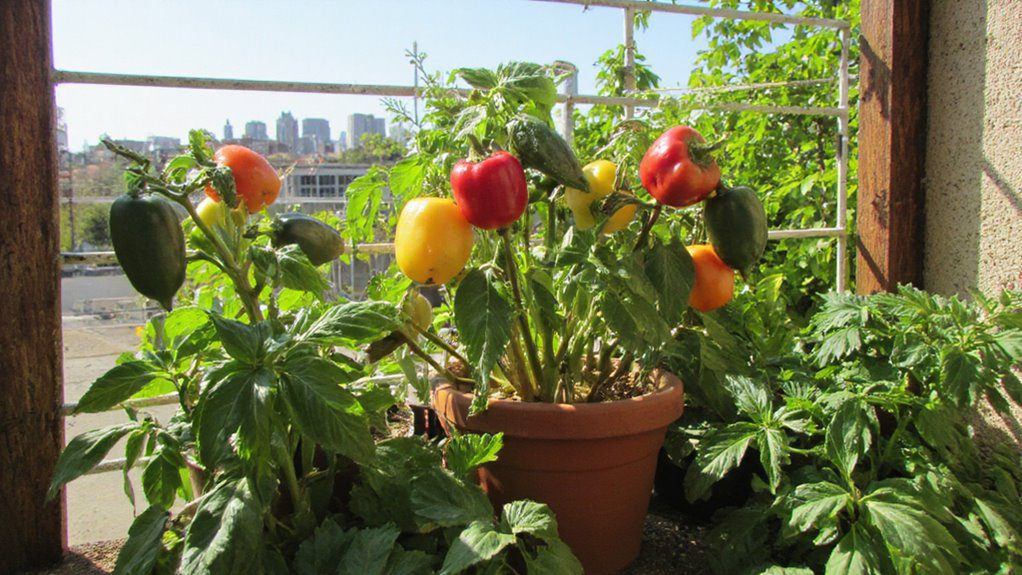
Since peppers thrive in abundant sunlight and warm temperatures, I always place their containers in sunny balcony corners where they get at least 6 to 8 hours of direct light.
I use rich, well-draining potting mix with organic compost, maintain consistent moisture, and stake plants for support.
Choosing compact varieties like Jalapeño optimizes space, ensuring a sustainable, vibrant harvest in my urban garden.
Deep Containers for Healthy Carrots

I rely on deep containers, at least 12 inches in depth, to cultivate healthy carrots with straight, robust roots.
I choose porous materials with drainage holes, fill them with loose, sandy soil enriched with compost and bone meal, and space seeds carefully.
This method maximizes balcony space, reduces pests, and ensures sustainable, high-quality harvests of vibrant, nutrient-rich carrots.
Cultivating Sugar Snap Peas in Cool, Moist Conditions

When you cultivate sugar snap peas, maintaining cool, moist conditions plays a crucial role in their success.
I keep soil consistently moist—never soggy—within a 45 to 80°F range, using eco-friendly containers with excellent drainage.
Six hours of direct sunlight and neutral to slightly acidic potting mix ensure healthy roots and vigorous vines, fostering sustainable growth on my balcony.
Swiss Chard Care in Partial Shade

Although Swiss chard thrives with about six hours of full sun, it adapts remarkably well to partial shade, especially in warmer climates where afternoon shade prevents leaf scorch.
I use light, well-drained soil with pH 6.0–6.8, keep moisture consistent, and add organic compost to support sustainable growth.
Regular harvesting encourages fresh leaves, while natural pest control maintains plant health beautifully.
Best Herbs to Grow on a Balcony
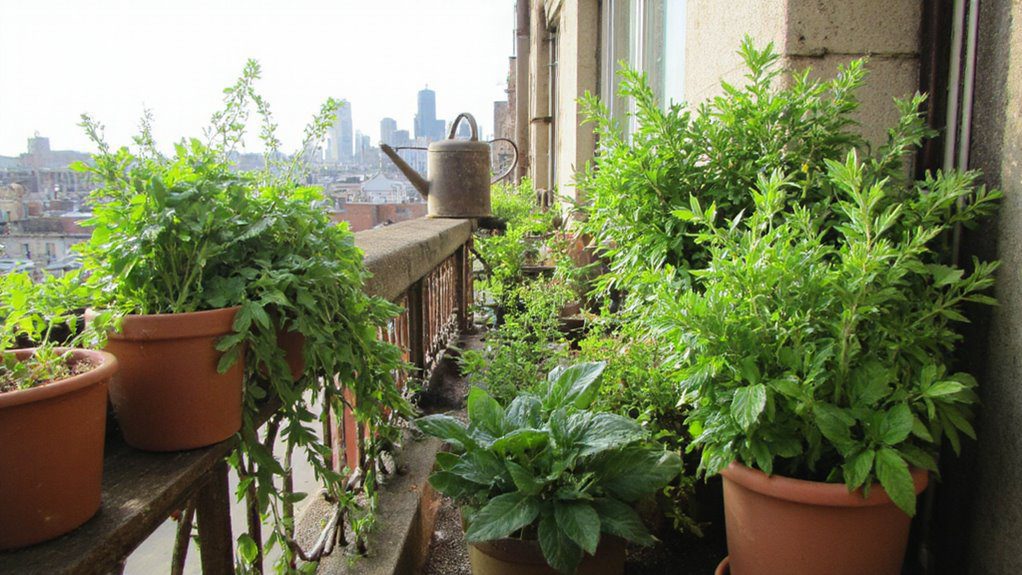
Five herbs stand out as ideal choices for balcony gardens, balancing ease of growth with culinary versatility.
Basil thrives in full sun with well-drained soil.
Mint suits partial shade but needs containment to prevent spread.
Chives require consistent moisture and propagate easily.
Oregano tolerates drought and prefers sun.
Parsley adapts to partial shade with regular watering—each offers sustainable, flavorful additions to your compact garden.
Using Tiered Plant Stands to Maximize Space

Maximizing limited balcony space demands smart solutions, and tiered plant stands offer a perfect blend of functionality and style.
I choose moisture-resistant steel or bamboo models that fit my balcony’s size and sunlight. These stands optimize vertical space, support multiple vegetable plants, and ease watering and pruning.
Plus, they double as storage for tools, making my garden both sustainable and organized.
Creative Hanging Baskets for Herbs and Trailing Plants
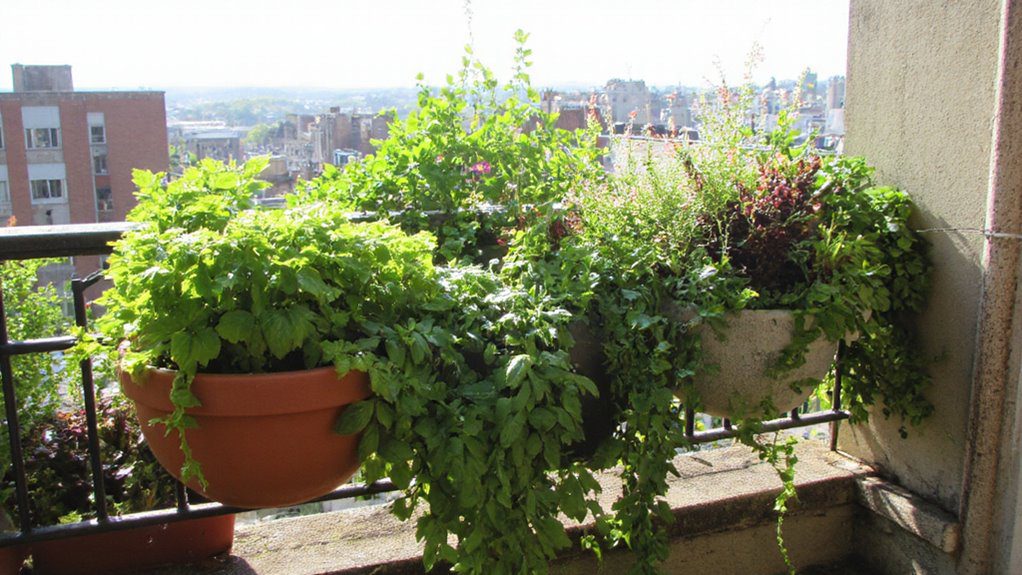
When I design my balcony garden, I rely heavily on creative hanging baskets to add both vertical interest and functional greenery.
Herbs like basil, thyme, and oregano thrive while trailing plants such as calibrachoa and lobelia cascade beautifully.
Using well-draining soil with water-retaining gel ensures sustainability, minimizes watering, and supports healthy growth, maximizing space efficiently without sacrificing aesthetics or plant vitality.
Building Pallet Gardens for Cost-Effective Growing

Creative hanging baskets add vertical layers to your balcony, but pallet gardens take space-saving and cost-efficiency to another level.
Using untreated pallets lined with taut landscaping fabric, I create pockets filled with nutrient-rich soil. Leaning the pallet vertically maximizes space, while selecting compact vegetables like lettuce ensures healthy growth.
This sustainable method reduces waste and adds a striking, functional feature to my balcony garden.
Utilizing Railing Pots for Extra Planting Area

Railing pots provide an excellent way to expand your balcony garden without sacrificing space or style.
I use them to maximize vertical planting, fitting herbs and leafy greens perfectly. Their secure brackets prevent damage while drainage holes protect roots.
Elevated placement improves pest control and water efficiency. Plus, they add vivid color and accessibility, making maintenance both sustainable and visually pleasing.
Selecting Containers: Plastic, Terracotta, and Fabric Grow Bags

Although container choice might seem straightforward, selecting between plastic, terracotta, and fabric grow bags significantly impacts your balcony garden’s health and aesthetics.
Plastic is lightweight and cost-effective but retains heat.
Terracotta offers natural aeration and elegance but is heavy and fragile.
Fabric grow bags excel in root health and drainage, are portable, and eco-friendly.
Choose based on plant needs, space, and sustainability.
Essential Care Tips: Watering, Fertilizing, and Pest Control
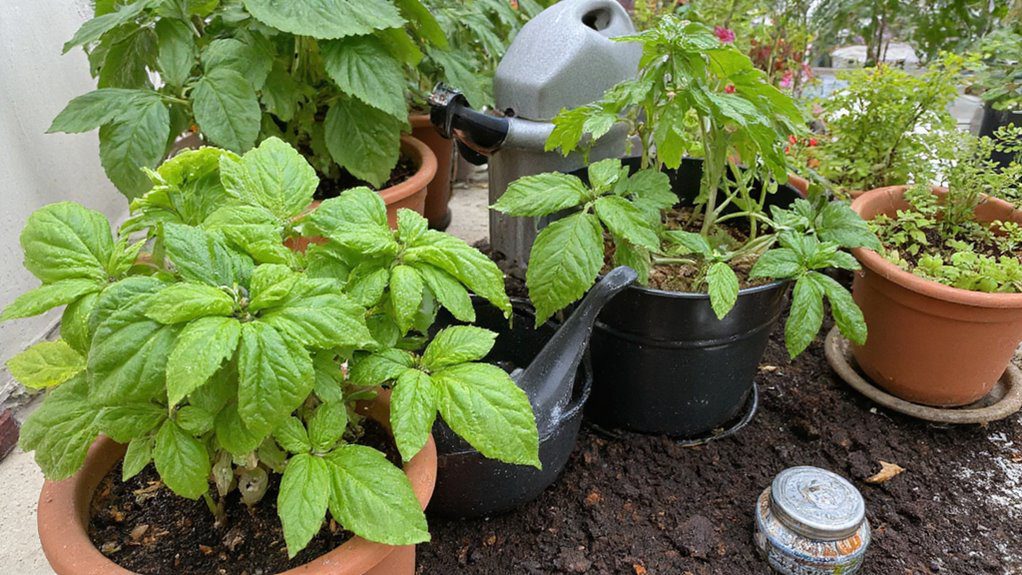
When you care for a balcony vegetable garden, watering, fertilizing, and pest control become the pillars of healthy growth.
I water thoroughly in the morning, avoiding leaves to reduce disease. I use balanced, diluted fertilizers after soil tests and add compost for sustainability.
Regular inspections help me apply neem oil or water sprays against pests, maintaining an organic, vibrant garden.