

When I plan a vegetable garden, the layout is just as important as the plants themselves. A well-thought-out design can boost productivity, improve soil health, and create a visually appealing space. Whether you have a sprawling yard or a small balcony, the right arrangement makes all the difference. I’ve gathered 13 practical layout ideas that balance form and function—some might surprise you and could transform how you approach your next planting season.
Traditional Row Planting for Easy Management

Although there are many ways to design a vegetable garden, I find traditional row planting offers unmatched ease in managing crops.
Rows maximize space, improve air circulation to reduce disease, and simplify irrigation with clear channels.
Organizing crops by type in neat rows also streamlines maintenance, harvesting, and prevents pest spread—all while creating a timeless, visually appealing garden structure.
Square-Foot Gardening for Efficient Space Use
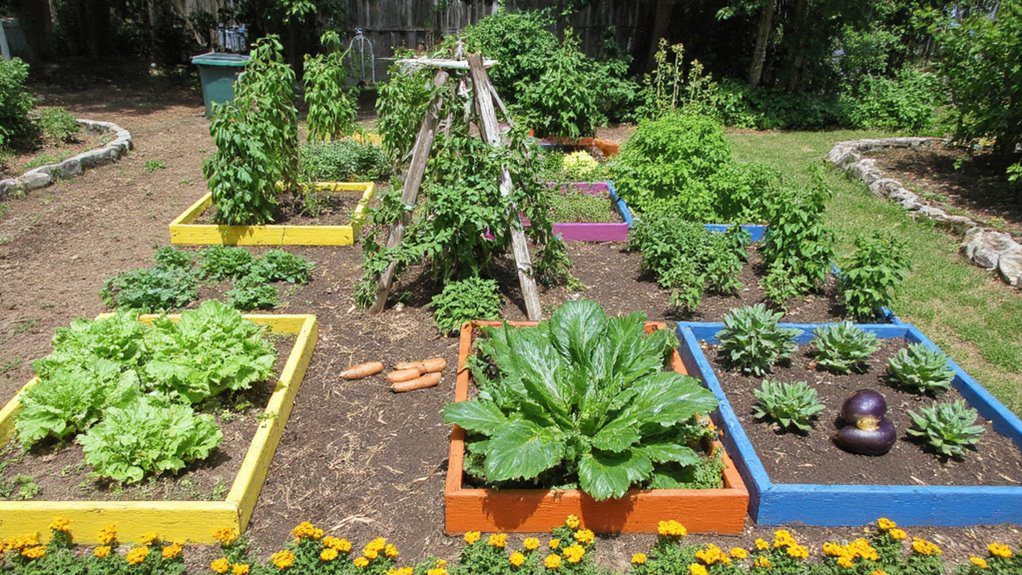
When you want to make the most of limited space, square-foot gardening offers a smart, efficient solution that transformed how I approach planting.
Dividing beds into one-foot squares lets me grow diverse crops tightly, boosting yield and beauty.
I carefully select compact plants, arrange companions, and use vertical supports to maximize space without overcrowding, creating a vibrant, manageable garden.
Raised Beds to Improve Soil Quality and Drainage
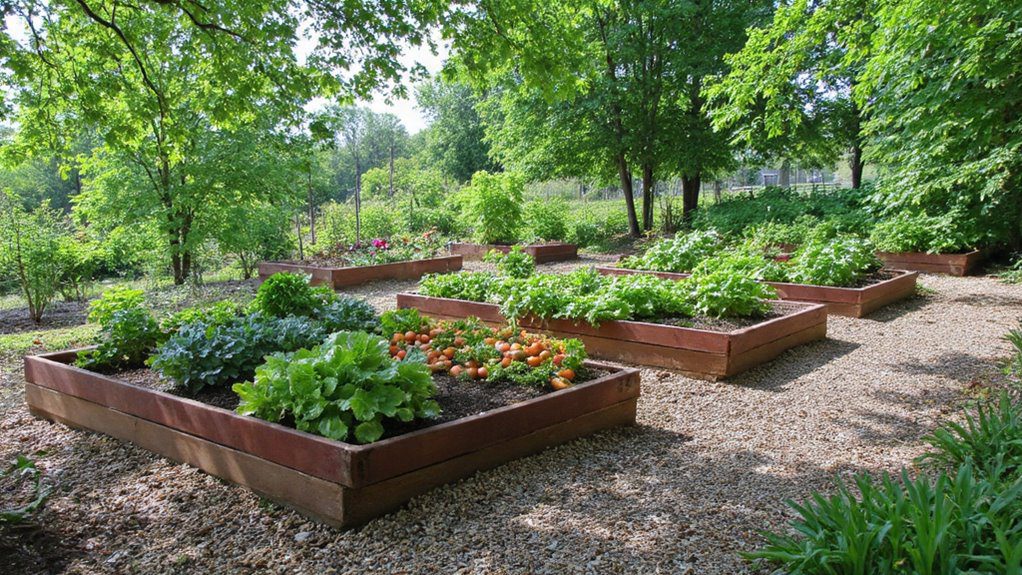
Square-foot gardening taught me how to maximize space, but raising the beds themselves takes soil management to a new level.
With raised beds, I control soil quality using custom mixes and compost, ensuring rich nutrients. Their elevation improves drainage and aeration, preventing waterlogging and root rot.
Plus, they keep the garden tidy and accessible, blending practicality with visual appeal.
Vertical Gardening to Maximize Small Spaces

Since space is often limited, vertical gardening offers a smart solution that lets me grow more without expanding my footprint.
I use trellises and wall planters to cultivate cucumbers and pole beans, enhancing air circulation and sunlight exposure.
This setup reduces bending, cuts pests, and creates an attractive living wall that maximizes yield while beautifying small patios or balconies efficiently.
Four-Square Garden Layout for Organized Planting

A four-square garden offers a timeless and elegant way to organize your planting space, blending history with functionality.
With its enclosed layout and T-shaped paths dividing four distinct plots, it ensures easy access and crop rotation.
I love how adding fruit trees or vines softens the structure, creating a practical yet charming garden that suits both traditional and modern aesthetics perfectly.
Incorporating Companion Plants to Boost Growth
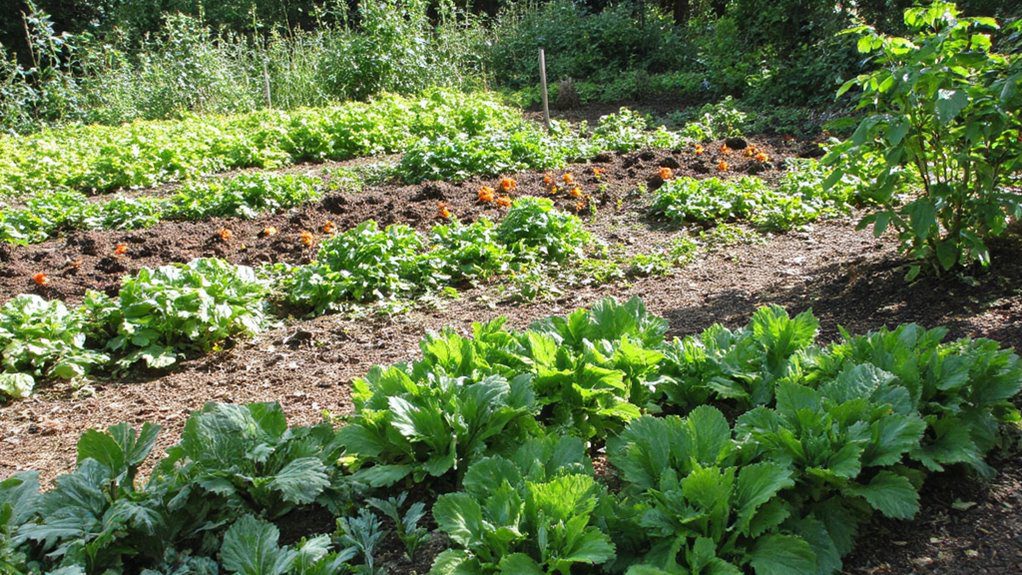
When you combine the right plants, you’ll see your garden thrive in ways you mightn’t expect.
I plant companions like tomatoes with basil and marigolds to boost flavor and repel pests naturally.
Intercropping carrots with onions maximizes space and deters pests.
Thoughtful pairings improve soil health, reduce disease, and create a vibrant, productive garden that’s as beautiful as it’s efficient.
Attracting Pollinators With Flower Borders
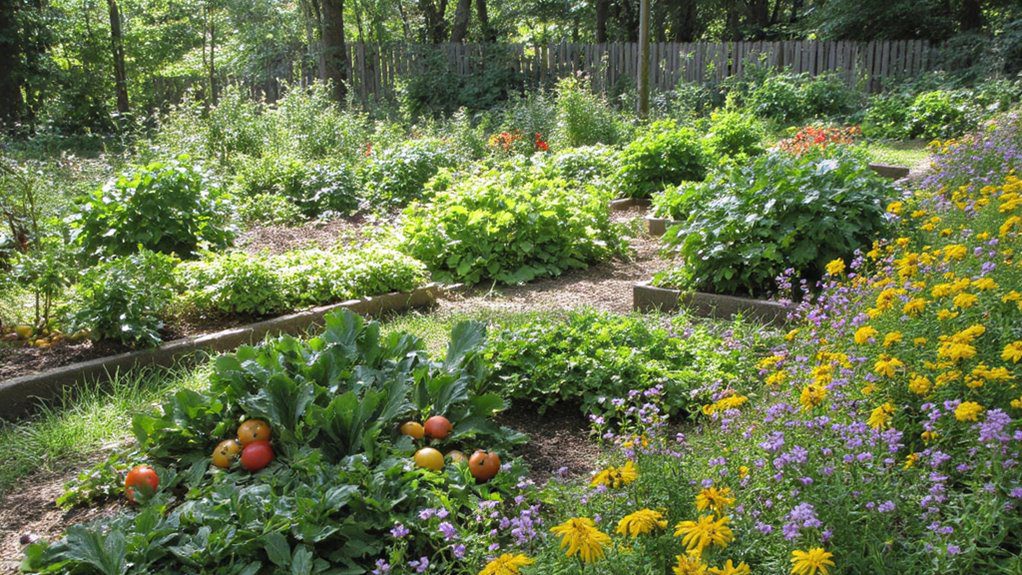
Although many gardeners focus solely on vegetables, I find that adding flower borders designed to attract pollinators transforms the entire garden into a vibrant, buzzing ecosystem.
I plant clusters of salvia, coneflowers, and lavender in close rows along edges, creating a colorful, fragrant carpet. This not only draws bees and butterflies but also boosts crop yields and supports natural pest control.
Using Hoop Houses for Season Extension
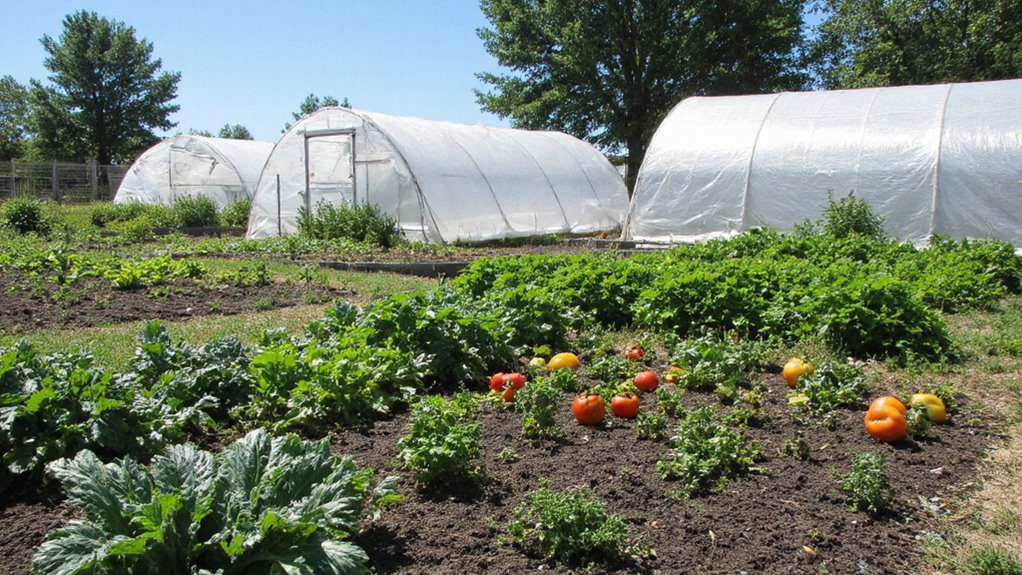
Since extending the growing season can transform your garden’s productivity, I’ve found hoop houses to be an indispensable tool.
They create a warm, protected microclimate, sheltering vegetables like tomatoes and kale from frost.
Using simple PVC frames and plastic, you can build affordable, walk-in structures that optimize light and ventilation.
This practical, elegant solution keeps your garden thriving well beyond traditional seasons.
Creating Pathways With Mulch or Gravel
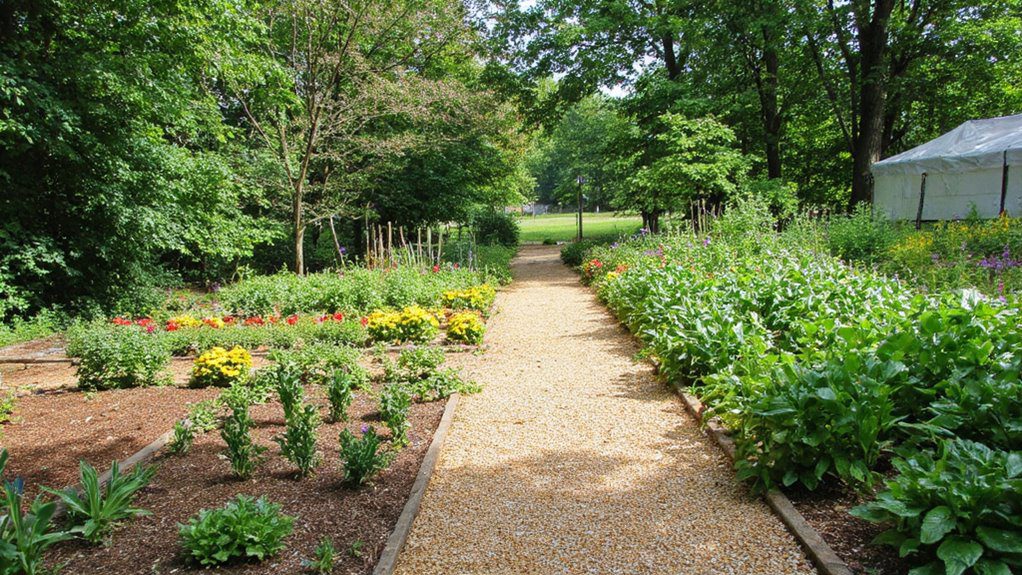
Three key materials often come to mind when creating pathways in a vegetable garden: mulch, gravel, and pebbles.
I prefer mulch for its natural look and weed suppression, though it needs replenishing.
Gravel offers excellent drainage and durability but can be uncomfortable to walk on.
Both require occasional maintenance, so I balance aesthetics and function to keep pathways inviting and practical.
Crop Rotation Strategies Within Your Layout
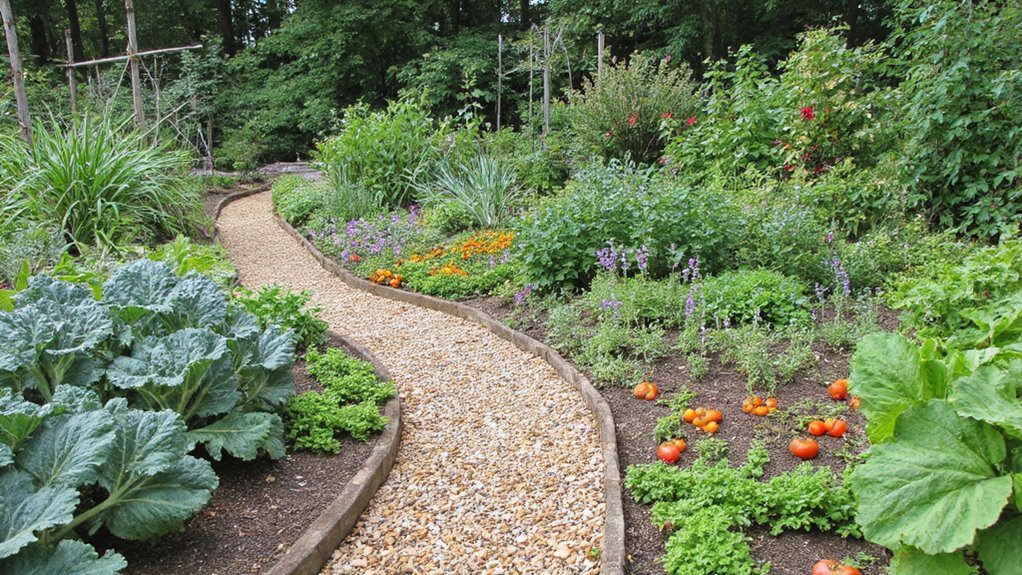
Pathways guide you through your garden, but how you plan the crops within those paths determines long-term soil health and productivity.
I rotate families—legumes, roots, fruits, and leaves—each year to balance nutrients and reduce pests.
Tracking locations in a garden log helps me prevent soil-borne diseases, maintain fertility, and keep my layout both beautiful and bountiful season after season.
Mixing Tall, Medium, and Short Plants Effectively

When I design my garden, I carefully arrange tall, medium, and short plants to maximize sunlight and create a visually pleasing layout.
I place tall plants like pole beans on the north side to avoid shading. Medium plants such as eggplants go in the middle, while short herbs sit south for full sun.
This strategic layering enhances growth, airflow, and pest control beautifully.
Planning Succession Planting for Continuous Harvests
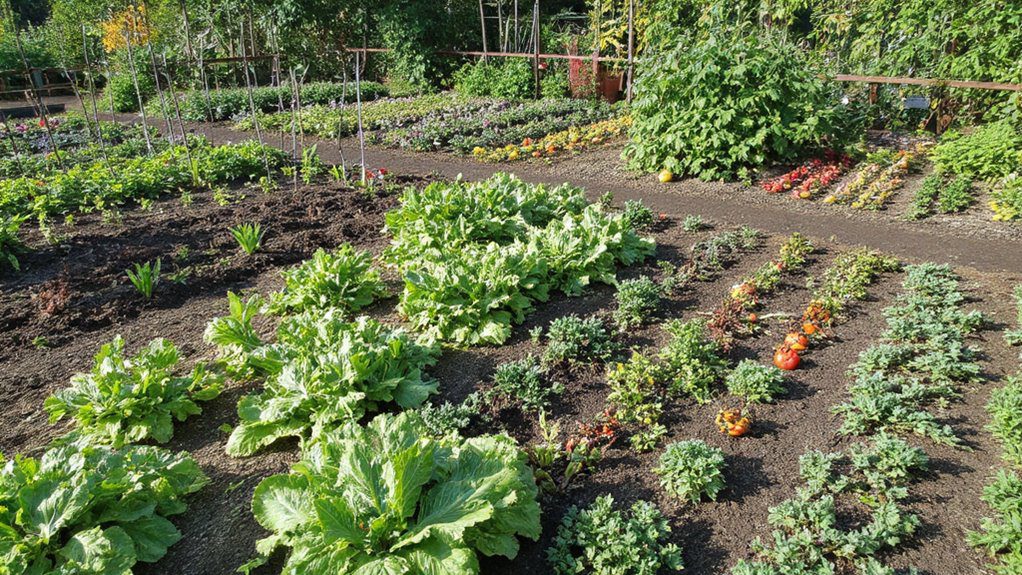
Although succession planting requires careful timing and planning, it’s one of the most rewarding strategies I use to keep my vegetable garden productive from early spring through late fall.
I stagger plantings and select varieties with different maturation times, seamlessly transitioning from cool-season greens to warm-season squash.
This approach ensures continuous harvests, maximizes space, and keeps my garden vibrant and abundant all season long.
Designing With Automated Garden Planning Tools

Keeping a steady harvest through succession planting means juggling many details, from timing to spacing.
I rely on automated garden planning tools like GrowVeg and Almanac’s Garden Planner to map layouts, suggest companion plants, and adapt to local weather.
These tools streamline design with drag-and-drop interfaces and personalized schedules, helping me create efficient, beautiful beds without overcrowding or guesswork.