

When I first started my vegetable garden, I quickly realized that success depends on more than just planting seeds. Choosing the right location, improving soil quality, and designing an efficient layout are crucial steps that many overlook. Over time, I learned how proper watering, pest control, and timely harvesting make a significant difference in yield and flavor. If you’re serious about growing your own veggies, there are essential tips that can transform your garden into a productive space.
Choose the Perfect Location for Your Garden
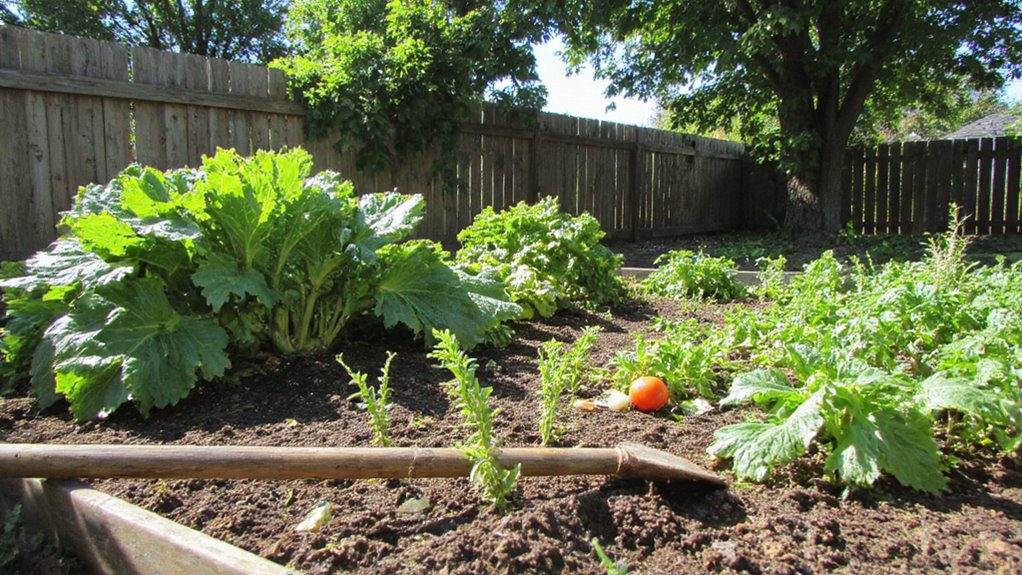
When choosing the perfect location for your vegetable garden, I always start by assessing sunlight exposure, since most vegetables need at least eight hours of direct sun to thrive.
I track sun patterns across seasons to find consistent spots. For full-sun crops like tomatoes or peppers, I pick open areas, while leafy greens can tolerate partial shade, making location flexibility key.
Test and Improve Your Soil Quality

Since soil quality fundamentally determines your garden’s success, I always start by testing it thoroughly before planting.
I analyze pH, nutrient levels, and organic matter using DIY kits or extension services.
Then, I incorporate 1 to 3 inches of organic matter into the topsoil, ensuring proper aeration to prevent compaction and support beneficial microbes, optimizing drainage and nutrient availability.
Design an Efficient Garden Layout
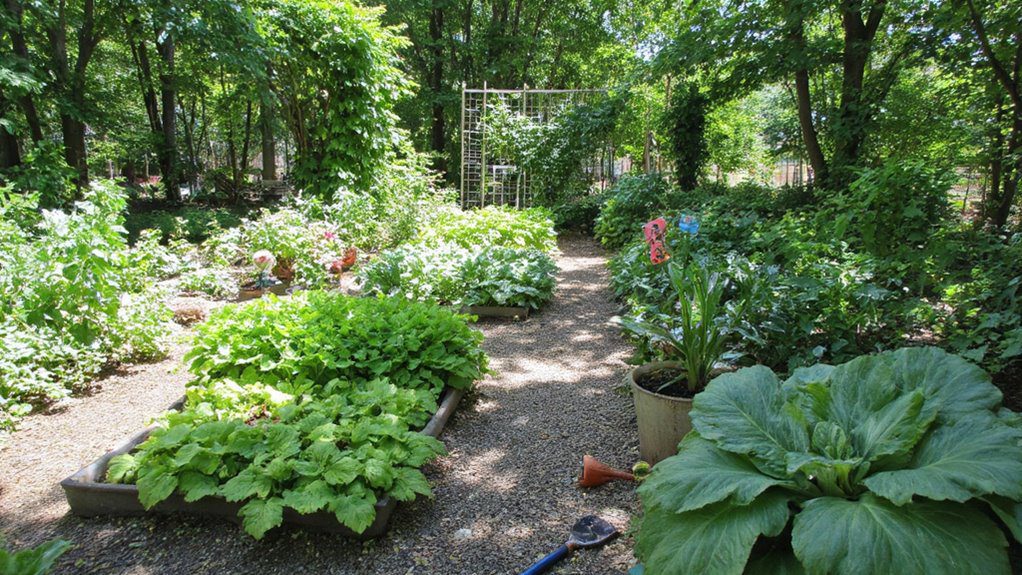
Although designing a garden layout can seem daunting, I focus on maximizing sunlight exposure, space efficiency, and accessibility to create a thriving vegetable garden.
I orient rows north-south, place taller plants on the north side to avoid shading, and incorporate intercropping.
I ensure wide pathways for easy maintenance and plan block planting for crop rotation, optimizing every inch for healthy growth and harvest.
Build Raised Beds With Safe Materials

Maximizing your garden layout sets a strong foundation, but the materials you choose to build your raised beds directly impact your garden’s health and longevity.
I recommend untreated cedar or redwood for durability and safety, avoiding chemical leaching.
For longevity, stone or galvanized steel with a non-toxic liner works well.
Composite lumber offers eco-friendly options.
Always prioritize materials that resist rot and support sustainable gardening.
Select Vegetables Suitable for Your Climate
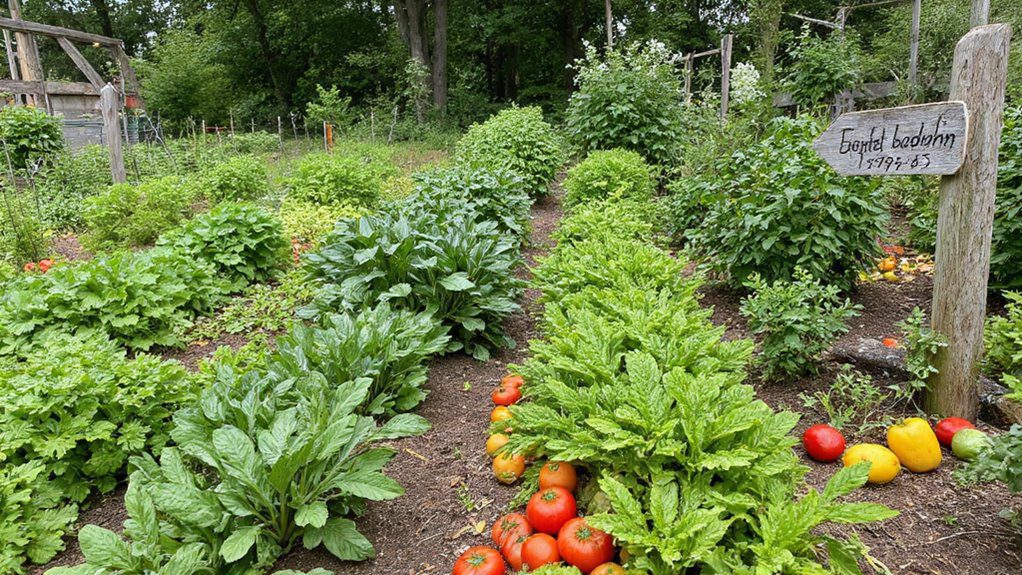
When choosing vegetables for your garden, understanding your local climate is essential to ensure healthy growth and a bountiful harvest.
Warm climates favor tomatoes, peppers, and cucumbers, while cool climates suit lettuce, kale, and broccoli.
Match vegetables to your hardiness zone and seasonal temperatures—plant hardy crops like broccoli early and protect semi-hardy ones like cabbage from frost for optimal results.
Decide Between Seeds and Transplants
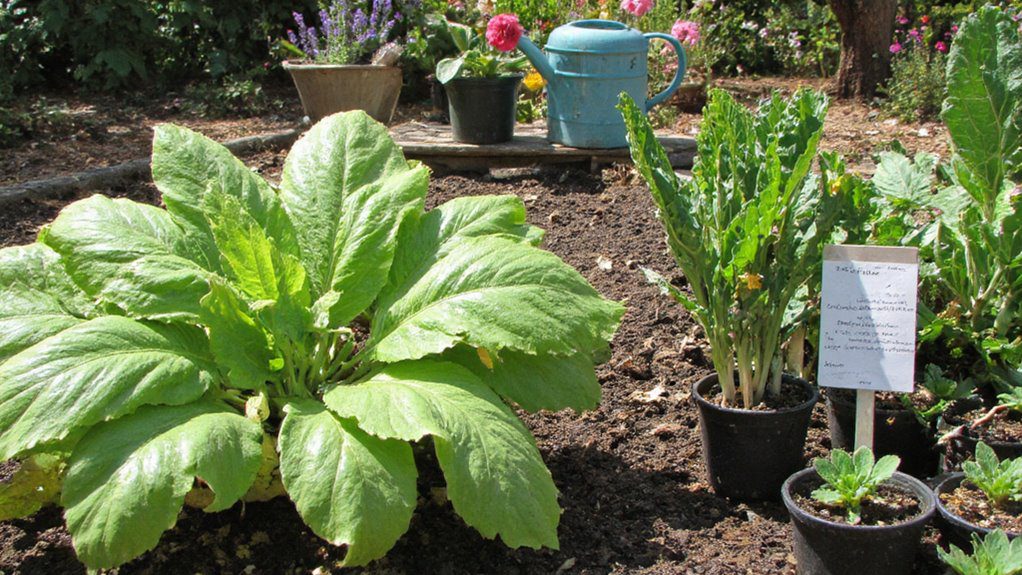
Deciding whether to start your vegetable garden from seeds or transplants depends largely on your schedule, available space, and desired plant varieties.
Seeds offer affordability, variety, and control but need space and daily care.
Transplants save time and provide a quicker harvest but cost more and limit variety.
Choose based on your time, space, and crop type to optimize success.
Plant With Proper Spacing and Depth
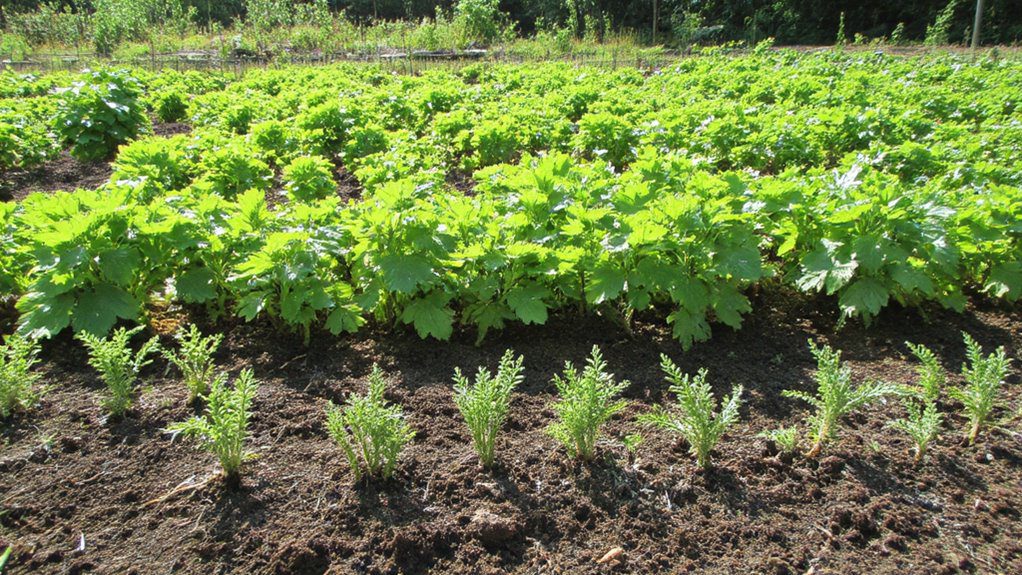
Although it might seem straightforward, planting your vegetables with the right spacing and depth requires careful attention to each crop’s specific needs to ensure healthy growth and optimal yield.
For example, cucumbers need 8-10″ spacing, tomatoes 24-36″.
Plant seeds 2-3 times their diameter deep; deeper for root crops like carrots.
Adjust spacing for climate, garden type, and trellising to maximize space and health.
Enrich Soil With Organic Matter and Compost
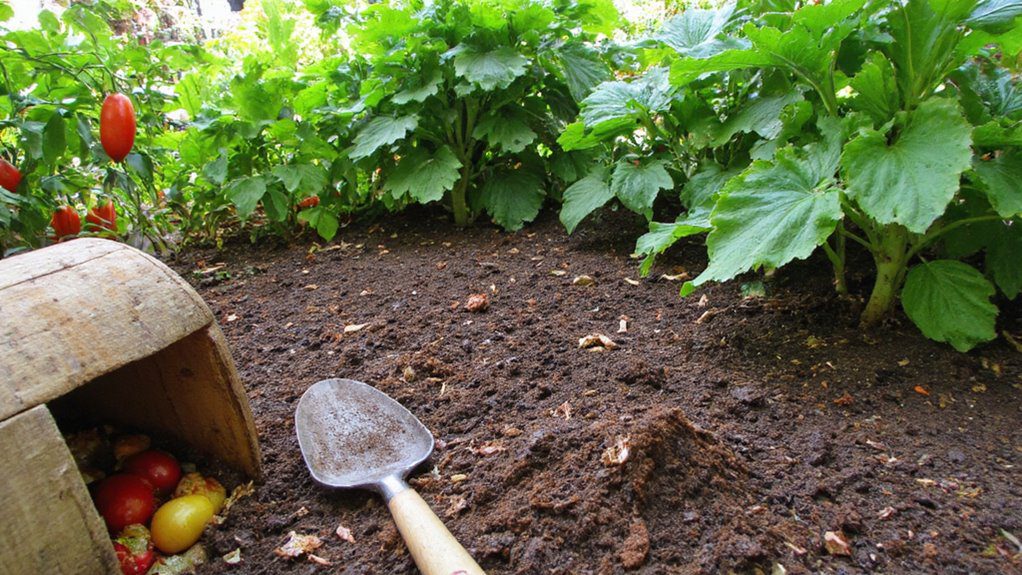
Since healthy soil forms the foundation of any thriving vegetable garden, enriching it with organic matter and compost is essential.
I mix well-rotted compost or composted manure into the topsoil to improve structure, water retention, and nutrient availability.
Regularly adding mulches like wood chips maintains moisture and suppresses weeds.
This boosts microbial activity and root growth, ensuring your garden stays fertile and resilient season after season.
Set Up an Effective Irrigation System
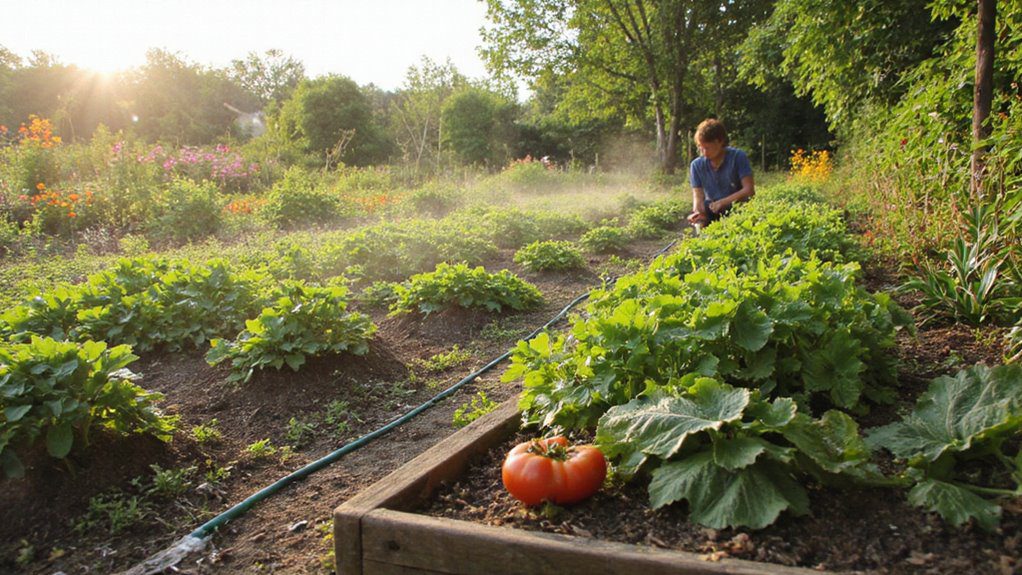
When you want your vegetable garden to thrive, setting up an effective irrigation system is crucial.
I start by mapping the garden, choosing drip tubing for direct root watering, and installing timers for consistent schedules.
I use pressure reducers and backflow preventers to protect the system.
Burying tubes and securing fittings tightly prevents damage and leaks, ensuring efficient water delivery tailored to each plant’s needs.
Monitor Soil Moisture and Adjust Watering
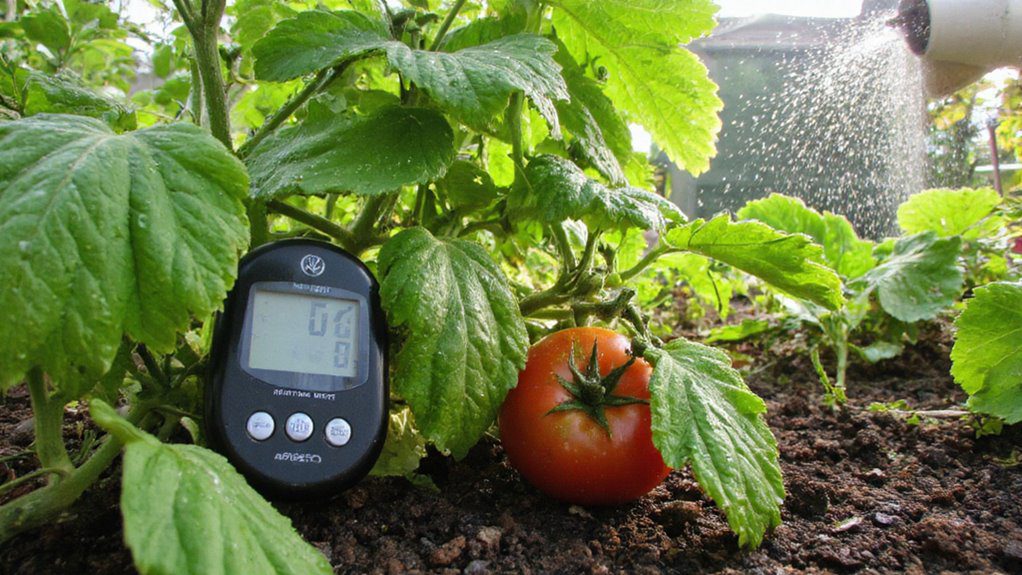
After setting up an efficient irrigation system, I focus on monitoring soil moisture closely to fine-tune watering practices.
I use soil probes and moisture sensors to measure wetness accurately, adjusting watering based on plant type, soil texture, and weather.
Early morning watering and deep soaking promote healthy roots, while I avoid overwatering by responding to sensor data and environmental changes to conserve water effectively.
Control Weeds and Protect Against Pests
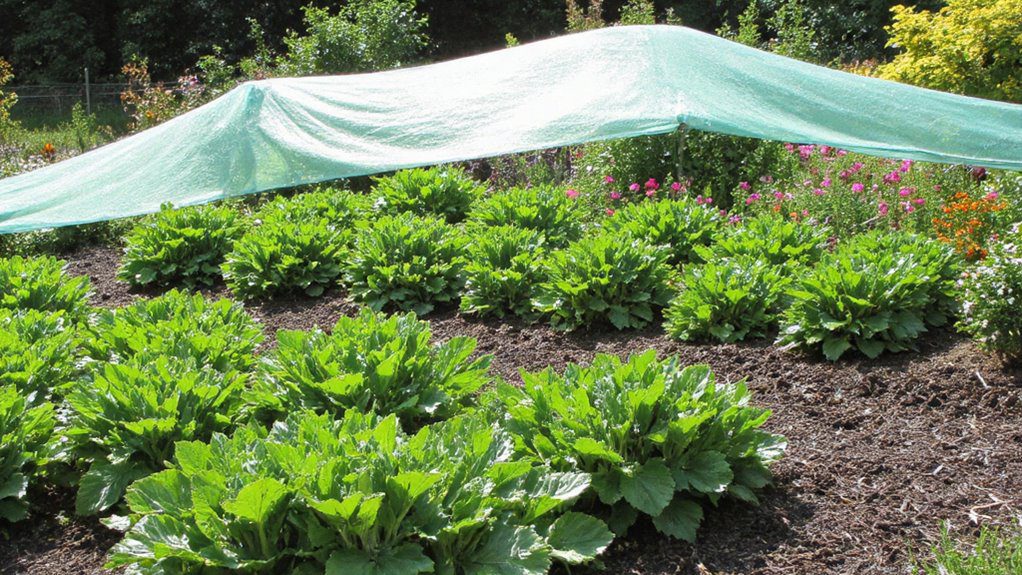
Although controlling weeds and protecting against pests can feel overwhelming, I’ve found that a strategic approach makes all the difference.
I rely on mulching with straw and shredded leaves to suppress weeds and use row covers to block pests.
I also practice crop rotation and companion planting to reduce pest buildup naturally, while regularly removing young weeds before they establish roots.
Support Your Plants for Better Growth
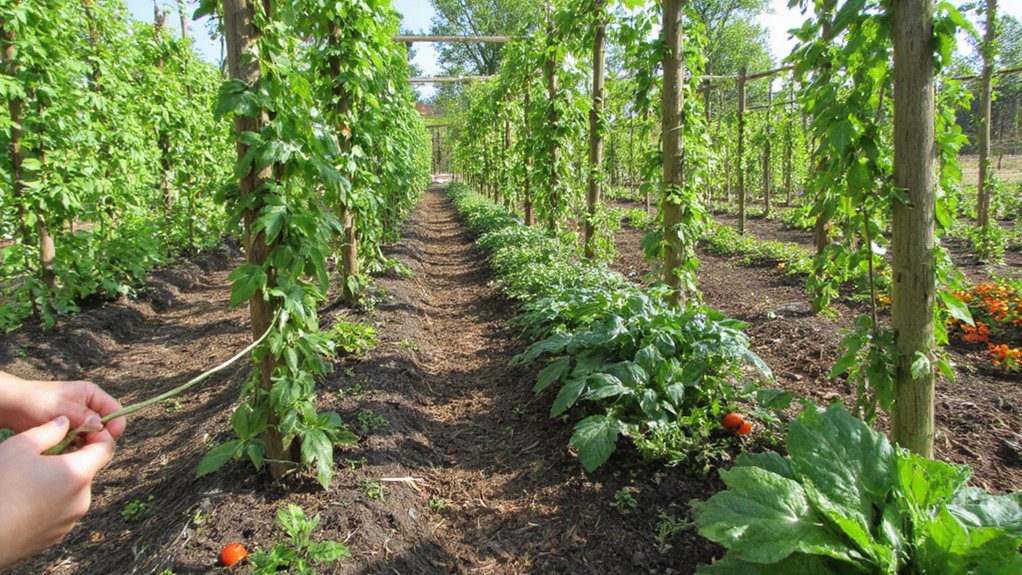
Managing weeds and pests sets the stage, but supporting your plants properly can make a significant difference in their growth and yield.
I use trellises for climbers and cages for tomatoes to improve air circulation and keep fruits off the ground. Stakes prevent wind damage to tall plants.
This vertical growth maximizes space, reduces disease risk, and ensures healthier, more productive vegetables.
Harvest at the Right Time for Best Flavor
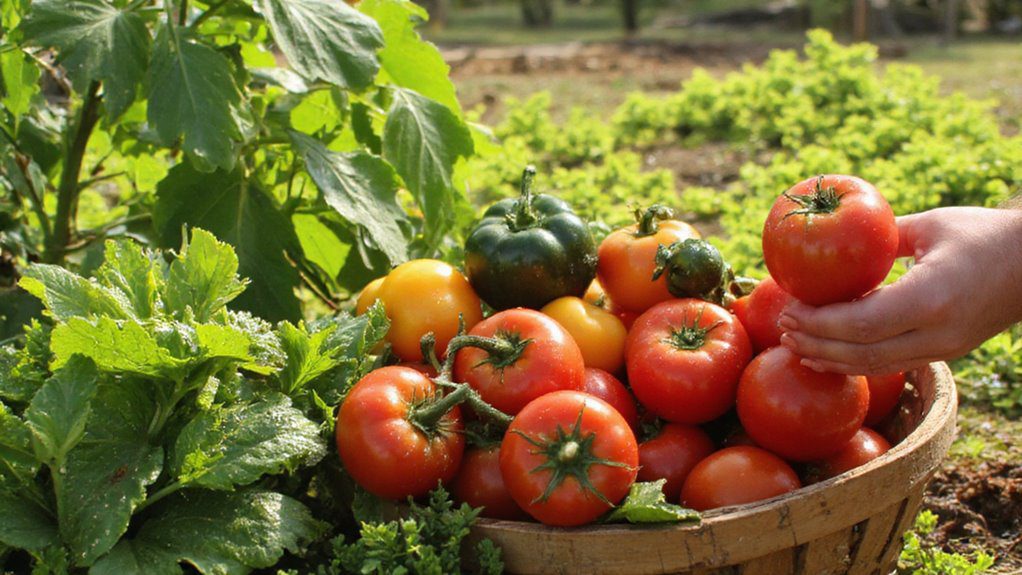
When exactly should you harvest your vegetables to capture their best flavor? I watch for visual cues like vibrant colors and firmness, and for crops like corn, I check for milky juice in kernels.
I harvest early mornings to retain moisture and avoid heat stress. Regularly picking encourages more production, especially with zucchini and cucumbers, ensuring peak taste and quality.