
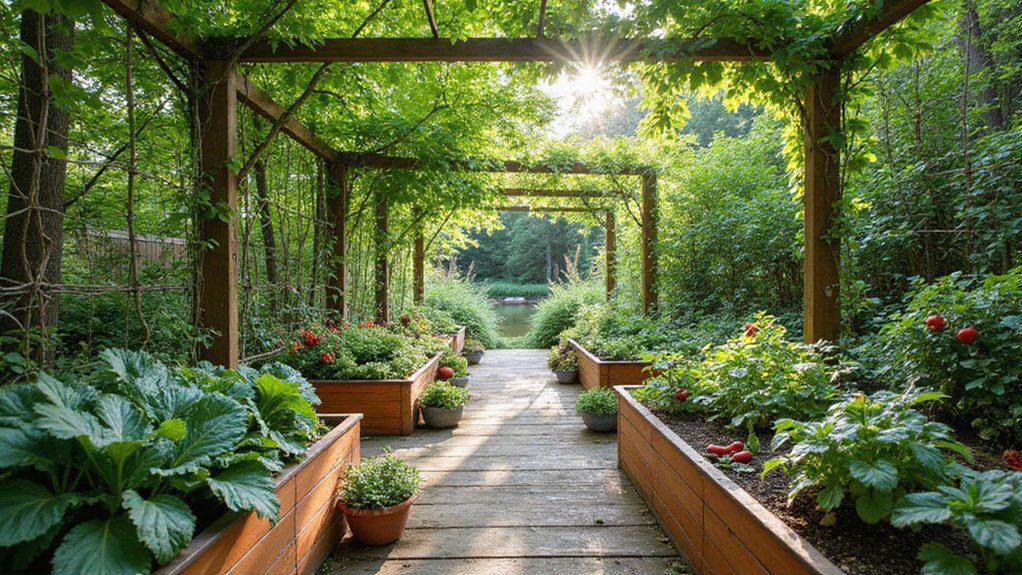
When I first started designing my home vegetable garden, I quickly learned that thoughtful planning makes all the difference between a chaotic patch and a thriving space. From selecting the ideal spot to arranging plants for both beauty and productivity, every choice impacts the outcome. Whether you have a sprawling yard or just a small balcony, there are strategies that can transform your garden into a vibrant, efficient oasis. Let me share some ideas that might change the way you approach your garden.
Choosing the Perfect Location for Your Vegetable Garden
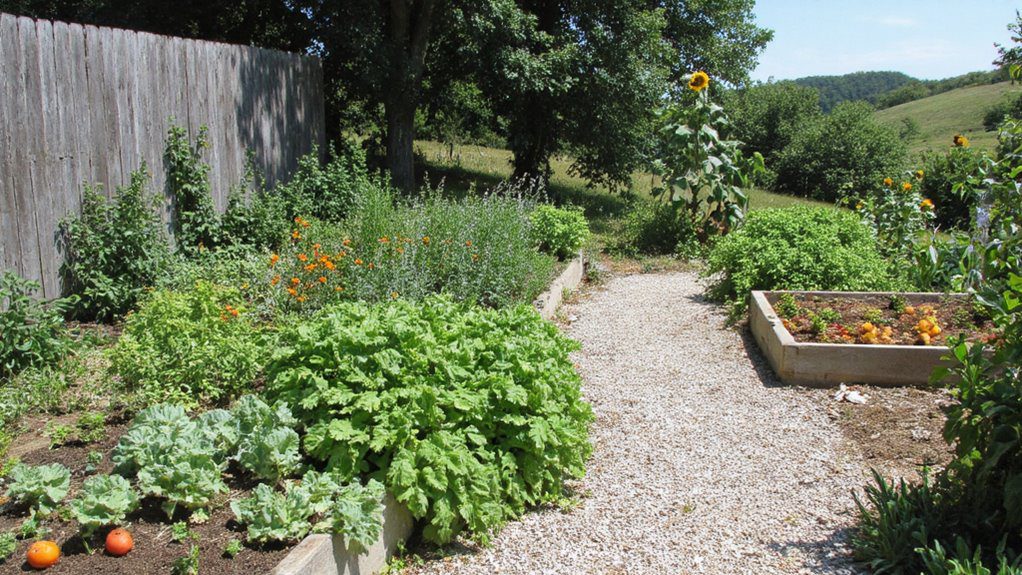
Selecting the perfect location for your vegetable garden hinges on several critical factors, with sunlight exposure topping the list.
Most vegetables thrive with at least six hours of direct sun—ideally eight to ten. Watch for shade from trees or buildings, which can stunt growth.
Leafy greens tolerate less sun, but full sun maximizes yield and quality, so choose a bright, open spot carefully.
Planning Your Garden Layout for Maximum Efficiency
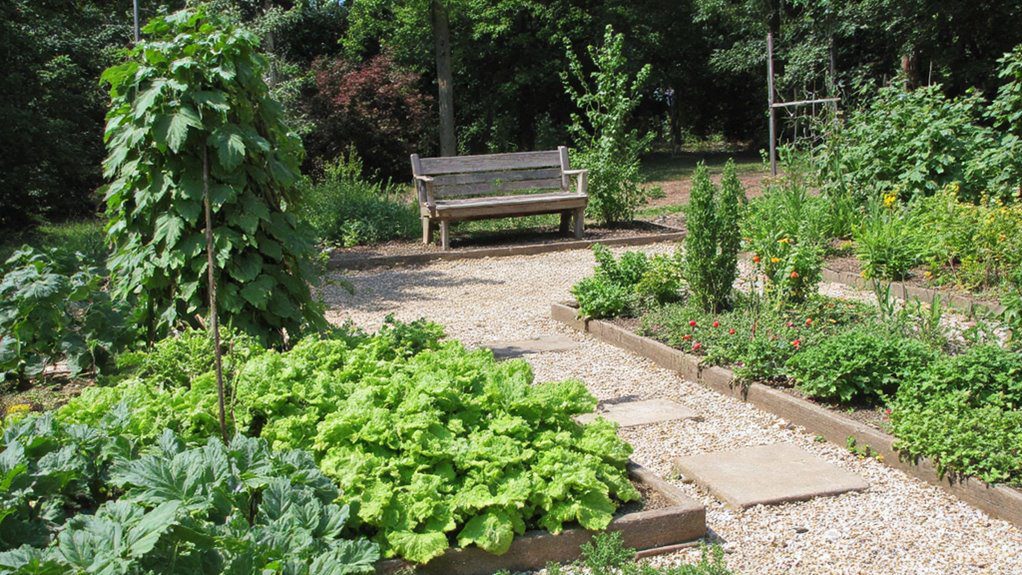
When you’ve found the ideal sunny spot for your vegetable garden, the next step is to plan the layout carefully to make the most of every inch.
I recommend raised beds about 3-4 feet wide for easy access and improved soil.
I use intensive planting, intercropping, and vertical structures like trellises to maximize space, boost yields, and enhance plant health efficiently.
Traditional Row Gardening Techniques
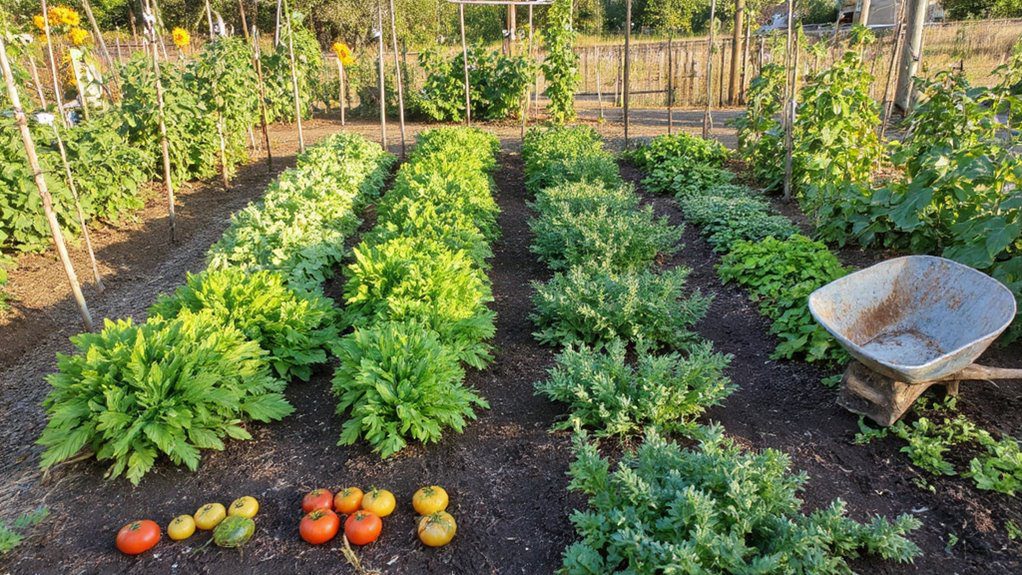
Traditional row gardening techniques have guided vegetable growers for centuries, and I find their straightforward structure both practical and reliable.
Planting in straight, well-spaced rows allows easy access for tilling and weed control. I prepare soil annually, incorporating organic matter and orient rows north-south for optimal sunlight.
Though less space-efficient, this method suits large crops and ensures good air circulation and manageable maintenance.
Square Foot Gardening for Small Spaces

While row gardening offers a reliable structure for larger plots, it may not suit those with limited space or time.
Square Foot Gardening uses 4×4-foot raised beds divided into sixteen 1-foot squares, maximizing yield efficiently.
Using Mel’s Mix soil and dense planting layouts, I create accessible, manageable plots that reduce water use and weeding, perfect for urban or small gardens.
Benefits of Raised Bed Gardens

Raised bed gardens offer a remarkable way to transform your growing space by giving you full control over soil quality and garden conditions.
I customize soil mixes to promote root growth and ensure excellent drainage, preventing waterlogged roots. These beds reduce weeds and pests, improve accessibility by minimizing bending, and extend the growing season, letting me plant earlier and harvest longer with ease and efficiency.
Utilizing Vertical Gardening Structures
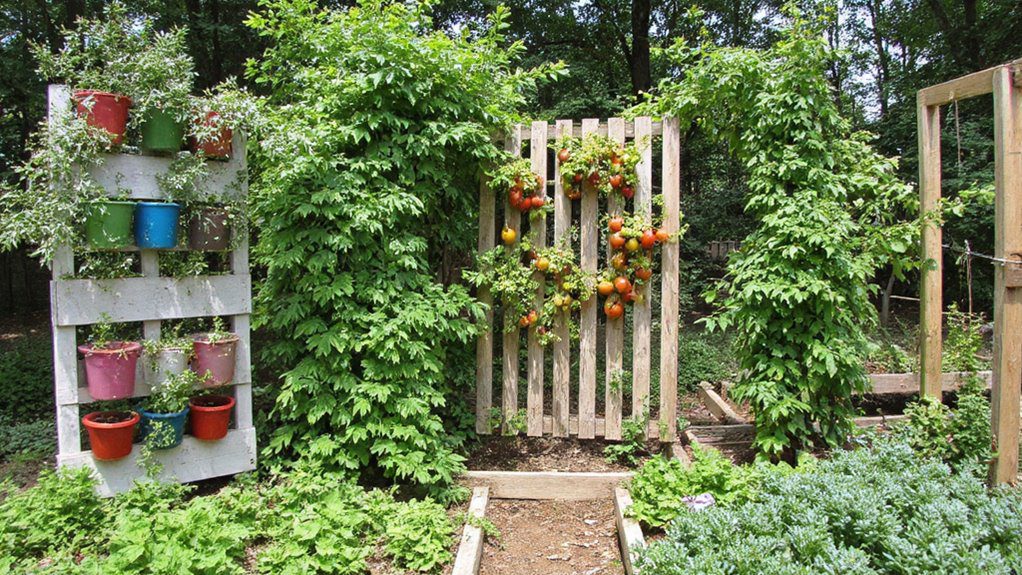
Because space is often limited, I rely heavily on vertical gardening structures to maximize yield without expanding my garden’s footprint.
I use sturdy trellises and cages for tomatoes and cucumbers, and arches to create inviting garden rooms.
Repurposed pallets add charm while supporting peas and beans.
These durable, well-placed supports optimize sunlight exposure and simplify harvesting, enhancing both productivity and aesthetics.
Creative Container Gardening Ideas

Maximizing vertical space has transformed my garden’s productivity, yet container gardening brings an equally dynamic dimension to growing vegetables at home.
I use upcycled wheelbarrows for herbs, vintage bathtubs for tomatoes, and fabric grow bags tailored by size.
Wooden crates lined with plastic extend life, while metal troughs add rustic charm.
These creative containers optimize space and enhance plant health beautifully.
Incorporating Companion Planting Strategies
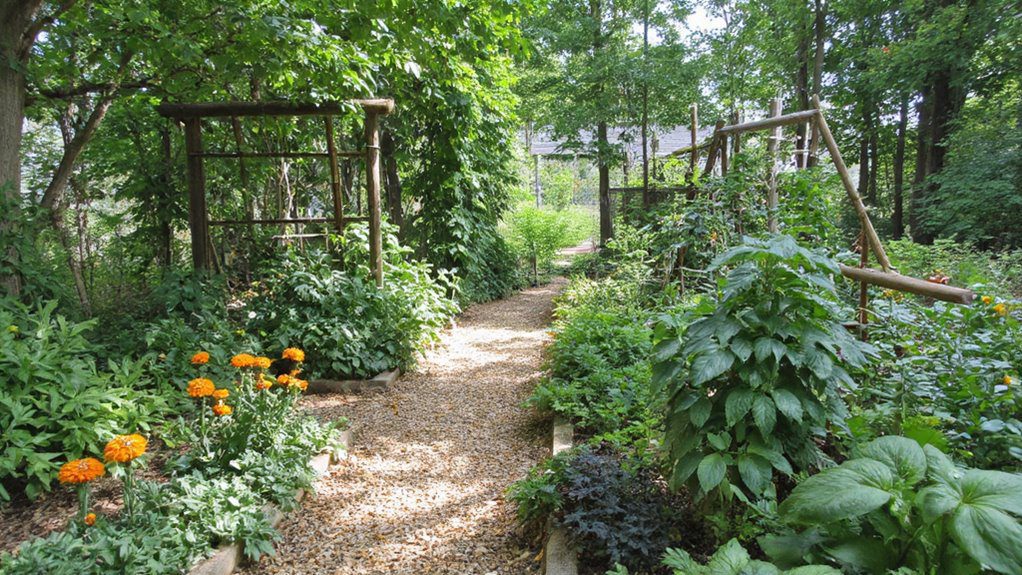
When I design my vegetable garden, I always incorporate companion planting strategies to create a thriving, balanced ecosystem.
Mixing legumes that fix nitrogen with deep-rooted plants improves soil structure. I plant basil near tomatoes to repel pests and boost flavor, while nasturtiums act as trap crops.
This thoughtful layering increases biodiversity, reduces pests naturally, and maximizes space with complementary growth habits.
Succession Planting to Extend Your Harvest
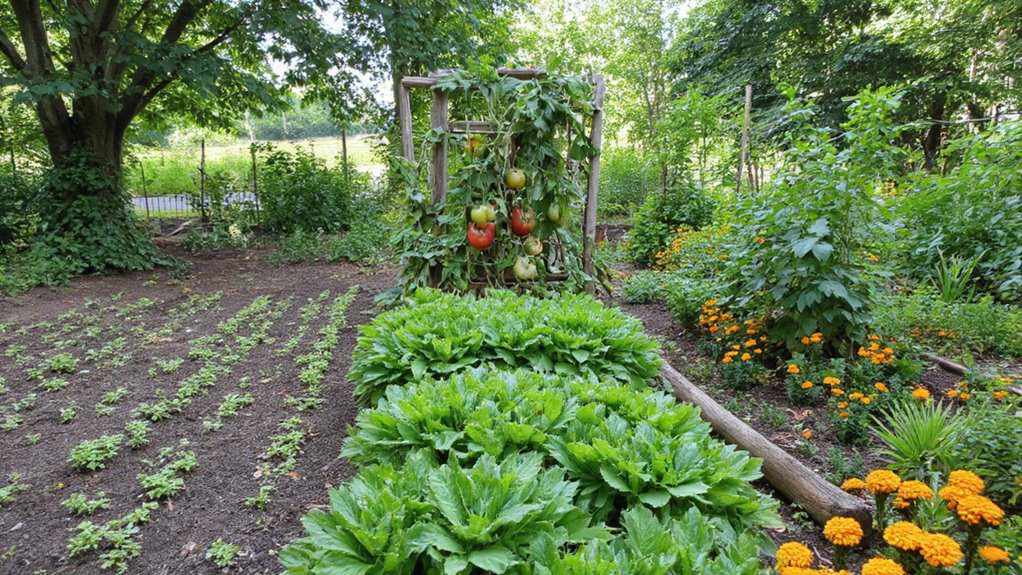
Although it requires careful planning, succession planting lets me enjoy fresh vegetables continuously by staggering sowing times throughout the season.
I sow small batches of quick-maturing crops like lettuce and radishes every 1-3 weeks, ensuring a steady harvest.
This method maximizes garden productivity, prevents gluts, and extends the harvest window, making my garden vibrant and productive for months.
Intercropping for Space Optimization
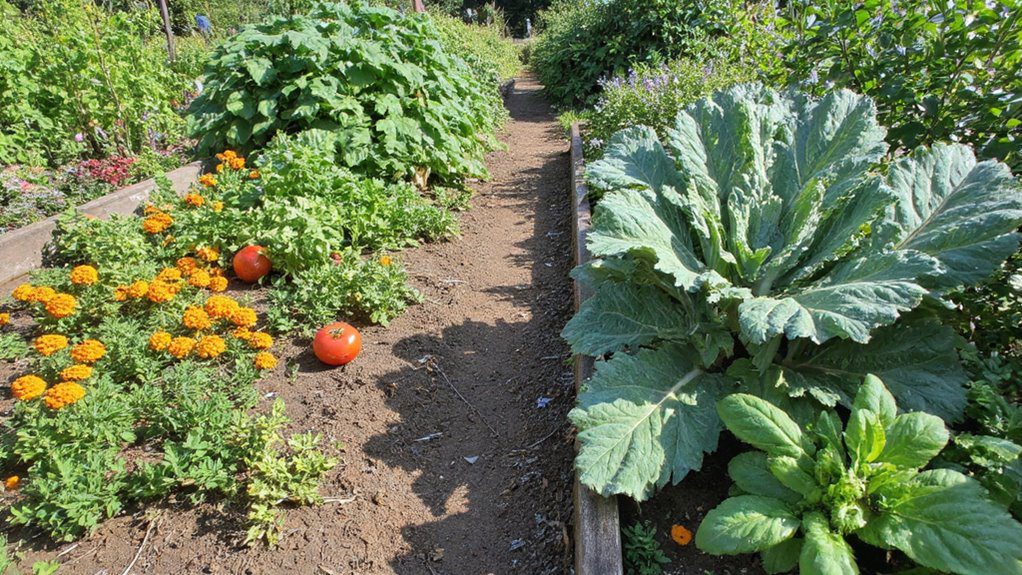
How can you make the most of every inch in your vegetable garden?
Intercropping lets you grow complementary crops together, like corn supporting climbing beans while squash spreads below, maximizing light, nutrients, and space.
Enhancing Garden Beauty With Flowers and Herbs
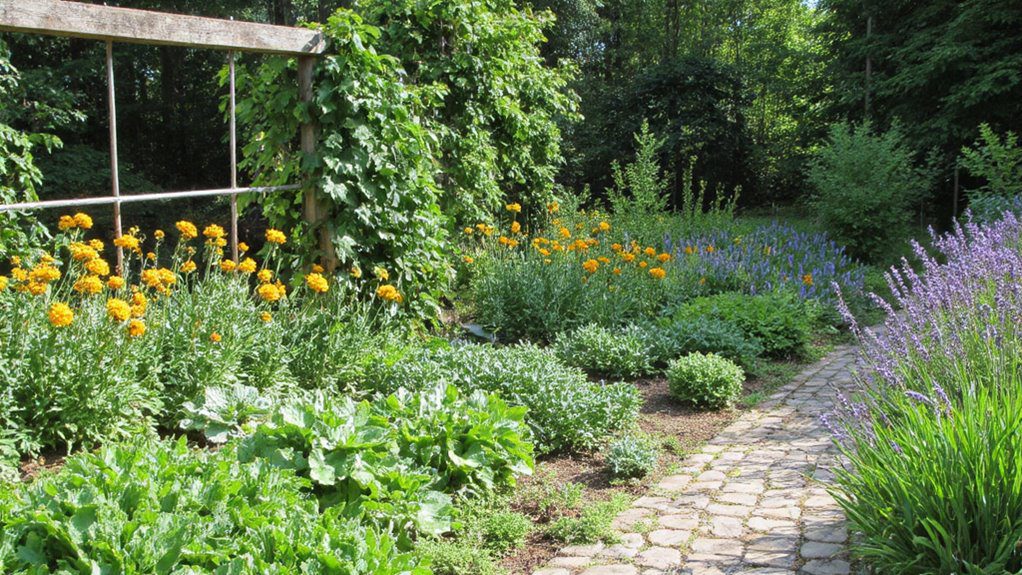
Why settle for a purely functional vegetable garden when you can elevate its visual and sensory appeal with carefully chosen flowers and herbs?
Bright marigolds, purple basil, and tall sunflowers add color, texture, and height variation. Fragrant lavender and mint enrich scents while attracting pollinators.
Edible nasturtiums and calendula provide beauty plus flavor, enhancing both aesthetics and productivity seamlessly.
Designing Pathways and Garden Borders

Adding vibrant flowers and herbs certainly enlivens a vegetable garden, but the way you move through and organize the space shapes your entire gardening experience.
I design pathways wide enough for wheelbarrows, using gravel or mulch for drainage and stability.
Borders made of treated wood or steel keep soil and mulch contained, defining beds clearly while protecting plants from foot traffic and weeds.
Adding Decorative Elements to Personalize Your Garden

Where can you find opportunities to bring personality and charm into your vegetable garden?
I add colorful annuals like marigolds at bed edges, use bamboo trellises for climbing beans, and place decorative containers or solar lamps for visual interest.
Painting raised beds and incorporating bird feeders also create inviting focal points, blending function with beauty seamlessly in my garden space.