

Looking to support your climbing plants without using moss poles? Consider these fast alternatives: try using Airy Mix, a lightweight and well-draining medium that enhances aerial root growth. Bark provides stability and moisture retention with a rustic feel. Cocoa Chunks offer innovative support with excellent water retention properties. Leca, lightweight expanded clay, provides aeration and moisture retention for healthy plants. To keep your plants thriving, water them thoroughly and consistently, adjusting based on your environment’s humidity levels. These alternatives can be effective and easy to implement for your plant support needs.
1. Airy Mix

An airy mix is a lightweight and well-draining growing medium that provides essential aeration and support for the roots of climbing plants. When using this mix for potted plants, you must make sure it consists of materials like bark, perlite, and charcoal to ensure proper aeration and drainage. Unlike traditional moss poles, the airy mix helps prevent waterlogged conditions that can harm plant roots by promoting a healthy root environment. It is an easy alternative to moss poles that can be made at home, offering a convenient way to support climbing plants. Additionally, the airy mix aids in encouraging aerial root growth, providing vertical support without the need for traditional poles. When considering the use of airy mix for your climbing plants, remember to maintain the appropriate balance of materials to create a supportive and aerated environment for healthy root development.
2. Bark

Consider incorporating bark as a natural and textured alternative to traditional moss poles for supporting climbing plants. Bark poles offer a rustic and organic aesthetic while providing a beneficial environment for plants to thrive. These poles can enhance healthy root development, offering stability and moisture retention as your climbing plants grow. Creating bark poles is a simple DIY project that involves securing bark pieces around a stake or pole using zip ties or twine. This cost-effective alternative allows for customization based on the type and size of bark you choose to use.
3. Cocoa Chunks
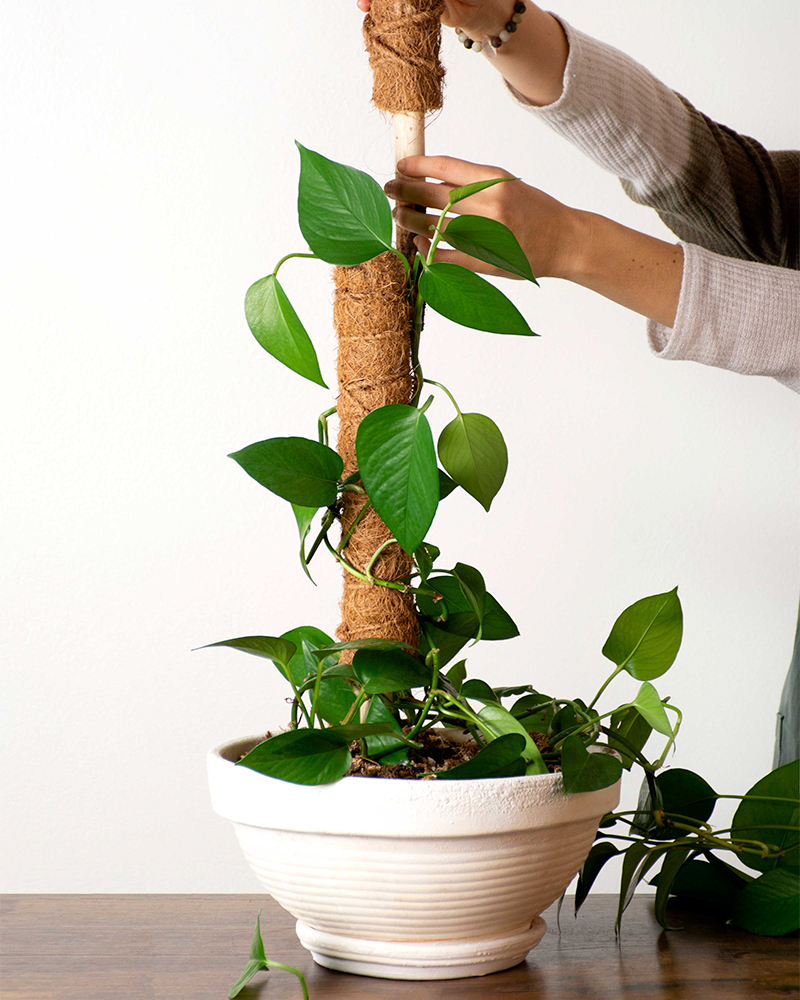
To explore an innovative plant support method, look into utilizing cocoa chunks as a natural alternative to traditional moss poles. Cocoa chunks offer excellent water retention properties, making them a valuable resource for keeping your plants adequately hydrated. They can be utilized in DIY projects for plant poles or combined with other materials such as perlite and bark to create a customized growing medium. While cocoa chunks efficiently retain moisture, it is essential to monitor them periodically to prevent any water spillage. Many plant enthusiasts have found cocoa chunks to be a fast and efficient solution for supporting various climbing plants. By incorporating cocoa chunks into your plant care routine, you can provide your climbing plants with the necessary support they need to thrive. Consider this natural alternative for your next planting project to experience the benefits of this sustainable and effective plant support method.
4. Leca
Leca, a lightweight expanded clay aggregate, serves as a versatile and practical alternative to traditional moss poles for supporting climbing plants in indoor gardens. These clay balls, originally used in hydroponic systems, offer numerous benefits when used as support for climbing plants. Leca is lightweight, porous, and provides excellent aeration for plant roots, promoting healthy growth. One advantage of Leca poles is their customizability; they can be easily adjusted to accommodate different plant sizes and shapes, offering flexibility in garden design.
Moreover, Leca aids in moisture retention, crucial for plant health. The porous nature of these clay balls allows them to absorb and retain water, helping to maintain optimal moisture levels in the plant’s root system. This feature is particularly beneficial for climbing plants that require consistent hydration. By utilizing Leca as a support system, indoor gardeners can create a stable and nurturing environment for their plants, fostering robust growth and beautiful displays.
5. Watering Tips

For optimal plant health and growth, watering moss poles thoroughly until water runs out of the bottom is essential to ensure even moisture distribution. To maintain the right soil moisture levels, water your moss poles when the top inch of the pole feels dry to the touch. This helps in preventing both overwatering and underwatering, promoting healthy root growth. Consider using a moisture meter for accurate monitoring of moisture levels. Here are some practical watering tips to keep in mind:
| Watering Tips | Description | Benefits |
|---|---|---|
| Thorough watering | Water until it runs out of the bottom of the pole | Ensures even moisture distribution |
| Consistent schedule | Water when the top inch of the pole feels dry | Prevents overwatering or underwatering |
| Use a narrow spout watering can | Direct water to the base without splashing foliage | Prevents water wastage |
| Adjust frequency based on environment | Consider humidity levels for watering adjustments | Maintains proper moisture retention |