
If you’re looking for evergreen trees for privacy, I’ve found some excellent options. Arborvitae and Thuja Green Giant grow rapidly, providing dense screens quickly. Cypress species like Leyland and Italian Cypress can reach impressive heights and require minimal care. Juniper varieties, such as Blue Point, are drought-tolerant and low maintenance. Norway Spruce not only offers privacy but also adapts well to various soils. For a unique touch, consider Cryptomeria; it supports wildlife while enhancing your landscape. Each of these trees has specific needs and benefits, so there’s much more to explore depending on your garden’s requirements.
Arborvitae
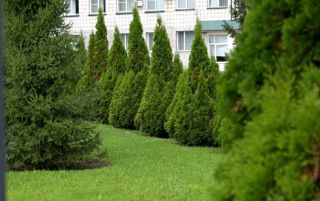
When it comes to creating a natural privacy screen, many homeowners find that Arborvitae stands out as an excellent choice.
The Arborvitae benefits include rapid growth of up to 3 feet annually and year-round coverage. Additionally, these trees offer minimal maintenance once established, making them a practical option for busy homeowners. Arborvitae are known for their dense foliage that provides effective privacy and windbreak capabilities.
For optimal Arborvitae spacing, I recommend planting them 6-8 feet apart for a dense screen or 2-3 feet apart for a trimmed hedge, ensuring effective privacy and aesthetics.
Juniper
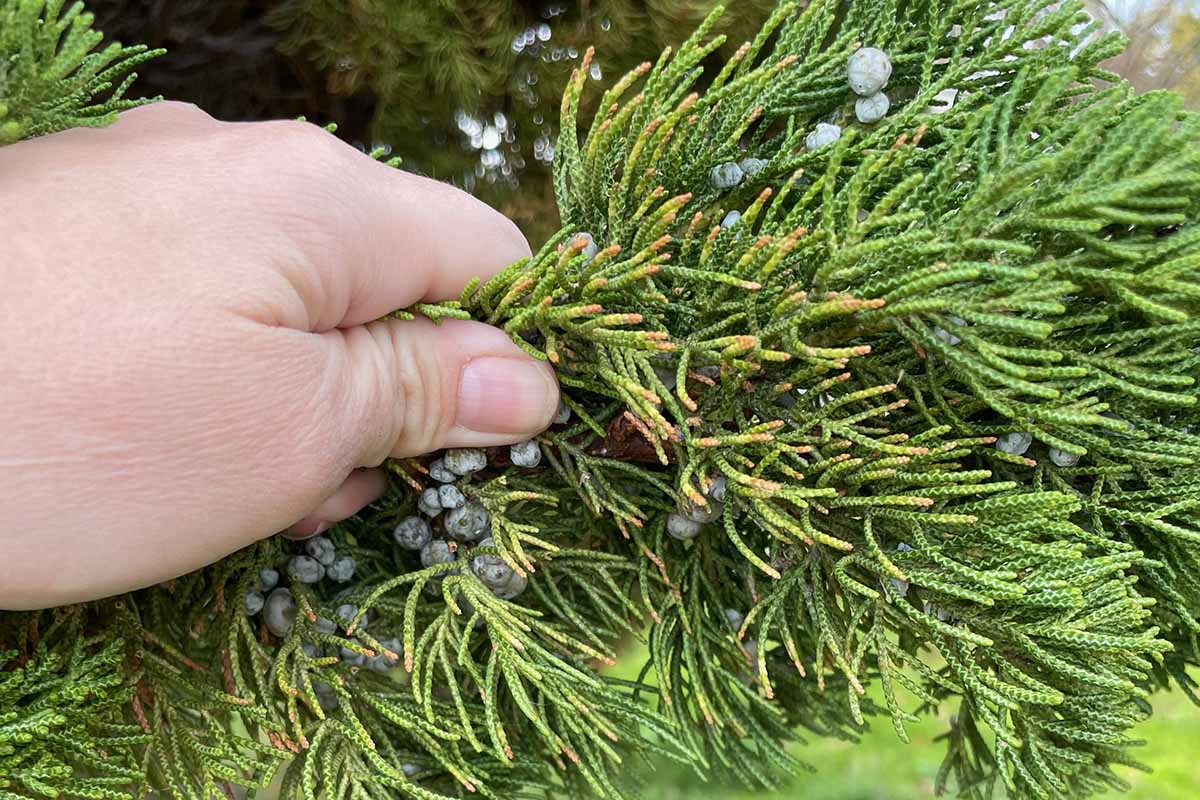
Junipers are remarkable evergreen trees that serve as effective privacy screens and windbreaks in various landscapes. With diverse juniper varieties like Blue Point and Spartan, they thrive in various soil types, showcasing excellent juniper drought tolerance. While juniper maintenance is minimal, be mindful of juniper pests. Their unique ecology includes dioecious reproduction, ensuring a balanced ecosystem and attractive, year-round foliage. Additionally, junipers offer unique aesthetic qualities that enhance the visual appeal of any landscape. To support healthy growth, it’s essential to plant them in well-draining soil that prevents waterlogging and promotes root health.
Spruce
Evergreen trees like junipers provide excellent privacy, but spruces also play a significant role in creating lush, green barriers. When considering spruce planting, I recommend spacing Norway Spruce 18 feet apart for optimal growth. Spacing trees closer than 8 ft apart can also encourage faster growth and a denser barrier. For spruce maintenance, regular watering during dry spells is crucial, along with spring pruning to remove any dead branches. These trees thrive in well-drained, acidic soil and full sun, making soil composition a key factor in ensuring their success.
Cypress

For those seeking a fast-growing option for privacy, cypress trees stand out as an excellent choice.
They can grow 3 to 5 feet annually, reaching heights of 40 to 60 feet within five years. With various cypress varieties adaptable to different soils, cypress care is straightforward, requiring minimal pruning and regular watering, ensuring a lush, dense privacy screen year-round. Additionally, their evergreen foliage provides year-round coverage, making them an attractive solution for outdoor privacy. Their ability to thrive in sandy soil conditions makes them particularly suitable for Florida landscapes.
Thuja Green Giant
After exploring the impressive qualities of cypress trees, I want to highlight the Thuja Green Giant, another remarkable option for creating privacy in your landscape.
This tree showcases rapid growth characteristics, reaching 30 feet in 30 years. For optimal results, plant in well-drained soil and ensure it receives full sun to part shade. Its dense foliage makes it perfect for privacy screens. This variety’s growth rate averages 3 to 5 feet per year, making it an excellent choice for quickly establishing a robust barrier.
Leyland Cypress
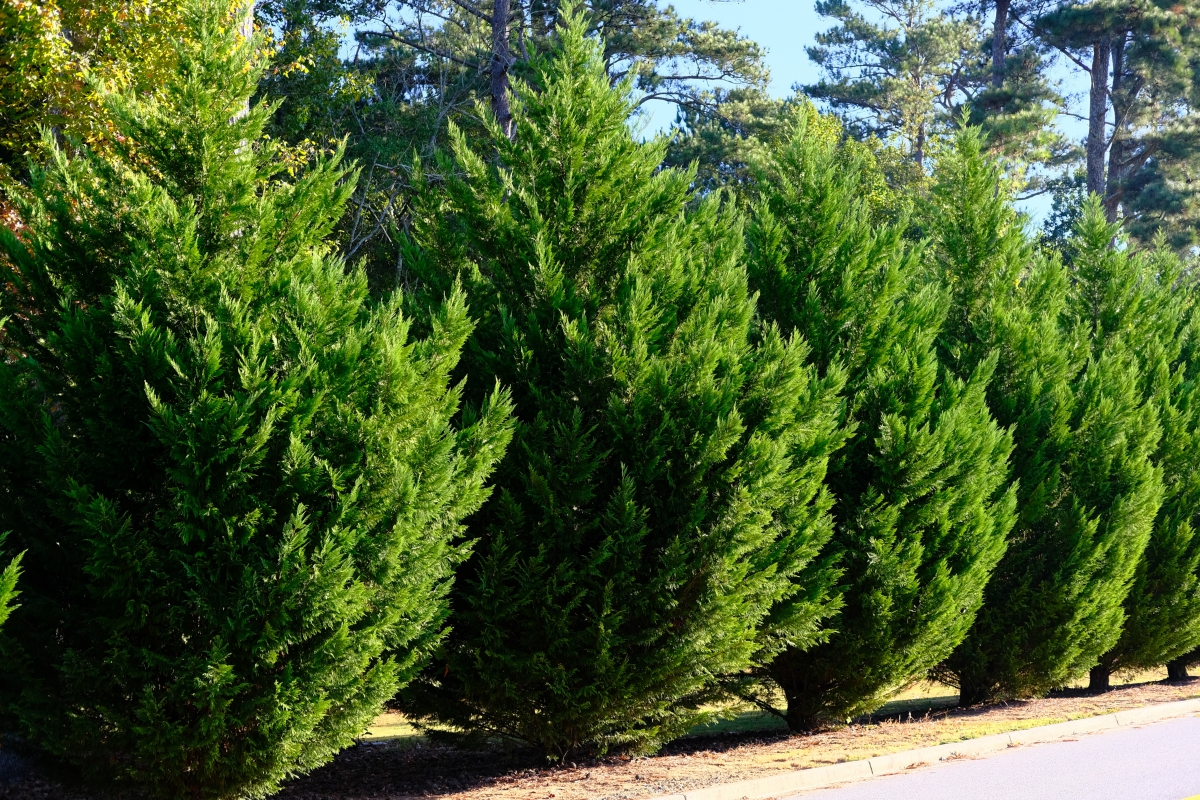
When seeking a fast-growing option for privacy, the Leyland Cypress stands out due to its remarkable growth rate and adaptability. It can reach heights of 40-60 feet within 15 years, making it perfect for privacy screens. This tree is known for its fast growth and ability to create dense privacy screens quickly.
For successful Leyland cypress planting, ensure well-drained soil and adequate sunlight.
Regular Leyland cypress maintenance, including pruning and watering, helps maintain its shape and health.
Norway Spruce
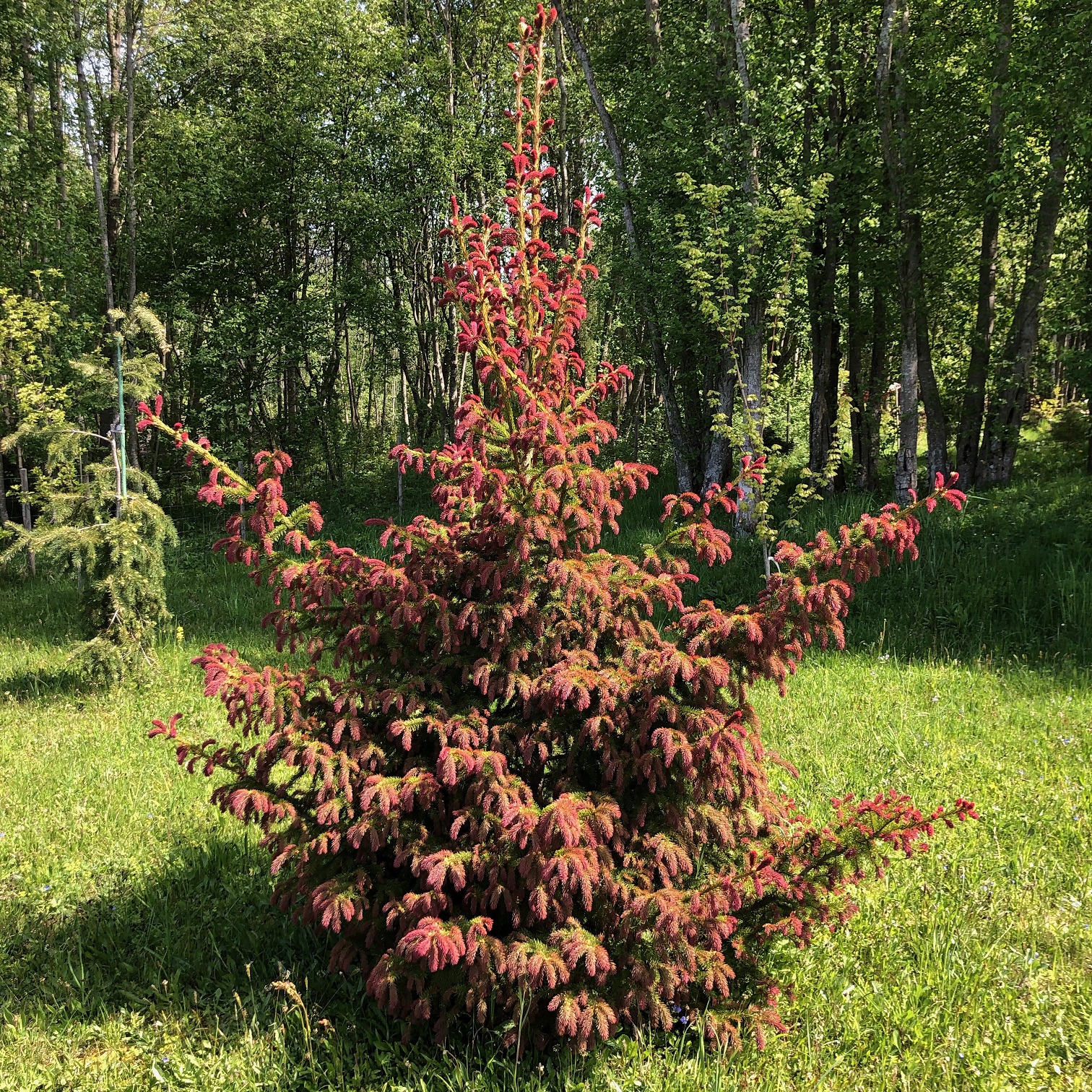
Norway Spruce, with its impressive growth rate and adaptability, serves as an excellent choice for creating privacy screens in various landscapes. It can grow up to 3 feet per year, reaching heights of 40-100 feet in optimal conditions. Its environmental adaptability allows it to thrive in diverse soils and climates, making it deer resistant and perfect for windbreaks and sound barriers. Additionally, it is recognized as the fastest growing spruce, making it an ideal option for quickly establishing privacy.
Emerald Green Arborvitae
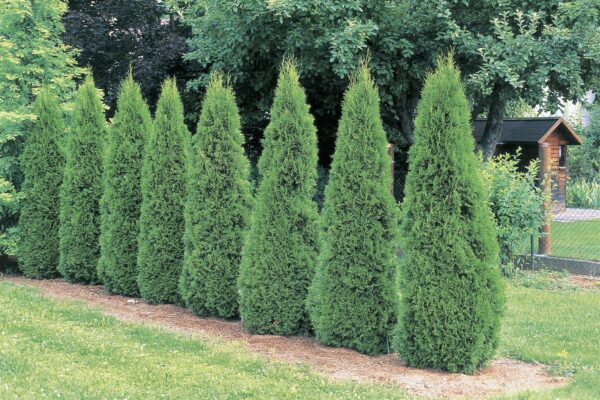
Emerald Green Arborvitae stands out as a prime choice for homeowners seeking to establish privacy in their gardens or yards due to its narrow, columnar shape and dense foliage. Its growth conditions are optimal in USDA zones 2-7, thriving in well-drained soil with full to partial sun. The privacy benefits are significant, creating effective living walls that enhance any landscape. Additionally, this variety is known for its low maintenance requirements, making it an ideal selection for busy homeowners.
Taylor Juniper

Although many homeowners prioritize aesthetics alongside functionality, the Taylor Juniper proves to be a remarkable choice for enhancing privacy in outdoor spaces.
This columnar tree grows 15-25 feet tall and thrives in full sun, adapting well to various soil types, provided they’re well-drained. Cold-hardy and thrives in full sun, this tree can withstand diverse weather conditions, making it a reliable option for year-round privacy.
Its dense, blue-green foliage makes it ideal for landscape design, serving as an effective privacy screen and wildlife habitat.
Eastern Redcedar Juniper

Utilizing the Eastern Redcedar Juniper can significantly enhance privacy in your outdoor space.
This tree grows 1-2 feet annually, reaching heights of 30-70 feet. It thrives in various soil types—clay, loam, and sandy—showing remarkable soil adaptability. Cold-hardy and adaptable, it can thrive in a variety of environments, making it a versatile choice for any landscape.
Not only does it provide a wildlife habitat by attracting diverse fauna, but it also offers excellent windbreaks and shade, enhancing your landscape’s functionality.
Douglas Fir
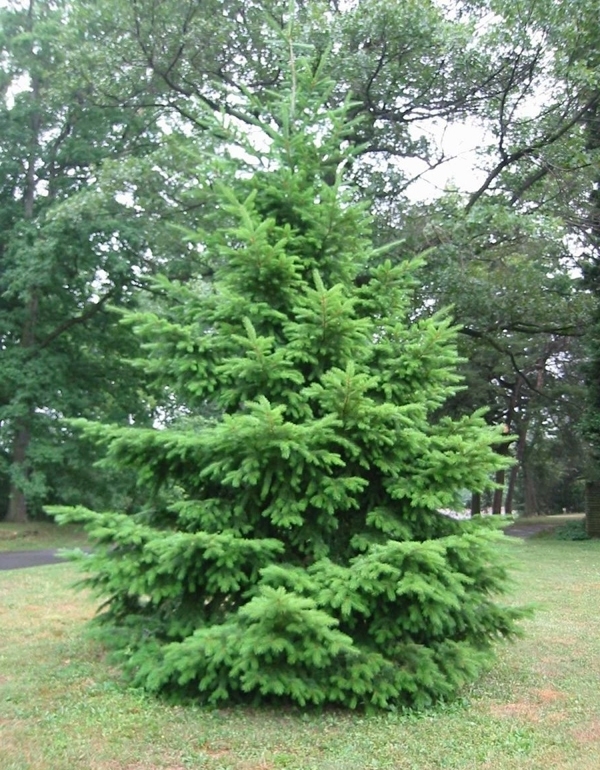
Among the evergreen options for privacy, the Douglas Fir stands out due to its robust growth and dense foliage.
Known scientifically as Pseudotsuga menziesii, its characteristics include a conical crown and needle-like leaves year-round.
For Douglas fir maintenance, plant them with the root flare level with the soil, apply mulch, and inspect regularly to prevent pest issues while ensuring consistent moisture.
Eastern Hemlock

The Eastern Hemlock, scientifically known as Tsuga canadensis, is a vital choice for those seeking an effective privacy screen in their landscape.
Thriving in moist, well-drained hemlock habitat, this tree exhibits slow hemlock growth, averaging 1.1% annual net volume increase.
Its pyramidal shape and tolerance for shade make it an excellent option for creating a natural barrier while supporting local ecosystems.
Blue Spruce
When considering options for an effective privacy screen, Blue Spruce (*Picea pungens* ‘Glauca’) stands out as a robust choice. This evergreen can reach heights of 30-60 feet, providing excellent coverage.

For optimal blue spruce care, ensure well-drained soil and full sun exposure.
The blue spruce benefits include acting as a sound barrier, offering wind protection, and enhancing the landscape with its striking foliage.
Western Red Cedar
Western Red Cedar (*Thuja plicata*) is an exceptional choice for those seeking a resilient and effective privacy screen.
With a growth rate of 24-36 inches annually, proper cedar maintenance, including biannual pruning, helps maintain its compact form.
This adaptable tree thrives in moist, well-drained soil, providing dense coverage and a natural barrier while supporting local wildlife and enhancing your outdoor space.
Italian Cypress
Italian Cypress (*Cupressus sempervirens*) stands out as a striking choice for creating privacy in your landscape, reaching impressive heights of 40-60 feet with a growth rate of up to 3 feet per year.
Employing proper cultivation techniques, I find they thrive in well-draining soil and full sun. Their columnar shape enhances landscape aesthetics, making them ideal for privacy screens or formal gardens.
Cryptomeria
Following the impressive stature of the Italian Cypress, Cryptomeria (*Cryptomeria japonica*) offers another fantastic option for enhancing privacy in your landscape.
This fast-growing tree reaches 30-40 feet tall and thrives in full sun to partial shade.
With minimal cryptomeria care, including annual fertilization and regular watering initially, you’ll enjoy its dense, fragrant foliage and long lifespan, providing excellent privacy benefits for decades.
Loblolly Pine
Loblolly Pine (*Pinus taeda*) is a remarkable choice for privacy in your landscape, reaching heights of 60 to 90 feet with a width of 20 to 40 feet in its native habitat.
Its rapid growth rate, tolerance to various soils, and thick evergreen needles make it ideal for Loblolly Pine landscaping.
This tree also supports wildlife, enhancing Loblolly Pine ecology in your yard.
Austrian Pine
Austrian Pine (*Pinus nigra*) stands out as a versatile and resilient option for enhancing privacy in your landscape. Its moderate to fast growth, reaching up to 60 feet, provides excellent coverage.
Austrian Pine benefits include noise reduction and windbreak capabilities.
For Austrian Pine care, be mindful of diseases like Diplodia blight. Various varieties adapt well to different soils, making them a reliable choice.