

As I began exploring the world of climbing plants for walls and trellises, I was surprised by the vast array of options available. The allure of cascading blooms and lush foliage creeping up vertical spaces is undeniable. From the vibrant colors of Bougainvillea to the delicate fragrances of Jasmine, each plant seems to offer a unique touch of beauty to any outdoor setting. But what truly sets these climbers apart? Well, let’s just say that functionality and wildlife benefits might be more intertwined with their aesthetics than you think.
1. Black-Eyed Susan Vine

If you’re looking to add a vibrant splash of color and vertical interest to your garden, the Black-Eyed Susan Vine is a fantastic choice. This annual vine, with its bright yellow flowers and dark centers, grows rapidly, reaching heights of 3 to 8 feet.
It thrives in full sun to part shade and attracts pollinators, making it a delightful addition to any garden. Just like hollyhocks, the Black-Eyed Susan Vine also benefits from well-draining soil and a sunny location to reach its full potential.
To ensure optimal growth, plant it in well-draining soil and provide a trellis for support as it climbs. Within just a month of planting, you’ll witness the stunning blooms that continue to grace your garden throughout the growing season.
For a pop of color and a touch of nature’s beauty, the Black-Eyed Susan Vine is a perfect pick.
2. Boston Ivy Fenway Park

Boston Ivy Fenway Park, also known by its scientific name Parthenocissus tricuspidata, is a robust climbing vine that can grow to towering heights of 30-50 feet and spread outwards up to 5-10 feet, making it an excellent choice for covering walls and trellises.
This climbing vine thrives in full sun to partial shade, showcasing vibrant fall colors in shades of red, orange, and gold, adding seasonal interest to any space. Named after Fenway Park, Boston Ivy is well-suited for urban landscapes, as it adheres to brick surfaces without causing damage.
Similar to the well-draining soil requirement of the Lady Palm, Boston Ivy also benefits from a soil that provides good drainage, enhancing its robust growth in various settings. Its adaptability to various soil types enhances its versatility in garden settings.
Beyond aesthetics, Boston Ivy provides environmental benefits, offering shelter to birds and insects while contributing to improved air quality through its photosynthetic processes.
3. Bougainvillea
:strip_icc()/pink-flowers-barn-door-72d0893c-54bc62035bcd441897b9f910055fb6a7.jpg)
Wondering what vibrant, showy vine can bring a splash of color to your walls and trellises? Bougainvillea is the answer!
This fast-growing vine can reach impressive heights and boasts vibrant bracts in shades of red, pink, purple, and yellow, encircling delicate white flowers for a stunning display.
Thriving in full sun and well-drained soil, this drought-tolerant evergreen plant is perfect for climates like USDA Zones 10 to 11.
Similar to fall flowers, Bougainvillea benefits from well-drained soil and ample sunlight, ensuring it flourishes.
To keep your Bougainvillea looking its best, regular pruning is essential, especially after the primary blooming season in spring.
With its striking appearance and low maintenance requirements, Bougainvillea is a fantastic choice for adding a touch of tropical charm to your outdoor spaces.
4. Carrion Flower

For those seeking a unique and intriguing addition to their garden, the Carrion Flower, scientifically known as Smilax herbacea, presents a fascinating choice.
This native vine, with its heart-shaped leaves, thrives in various conditions from full sun to shade and moist soils. The Carrion Flower’s climbing nature allows it to scale fences and tree trunks, making it a versatile addition to wooded landscapes.
Despite its unusual scent resembling decaying flesh, this plant attracts important pollinators like flies and supports biodiversity by producing blue-black berries that feed local wildlife.
5. Clematis

With its stunning blooms and versatile growth habit, Clematis is a popular choice for gardeners looking to add vertical interest to their outdoor spaces.
This climbing plant thrives in full sun and requires well-draining soil to reach heights between 3 to 20 feet.
Clematis blooms from spring to fall, showcasing a variety of flower shapes and colors like purple, pink, and white, depending on the specific type.
As a perennial vine, it adapts well to USDA zones 3 to 9, making it a favorite among gardeners in various climates.
Regular pruning, typically in early spring or late winter, promotes bushier growth and more abundant blooms, ensuring your Clematis remains a beautiful focal point in your garden.
6. Common Grape
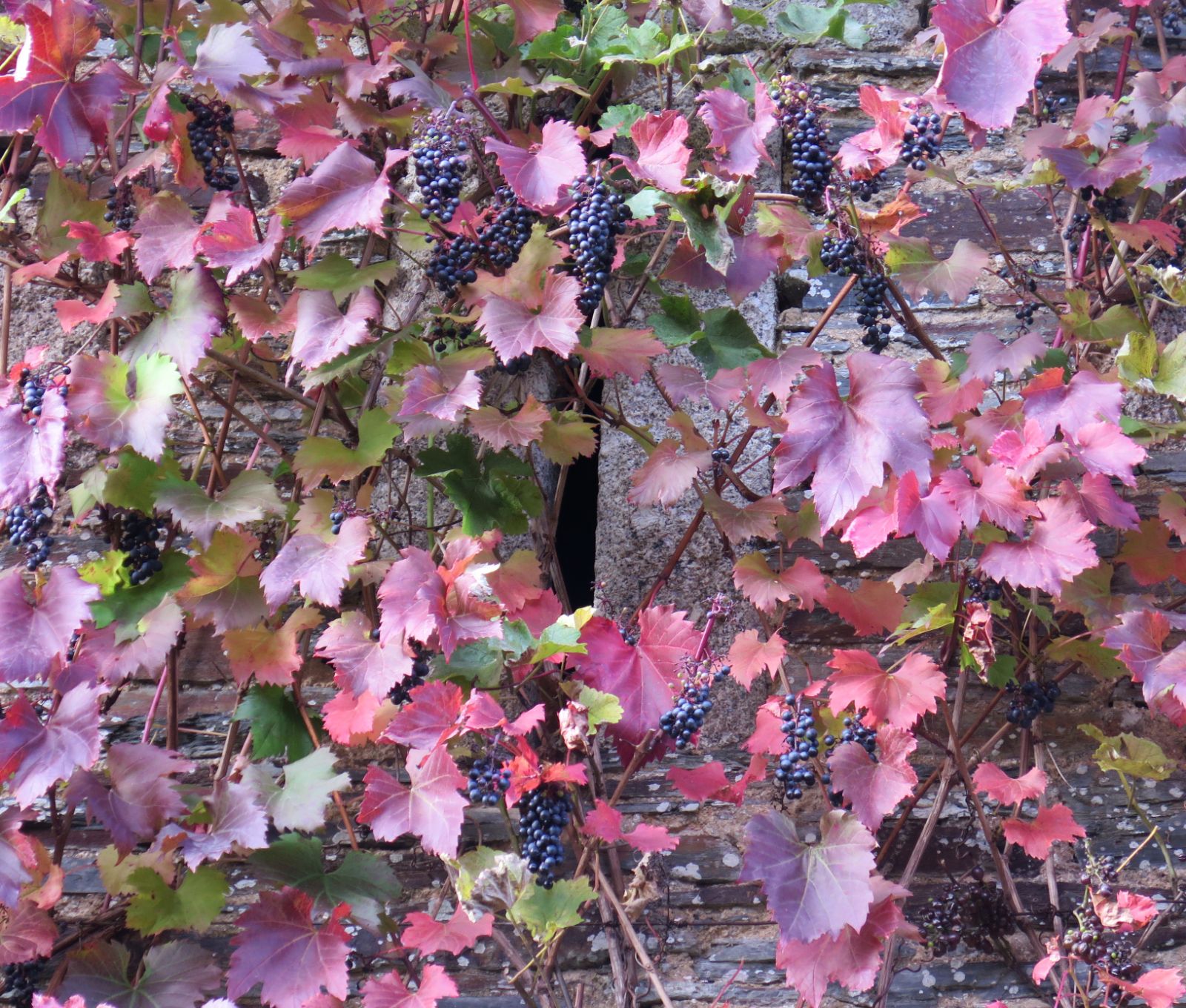
One of the most striking climbers for your outdoor space is the Common Grape, scientifically known as Vitis vinifera Purpurea.
This climbing plant thrives in full sun and well-drained soil, making it ideal for English gardens. With its deeply lobed leaves that turn from green to burgundy and crimson, the Common Grape can reach heights of 15-20 feet, spreading 6-10 feet wide.
Producing concord purple-blue fruit, this vine requires minimal pruning and adds both beauty and functionality to your garden.
Whether covering fences or sturdy arbors, the Common Grape is a versatile and low-maintenance choice for adding a touch of elegance to your outdoor space.
7. English (David Austin) Rose Carding Mill

The enchanting English (David Austin) Rose Carding Mill is a captivating addition to any garden landscape.
This climbing rose boasts stunning double peachy-orange blooms that transition to a beautiful apricot-pink hue, adding a touch of elegance to any outdoor space. Known for its spicy, myrrh-scented flowers, Carding Mill fills the air with a delightful fragrance.
Thriving in full sun, this rose is adaptable to various soil types, making it a low-maintenance choice for gardeners. With a height of 4 feet and a spread of 3.5 feet, it’s perfect for trellises, fences, or as a focal point in the garden.
Carding Mill is also suitable for different USDA Zones, making it an excellent option for climbers seeking beautiful and fragrant blooms.
8. Honeysuckle (Kintzley’s Ghost)

Looking to add a touch of elegance and nature’s charm to your garden? Consider planting Kintzley’s Ghost Honeysuckle, a stunning climbing vine that will surely elevate your outdoor space.
This hardy perennial, thriving in full sun to partial shade, boasts beautiful silver-blue bracts and fragrant tubular flowers that not only attract hummingbirds but also add a delightful fragrance to your garden.
With its robust growth and adaptability to various soil types, this vine is a versatile choice for trellises or small trees. Kintzley’s Ghost Honeysuckle supports local wildlife by providing nectar and habitat for pollinators.
Remember to plant it in well-drained soil and enjoy its striking blooms while enhancing your garden’s aesthetic appeal.
9. Jasmine
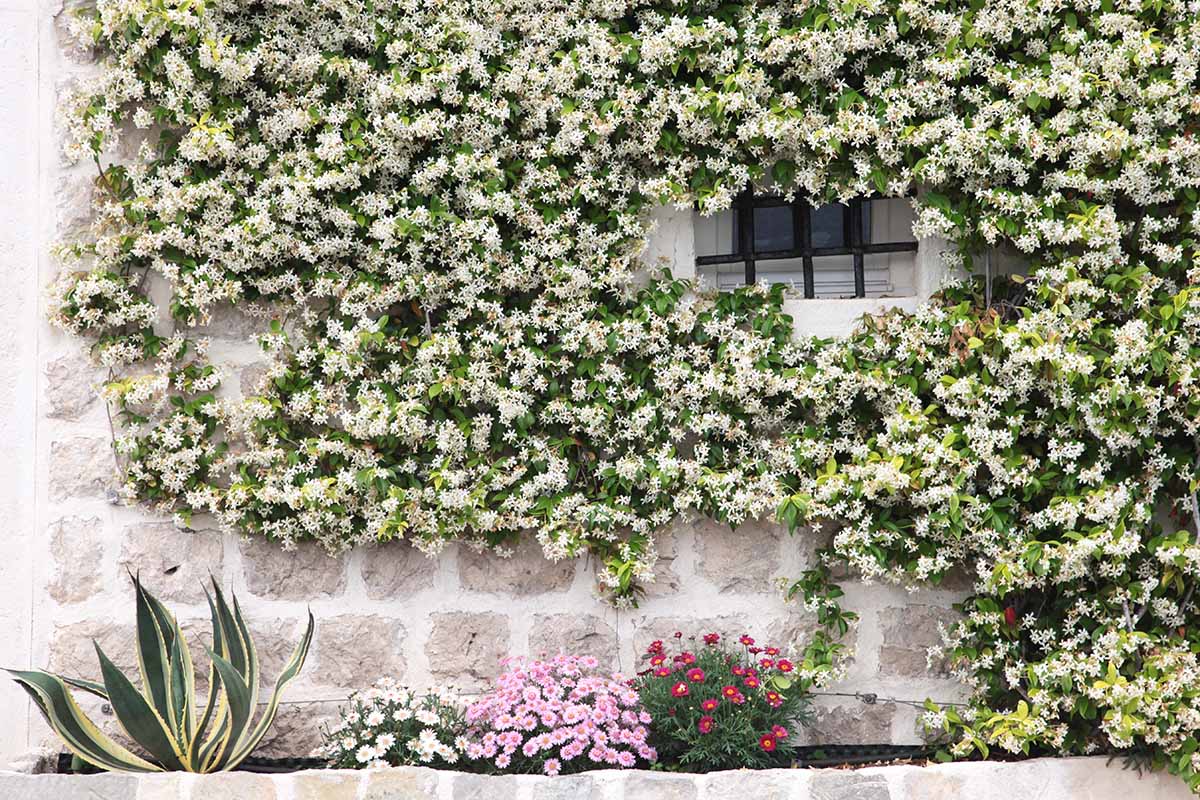
Interested in adding another stunning climbing plant to your garden after exploring the beauty of Kintzley’s Ghost Honeysuckle?
Consider Jasmine, a fast-growing vine that can reach heights of 10-20 feet. Thriving in full sun and well-draining soil, Jasmine produces fragrant flowers that attract pollinators like butterflies, enriching your garden’s biodiversity.
To maintain a lush display of blooms, regular pruning is essential to shape the vine and encourage bushier growth. Depending on the variety, Jasmine can be either evergreen or deciduous, providing year-round interest.
With its climbing vines and aromatic blossoms, Jasmine is a fantastic choice for vertical spaces, adding beauty and fragrance to your outdoor oasis.
10. Wisteria

If you’re seeking a show-stopping addition to your garden, consider Wisteria. This perennial vine, with its cascading clusters of fragrant purple flowers, can reach impressive heights of 10 to 30 feet and needs sturdy support due to its vigorous growth.
Here are some key points to keep in mind:
- Full Sun and Well-Drained Soil: Wisteria thrives in full sun and requires well-drained soil to flourish.
- Pruning: Regular pruning, especially in late winter or early spring, is crucial to encourage optimal blooming and manage its size.
- Long-Lasting Beauty: With proper care, Wisteria can grace your garden for decades, offering a stunning and fragrant display season after season.
11. Climbing Roses

With their ability to reach heights of up to 20 feet and their stunning display of fragrant flowers in various hues, climbing roses are a captivating addition to any garden.
These versatile plants thrive in full sun and well-draining soil, preferring a pH level between 6.0 and 6.8 for optimal growth. Regular pruning in late winter or early spring is crucial to encourage bushier growth and enhance flowering.
Climbing roses bloom from spring to fall, offering colors like red, pink, and white, depending on the cultivar. They’re suitable for USDA Zones 4 to 11, making them adaptable to various climates.
When providing sturdy support structures such as trellises or arches, climbing roses can create a beautiful vertical display in your outdoor space.
12. Sweet Pea

Sweet Pea, also known by its botanical name Lathyrus odoratus, is a charming annual climbing plant that adds a touch of elegance to any garden space.
This fragrant beauty produces colorful flowers in shades of pink, purple, and white, making it a delightful addition to trellises or fences.
To help it thrive, ensure it gets full sun and well-drained soil.
Here are some key points to consider:
- Sweet Pea vines grow 5-8 feet tall and require support structures.
- These plants bloom best in full sun, but can tolerate some shade.
- Consistent moisture and regular watering are essential for continuous blooming throughout the growing season.
13. Passionflower

Known for its exotic appearance and vigorous growth, the Passionflower (Passiflora sp.) is a stunning climbing plant that can reach heights of up to 30 feet, making it an ideal choice for vertical spaces such as walls and trellises.
This fast-growing vine thrives in full sun and well-drained soil, attracting butterflies with its unique flowers. Blooming from summer to fall, the Passionflower’s nectar-rich blossoms also entice hummingbirds.
Its edible fruit, known as passionfruit, adds to its allure as both an ornamental and edible plant. Suitable for USDA Zones 6 to 10, this plant is adaptable to various climates but requires regular pruning for shape and flowering.
Providing sturdy support for optimal growth, the Passionflower is a versatile and attractive addition to any vertical garden.
14. Mandevilla

Amidst the colorful array of climbing plants suitable for walls and trellises, the Mandevilla vine stands out with its striking trumpet-shaped flowers and rapid growth rate.
This fast-growing plant, ideal for trellises, fences, or walls, thrives in full sun and well-draining soil. Here are some key points to consider about Mandevilla:
- Mandevilla blooms in vibrant shades of pink, red, or white from spring to fall.
- It can reach heights of 3 to 8 feet and requires sturdy support for climbing.
- Regular pruning is essential to maintain its shape, encourage new growth, and ensure abundant flowering throughout the growing season.
Mandevilla is best suited for USDA hardiness zones 9 to 11, but in cooler climates, it can be grown as an annual or brought indoors during winter.
15. Variegated Kiwi Vine
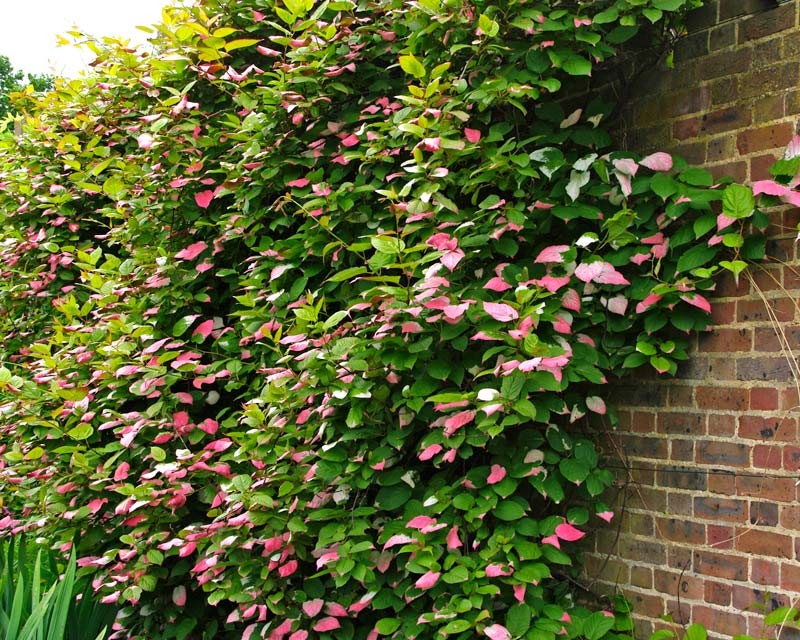
The Variegated Kiwi Vine, scientifically known as Actinidia kolomikta, presents an eye-catching option for adorning walls and trellises with its distinctive green and white variegated leaves.
This climbing plant is a fast-growing vine that can reach impressive lengths of 15 to 30 feet, making it ideal for covering large vertical spaces. Thriving in full sun and well-drained soil with a pH of 5.5 to 7.0, this vine produces fragrant white flowers in late spring, attracting pollinators such as bees and butterflies.
While primarily grown for its ornamental value, the Variegated Kiwi Vine can yield edible kiwifruit if both male and female plants are present for pollination.
Consider adding this captivating vine to your outdoor space for a beautiful and functional addition.