

To attract hummingbirds to your garden, plant potted flowers like salvia, bee balm, and fuchsia. These vibrant blooms offer nectar that hummingbirds love. Choose tubular or trumpet-shaped flowers in red, orange, yellow, or blue hues for maximum attraction. Optimal sunlight exposure is key for these plants, so ensure they receive full sun to partial shade. Keep the soil moist, provide the right nutrients, and arrange your potted plants strategically for a hummingbird-friendly space. By selecting the right flowers and maintaining them well, you can create a beautiful haven for these delightful birds in your outdoor area.
1. Benefits of Potted Hummingbird Flowers
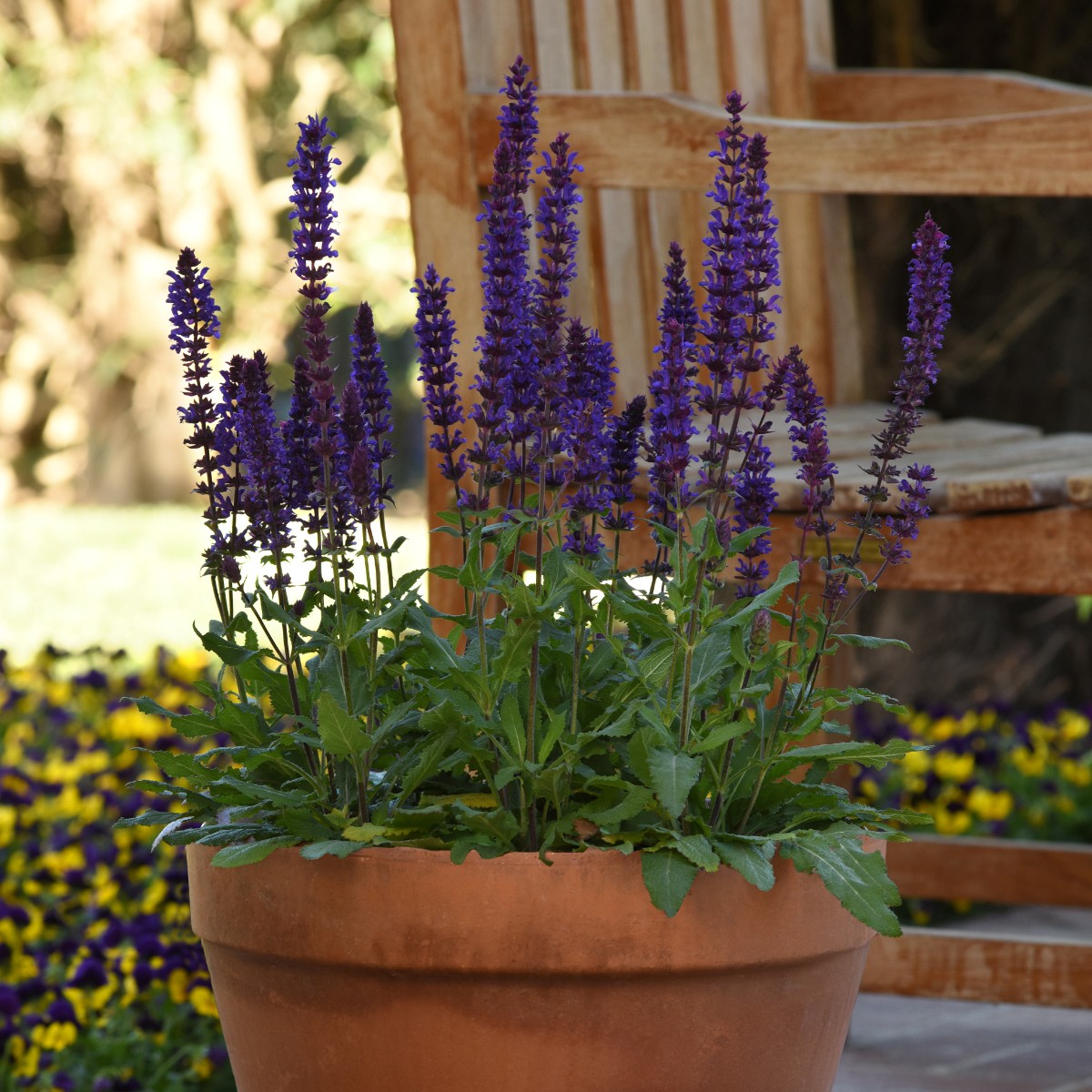
Potted hummingbird flowers offer a convenient and effective method for attracting these fascinating birds to your outdoor space. When considering a container garden to attract hummingbirds, opting for plants with red flowers is key. Hummingbirds are naturally attracted to bright red hues as they associate them with nectar-rich blooms. By planting red flowering plants like salvia, bee balm, or fuchsia in your potted garden, you are more likely to catch the attention of these tiny, vibrant birds.
Container gardens provide the flexibility needed to optimize sunlight exposure for your hummingbird flowers. You can easily move your potted plants around to ensure they receive adequate sunlight throughout the day, creating an inviting environment for hummingbirds to visit. Additionally, potted flowers are less susceptible to pests and diseases compared to plants in traditional garden beds, making them a low-maintenance option for attracting hummingbirds to your outdoor space.
2. Top Flower Choices for Hummingbirds
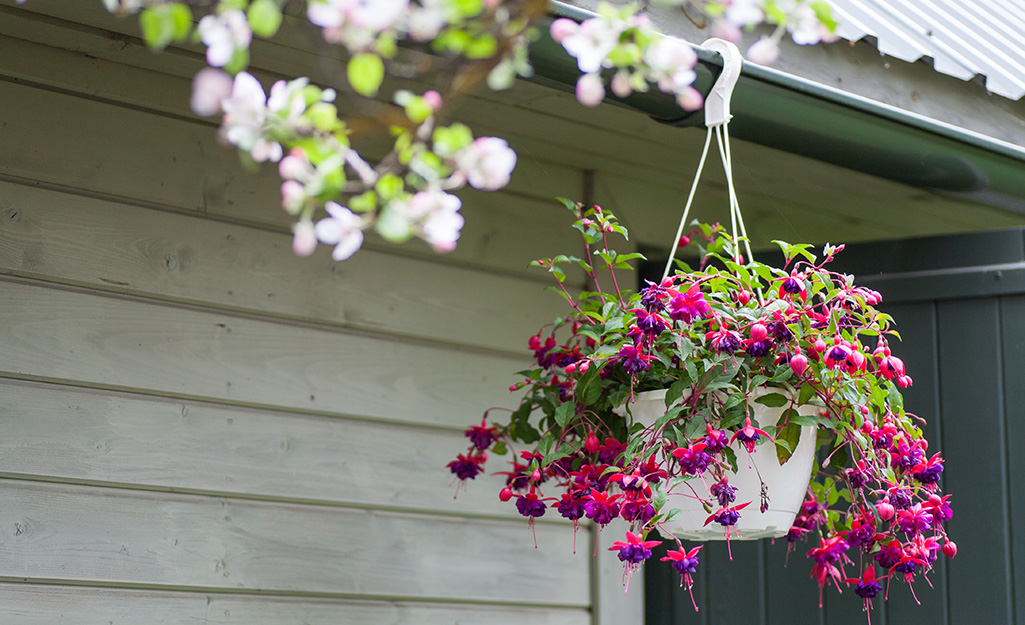
Red, orange, yellow, and blue blooms are highly appealing to hummingbirds, making them excellent choices for your container garden to attract these vibrant birds. When creating a hummingbird garden in hanging baskets or containers, consider plants like the ‘Bonfire’ begonia, cigar plant, ‘Gartenmeister Bonstedt’ fuchsia, Superbells Saffron calibrachoa, and ‘Tropical Bronze Scarlet’ canna. These plants are known to thrive in areas with full sun to partial shade, although some may require afternoon shade in warmer climates to prevent wilting. For those looking for alternatives, zonal geraniums, trailing plants with nectar-rich flowers, upright plants with bell-shaped or tubular flowers, and other options with nectar-rich blooms can also attract hummingbirds to your garden. Remember, hummingbirds have excellent memory and can lap up nectar at a remarkable rate of about 13 licks per second, so having a variety of these plants can keep them coming back to your garden.
3. Planting Tips for Attracting Hummingbirds

To attract hummingbirds to your container garden, select tubular or trumpet-shaped flowers known to be highly appealing to these vibrant birds. Opt for varieties like Bonfire begonia and Superbells Saffron calibrachoa, as they are considered hummingbird magnets due to their shape and nectar production. When planning your container garden, choose flowers in shades of red, orange, yellow, or blue, as these colors are particularly attractive to hummingbirds.
Ensure that the plants you select thrive in full to partial sun. For example, Tropical Bronze Scarlet canna and Gartenmeister Bonstedt fuchsia flourish in these light conditions. In warmer climates, consider providing afternoon shade for plants like cigar plant to prevent them from getting stressed. Additionally, offer alternatives such as Profusion Fire zinnia or Vancouver Centennial geranium to complement your cigar plants in the container garden.
4. Colorful Flowers That Hummingbirds Love

Colorful flowers that hummingbirds love typically include vibrant blooms in shades of red, orange, yellow, and blue, with tubular or trumpet-shaped structures that are particularly enticing to these tiny birds. When planning to attract hummingbirds to your container garden, consider planting flowers like Bonfire begonia, cigar plant, and Gartenmeister Bonstedt fuchsia. These plants not only offer the desired colors but also provide the tubular shapes that hummingbirds prefer for nectar feeding. For optimal results, ensure your container garden receives full sun to partial shade, with some plants benefiting from afternoon shade in warmer climates. By incorporating a variety of these colorful flowers in your garden, you create a visually appealing space for both you and the hummingbirds. Remember, the key is to provide a mix of colors and shapes to attract these beautiful birds to your outdoor sanctuary.
5. Best Locations for Potted Hummingbird Plants

Where should you position your potted hummingbird plants for optimal growth and hummingbird attraction? Choosing the right locations is crucial for the success of your hummingbird garden. It is a good idea to place your potted plants that attract hummingbirds in areas with abundant sunlight and minimal noise. This will promote healthy plant growth and make them more visible to hummingbirds. Additionally, ensure there are trees nearby for hummingbirds to perch, nest, and find insects for food.
Avoid placing your potted plants in high bird activity areas to prevent competition for feeding spots. Instead, consider hanging wire baskets with potted plants in locations with good visibility. This will not only attract hummingbirds but also provide you with a clear view for easy watching and enjoyment. To further enhance hummingbird attraction, consider adding multiple hummingbird feeders near your potted plants. By strategically placing your potted plants in these locations, you can create a hummingbird-friendly environment that will bring these beautiful birds to your garden.
6. Watering and Feeding Tips for Hummingbird Flowers
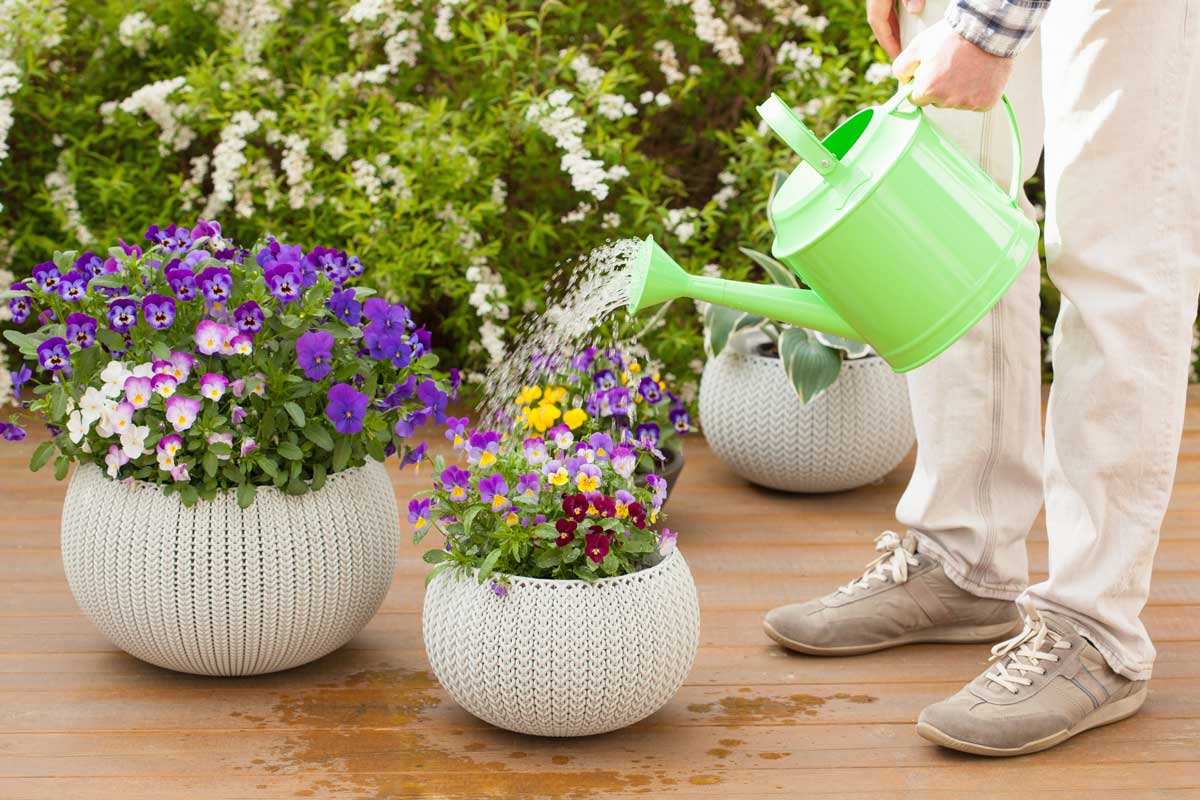
Consistently watering and feeding your hummingbird flowers is essential for promoting healthy growth and blooming. During the hot summer months, it’s crucial to keep the soil moist by watering the plants regularly. However, be cautious not to overwater as this can lead to root rot. To provide essential nutrients for optimal flower growth, use a balanced liquid fertilizer every 2-4 weeks. Additionally, consider incorporating a slow-release fertilizer to sustain your flowering plants for a longer period.
Adjust your watering frequency based on the weather conditions and the specific needs of your hummingbird flowers. Proper drainage is vital for potted plants, so ensure that excess water can easily escape. By following these watering and feeding tips, you can support the health and vibrancy of your hummingbird garden throughout the summer months. Remember, a well-maintained watering and feeding schedule will help your hummingbird flowers thrive and attract these delightful visitors to your garden.
7. Container Selection for Hummingbird Gardens

To create a successful hummingbird garden, the choice of containers plays a crucial role in providing the optimal environment for your plants to thrive. When selecting containers, opt for hanging baskets that are at least 12 inches in diameter to accommodate multiple plants. Choosing larger containers is beneficial as they can hold more plants and retain moisture, aiding in optimal growth. Ensure that the containers provide sturdy support to prevent tipping over, especially in windy conditions. To create an attractive display, consider combining foliage and flowers in the same container. It is essential to group plants with similar water and light requirements together in a single container to ensure successful growth. By selecting the right containers, such as spacious hanging baskets that provide stability and room for a variety of plants, you can create a full and visually appealing hummingbird garden that will attract these delightful pollinators.
8. Creating a Hummingbird-Friendly Garden Design
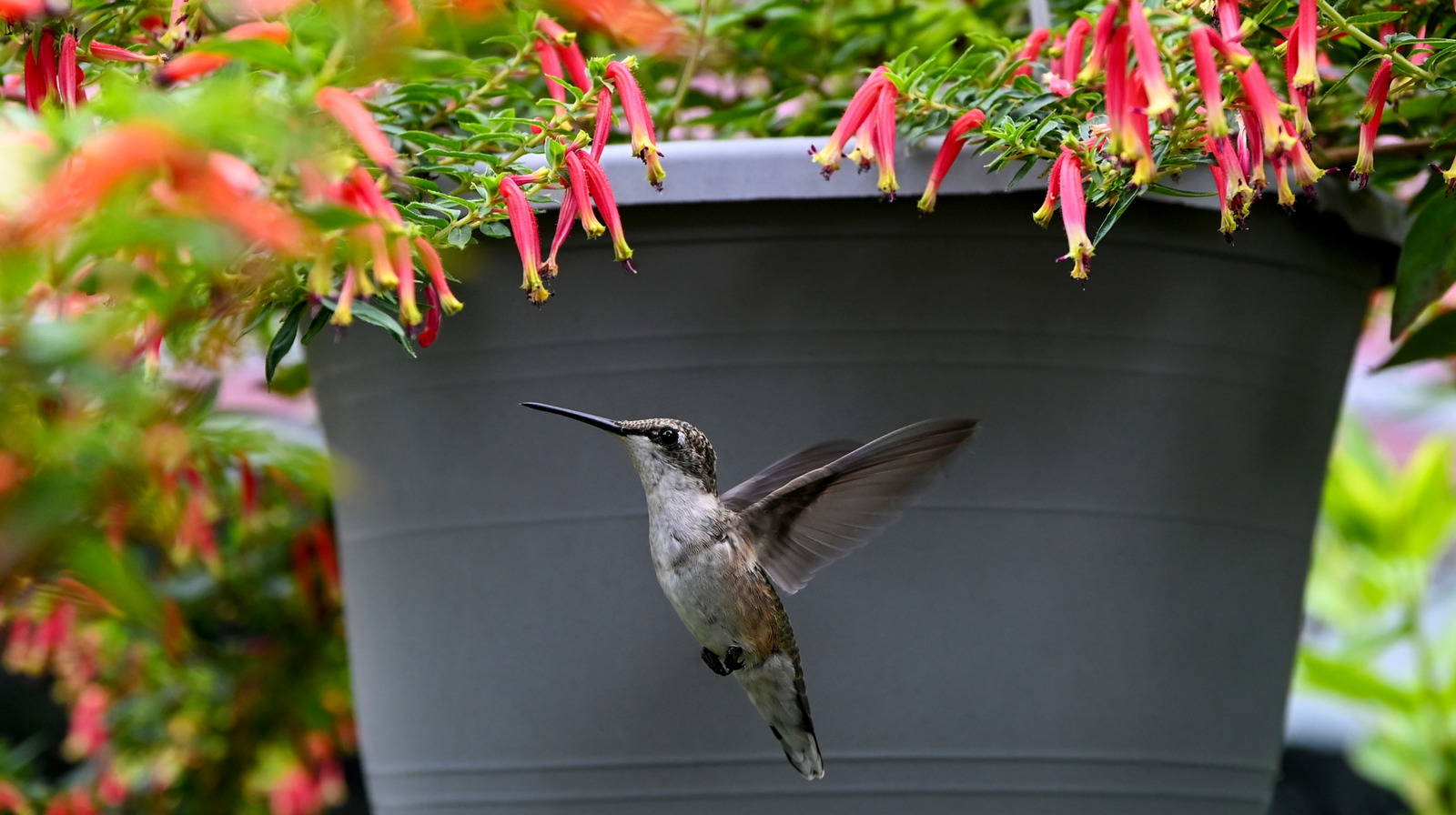
Selecting tubular or trumpet-shaped flowers such as salvia and penstemon is key to attracting hummingbirds to your garden. To create a hummingbird-friendly garden design, consider incorporating plants like cigar plant and hummingbird mint, known for their tubular flowers rich in nectar. Place these plants in clusters with staggered bloom times, utilizing colors like red, orange, yellow, and blue to attract hummingbirds consistently. Arrange potted plants at varying heights and forms, providing perches and hanging baskets for hummingbirds to rest and feed comfortably. Ensure your garden receives sun to partial shade, as these flowers thrive in such conditions. By clustering potted plants together, you can create an inviting environment that offers multiple feeding opportunities for hummingbirds. Remember to avoid pesticide use, opt for nectar-rich flowers, and maintain proper care to cultivate a thriving hummingbird-friendly garden.
9. Seasonal Flowering for Hummingbirds
:max_bytes(150000):strip_icc()/GettyImages-1429112777-86f0bd47165340a7abcf2515336083e6.jpg)
Understanding the blooming cycles of various flowering plants is essential for ensuring a continuous nectar supply for hummingbirds throughout the seasons. To attract hummingbirds year-round, it is crucial to plant a diverse selection of annuals and perennials that bloom at different times. By incorporating early, mid, and late blooming flowers in your garden, you can provide a consistent food source for hummingbirds during their migration and breeding periods. This strategic planning ensures that your garden remains attractive to hummingbirds throughout the year.
Selecting plants with staggered blooming periods is key to creating a habitat that supports hummingbirds during all seasons. Annuals like petunias, fuchsias, and salvias are great for providing nectar in the spring and summer months. Perennials such as bee balm, columbine, and penstemon offer nectar sources in the fall, ensuring that hummingbirds have access to food even as the seasons change. By planting a variety of flowers with overlapping blooming times, you can maintain a garden that continuously attracts hummingbirds.
10. Hummingbird Garden Maintenance Tips

Water your hummingbird-attracting potted plants generously during hot summer months to ensure their thriving health and blooming success. Regular watering is essential for plants like the firecracker plant, known for its tubular flowers that hummingbirds love. Besides watering, maintaining your hummingbird garden involves regular upkeep to keep the plants in top condition. Here are some practical maintenance tips to help you create a welcoming environment for these delightful birds:
| Maintenance Tips | Description |
|---|---|
| Regular Watering | Provide consistent moisture, especially in hot weather, for healthy growth. |
| Pruning Spent Blooms | Trim off faded flowers to promote continuous blooming and attract more hummingbirds. |
| Choosing Large Containers | Opt for spacious pots to allow roots to spread and provide stability for taller plants. |
11. Attracting Hummingbirds With Potted Blooms
:max_bytes(150000):strip_icc()/fabulous-plants-for-spring-containers-gardens-847901-hero-667b9cc984f84cfb8cbacc5ee31925d0.jpg)
To successfully attract hummingbirds to your potted garden, focus on selecting nectar-rich, tubular blooms like penstemon, salvia, and petunia. These flowers provide the essential nectar hummingbirds seek while offering a striking visual appeal to your garden. Here are some key tips to attract hummingbirds with potted blooms:
- Multiple Flowers: Choose plants with multiple flowers in open clusters to provide abundant nectar sources for hummingbirds.
- Staggered Bloom Times: Opt for plants with staggered bloom times to ensure a consistent supply of nectar throughout the season, keeping hummingbirds coming back to your garden.
- Red Flowers: While red flowers are a favorite of hummingbirds, remember that these birds are also attracted to various other hues, so diversity in color is beneficial.
- Well-Draining Soil: Ensure your pots have well-draining soil mix to prevent waterlogging, which can be detrimental to plant health and hummingbird attraction.
- Regular Watering: Maintain regular watering schedules to keep your potted blooms healthy and vibrant, enhancing their appeal to hummingbirds.
12. Blooming Schedule for Hummingbird Flowers

For optimal attraction of hummingbirds, plan a blooming schedule that ensures a continuous nectar source throughout the season. To achieve this, select potted flowers that are easy to grow and offer long flowering seasons. Consider incorporating plants that bloom in late spring and boast vibrant red flowers, a color that hummingbirds are particularly attracted to. Opt for species that produce multiple flowers in open clusters, as this allows for several hummingbirds to feed simultaneously.
When planning your blooming schedule, aim to have a variety of plants that flower at different times to provide a consistent food source for hummingbirds. By staggering the bloom times of your potted flowers, you can maintain a season-long attraction for these delightful birds. Additionally, having a mix of flower shapes and colors in your container garden will appeal to various hummingbird species, enhancing the overall diversity and interest in your garden.
13. Potted Flower Combinations for Hummingbirds

Creating a vibrant hummingbird-friendly container garden involves selecting a mix of tubular flowers like salvia, penstemon, and petunia. To attract hummingbirds to your outdoor space, design potted arrangements with red, orange, and blue blooms that provide ample nectar. Combine tall, mounded, and trailing plants in containers for both visual appeal and a rich food source for hummingbirds. Opt for plants such as fuchsia, salvia, lantana, bee balm, and petunia to create an enticing environment for these delightful birds. Ensure your potted flower combinations include staggered bloom times, clusters of multiple flowers, and a well-draining soil mix to support healthy growth and continuous blooming. Place your containers in areas that receive morning sun to maximize the attractiveness of your garden to hummingbirds.
- Select a mix of tubular flowers like salvia, penstemon, and petunia.
- Design with red, orange, and blue blooms for hummingbird attraction.
- Combine tall, mounded, and trailing plants for visual interest.
- Opt for fuchsia, salvia, lantana, bee balm, and petunia for nectar-rich options.
- Ensure staggered bloom times and well-draining soil mix for successful hummingbird attraction.