
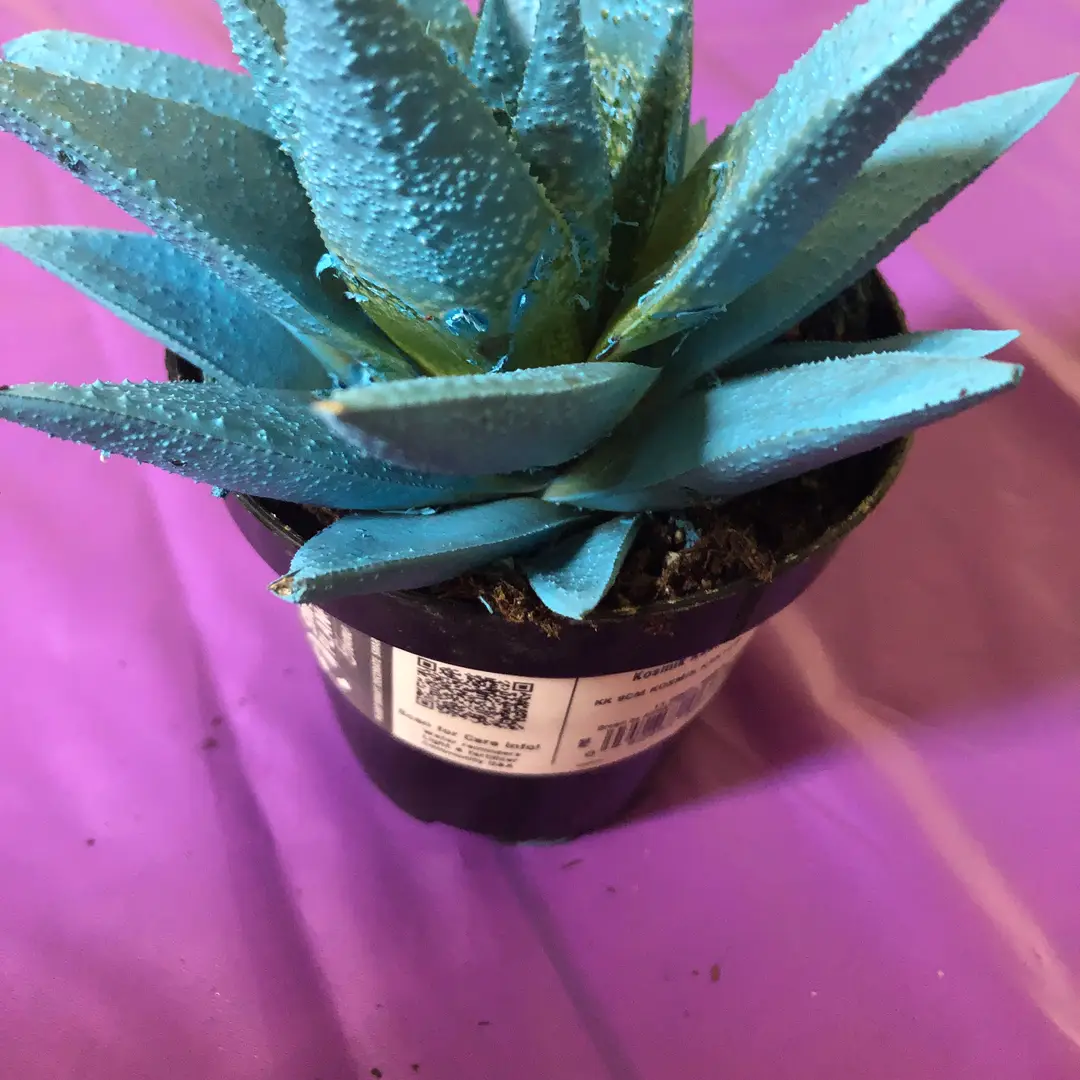
Kosmik Kaktus refers to a unique line of succulents, which I’ve learned are primarily haworthia or haworthiopsis species, developed by Altman Plants. They catch your eye with their vivid colors, achieved through non-toxic, food-safe dyes. These eye-catching hues eventually fade, revealing the plant’s natural shades of green or golden yellow. Although they require minimal care—similar to typical succulents—the dye can affect their photosynthesis and growth, potentially stunting their development temporarily. Interestingly, the reception in the gardening community is mixed, with debates about the ethical implications of such modifications. Understanding these aspects may lead you to explore further how this impacts plant health and consumer choice.
Understanding Kosmik Kaktus
Kosmik Kaktus, a line of vividly colored succulents developed by Altman Plants, offers a striking visual appeal designed to catch the eye of consumers in garden centers.
These painted succulents, primarily derived from haworthia or haworthiopsis species, are noted for their vibrant hues. The coloration process involves a non-harmful, food-safe dye, ensuring it doesn’t adversely affect the plant’s health.
Despite the visual allure, ethical concerns arise regarding the naturalness of these modifications. Interestingly, as the dye wears off, new growth resumes in its natural green or golden yellow tones, revealing the plant’s original color.
This transformation could influence consumer perception, as some might prefer the authenticity of naturally colored plants. The diverse colors and patterns of these succulents align with the various aesthetic options available, adding a unique touch to any indoor setting.
Ethical and Consumer Perspectives
Despite their eye-catching appearance, the vibrant, artificially colored Kosmik Kaktus plants raise significant ethical concerns and provoke mixed reactions among consumers. Many of you have shared your regret after purchasing these succulents, citing a compromise in both plant health and authenticity.
This division echoes broader discussions within the community, where some appreciate the novelty, while others staunchly advocate for natural varieties, criticizing the artificial modification as unethical. Critics also highlight that such marketing strategies may overshadow genuine gardening interests and normalize artificial enhancements in horticulture.
Additionally, concerns about the safety of the paints used—potentially harmful to both plant and consumer health—demand greater transparency.
Moreover, understanding the nutrient composition of the soil used for Kosmik Kaktus could provide insights into potential long-term impacts on plant health.
This ongoing debate challenges us to reconsider our values in plant care and consumer choices.

Plant Care and Maintenance
Caring for your Kosmik Kaktus involves a few key practices that ensure its health and longevity.
Firstly, this succulent requires minimal water—typically every few weeks—and thrives best in the warmest, sunniest area of your home. It’s crucial to use a sandy, dry soil with good drainage, like a succulent mix, to prevent root rot and other diseases.
For optimal soil conditions, consider using unglazed clay pots which help in preventing over-watering by allowing better evaporation. You should fertilize your Kosmik Kaktus with a succulent-specific fertilizer twice a year, during spring and summer, to promote optimal growth.
Regular health checks help monitor for pests such as mealybugs; treatments like insecticidal soap or neem oil can be effective.
Additionally, propagation through stem cuttings or seeds can expand your Kosmik collection, provided conditions are ideal for their growth and health.
Growth Challenges and Recovery
Painted succulents like the Kosmik Kaktus often encounter growth challenges, primarily due to the artificial dye that can impair photosynthesis and overall plant health. This hindrance often leads to stunted growth, presenting significant health issues for these vibrant plants.
However, recovery is possible and typically follows after the dyed sections perish. New growth usually emerges in natural hues like green or golden yellow, signifying a return to health.
To facilitate this recovery, regular repotting is crucial. It not only accommodates the Kosmik Kaktus’s increasing size but also promotes healthier growth.
Additionally, careful monitoring for signs of distress is imperative during this phase. Recognizing and addressing these signs early can prevent further complications, ensuring your painted succulents thrive once more.

Community Engagement and Impact
The community’s response to the Kosmik Kaktus has been notably divided, shedding light on broader ethical and aesthetic considerations within the plant enthusiast community.
As part of the Altman Plants line, these painted succulents have ignited a spectrum of opinions. Some consumers are captivated by their vibrant hues, while purists advocate for the inherent beauty of natural forms.
Online platforms and gardening blogs buzz with debates, underscoring the role of community engagement in shaping perceptions and practices around these controversial creations.
The discourse extends to the impact on biodiversity and the necessity for robust consumer education, challenging us to consider whether such trends support or undermine the conservation of plant authenticity and diversity.