

When designing a tulip garden, I focus on how structure and color interact to create both harmony and impact. From bold color blocking to subtle layering with perennials, each approach changes the way tulips command attention. I’ve found that details like bed shape and plant height can transform a simple patch into a dynamic landscape feature. Let’s explore eleven thoughtful design ideas that balance aesthetics with practical gardening techniques, ensuring your tulips shine season after season.
Bold Color Blocking With Tulips

Although bold color blocking is a popular garden design technique, it doesn’t always translate well with tulips due to their natural color gradients and petal variations.
Tulips inherently exhibit subtle shading and delicate petal transitions, which disrupt the uniformity bold blocks require.
Attempting strict color zones often undermines tulips’ organic beauty, making precise, contrasting blocks challenging to achieve effectively.
Layered Planting for Depth and Texture
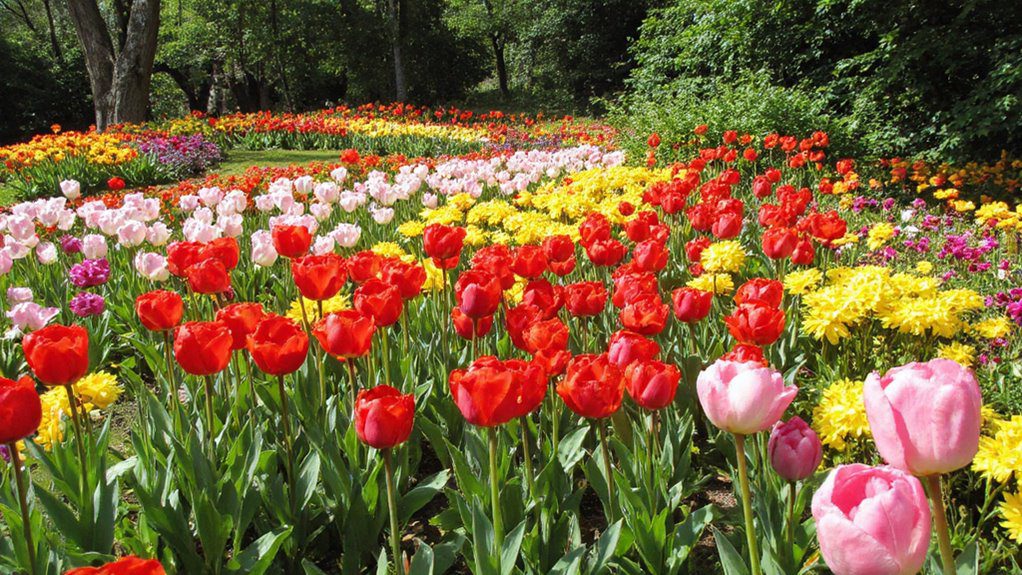
When you layer tulips with complementary plants of varying heights and textures, you create a garden scene rich in depth and visual interest.
I carefully arrange taller foliage behind mid-height tulip clusters, then add low groundcovers in front.
This stratification enhances dimensionality, contrasts leaf shapes, and balances color saturation, producing a dynamic, textured composition that evolves beautifully throughout the blooming season.
Curved Tulip Beds for Organic Flow

Three gently curved tulip beds can transform a rigid garden layout into a fluid, natural composition.
I carefully design these curves to guide the eye smoothly, balancing symmetry with organic shapes. This technique softens harsh lines, enhances spatial dynamics, and allows tulip clusters to bloom in harmonious waves, creating an elegant, flowing rhythm that elevates the entire garden’s visual appeal and structural coherence.
Mixing Tulips With Perennials

Blending tulips with perennials adds depth and continuity to your garden’s seasonal display.
I carefully select perennials with staggered bloom times and complementary textures to extend visual interest after tulip petals fade.
Combining tulips’ vibrant, ephemeral colors with perennials’ structural foliage creates balanced layers—ensuring your garden maintains dynamic form and color progression through spring into summer’s maturity.
Creating a Tulip Border Along Pathways
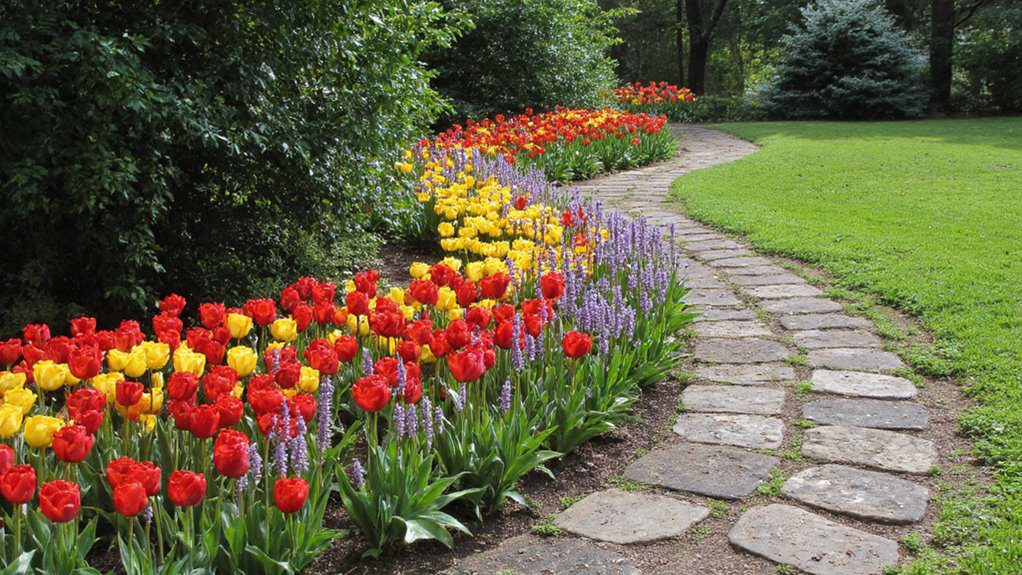
Although pathways naturally guide movement through a garden, adding a tulip border elevates their aesthetic impact and defines the space more clearly.
I plant tulips closely along edges, ensuring consistent spacing for uniformity. Selecting vibrant colors enhances visual flow, while maintaining soil drainage prevents bulb rot.
This precise arrangement frames pathways elegantly, creating a cohesive, inviting garden experience.
Combining Different Tulip Heights

When I combine tulips of varying heights, I create depth and dynamic layers that draw the eye through the garden.
I carefully position taller varieties at the back or center, with medium and shorter tulips cascading forward. This graduated height arrangement enhances visual interest, emphasizes color contrasts, and ensures each bloom is visible, resulting in a balanced, textured composition that elevates the overall design.
Using Tulips in Container Gardens

Since space can be limited, I often turn to container gardens to showcase tulips with controlled elegance.
Choosing well-draining pots, I layer bulbs at varying depths to stagger bloom times and heights. I use a high-quality, nutrient-rich soil mix and ensure proper watering to prevent rot.
This method highlights tulips’ vibrant colors while maintaining structural balance in compact spaces.
Designing a Tulip Spiral Garden

Container gardens offer a practical way to grow tulips in limited spaces.
But creating a tulip spiral garden allows you to explore dynamic spatial arrangements on a larger scale. By planting bulbs in a precise spiral pattern, you enhance visual flow and depth.
I carefully calculate spacing and color gradation, ensuring the spiral’s geometry creates a harmonious, eye-catching focal point in the landscape.
Incorporating Tulips Into Rock Gardens
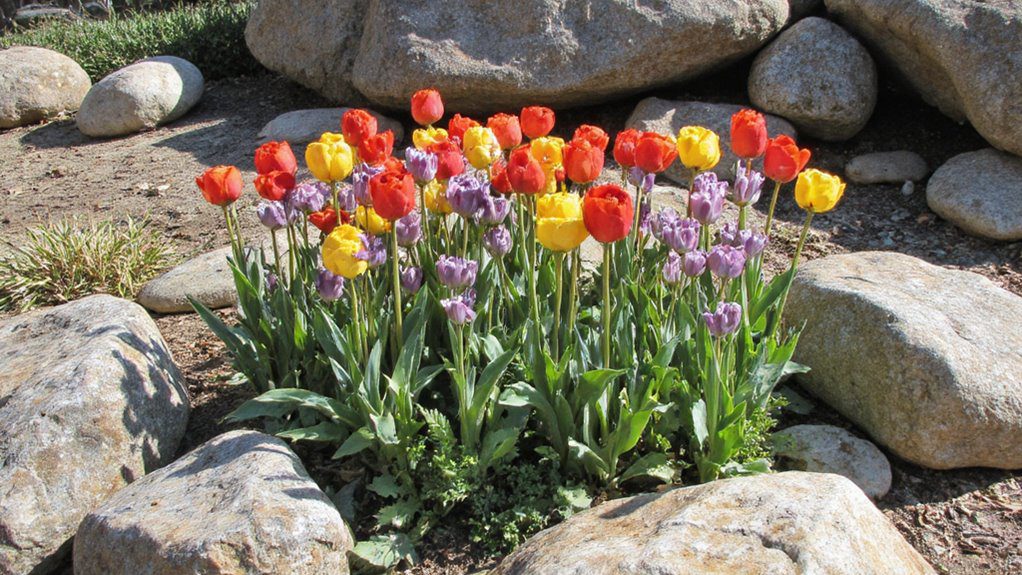
Although tulips aren’t typically associated with rock gardens, I’ve found that careful selection and placement can create striking contrasts between the flowers’ vibrant colors and the rugged textures of stones.
Positioning tulip bulbs in crevices with well-drained soil ensures healthy growth. Choosing species with varied bloom times maintains continuous color, while grouping similar hues enhances visual cohesion against the rocky backdrop.
Monochromatic Tulip Displays
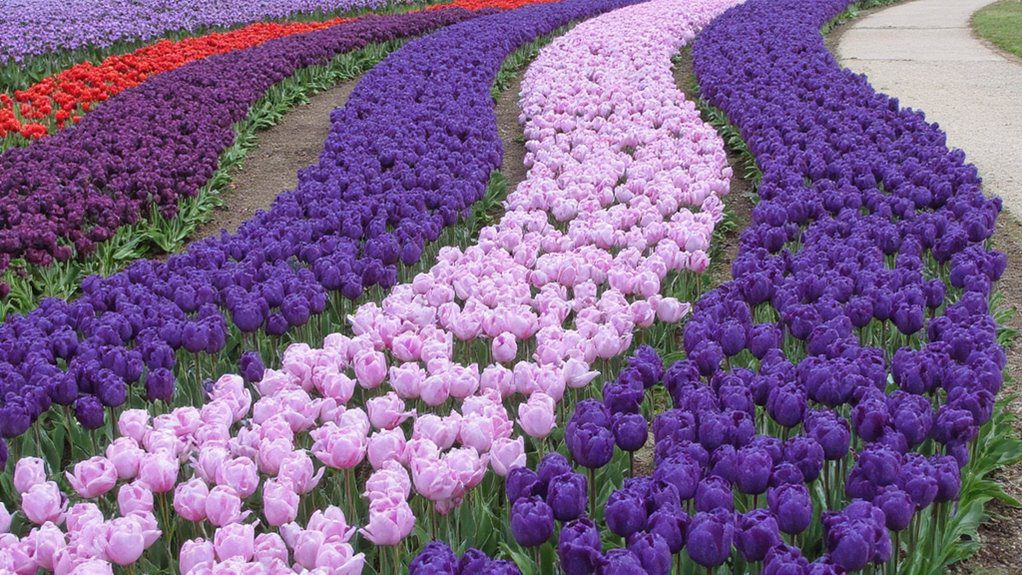
When you focus on a single color palette, monochromatic tulip displays offer a refined and harmonious aesthetic that emphasizes form and texture over contrast.
I carefully select tulip varieties with subtle tonal variations to create depth and visual interest. This technique highlights petal shape and leaf structure, producing a cohesive yet dynamic garden section that feels both sophisticated and serene.
Seasonal Tulip and Bulb Combinations

While monochromatic tulip displays focus on uniformity and subtlety, combining tulips with other spring bulbs allows me to craft more complex seasonal compositions that extend bloom time and enrich texture.
I integrate daffodils and hyacinths for staggered flowering, ensuring continuous color shifts. Their contrasting forms and foliage density complement tulip shapes, enhancing visual depth and dynamic rhythm within the garden’s seasonal narrative.