

Designing a small backyard can be a rewarding challenge when you apply smart, space-saving strategies. From vertical gardening that maximizes greenery to multi-functional furniture that adapts to your needs, every element must serve both form and function. Thoughtful use of light, texture, and layout can transform a limited area into a serene retreat. But how do you balance aesthetics with practicality without overcrowding the space? Let’s explore some effective solutions.
Utilize Vertical Gardening to Save Space
Although many assume vertical gardening is the best solution for saving space, I’ve found it doesn’t always maximize area efficiency in backyard landscapes.
Vertical structures often limit plant variety and growth potential due to root and sunlight constraints.
Strategically assessing spatial dynamics and plant needs before installation ensures functionality.
Thoughtful integration of vertical elements enhances aesthetics without compromising overall garden utility or biodiversity.
Incorporate Multi-Functional Outdoor Furniture
When you design a backyard, incorporating multi-functional outdoor furniture can transform your space by blending practicality with style.
Choose pieces with integrated storage, foldable components, or convertible features to maximize usability without clutter. Durable materials like teak or aluminum ensure longevity, while sleek designs maintain an elegant aesthetic.
This approach optimizes limited space and enhances functionality, perfect for compact outdoor areas.
Create a Cozy Fire Pit Area

Maximizing your backyard’s functionality with multi-purpose furniture sets the stage for creating a cozy fire pit area that invites warmth and social connection.
I recommend choosing a compact, circular fire pit with heat-resistant materials like steel or concrete. Surround it with built-in seating or modular benches for flexibility.
Incorporate gravel or pavers underneath to define the space while ensuring proper drainage and safety.
Use Light Colors to Enhance the Space
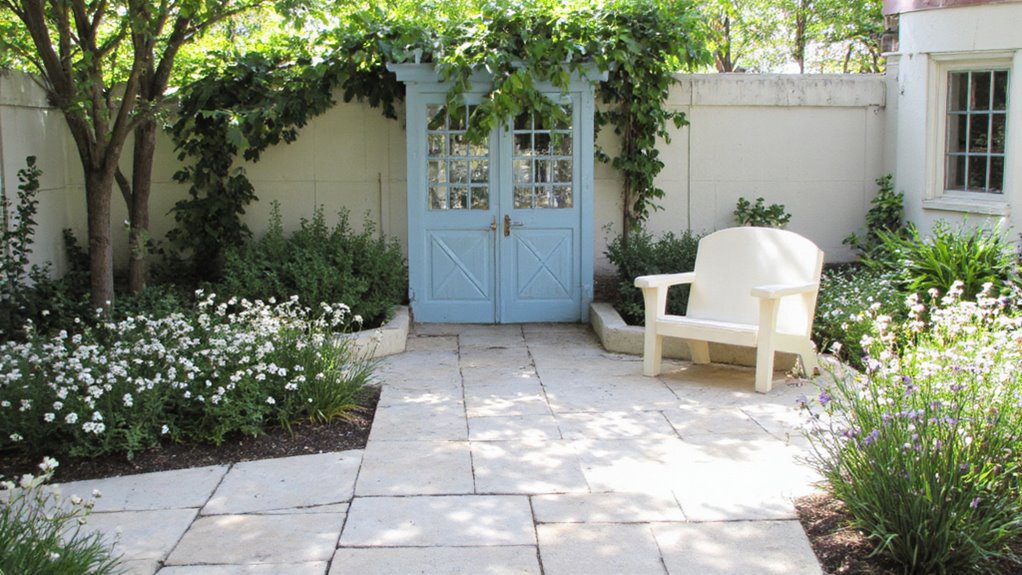
Since light colors can visually expand your backyard, I recommend incorporating them strategically to enhance the sense of space.
Use pale shades on fences, furniture, and planters to reflect natural light and create an airy atmosphere.
Soft tones also highlight textures and shapes, making your landscape appear larger without overwhelming the design or compromising depth and contrast.
Install a Small Water Feature for Tranquility
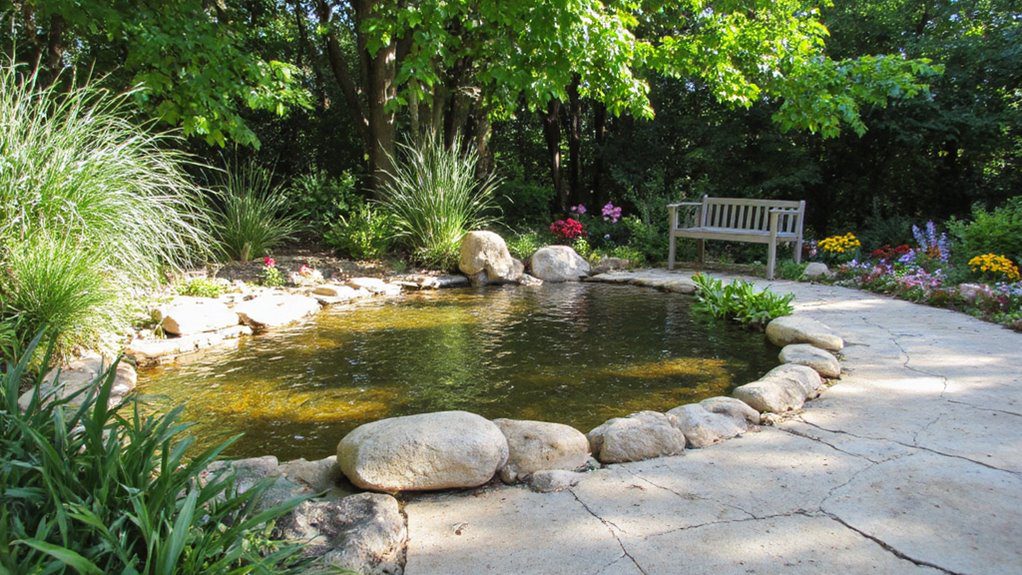
Beyond choosing light colors to visually expand your backyard, incorporating a small water feature adds an element of tranquility that complements the airy atmosphere.
I recommend a compact fountain or a shallow basin with a recirculating pump for minimal maintenance.
Position it near seating areas to maximize sound impact, using natural stones and subtle lighting to enhance both texture and ambiance efficiently.
Design a Compact Herb or Vegetable Garden
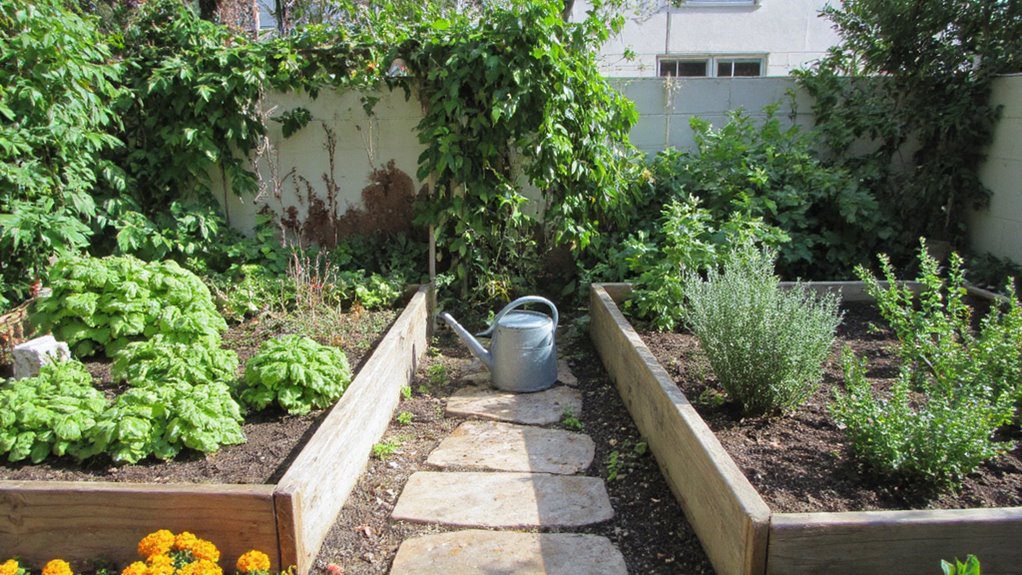
A well-planned compact herb or vegetable garden can transform a small backyard into a productive and visually appealing space.
I focus on raised beds or vertical planters to maximize limited space, ensuring optimal drainage and sunlight exposure.
Choosing compact, high-yield varieties and grouping plants by water needs enhances efficiency, while clean lines and organized layouts keep the garden both functional and aesthetically pleasing.
Add Layered Planting for Depth and Interest

After establishing a compact herb or vegetable garden, I focus on adding layered planting to create depth and visual interest in the backyard.
I strategically position varying plant heights and textures—tall shrubs at the back, medium perennials in the middle, and low groundcovers upfront—enhancing spatial perception and complexity.
This technique transforms small spaces into dynamic, visually engaging environments with structured botanical layers.
Use Pathways to Define Zones

While designing my backyard, I use pathways to clearly define distinct zones, guiding movement and enhancing organization.
Selecting materials like gravel or stone, I ensure durability and texture contrast.
Curved or linear layouts direct flow naturally, separating dining, gardening, and relaxation areas.
Precise edging maintains clean lines, while subtle lighting along paths adds safety and highlights spatial divisions effectively.
Incorporate Mirrors to Create an Illusion of Space
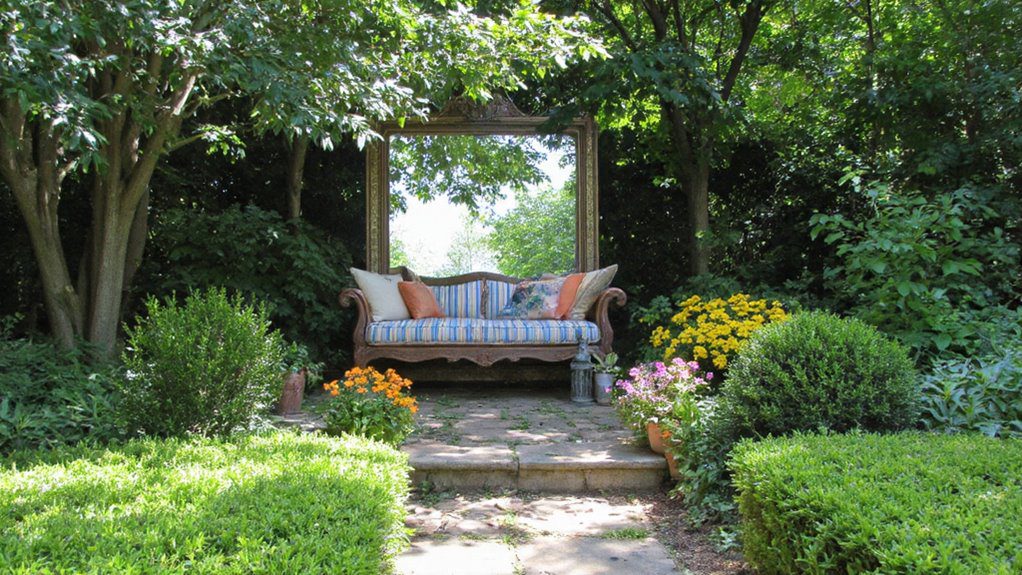
Incorporating mirrors into your backyard design can dramatically enhance the perception of space, making even compact areas feel much larger.
Position mirrors strategically to reflect greenery and light, creating depth and dimension. Use weather-resistant frames and secure mounting to withstand outdoor conditions.
This technique visually expands boundaries, offering an elegant solution to spatial constraints without overcrowding your small backyard.
Choose Low-Maintenance Plants for Easy Care
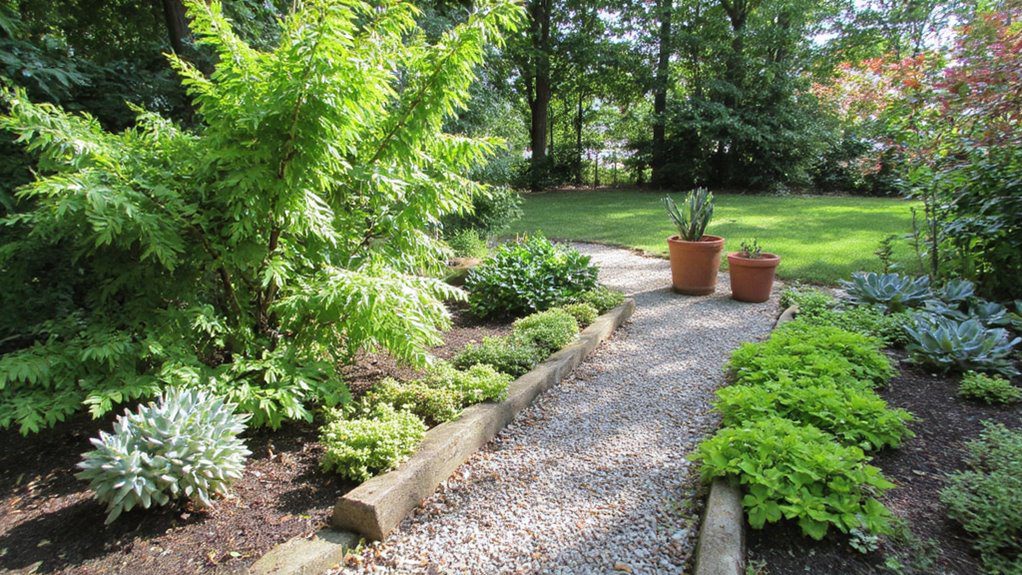
When I design a backyard, I always prioritize low-maintenance plants to ensure easy care without sacrificing beauty.
I select drought-tolerant, native species with slow growth rates to minimize pruning and watering. Succulents, ornamental grasses, and evergreens provide texture and year-round structure.
This approach reduces upkeep while maintaining a cohesive, elegant landscape that thrives in small spaces with minimal intervention.
Build Raised Garden Beds for Better Organization

Since organizing a garden efficiently can transform your backyard’s functionality, I recommend building raised garden beds to achieve this goal.
Raised beds improve soil drainage and structure, allowing precise plant placement. They define planting areas clearly, reduce weeds, and facilitate maintenance.
Using durable materials and proper dimensions ensures both aesthetic appeal and long-term usability, optimizing your small backyard’s organization and productivity.