

When I design outdoor spaces, I often turn to rock elements for their durability and timeless appeal. Natural stone pathways and multi-level terraces not only structure a garden but also create subtle layers of texture and depth. Adding features like waterfalls or boulder accents can transform an ordinary yard into a serene retreat. If you want to understand how to balance practicality with aesthetic finesse, there are several ideas worth exploring further.
Natural Stone Pathways
When designing natural stone pathways, I focus on selecting stones that offer both durability and visual appeal.
I prioritize materials like granite or slate for their resistance to weathering and slip resistance.
Precise stone placement ensures a stable surface and smooth transitions, while maintaining natural irregularities enhances the pathway’s organic charm, blending functionality with an elegant, timeless aesthetic.
Rock Garden With Succulents
Although creating a rock garden with succulents demands careful planning, I find it rewarding to combine textured stones with drought-tolerant plants for a striking, low-maintenance landscape feature.
Selecting angular rocks enhances drainage, crucial for succulents’ health. I arrange plants by size and color contrast, ensuring optimal sun exposure.
This meticulous layering creates a balanced, visually appealing rock garden that thrives in arid conditions.
Multi-Level Rock Terraces

Combining succulents with textured stones sets a strong foundation for more intricate rock designs, like multi-level rock terraces.
I carefully arrange flat, durable stones to create stable, tiered retaining walls, ensuring proper drainage and soil retention.
These terraces add depth and dimension to the landscape, allowing varied plant placement and enhancing visual interest through contrasting textures and elevations.
Waterfall and Rock Features

A carefully crafted waterfall can transform a rock landscape into a dynamic focal point that engages both sight and sound.
Integrating natural stone with precise water flow control enhances texture and movement. Selecting durable, water-resistant rocks ensures longevity.
Positioning the feature for optimal sunlight highlights surface patterns, creating an immersive sensory experience that balances aesthetics with functional design in outdoor spaces.
Boulder Accents in Flower Beds
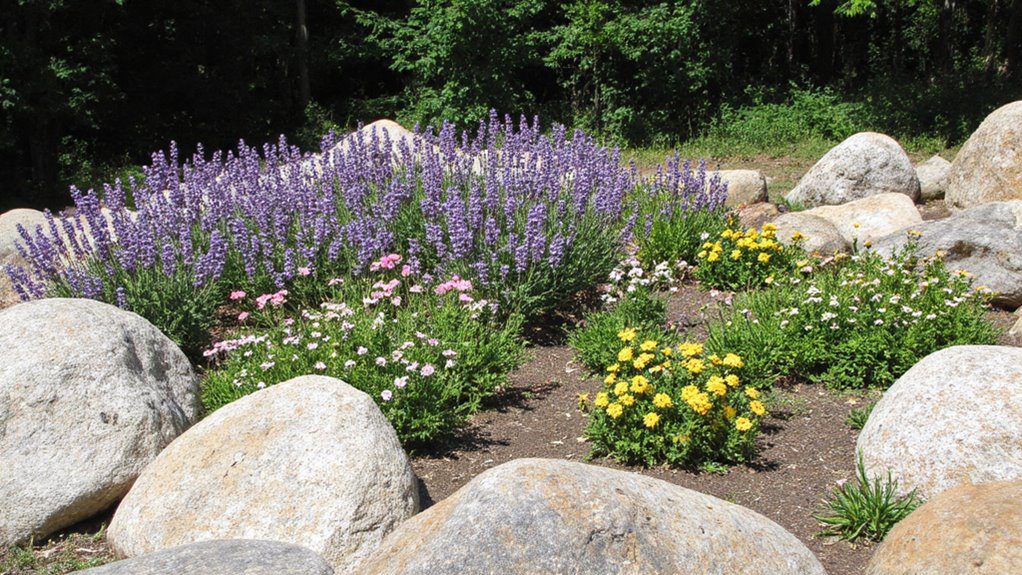
Incorporating boulder accents into flower beds can dramatically elevate the visual structure and natural appeal of your garden.
I carefully select boulders with varied textures and subtle color contrasts to complement surrounding plants.
Strategically placing these stones creates focal points, enhances depth, and stabilizes soil.
This technique balances softness with ruggedness, resulting in a harmonious, enduring landscape that highlights both flora and stone.
Dry Creek Bed Landscaping

When I design dry creek beds, I focus on channeling natural water flow while adding sculptural texture to the landscape.
I carefully select smooth river rocks and angular stones to mimic authentic streambeds, ensuring proper grading for drainage.
Strategic placement of native plants softens edges and stabilizes soil, creating a functional, visually striking feature that manages runoff and enhances overall garden harmony.
Zen Rock Garden
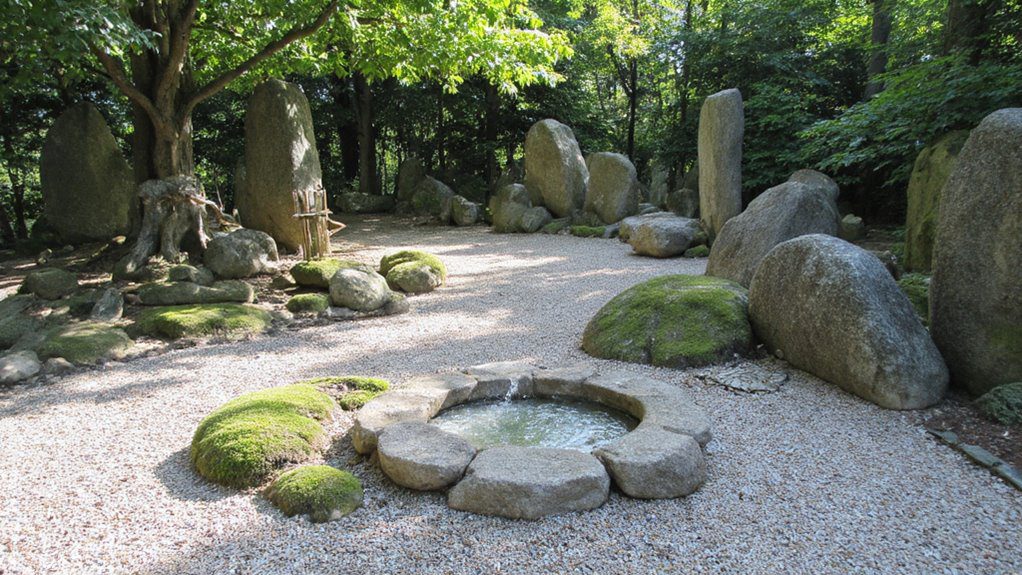
Moving from the dynamic flow of dry creek beds, I turn my attention to the serene composition of Zen rock gardens.
These spaces emphasize simplicity, using carefully placed rocks, gravel, and minimal greenery to evoke calm. Raking patterns in gravel simulate water flow, while stone arrangements follow principles of balance and asymmetry, creating meditative landscapes that invite quiet reflection and timeless beauty.
Rustic Rock Retaining Walls
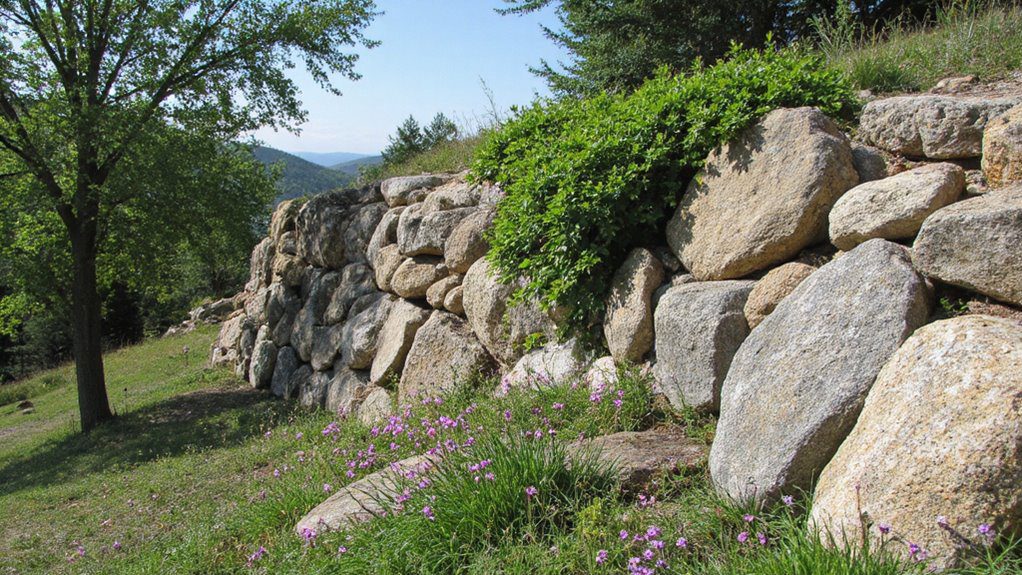
Although rustic rock retaining walls serve a functional purpose by stabilizing soil and preventing erosion, I find their rugged textures and natural forms add a striking visual element to landscapes.
Carefully selecting irregular stones and stacking them without mortar creates organic contours that blend seamlessly with surrounding terrain.
This technique enhances structural integrity while emphasizing raw, earthy aesthetics in garden design.
Rock Borders for Garden Beds

Since defining the edges of garden beds can dramatically enhance their appearance, I recommend using rock borders to achieve both function and form.
Carefully selected stones create a durable, low-maintenance barrier that controls soil erosion and separates plants from pathways. Arranging rocks by size and shape ensures stability, while varying textures and colors adds visual interest, complementing the garden’s overall design with natural elegance.
Mixed Rock and Gravel Driveways
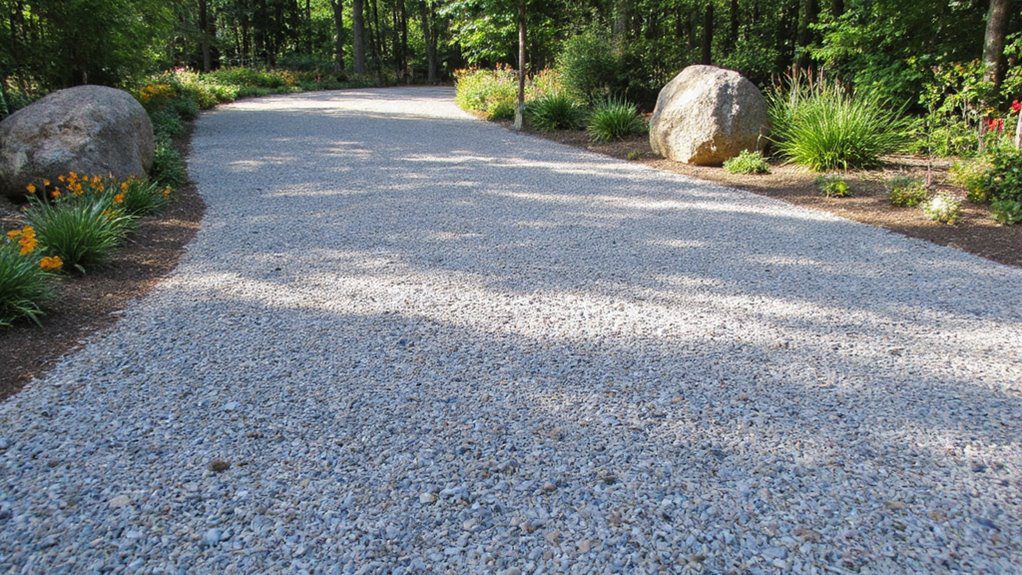
When designing a driveway, I find that combining mixed rock and gravel offers both durability and aesthetic appeal.
The varied sizes and textures create a stable surface that resists rutting while enhancing visual interest.
Proper layering with a compacted base ensures longevity, and selecting complementary colors integrates the driveway seamlessly with the surrounding landscape, balancing function and form effectively.
Fire Pit Surrounded by Stones

Creating a fire pit surrounded by stones requires careful selection and placement to ensure both safety and visual harmony.
I choose heat-resistant, non-flammable stones, arranging them tightly to form a stable barrier.
The stones’ natural colors and textures complement the landscape, while their positioning directs heat outward.
This combines functionality with aesthetic balance, crafting a secure, inviting focal point in my outdoor space.