
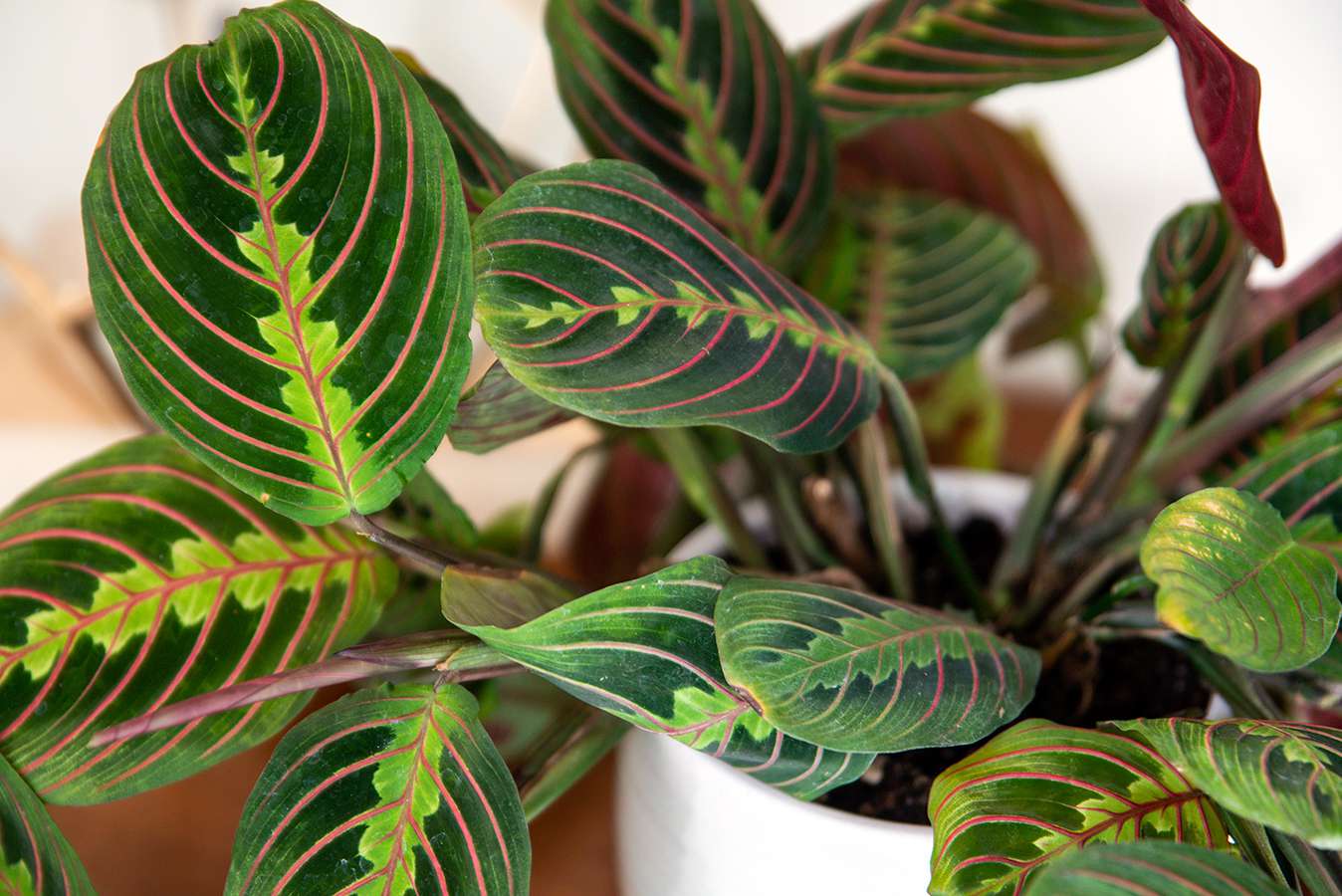
If your prayer plant’s leaves are curling, it’s likely due to underwatering or overwatering. Ensure you water thoroughly when the soil is partly dry and adjust your watering schedule to prevent these issues. Check soil moisture regularly by feeling 1-2 inches deep and water when about 25% dry. Also, consider light exposure; insufficient light can lead to weak leaves. Maintain stable environmental conditions and monitor for pests. By addressing these factors, you’ll help your prayer plant thrive.
Underwatering as a Cause
What triggers the curling of prayer plant leaves? Underwatering is a common culprit, causing the soil to become dry and the foliage to become stressed. Signs of underwatering include curled and drooping leaves that feel soft and limp to the touch.
When the soil is completely dry, the leaves may become severely limp and droopy, indicating a lack of water reaching the plant roots. To combat this issue, it’s essential to water thoroughly when the top layer of soil is partially dry to maintain consistent moisture levels.
Implementing a soak-watering method can help ensure thorough saturation and prevent leaf curling due to lack of water. By addressing underwatering promptly and providing adequate moisture, you can help your prayer plant regain its health and vibrancy, preventing further stress to the foliage.
Overwatering Effects
Overwatering of prayer plants can have detrimental effects on their health, particularly impacting the root system and leaf condition. When prayer plants receive excess water, it can lead to root rot, where the roots decay due to lack of oxygen, affecting the plant’s ability to uptake nutrients and water effectively. This, in turn, manifests in symptoms such as yellowing leaves, wilting, and a musty odor emanating from the soil. Curled leaves resulting from overwatering may take on a mushy, waterlogged texture, indicating stress and potential damage to the plant.
To mitigate the effects of overwatering on prayer plants, consider the following:
- Adjust Watering Schedule: Ensure you aren’t watering the plant too frequently, allowing the soil to dry out slightly between waterings.
- Improve Drainage: Use well-draining soil and pots with drainage holes to prevent water from pooling at the roots.
- Monitor Leaf Health: Keep a close eye on the condition of the leaves to catch early signs of overwatering and address them promptly.
Inadequate Light Exposure
Insufficient light exposure can significantly impact the health of your Prayer Plant. When the plant doesn’t receive enough bright, indirect light, its leaves may start to curl and appear weak.
To prevent this issue, it’s crucial to ensure your plant receives several hours of adequate light daily to promote healthy growth and avoid leaf curling.
Light Requirements Overview
Prayer plants thrive when exposed to bright to medium indirect light, crucial for preventing leaf curling and ensuring optimal growth.
When it comes to light requirements for your prayer plants, here are some key points to consider:
- Avoid Direct Sunlight: Direct sunlight can be harmful to prayer plants, causing leaf damage and curling. It’s best to place your plants in locations where they can receive filtered or indirect light to thrive.
- Inadequate Light Impact: Inadequate light exposure can lead to weak growth and curled leaves in prayer plants. If your plants aren’t receiving enough natural light, supplementing with a grow light can help maintain their health and prevent issues like leaf curling.
- Optimal Light Placement: Placing prayer plants in north or east-facing windows can provide the ideal indirect light they need for growth. These orientations typically offer the right balance of brightness without the harshness of direct sunlight.
Signs of Insufficient Light
When your Prayer Plant shows signs of insufficient light, such as curling leaves, it indicates a lack of proper light exposure for optimal growth.
Insufficient light can cause weak growth and lead to the curling of leaves on your Prayer Plant.
It’s essential to provide bright to medium indirect light for your plant, avoiding direct sunlight that can result in leaf damage and curling.
Monitoring your plant’s response to light changes is crucial to ensure it receives adequate light exposure.
By maintaining the right balance of light exposure, you can promote vibrant foliage without curling.
Remember that the health and appearance of your Prayer Plant leaves are directly influenced by the amount and quality of light it receives.
Adjusting the light conditions accordingly can help prevent the curling of leaves and support the overall well-being of your plant.
Improving Light Conditions
Consider relocating your Prayer Plant to a brighter spot or utilizing a grow light to enhance the inadequate light exposure and promote optimal growth conditions. Insufficient light exposure can result in weak growth and curling leaves in Prayer Plants.
To improve light conditions effectively, follow these steps:
- Optimal Light Levels: Ensure your Prayer Plant receives bright to medium indirect light, as direct sunlight can lead to leaf damage and curling. Adjust the plant’s placement accordingly to provide adequate light exposure for healthy growth.
- Use of Grow Light: If natural light is limited, supplement with a grow light to ensure your Prayer Plant receives the necessary light intensity for proper development. Position the grow light at an appropriate distance from the plant to prevent potential light burn.
- Monitoring Response: Regularly observe your plant’s response to the new light conditions. Watch for changes in leaf color, curling patterns, and overall growth to gauge the effectiveness of the light adjustment. Monitoring will help you fine-tune the light exposure to prevent further leaf curling issues.
Impact of Environmental Changes
Environmental changes play a significant role in the curling of prayer plant leaves. Sudden shifts in temperature, light exposure, or humidity levels can stress the plant, leading to leaf curling. To maintain healthy prayer plants, it is essential to provide a stable environment with consistent conditions. Here is a table outlining the impact of various environmental changes on prayer plant leaves:
| Environmental Change | Impact on Prayer Plant Leaves |
|---|---|
| Extreme Temperatures | Curling due to stress |
| Light Exposure Variation | Leaf curling as a response |
| Humidity Fluctuations | Stress causing leaf curling |
Monitoring and adjusting these factors can help prevent prayer plant leaves from curling. Remember that prayer plants prefer high humidity levels, so if you notice curled leaves, make sure to increase humidity. Consider using plant watering globes or humidifiers to maintain optimal growing conditions and prevent leaf curling.
:max_bytes(150000):strip_icc()/GettyImages-1367369361-3bfe5b949b37412e8d4087f19b0a1f9d.jpg)
Nutrient Imbalances
Nutrient imbalances in prayer plants can lead to leaf curling, making balanced fertilization and soil pH monitoring crucial for maintaining plant health.
When it comes to nutrient management for your prayer plant, here are some key points to consider:
- Over-feeding: Excessive fertilization can overwhelm the plant with nutrients, leading to toxicity and curled leaves. It’s vital to follow a proper fertilization schedule and avoid overfeeding your prayer plant.
- Under-feeding: On the other hand, insufficient nutrients can cause deficiencies in the plant, resulting in leaf curling as well. Ensure your prayer plant receives adequate nutrients through balanced fertilization to prevent this issue.
- Soil pH: Monitoring the pH of the soil is essential, as it influences nutrient availability to the plant. An improper soil pH can hinder nutrient uptake, leading to deficiencies and curled leaves. Maintain a suitable soil pH to support optimal nutrient absorption and prevent leaf curling due to nutrient imbalances.
Pest Infestations Overview
Pest infestations pose a significant threat to Prayer Plants, with common pests such as spider mites, mealybugs, fungus gnats, and whiteflies targeting these plants.
Spider mites, which thrive in dry conditions, can cause leaf curling by sucking sap from leaves. Mealybugs, identifiable by their white, waxy appearance, tend to cluster on the undersides of leaves, leading to leaf curling as they feed. Fungus gnats, small flying insects, lay eggs in moist soil, potentially causing damage to roots and subsequent leaf curling. Whiteflies, tiny white insects that feed on plant sap, can also contribute to leaf curling in Prayer Plants.
To address pest infestations on Prayer Plants, it’s crucial to regularly inspect the plant for signs of these common pests. When identified, appropriate measures such as washing the plant with insecticidal soap, introducing predatory insects, like ladybugs, or using neem oil can help control and eliminate these pests, thereby preventing further leaf curling and promoting the plant’s health.
Proper Watering Practices
Maintaining proper moisture levels in the soil is crucial to prevent leaf curling in Prayer Plants. When it comes to watering your Prayer Plant, here are some essential practices to keep in mind:
- Prayer plants prefer consistent moisture: These plants thrive in soil that’s consistently moist but not waterlogged. Keeping the soil at the right moisture level is key to preventing leaf curling.
- Avoid overwatering and underwatering: Both extremes can lead to curling leaves in Prayer Plants. Overwatering can suffocate the roots and cause leaf curling, while underwatering can lead to dry, curling leaves.
- Water when the top 25% of the soil is dry: To maintain the ideal moisture levels, wait until the top layer of the soil feels dry to the touch before watering again. This practice helps prevent both overwatering and underwatering, keeping your Prayer Plant healthy and its leaves vibrant.
Maintaining Soil Moisture
To maintain optimal soil moisture for your Prayer Plant, it’s essential to water when the soil is about 25% dry, ensuring thorough saturation.
Over or underwatering can lead to leaf curling, with dry soil causing leaves to droop and become limp.
Utilizing the soak-watering method will help prevent dryness-induced leaf curling and keep your plant healthy.
Proper Watering Techniques
Consistently monitoring soil moisture levels in your Prayer Plant’s pot is essential to prevent leaf curling and maintain optimal plant health. To ensure your plant thrives, follow these proper watering techniques:
- Check Soil Moisture: Stick your finger into the soil up to 1-2 inches deep. If it feels dry at this depth, it’s time to water your Prayer Plant.
- Thorough Watering: When watering, ensure that water runs through the drainage holes at the bottom of the pot. This method helps saturate the soil evenly and prevents dry patches that can lead to leaf curling.
- Regular Watering Schedule: Develop a routine based on the plant’s needs. Water your Prayer Plant when approximately 25% of the soil volume is dry to maintain optimal moisture levels and prevent leaf curling caused by dryness.
Humidity Level Adjustments
A crucial factor in ensuring optimal soil moisture for your Prayer Plant is controlling the humidity levels in its environment. Maintaining proper humidity is essential to prevent dry air, which can cause leaf curling due to insufficient moisture in the soil.
Prayer Plants require a humidity level of at least 50% to keep the soil consistently moist and promote healthy growth. To adjust humidity levels effectively, consider using a humidifier or placing the plant on a pebble tray filled with water. These methods can help increase the surrounding moisture and prevent the soil from drying out, ultimately benefiting the overall health of your plant.
Monitoring and making adjustments to the humidity in the plant’s environment is crucial in maintaining adequate soil moisture levels, which can directly impact the prevention of leaf curling issues in your Prayer Plant. Remember, a well-controlled humidity level is key to ensuring the soil remains appropriately moist for your plant’s optimal growth.
Ensuring Adequate Light Levels
For optimal growth and leaf health in Prayer Plants, ensuring adequate light levels is crucial. Here are some key considerations to help you provide the right light conditions for your plant:
- Optimal Light Requirement:
- Prayer plants thrive in bright to medium indirect light.
- Direct sunlight can be too harsh for them, causing their leaves to curl.
- Position your plant near a north or east-facing window where it can receive gentle, filtered sunlight.
- Impact of Insufficient Light:
- Inadequate light exposure can lead to weak growth and curled leaves in Prayer Plants.
- If natural light is lacking in your space, consider supplementing with an indoor grow light to ensure your plant gets the necessary light levels for healthy growth.
- Preventive Measures:
- Regularly monitor the light levels your Prayer Plant receives to prevent leaf curling.
- Adjust the positioning of your plant or provide additional light sources as needed to maintain optimal growth conditions.
:max_bytes(150000):strip_icc()/GettyImages-1314570785-7bcdd7dc38b748b58b54fda52b57aaf2.jpg)
Monitoring Humidity Levels
Maintaining appropriate humidity levels is fundamental for the health of your Prayer Plant, especially in preventing leaf curling caused by insufficient moisture. Prayer plants thrive in humidity levels of 50% or higher, making it essential to monitor the humidity in the air around your plant.
Low humidity levels below 50% can lead to prayer plant leaves curling up due to a lack of moisture. To prevent leaf curling, consider using a humidifier or placing a pebble tray filled with water under the plant to increase humidity levels.
Monitoring humidity levels regularly is crucial for maintaining healthy prayer plant foliage and preventing curling leaves. Additionally, regular misting of the leaves can help increase humidity directly around the plant, providing the moisture necessary to keep the leaves from curling.
Providing Balanced Nutrients
To prevent leaf curling in Prayer Plants, ensuring a balanced nutrient supply is essential. Providing the right nutrients at the right time is crucial for maintaining the health of your plants.
Here’s how you can manage the nutrients effectively:
- Use a balanced fertilizer: Choose a fertilizer specifically formulated for houseplants, and ensure it contains a good balance of essential nutrients like nitrogen, phosphorus, and potassium. Avoid over-fertilizing, as this can lead to nutrient excess and curled leaves.
- Monitor nutrient absorption: Regularly check the soil pH levels to make sure they’re optimal for nutrient uptake. Adjusting the pH levels can enhance the plant’s ability to absorb nutrients efficiently and prevent deficiencies that may cause leaf curling.
- Prevent nutrient deficiencies: Keep an eye out for signs of nutrient deficiency such as yellowing or discolored leaves. Address any deficiencies promptly by supplementing with the necessary nutrients to avoid leaf curling issues due to nutrient imbalances.
Regular Pest Inspection
Inspecting your Prayer Plant regularly for common pests is vital in preventing leaf curling issues. Common pests such as spider mites, mealybugs, fungus gnats, and whiteflies can cause stress to your plant, leading to curled leaves.
Spider mites, for example, thrive in dry conditions, so increasing humidity levels can help deter them. Mealybugs, on the other hand, can be treated with horticultural oils to prevent leaf curling. Fungus gnats are attracted to overly damp soil, which can also result in leaf damage and curling, so ensuring proper soil moisture is essential.
Additionally, whiteflies can cause leaf curling and should be removed using water sprays or insecticidal soap. Regularly monitoring your plant for these pests and taking proactive measures such as adjusting humidity levels and using appropriate treatments like horticultural oils can help maintain the health of your Prayer Plant and prevent leaf curling issues.
Adjusting Watering Frequency
To ensure your Prayer Plant’s optimal health, you must carefully adjust your watering frequency. Monitoring the soil’s moisture content and allowing the top inch to partially dry out before watering can help prevent both over and under-watering issues.
Finding the right balance in moisture levels is crucial for correcting leaf curling problems and promoting healthy growth in your Prayer Plant.
Watering Schedule Tips
Adjust your watering frequency for your prayer plant based on the soil moisture level to prevent leaf curling issues.
Follow these watering schedule tips to ensure your plant stays healthy and vibrant:
- Check Top Soil Moisture:
Before watering your prayer plant, always assess the top layer of soil. Stick your finger into the soil up to 1-2 inches deep to determine if it feels dry to the touch. This method helps you avoid over or underwatering.
- Consistently Moist Soil:
Aim to maintain consistently moist soil for your prayer plant. Adjust your watering routine to meet the plant’s needs, ensuring the soil doesn’t dry out completely between waterings. This practice is crucial for preventing leaf curling due to dehydration.
- Optimal Moisture Balance:
Strive for an optimal moisture balance by watering your plant when the top layer of soil is slightly dry. This strategy promotes healthy growth and reduces the risk of overwatering, which can also lead to leaf curling issues.
Signs of Overwatering
What’re the key indicators of overwatering in your Prayer Plant that signal the need to adjust your watering frequency?
Overwatering can lead to various signs of distress in your Prayer Plant, such as root rot, yellowing leaves, and wilting.
To identify overwatering, look for mushy and yellowing leaves, as well as a foul odor emanating from the soil. These symptoms indicate that the roots are being suffocated due to excess water, leading to stress in the plant.
To address overwatering and prevent further damage, adjust your watering frequency by monitoring soil moisture levels closely. Allow the top inch of soil to dry out before watering your plant again to avoid waterlogged conditions.
Proper drainage is crucial in preventing overwatering and subsequent leaf curling in Prayer Plants. By regulating your watering habits and ensuring proper soil moisture levels, you can promote healthy root growth and overall plant well-being.
Correcting Under-Watering
Correcting under-watering in your Prayer Plant involves closely monitoring soil moisture levels to prevent leaf curling caused by insufficient water.
To adjust watering frequency effectively, follow these steps:
- Check the Top Inch of Soil: Before watering, always ensure the top inch of soil is dry to the touch. Insert your finger into the soil; if it feels dry, it’s time to water. This practice helps prevent under-watering and subsequent leaf curling.
- Maintain Consistent Moisture: After watering, strive to keep the soil consistently moist but not waterlogged. Prayer plants prefer slightly damp conditions to thrive, ensuring healthy, unfurled leaves.
- Monitor and Adjust: Over time, monitor your plant’s response to watering adjustments. Healthy leaves and diminished leaf curling indicate that your watering frequency is appropriate. Consistently adjusting watering habits will help your Prayer Plant recover from the effects of under-watering, promoting a lush and vibrant appearance.

Managing Light Conditions
How crucial is providing the right amount of bright, indirect light for Fishbone Prayer Plants to prevent leaf-curling issues?
Fishbone Prayer Plants require a delicate balance of light exposure to thrive and avoid leaf curling. Direct sunlight should be avoided, as it can induce leaf-curling tantrums in these plants.
To prevent future leaf curling, it’s essential to ensure that your Prayer Plant receives consistent lighting conditions. Sudden changes in environmental factors, including light intensity, can lead to leaf curling, highlighting the need for a stable lighting environment.
Maintaining an ideal temperature range, along with suitable humidity levels, is also vital in preventing leaf curling. If natural light is insufficient, supplementing with artificial light can help provide the necessary brightness for your Prayer Plant.
Preventing Future Leaf Curling
To prevent future leaf curling in Fishbone Prayer Plants, maintaining optimal growing conditions is key. Follow these simple steps to ensure your plant stays healthy and vibrant:
- Increase humidity levels:
Prayer Plants thrive in high humidity environments. To prevent leaf curling, mist the leaves regularly and use filtered water when watering to create a humid atmosphere around the plant.
- Ensure good air circulation:
Poor air circulation can lead to stagnant air around the plant, making it more susceptible to issues like leaf curling. Place the plant in an area with good airflow to maintain optimal growing conditions.
- Provide balanced fertilizer:
During the growing season, feed your Prayer Plant with a balanced fertilizer to support healthy growth. Nutrient imbalances can contribute to leaf curling, so it’s essential to provide the plant with the necessary nutrients it needs.
Conclusion
In conclusion, addressing the underlying causes of prayer plant leaf curling is essential for maintaining the health and vitality of your plant. By adjusting watering frequency, managing light exposure, and ensuring a balanced nutrient supply, you can help prevent future leaf curling and promote optimal growth.
Regular pest inspections and environmental monitoring are also key factors in maintaining the overall well-being of your prayer plant. Stay vigilant and proactive in caring for your plant to ensure its long-term success.