

When pruning your peace lily, reap benefits like healthier growth and appearance. Trim every 6 months or as needed, avoiding winter. Use sharp shears to cut dead parts or after flowering. Proper techniques involve cutting at the base, promoting new growth. Tools like pruning shears and gloves are crucial for clean cuts. Handling overgrown plants means trimming or repotting. Remember to not over-prune, gradually trimming as needed. For more detailed pruning tips and tricks, explore further into the best practices for your peace lily’s well-being.
Benefits of Pruning a Peace Lily

Enhancing the overall appearance and promoting healthy growth, pruning a peace lily offers a multitude of benefits for the plant’s vitality and longevity. By pruning your peace lily, you are not only maintaining its desired size and shape but also removing any dead or diseased parts that could potentially harm the plant. This practice helps prevent diseases from spreading to healthy tissue, ensuring the overall health of your plant.
Additionally, pruning encourages the development of new shoots and flowers, keeping your peace lily vibrant and flourishing. It is essential to pay attention to the leaves, especially if you notice any brown tips. Trimming these brown tips not only improves the aesthetic appeal of the plant but also promotes healthier growth.
To achieve optimal results, consider these tips when pruning your peace lily: use sharp, clean scissors or pruning shears, trim at a 45-degree angle, and remove any wilted or yellow leaves. Regular pruning is key to preventing diseases from spreading and ensuring your peace lily remains healthy and visually appealing.
Pruning Timing and Frequency
:max_bytes(150000):strip_icc()/SPR-how-to-prune-peace-lily-6822902-hero-A-b07ce10394fc4db3aa6c7c67d62dc04b.jpg)
Prune your peace lily every 6 months or as needed to maintain its health and appearance, with the best time for pruning being during the growing season from spring to summer. Avoid pruning in winter to allow the plant to focus on growth and recovery. Regular pruning not only keeps your peace lily looking tidy but also promotes new growth and prevents it from becoming leggy or overcrowded. During the pruning process, remember to deadhead any spent flowers and check for pests or diseases that may be affecting your plant’s health. By staying proactive with your pruning routine, you can ensure that your peace lily thrives year-round.
| Pruning Timing | Pruning Frequency |
|---|---|
| Spring to Summer | Every 6 months |
| Avoid Winter | As needed |
| Promotes new growth | Prevents overgrowth |
| Deadhead spent flowers | Check for pests and diseases |
Essential Tools for Pruning
:max_bytes(150000):strip_icc()/SPR-how-to-prune-peace-lily-6822902-tools-b0ecf22068b24fdca402c5d7e0f5f7b7.jpg)
When it comes to maintaining the health and appearance of your peace lily, having the right tools for pruning is key. Sharp pruning shears are essential for making clean cuts on your peace lily plant. Gloves are necessary to protect your hands while handling both the plant and the tools. Using a cotton cloth to clean your tools is important as it helps prevent the spread of diseases between plants. Before pruning, make sure to sterilize your tools with rubbing alcohol to maintain the health of your peace lily. By having the proper tools and ensuring they are clean and sharp, you can efficiently prune your peace lily, promoting plant health and vitality. Remember, the efficiency of your pruning practices can significantly impact the overall well-being of your peace lily plant.
Proper Pruning Techniques
:max_bytes(150000):strip_icc()/SPR-how-to-prune-peace-lily-6822902-step-04-068081b14a524a0f84f825d3328d7d72.jpg)
To maintain the health and appearance of your peace lily, it is crucial to employ proper pruning techniques using sharp pruning shears. When pruning your peace lily, make sure to remove any dead, yellowing, or damaged leaves by cutting them at the base. This helps the plant focus its energy on healthy foliage. After your peace lily has finished flowering, prune it to encourage new growth and future blooming. Deadheading spent flowers is essential; simply cut off the flower stalk at the base to promote continuous blooming. Regular pruning not only keeps your peace lily looking its best but also helps maintain its desired size and shape. Remember, always use sharp pruning shears to make clean cuts, which aid in the plant’s healing process and reduce the risk of disease. By following these proper pruning techniques, you can ensure your peace lily remains healthy and vibrant.
Dealing With Overgrown Peace Lilies
When facing an overgrown peace lily, consider trimming yellow leaves, repotting a rootbound plant, or dividing an overcrowded one. These actions can help rejuvenate the plant, promote healthy growth, and maintain its overall health and vitality. Remember to handle the pruning with care to prevent stress and ensure the peace lily’s well-being.
Trim Yellow Leaves
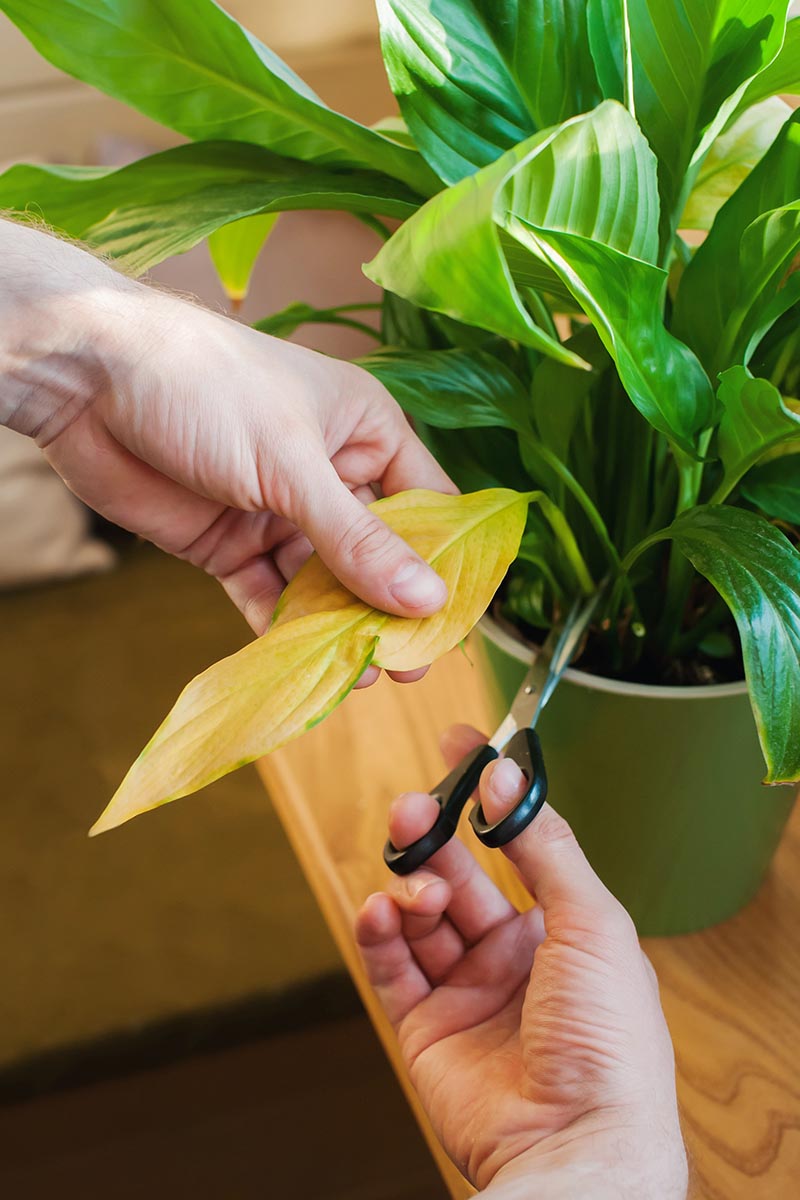
Prune away yellow leaves from your overgrown Peace Lily to encourage new growth and maintain plant health. Trimming these yellow leaves at the base is crucial to promote the emergence of fresh, healthy foliage. By removing the yellowing leaves promptly, you not only prevent the potential spread of diseases but also help your Peace Lily sustain a vibrant appearance. This practice contributes significantly to the plant’s overall vitality and aesthetics.
When you trim the yellow leaves, make sure to cut as close to the base as possible. This technique ensures that the plant concentrates its energy on nourishing the remaining healthy leaves, fostering robust growth. Regularly pruning yellow leaves is essential for keeping an overgrown Peace Lily in top condition. By incorporating this simple task into your plant care routine, you can help your Peace Lily thrive and maintain its beauty over time.
Repot Rootbound Plant

When faced with a rootbound Peace Lily, addressing the crowded roots circling the pot is crucial to rejuvenating its growth and overall health. Overgrown peace lilies display symptoms like stunted growth and water drainage issues, indicating the need for repotting. To repot a rootbound plant, carefully loosen the roots, trim if necessary, and transfer it to a larger pot filled with fresh soil. Repotting can breathe new life into an overgrown peace lily, promoting healthier growth. Regular repotting is essential to prevent peace lilies from becoming rootbound, ensuring they have ample space to thrive. By repotting your overgrown peace lily, you provide it with the opportunity to flourish and reach its full potential. Remember, a well-maintained root system is key to the overall health and vitality of your peace lily.
Divide Overcrowded Plant

To address overcrowded peace lilies, dividing the plant into smaller clumps can promote healthier growth and prevent root-bound conditions. When dealing with overgrown peace lilies, cutting the plant into sections with healthy roots is essential. This process not only helps in managing the size of the plant but also promotes new growth and rejuvenates the plant’s health. Dividing an overgrown peace lily allows you to create multiple smaller plants from a single overcrowded one, ensuring continued growth and vitality.
To divide an overgrown peace lily, carefully remove it from its pot and gently separate the root clumps. Look for sections with healthy roots and new shoots, ensuring each division has enough foliage to support itself. Trim any damaged or unhealthy roots before replanting the sections in fresh soil. Remember to water the newly divided plants adequately and provide them with the necessary care to help them thrive in their rejuvenated state. By dividing overcrowded peace lilies, you can effectively manage their size and encourage long-term health and growth.
Post-Pruning Care Tips
:strip_icc()/bhg-how-often-to-water-peace-lily-6f1afba66feb4b72ba5a699ebaf4e3a6.png)
After pruning a peace lily, it is crucial to provide proper post-pruning care to ensure the plant’s optimal recovery and health. Water the plant sparingly in the days following pruning to prevent overwatering, which can hinder the healing process. Placing the peace lily in partial shade will aid in reducing stress and supporting its revival after pruning. To safeguard the fresh cuts made during pruning, apply horticultural pruning seal to prevent infections and promote healing. It is essential to maintain consistent temperature and humidity levels post-pruning to create an ideal environment for the peace lily to recover. Additionally, lightly fertilize the plant after pruning to provide essential nutrients for healthy new growth. By following these post-pruning care tips, you can ensure your indoor peace lily thrives and continues to flourish after being pruned.