

If you’ve spotted holes on your rose leaves, sneaky culprits like Rose Chafer Beetles, Sawfly Larvae, and Leafcutter Bees might be the cause. Combat them by manually removing them or using specific insecticides. Beware of Slugs, Snails, Japanese Beetles, and Weevils too, which can harm your roses. Employ traps, handpicking, or insecticides to control their damage. These pests can weaken your precious roses, but fret not, solutions are available to protect your plants. Keep an eye out for irregular holes and act swiftly to safeguard your rose bushes. The fight against these pests can be won with proper care and vigilance.
Rose Chafer Beetle

If you notice irregular holes on your rose leaves, chances are you might be dealing with the destructive Rose Chafer Beetle. These tan fuzzy insects, adorned with small yellow hairs, have a penchant for light-colored flowers like roses. Unfortunately, their voracious appetite can wreak havoc on your garden, with the potential to defoliate plants rapidly. The telltale signs of their presence are the chewed edges and irregular holes that mar the once pristine appearance of your rose leaves.
To combat the Rose Chafer Beetle infestation, it’s essential to take swift action. Manual removal of these beetles can be effective, especially during the early stages of an outbreak. Additionally, using specific insecticides tailored to deter these pests can help safeguard your roses from further damage. By staying vigilant and implementing these control methods, you can protect your beloved roses from the destructive tendencies of the Rose Chafer Beetle.
Sawfly Larvae
Sawfly larvae, the culprits responsible for the distinctive windowpane damage on rose leaves, are light green with tan heads and feed on the underside of the foliage. To effectively deal with these voracious pests, consider the following:
- Identification: Recognize sawfly larvae by their light green color and tan heads, resembling slugs or caterpillars.
- Control Methods: Use neem oil, insecticidal soaps, or horticultural oils, as Bt pesticide is ineffective against sawfly larvae.
- Prevention: Ensure thorough coverage of the underside of rose leaves and be vigilant for early signs of damage, especially in early June.
- Natural Predators: Encourage beneficial insects or predators in your garden, as they might help keep sawfly larvae populations in check.
Leafcutter Bees

Leafcutter bees, known for their precise cutting of half-moon shapes along the edges of rose leaves, play a beneficial role as pollinators in the garden. These bees meticulously craft these holes to line them with leaf bits, creating protective shelters for their larvae. Although their activity may initially cause concern due to the distinctive damage on rose leaves, it’s essential to note that leafcutter bees are essential pollinators and do not inflict lasting harm on the plants. They are naturally drawn to rose leaves for nesting purposes, seeking out the ideal materials to construct their intricate homes. To coexist harmoniously with leafcutter bees in your garden, consider implementing protective measures such as providing alternative nesting sites or placing physical barriers around prized rose bushes. By understanding the role of these fascinating bees and taking proactive steps, you can appreciate their contribution to the ecosystem without compromising the health and beauty of your rose plants.
Slugs and Snails
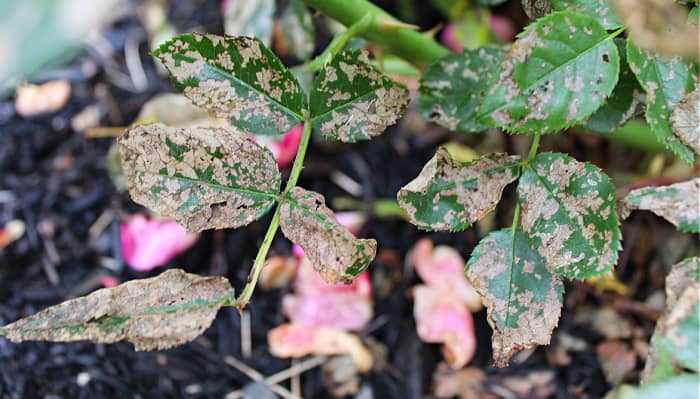
You may notice irregular holes with smooth edges on your rose leaves, a common sign of slugs and snails feeding. These pests thrive in moist conditions and are active at night, leaving slimy trails behind them. To control slugs and snails, consider handpicking them, setting up beer traps, or using copper screens to protect your rose plants.
Pest Identification
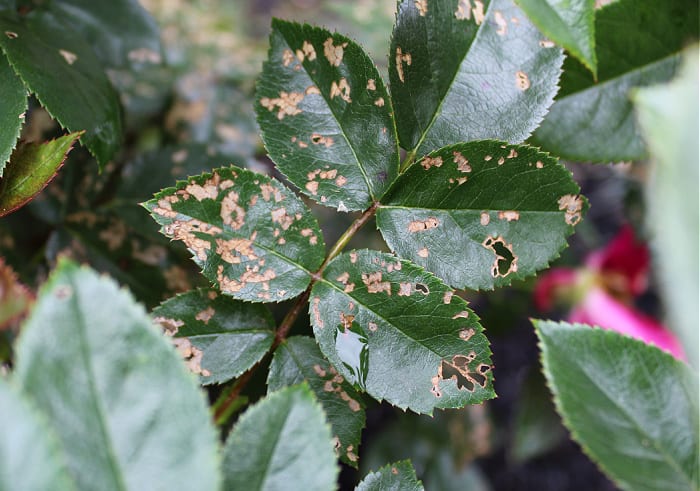
Slugs and snails are common culprits when it comes to causing irregular holes with smooth edges on rose leaves in the garden. To identify these pesky invaders, look for ragged holes on the leaves, especially those with a slimy trail nearby. These creatures thrive in moist environments and are most active during the night, making them tricky to spot during the day. If you suspect slugs or snails are the cause of the damage, inspect your plants after damp weather for their presence.
- Look for irregular holes with smooth edges on rose leaves.
- Check for slime trails near damaged leaves.
- Monitor plants during the night for signs of slugs and snails.
- Investigate after rainy weather to catch these pests in action.
Identifying these garden pests early can help you take proactive measures to protect your roses from further damage.
Control Methods

To effectively manage the presence of slugs and snails in your garden and protect your rose leaves from further damage, implementing targeted control methods is essential. Slugs and snails, common culprits for causing holes on rose leaves, can be controlled using specific treatments designed for these pests. Handpicking them or using traps can help reduce their population and minimize damage. Additionally, creating an environment less appealing to slugs and snails by eliminating hiding spots and excess moisture can aid in controlling their impact on your rose plants.
If the infestation persists, you may consider using insecticidal soap, which is effective against these slimy invaders. Another option is to introduce natural predators of slugs and snails, such as certain types of ground beetles. It’s also worth noting that controlling other pests like Japanese beetles and white grubs can indirectly help reduce the food source for slugs and snails, potentially decreasing their numbers in your garden. By employing these targeted control methods, you can effectively combat slugs and snails and safeguard your beautiful rose leaves.
Japanese Beetle

When dealing with the issue of holes on rose leaves, understanding the behavior and control of the Japanese beetle is essential. Here’s what you need to know:
- Distinct Appearance: The Japanese beetle stands out with its metallic green head and distinctive copper-colored wing cases.
- Feeding Habits: These beetles often target the middle of rose leaves, creating half-moon shaped holes, leading to significant damage to the foliage.
- Larval Damage: Not only do the adult beetles cause harm, but their larvae can also attack lawn grasses, compounding the overall damage to your garden.
- Control Measures: Implementing effective control methods is crucial in managing Japanese beetles and preventing further harm to your rose plants. Consider using traps, handpicking beetles, or applying insecticides to protect your roses.
Fuller Rose Beetle

Identifying Fuller Rose Beetles by their distinct feeding pattern of chewing irregular notches in rose leaves is crucial for effective pest management. These beetles are known for the unique damage they cause, leaving behind noticeable holes in the plant’s foliage. To protect your rose plants from further harm, it’s essential to monitor and address any damage promptly.
If you suspect Fuller Rose Beetle activity, manual removal can be an effective control method. Simply inspect the leaves for signs of the beetles and remove them by hand. This proactive approach helps prevent the beetles from causing more damage to your plants.
Keep a close eye on your rose garden to catch any Fuller Rose Beetle damage early on. By staying vigilant and taking swift action, you can protect your plants and ensure they remain healthy and vibrant. Remember, a little attention goes a long way in maintaining the beauty of your roses.
Grasshoppers

Grasshoppers can be a significant threat to your rose plants, as they are known to cause holes in the leaves by feeding on the foliage. These pests chew irregular holes in the leaves, often leaving a ragged appearance. Here are some key points to consider when dealing with grasshoppers:
- Active Pests: Grasshoppers are active during warm weather, making them a common nuisance in gardens.
- Damage Severity: Their powerful jaws can easily damage plant leaves, including delicate rose foliage. Holes in your rose leaves can lead to serious damage if left unchecked.
- Feeding Behavior: Grasshoppers feed voraciously, consuming large sections of leaves and potentially hindering the plant’s ability to photosynthesize effectively.
- Control Measures: To combat grasshoppers, consider handpicking them off the plants, using row covers to protect your roses, and applying insecticidal soap as a natural deterrent against these true caterpillars. Utilizing these control methods can help safeguard your roses from further harm.
Leafhoppers
Leafhoppers are tiny insects that extract plant sap, causing issues like stippling and yellowing on rose leaves. To combat these pests, you can employ natural predators, insecticidal soaps, neem oil, or reflective mulches as effective control measures. Monitoring leafhopper activity early on is crucial to preventing extensive damage to your garden plants.

Leafhopper Feeding Behavior
With their small, wedge-shaped bodies and remarkable jumping abilities, leafhoppers exhibit a feeding behavior that involves piercing plant tissues to extract sap, leading to the characteristic stippling and yellowing of affected leaves. When leafhoppers feed, they create small, triangular-shaped notches on the edges of entire leaves, giving them a distinctive appearance. This feeding process not only damages the aesthetic appeal of plants but also weakens their overall health, making them more susceptible to various plant diseases like aster yellows and phytoplasmas. Additionally, as leafhoppers feed, they excrete honeydew, a sugary substance that attracts ants and encourages the growth of sooty mold on plants. Understanding leafhopper feeding behavior is crucial in implementing effective control measures to protect your garden. By using insecticidal soaps, neem oil, or introducing natural predators like lacewings and lady beetles, you can manage leafhopper populations and prevent further damage to your plants.
Natural and Chemical Remedies
To combat the damage caused by leafhoppers on rose leaves, implementing natural and chemical remedies is essential. Leafhoppers, those tiny insects that feast on plant sap, can leave behind stippling or yellowing on your beloved rose bushes. These pests puncture the plant tissue, creating small holes and marks that not only affect the aesthetics of your roses but can also transmit diseases, compromising the overall health of your plants.
One effective way to control leafhopper populations on your roses is by using insecticidal soap. This environmentally friendly option works by suffocating the leafhoppers, helping to reduce their numbers and minimize the damage they cause. Another alternative is neem oil, which has insecticidal properties and can deter leafhoppers from feeding on your rose leaves.
Weevils

Weevils, the small beetles known for causing distinctive notches in rose leaves, are a common pest that can be controlled through various methods. These pests feed on the edges of leaves, creating a characteristic crescent-shaped damage that can quickly spread if left unchecked. To effectively manage weevils in your garden, consider the following tips:
- Manual Removal: Handpick adult weevils from the leaves, especially if you notice tan heads poking out or irregular holes on the foliage.
- Insecticides: Use insecticides labeled for weevil control, following the instructions carefully to protect your roses without harming the environment.
- Signs of Infestation: Keep an eye out for adult weevils on the leaves and the characteristic damage they make, which can affect the entire plant if not addressed promptly.
- Preventative Measures: Implement good garden hygiene practices and avoid over-fertilization to reduce the risk of weevil damage on your beautiful rose bushes.