

Elevate your tree landscaping with rocks by varying sizes for interest, using large rocks as focal points, and small ones for ground cover. Protect roots with rocks, prevent compaction, and allow drainage. Rock edging stops erosion, looks natural, and lasts. Create focal points with rocks strategically placed for balance and texture. Use rocks to control weeds and add depth to your landscape. Rock pathways add appeal and prevent erosion, while mulching with rocks retains moisture and looks stylish. Rocks harmonize with tree aesthetics, protecting from erosion and enhancing beauty. Master these tips for stunning outdoor spaces.
1. Choose the Right Rock Sizes
:max_bytes(150000):strip_icc()/sprucetreeromero2-5b89ad9846e0fb005099aac6.jpg)
When landscaping around trees with rocks, vary the sizes you choose to add visual interest and texture to your outdoor space. In landscape design, rocks play a crucial role in enhancing the beauty of your tree landscaping. Opt for large rocks as focal points or to create borders around trees, providing structure and definition to your garden. These large rocks can also serve as anchor points, drawing the eye towards the trees. For ground cover and filling in gaps between the larger rocks, incorporate smaller rocks. They add a delicate touch and create a seamless flow within the landscape. Medium-sized rocks are perfect for pathways or as stepping stones around trees, offering both functionality and aesthetic appeal. When selecting rocks, consider how they complement the size of the trees and surrounding plants to ensure a harmonious and cohesive look in your outdoor oasis. By carefully choosing the right rock sizes, you can elevate your tree landscaping ideas to new heights.
2. Mind Tree Root Protection
To safeguard the health and integrity of your trees, consider utilizing rocks as a protective barrier for their roots when landscaping around them. Rocks serve as a natural barrier, shielding tree roots from potential damage caused by foot traffic or landscaping equipment. By creating a protective layer, rocks help reduce soil compaction and erosion that can harm tree roots over time. Additionally, strategically placing rocks around tree bases can deter weeds and grass from encroaching on the root zones, preserving the health of the trees.
Apart from the practical benefits, rocks also contribute to the aesthetic appeal of your tree landscaping. When using rocks for root protection, ensure they do not obstruct root growth or hinder water absorption. By maintaining a balance between functionality and visual appeal, rocks can enhance the overall look of your landscape while providing essential protection for your trees.

3. Enhance With Rock Edging
Consider incorporating rock edging around your trees to enhance the definition of the tree base and prevent soil erosion while adding a touch of natural beauty to your landscape design. Using rocks as edging provides a natural, low-maintenance border that not only serves a functional purpose but also adds aesthetic value to your outdoor space. Rocks offer durability, ensuring that your tree landscaping remains intact despite weather conditions and foot traffic. Additionally, the texture and visual interest that rocks bring can complement the natural look of trees, creating a harmonious and visually appealing environment.
To further illustrate the benefits of rock edging, here is a table showcasing how rocks can enhance tree landscaping:
| Benefits of Rock Edging | |
|---|---|
| Prevents Soil Erosion | |
| Adds Natural Aesthetic | |
| Low-Maintenance Option |
4. Ensure Proper Drainage
:max_bytes(150000):strip_icc()/shippee-GettyImages-939371484-9023961787044c7f930c7f0f65da933b.jpg)
Improving drainage around trees is crucial for maintaining their health and vitality in your landscape design. Rocks play a vital role in enhancing drainage, preventing water accumulation, and reducing the risk of root rot. By creating a natural barrier, rocks help direct water away from tree trunks and root systems, safeguarding against fungal diseases and decline. The strategic placement of rocks not only serves a practical purpose but also adds to the overall aesthetics of the landscaping.
When incorporating rocks to improve drainage, it is essential to choose the right size and type of rocks. Opting for rocks that allow water to flow easily while still providing ample coverage is key. Larger rocks can help with water diversion, while smaller rocks aid in soil aeration. By selecting the appropriate rocks, you ensure effective drainage and complement the design of your tree landscaping. Remember, proper drainage not only benefits the trees but also adds a visually appealing element to your outdoor space.
5. Create Focal Points

Enhance the visual impact of your tree landscaping by strategically arranging rocks to create captivating focal points that draw attention and add depth to the overall design. Rocks play a vital role in highlighting the beauty of your trees and adding interest to the landscape. Here’s how you can effectively create focal points using rocks:
- Select Various Sizes, Shapes, and Colors: Choose rocks of different sizes, shapes, and colors to create a visually appealing contrast around the trees.
- Strategic Placement for Balance: Position larger rocks strategically to anchor the design and maintain a sense of balance in the landscaping.
- Add Texture and Visual Interest: Incorporate rocks around the base of the tree to not only enhance the visual appeal but also provide texture to the overall landscape design.
6. Use Rocks for Weed Control

To effectively control weeds around trees, utilizing rocks as a natural barrier can provide a low-maintenance and aesthetically pleasing solution. Rocks act as a physical barrier that blocks sunlight and inhibits weed growth, reducing the need for frequent weeding in landscaped areas. This method not only saves time and effort but also adds a unique touch to tree landscaping.
In addition to weed control, rocks help retain soil moisture and prevent erosion, benefiting the overall health of the trees. Different types and sizes of rocks can be strategically placed around trees to enhance the aesthetic appeal of the landscape. From small pebbles to larger boulders, the variety allows for creative arrangements that blend functionality with beauty.
7. Layer Rocks for Depth
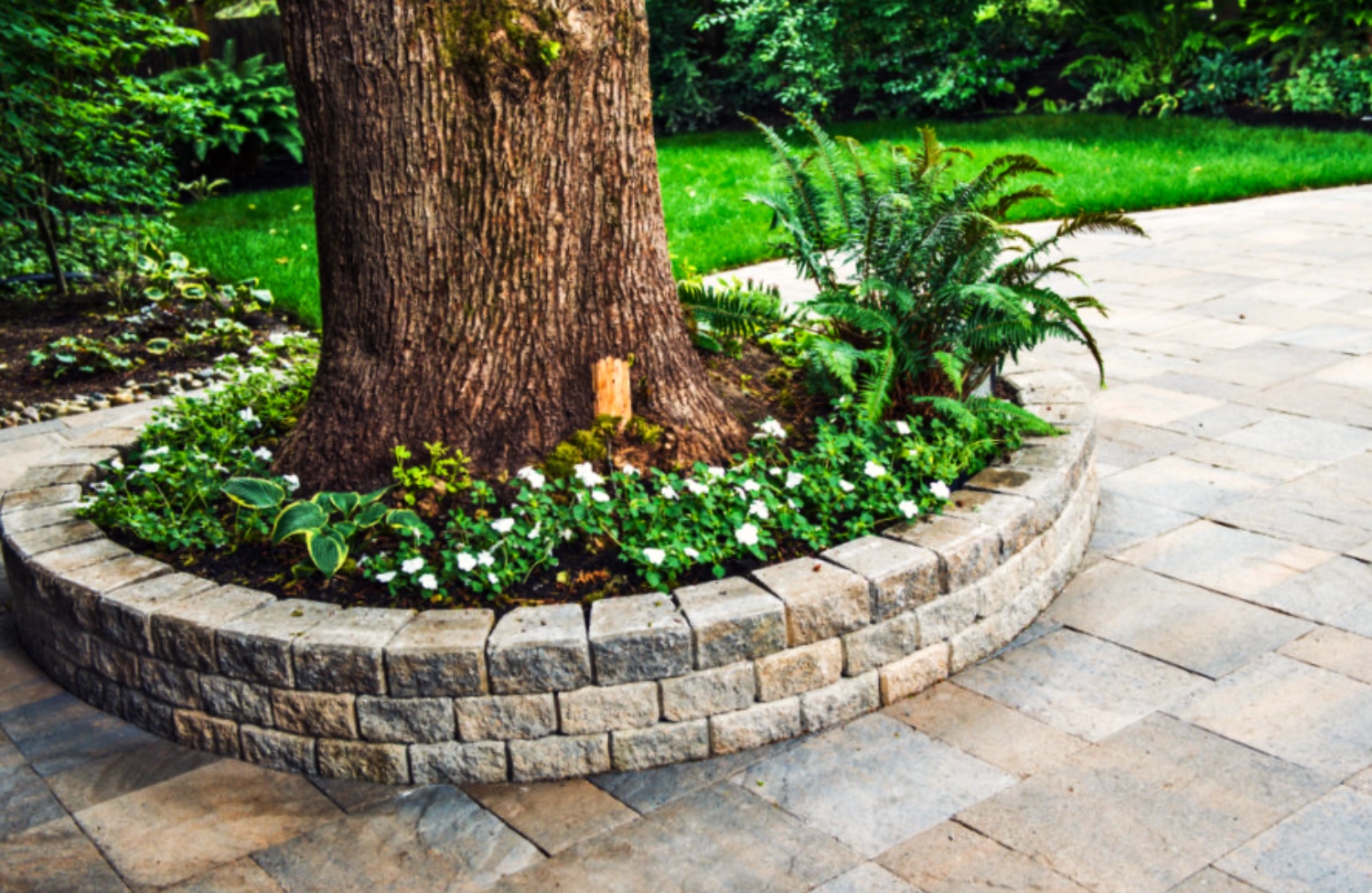
Creating visual depth and interest in your landscape design can be achieved by skillfully layering rocks around trees. By incorporating rocks of different sizes and types, you can add texture and variety to the area surrounding your trees. Here’s how to make the most of layering rocks for depth:
- Mix Sizes: Combine small pebbles with medium-sized rocks and larger boulders to create a dynamic and visually appealing landscape.
- Play with Placement: Experiment with stacking rocks in varying heights and angles to add dimension and interest to the space around your trees.
- Blend Colors: Use rocks in different shades and hues to enhance the natural beauty of your garden and complement the colors of your trees and plants.
In addition to enhancing the aesthetic appeal of your landscape, properly layered rocks can also serve practical purposes like erosion prevention, maintaining soil moisture, acting as a natural barrier, and protecting tree roots from damage. Start layering rocks creatively to transform your tree landscaping into a visually captivating and functional outdoor space.
8. Incorporate Rock Pathways

Consider weaving rock pathways through the landscape around your trees to add both functionality and visual appeal to your outdoor space. Rock pathways not only provide a durable and low-maintenance solution but also add texture and visual interest to your tree landscaping. By incorporating rock pathways, you can prevent soil erosion around your trees while creating a natural and harmonious look that complements the surrounding greenery.
One of the benefits of using rock pathways is their versatility in design. You can arrange rocks in various patterns and sizes to enhance the aesthetic appeal of your tree landscaping. Whether you prefer a more structured layout or a more organic feel, rock pathways can adapt to your vision while maintaining a cohesive look. Additionally, the rugged and natural look of rock pathways blends seamlessly with the environment, creating a visually pleasing contrast that highlights the beauty of your trees.
9. Consider Rock Mulching

Enhance the health and aesthetics of your tree landscaping by exploring the benefits of rock mulching. Rock mulching offers more than just a decorative touch; it serves as a practical solution to retain soil moisture and minimize weed growth effectively. Consider the following advantages of incorporating rock mulching around your trees:
- Retaining Soil Moisture: Rocks act as a barrier, reducing water evaporation from the soil and helping to maintain adequate moisture levels for your tree roots.
- Reducing Weed Growth: The use of rocks as mulch creates an inhospitable environment for weeds, decreasing the need for frequent weeding sessions.
- Low-Maintenance Landscaping Solution: Unlike organic mulches that decompose over time, rock mulching is a durable and long-lasting option that requires minimal upkeep.
With rock mulching, you can achieve both a visually appealing and functional landscape design. The variety of rock sizes, shapes, and colors available allows for creative landscaping designs that seamlessly complement the natural look of your trees, adding visual interest to your outdoor space.
10. Add Visual Interest With Rocks

Introduce a touch of natural charm and texture to your tree landscaping by incorporating rocks strategically. Rocks not only add visual interest but also create a unique and natural aesthetic around your trees. Consider using a variety of rocks like river rocks, pebbles, or boulders to enhance the overall look of your landscape. These rocks can serve a dual purpose by preventing erosion around tree roots and offering a low-maintenance alternative to traditional mulch.
11. Use Rocks for Erosion Control
To combat soil erosion and protect your tree landscaping, strategically positioning rocks can effectively stabilize the ground and shield tree roots from the impact of heavy rainfall. Rocks play a crucial role in preventing soil erosion and maintaining the health of your trees. Here’s why using rocks for erosion control around trees is a smart choice:
- Rocks act as a barrier: Placing larger rocks strategically around trees creates a barrier that helps retain soil and prevent erosion in tree landscaping.
- Stabilize the ground: Rocks provide stability to the soil, especially during heavy rainfall, reducing the risk of erosion and protecting tree roots.
- Low-maintenance solution: Utilizing rocks for erosion control is a natural, low-maintenance solution that not only serves a functional purpose but also enhances the aesthetic appeal of your tree landscaping.

12. Harmonize Rocks With Tree Aesthetics
Incorporating rocks into your tree landscaping not only adds visual appeal but also contributes to the overall harmony and aesthetic balance of your outdoor space. To achieve a harmonious look, select rocks that complement the size, color, and shape of your tree. Using rocks of varying sizes and textures around the base of the tree can create visual interest and highlight the natural beauty of your landscape.
Place rocks strategically to serve as a focal point in your landscaping design, drawing attention to the tree’s features. Consider using rocks as a border or edging to define the space around the tree, preventing erosion while enhancing the overall aesthetic appeal. Rocks offer a low-maintenance and durable alternative to traditional mulch, ensuring long-lasting beauty for your tree landscape. By carefully integrating rocks into your design, you can create a visually stunning and cohesive outdoor space that showcases the beauty of your trees.