

Owls, though rare, may pose a risk for small dogs under 15 pounds, potentially causing injuries or fatalities. Understanding owl behaviors like silent hunting is key. Protect your pet by covering outdoor areas, pruning tree branches, and using scarecrows. Sound and visual deterrents can repel owls, while training your dog and supervising outdoor time add safety. In case of an encounter, shield your pet and seek veterinary care. For comprehensive protection, know owl behavior and implement safety measures. Stay vigilant to safeguard your furry friend.
Understanding Owl Behavior Towards Dogs
To understand owl behavior towards dogs, it is essential to recognize the potential risks posed by Great Horned Owls, especially towards small canines weighing under 15 pounds. While verified reports of owl attacks on dogs are rare, owls have been known to target small pets. Using deterrents such as Nite-Guard or strobe lights can help prevent owl attacks on dogs. Owls, as predators, can cause injuries or fatalities to small dogs, necessitating veterinary care post-attack. Supervising outdoor activities is crucial in preventing owl attacks on pets. Being mindful of the presence of these predators in the area can aid in safeguarding your pets. By understanding the predatory nature of owls and taking necessary precautions, such as using deterrents and closely supervising outdoor activities, you can help protect your small pets from potential owl attacks. Remember, vigilance and awareness play a key role in ensuring the safety of your beloved canine companions.
Yard Safety Measures
Implementing proper yard safety measures is crucial in safeguarding small dogs from potential owl attacks. To protect small dogs outside, cover outdoor dog pens or play areas to prevent owls from swooping down and targeting them as prey. Additionally, prune tree branches near your yard to eliminate high perches where owls could spot small pets. Removing bird feeders can also help in keeping birds of prey away from your property, reducing the risk of attacks on dogs. Setting up scarecrows or fake owls in your yard can further deter owls and scare off hawks that may pose a threat to small dogs. Remember not to leave small dogs unattended outside, as this increases the chances of owl encounters. By implementing these yard safety measures, you can create a safer outdoor environment for your small dog and minimize the risk of owl attacks.
Deterrents to Keep Owls Away
To deter owls from approaching your pets, consider utilizing sound deterrents such as strobe lights or Nite-Guard devices. These visual cues can confuse and deter owls from entering your property. Implementing these deterrents can help protect your pets from potential owl attacks.
Sound Deterrents for Owls
Sound deterrents such as Nite-Guard or strobe lights serve as effective tools in preventing owl attacks on pets. Strobe lights emit rapid, repetitive flashes of light that can confuse owls, deterring them from approaching small dogs. These sound deterrents are widely employed to protect pets from owl predators. While not infallible, using these devices can enhance the safety of small pets by creating a less appealing environment for owls. Implementing sound deterrents is a proactive measure that pet owners can take to reduce the risk of owl attacks on their beloved dogs. By incorporating Nite-Guard or strobe lights into your outdoor pet protection strategy, you can potentially decrease the likelihood of encounters between owls and your pets. Remember, these tools are just one part of a comprehensive approach to safeguarding your pets from potential owl threats.
Visual Deterrents for Owls
Strobe lights and Nite-Guard serve as effective visual deterrents for keeping owls away from pets. Strobing lights can confuse owls, making them less likely to approach your property and pets. Additionally, using a light-up collar on your pet can help deter owls from getting too close. While visual deterrents like these may not guarantee full protection, they can significantly reduce the risk of owl attacks on small pets. Implementing visual deterrents is a proactive measure that aids in safeguarding your furry companions from potential owl encounters.
| Visual Deterrents | Description |
|---|---|
| Strobe Lights | Emit rapid flashes of light, confusing and deterring owls. |
| Nite-Guard | Solar-powered lights that flicker at night, repelling nocturnal predators. |
| Light-Up Collar | Attaches to pets, creating a luminous barrier that wards off owls. |
Supervision and Training Tips
Regularly supervising your pets outdoors can significantly reduce the risk of owl attacks on dogs. Training your dogs to respond to commands such as ‘come’ and ‘stay’ is crucial for their protection against potential owl threats. The presence of humans in the yard acts as a deterrent, dissuading owls from approaching small pets. Implementing positive reinforcement training methods can further enhance your dog’s safety from owl attacks. By being cautious during outdoor activities and taking preventive measures, you can effectively lower the chances of an owl targeting your pet. Creating a safe outdoor environment involves not only supervision but also the reinforcement of obedience commands. These measures contribute to the overall protection of your dog from potential owl encounters. Remember, consistent training and active supervision are key components in safeguarding your pets from the dangers posed by owls.
Actions During an Owl Encounter
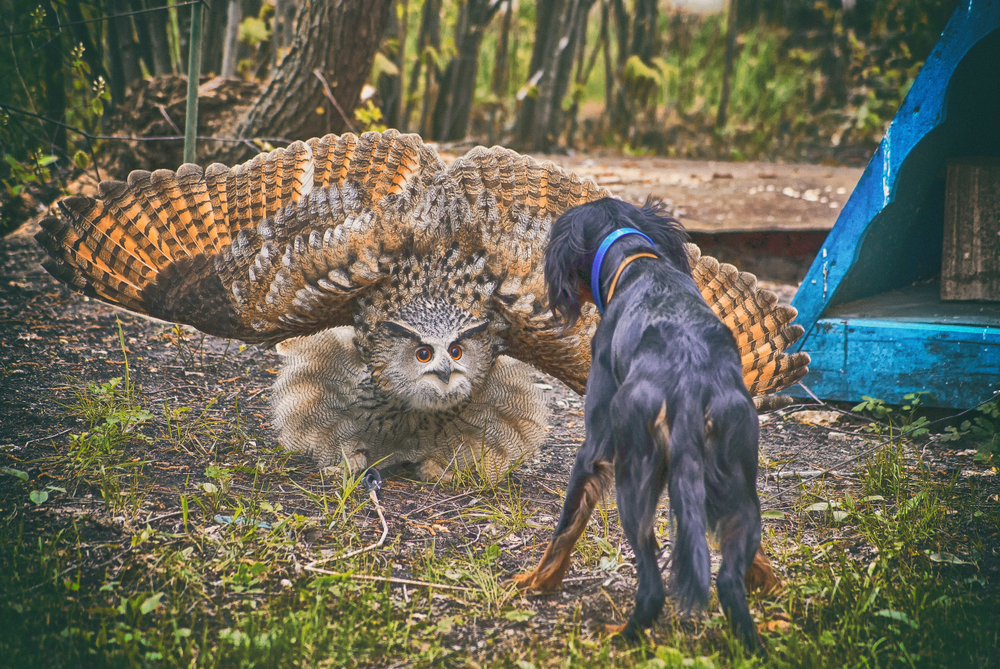
When encountering an owl, stay composed and deter the owl if it gets too close to your pet. Employ objects like an umbrella to shield your pet from potential owl attacks. Remember to promptly seek veterinary care if your dog sustains injuries and notify local authorities if necessary for further assistance.
Owl Behavior Around Pets
During an owl encounter, it is crucial to remain vigilant and closely supervise your small pets due to the silent approach owls can employ. Owls, particularly Great Horned Owls, have been known to attack small dogs, especially those weighing under 15 pounds, and even target extremely tiny dogs as prey. To paint a clearer picture of owl behavior around pets, consider the following scenarios:
| Owl Behavior Around Pets | Description |
|---|---|
| Silent Approach | Owls can silently swoop down on small pets during outdoor activities. |
| Hunting Behavior | They may exhibit hunting behaviors, especially at dawn and dusk. |
| Flight Patterns | Owls may circle overhead before making a move towards small pets. |
| Territorial Defense | They might attack to protect their nests or territories. |
To ensure your pet’s safety, it is essential to understand these behaviors and take necessary precautions when spotting an owl nearby.
Preventing Owl Attacks
Implementing defensive actions during an owl encounter can significantly reduce the risk of an attack on your pet. When faced with an owl, it is crucial to remain calm and take swift measures to protect your dog. Here are some key steps to prevent owl attacks:
- Scare off the owl: Utilize loud noises or bright lights to deter the owl and drive it away from your pet.
- Shield your dog: If the owl shows signs of aggression, use an umbrella or a large object to create a physical barrier between the owl and your pet.
- Seek veterinary care: In the unfortunate event that your dog sustains injuries from an owl attack, seek immediate veterinary assistance to ensure proper treatment and recovery.
Handling After Encounter
After encountering an owl, it is crucial to promptly assess your pet for any signs of injury or distress. Stay calm and attempt to scare off the owl by using loud noises or bright lights during the encounter. If the owl displays aggressive behavior towards your dog, consider using an umbrella or a large object to shield your pet from potential attacks. In the unfortunate event that your dog sustains injuries during the owl encounter, seek immediate veterinary care to ensure proper treatment and recovery. It is important to report any instances of aggressive bird behavior to local authorities to prevent future incidents and ensure the safety of pets in the area. Be particularly cautious and vigilant during dawn and dusk when owls are most active, taking necessary precautions to avoid encounters between owls and your dog. By being proactive and prepared, you can effectively handle situations following owl encounters and prioritize the well-being of your pet.
Seeking Veterinary Care
In the event of an owl attack on your dog, seeking immediate veterinary care is imperative to address any potential injuries effectively. A veterinarian can assess the wounds and provide appropriate treatment to prevent infections and complications. Veterinary care following an owl attack may include cleaning wounds thoroughly, administering medications such as antibiotics, and closely monitoring for any signs of infections. Early intervention plays a crucial role in ensuring the well-being of your dog post-attack.
- Thorough Wound Assessment: A veterinarian will carefully examine the extent of the injuries to determine the necessary course of action.
- Treatment Plan Development: Based on the assessment, a tailored treatment plan will be established to address the specific wounds and potential infections.
- Monitoring for Complications: Vigilant monitoring post-treatment is essential to detect any complications early on and prevent further issues.