

Yes, some mushrooms indeed glow in the dark! This phenomenon, known as bioluminescence, involves a chemical reaction where fungi emit light primarily in the blue-green spectrum. It’s facilitated by luciferin and luciferase which, when combined, produce light. Out of numerous fungi species, at least 81 are documented to be bioluminescent, including *Mycena chlorophos* and *Omphalotus nidiformis*. The light emission, interestingly, plays a role in attracting insects, aiding in spore dispersal and possibly contributing to the fungi’s survival. Exploring deeper into this topic unfolds intricate details about the ecological roles and survival strategies of these captivating organisms.
Bioluminescence Explained

Bioluminescence, a natural phenomenon where living organisms emit light, captivates anyone who sees it. In the realm of fungi, this fascinating ability is due to a specific chemical reaction involving luciferin and luciferase, resulting in light typically in the blue-green spectrum.
Notably, at least 81 species of bioluminescent fungi have been documented, all producing mushrooms and white spores. Among these, *Mycena chlorophos* and *Omphalotus nidiformis* stand out. The light can emanate from either the mushrooms or the mycelia.
The bioluminescent fungus *Mycena chlorophos* thrives in tropical climates, which are ideal for its growth and bioluminescent properties. This glowing feature isn’t just for show; it’s highly energy-efficient, ensuring nearly 100% of the light produced is usable, playing a critical role in ecological processes like spore dispersal.
How Fungi Emit Light
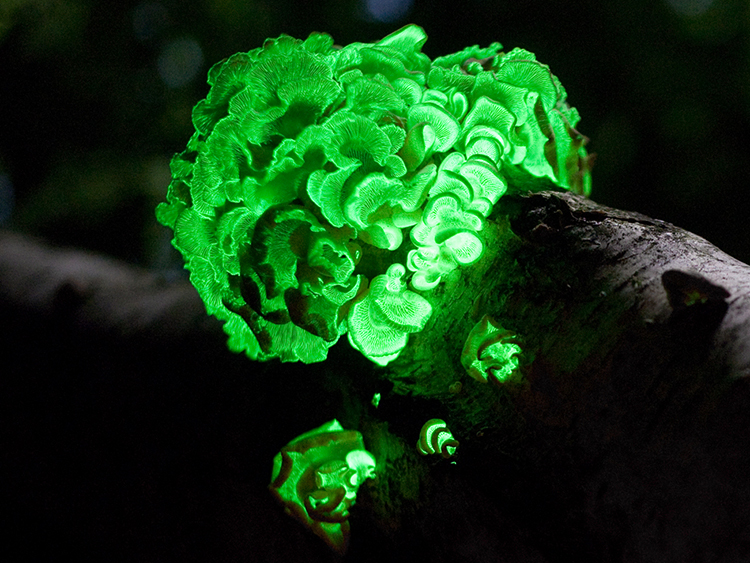
To understand how fungi emit light, we must delve into the biochemical reactions at play. Bioluminescent fungi, including those mushrooms that glow, use a compound known as luciferin. When luciferin interacts with the enzyme luciferase in the presence of molecular oxygen, a light is emitted.
This process begins with the synthesis of hispidin, a precursor that’s transformed into luciferin. The catalytic action of luciferase then triggers the emission of green light, typically at wavelengths of 520-530 nm. This remarkable mechanism isn’t just a fascinating chemical feat but also an ecological strategy—light emission from various fungal parts like mycelia attracts insects, aiding in spore dispersal.
Interestingly, the mycelium itself, similar to roots in plants, serves as an extensive underground network for fungi, playing a crucial role in nutrient absorption and environmental interaction. Remarkably, this light production is nearly 100% energy efficient, making every photon count in the dark forest environments where these organisms thrive.
Common Bioluminescent Mushrooms
Understanding the biochemical reactions that enable fungi to emit light leads us naturally to explore some of the most notable examples of bioluminescent mushrooms.
The *Mycena chlorophos* stands out for its vivid green light, illuminating tropical environments. Similarly, the *Neonothopanus gardneri*, thriving in Brazilian coconut forests, emits a radiant green glow, which is both mesmerizing and scientifically significant.
On the other hand, the *Omphalotus olearius*, commonly known as the Jack-O-Lantern Mushroom, projects an orange light from its gills and mycelium, but beware—it’s toxic.
These fungal species showcase a range of colors and intensities, with adaptations that allow continuous luminescence, making them captivating subjects for both research and observation in the study of bioluminescent mushrooms.
In the context of mushroom reproduction, it’s fascinating to note that the spores of these glowing mushrooms also play a crucial role in their life cycles, aiding in dispersal and species survival in their unique environments.

Theories on Fungal Glow
Several intriguing theories have emerged to explain why some mushrooms glow in the dark. One theory suggests the fungal glow attracts insects to help disperse spores. This idea finds some support in studies like that by Oliviera et al. (2015), where insects were drawn to artificially lit plastic mushrooms.
However, contrasting findings by Weinstein et al. (2016) propose that the ghost fungus’s glow might simply be a metabolic by-product, offering no ecological advantage since it didn’t lure insects.
Additionally, the variability in fungal bioluminescence across species hints at different ecological roles, possibly tied to their reproductive strategies and circadian rhythms.
Clearly, the relationship between fungal glow, spores, and insects requires further exploration to unravel these complex interactions.
Ecological Roles of Glowing Fungi
While the theories on why some fungi glow have sparked considerable debate, the ecological roles of these luminous mushrooms are equally fascinating and vital to forest ecosystems.
Bioluminescent fungi, such as *Mycena chlorophos* and *Omphalotus nidiformis*, are crucial in attracting insects that aid in spore dispersal, thus enhancing their reproductive success. This interaction boosts biodiversity and contributes to ecosystem stability by ensuring widespread spore distribution.
Moreover, the glow of these fungi often indicates healthy, nutrient-rich environments, essential for spore development and growth. Their bioluminescence also aids ecological researchers in identifying and studying these thriving habitats, ultimately providing deeper insights into forest health and the intricate relationships within these ecosystems.

Genetic Engineering and Bioluminescence
Harnessing the eerie glow of bioluminescent fungi, genetic engineering techniques like T-DNA transformation have opened the door to integrating these luminous traits into non-luminescent plants.
Dive deeper, and you’ll find researchers meticulously embedding fungal genes into the DNA of tobacco plants, not just for show but as a beacon of potential stretching far beyond mere aesthetics.
Key points to consider in this fascinating interplay of biology and technology include:
- Gene Transfer: Utilizing T-DNA transformation to introduce bioluminescence.
- Enhancement Techniques: Employing caffeic acid to boost luminous efficiency.
- Customization: Tailoring luciferase-based reporters for specific luminescent features.
- Application Potential: Exploring uses in environmental monitoring and educational tools.
- Safety Measures: Conducting thorough impact assessments to safeguard ecosystems.
This intricate blend of genetic engineering and glowing mushrooms paints a vivid picture of what’s possible in the realm of bioluminescence.
Practical Applications of Glowing Plants
Exploring further, we notice that the integration of bioluminescent properties into everyday flora isn’t just a theoretical exercise.
Bioluminescent plants, developed through genetic engineering of fungal pathways, could revolutionize urban landscapes by providing natural lighting and reducing energy consumption. Techniques like T-DNA transformation not only enhance the aesthetic appeal of gardens but also promote interest in sustainable practices.
Customizable luciferase reporters in these plants allow for tailored luminescent properties, making them invaluable in educational and environmental monitoring settings. They serve as ecological indicators, aiding in biodiversity assessments and ecosystem health insights.
As research progresses, these glowing plants might soon replace traditional lighting, offering an eco-friendly solution to our energy challenges.
Cultural Significance of Glowing Fungi
Bioluminescent fungi, often steeped in mystique and folklore, illuminate the deep shadows of forests with their eerie glow.
These glowing mushrooms aren’t just a fascinating natural phenomenon; they carry deep cultural and spiritual significance in various societies.
Here’s how they permeate different aspects of human culture:
- Folklore and Magic: Often symbolizing mystical properties in tales and myths, especially where *Mycena chlorophos* thrives.
- Scientific Interest: Sparked by M.J. Berkeley’s studies in 1830, enhancing our understanding of these organisms.
- Cultural Festivals: Celebrations that highlight their unique beauty and raise ecological awareness.
- Art and Literature: Inspiring artworks and stories that reflect on nature and environmental consciousness.
- Spiritual Practices: Integral to some indigenous rituals, emphasizing their role in traditional ecological knowledge.
These fungi’s glow brightens not just our forests, but also our cultural landscapes.
Conservation Efforts for Bioluminescent Species
Why should we focus on conserving bioluminescent fungi? These unique organisms are under threat from habitat loss due to deforestation, climate change, and urbanization—challenges particularly acute in biodiversity hotspots like the Atlantic Forest in Brazil.
This region alone harbors over 27 of the 100 known bioluminescent mushroom species, highlighting its significance for conservation initiatives. Organizations like IPBio are pioneering efforts that not only enhance academic understanding but also support local ecosystems.
Furthermore, sustainable ecotourism offers economic incentives for communities to preserve these natural habitats, fostering a symbiotic relationship between conservation and local livelihoods.
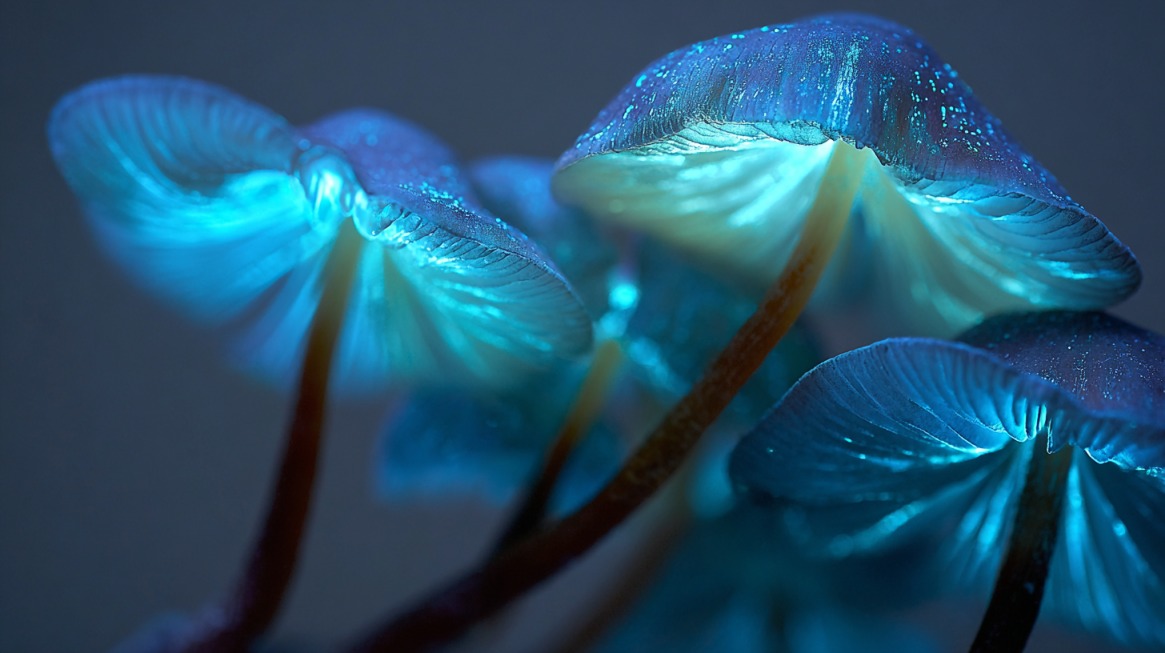
Collaborative approaches integrating scientific research with community engagement are crucial for the ecological restoration and long-term survival of these illuminating species.
Advanced Research in Fungal Bioluminescence
Building on our understanding of the need to conserve bioluminescent fungi, let’s examine the strides researchers have made in unraveling the mysteries of their glow.
The field has witnessed significant progress:
- Identification of key genes in Neonothopanus nambi that enable mushrooms’ light production.
- Successful genetic transfer of these bioluminescence pathways to tobacco plants.
- Use of Panellus stipticus as ecological indicators, highlighting the roles of glowing fungi within their habitats.
- Discovery of a 22-hour circadian rhythm in fungi that optimizes visibility for nocturnal insect attraction.
- Demonstrations that bioluminescent fungi attract insects effectively, aiding in the dispersal of fungal spores through light emission.
These findings not only deepen our understanding but also expand the potential applications of bioluminescence in science and technology.
Challenges in Studying Glowing Fungi
Despite the fascinating glow they emit, studying bioluminescent fungi presents a host of challenges. Observing these organisms in their natural settings is particularly difficult due to their elusive nature and the specific, dim light conditions required to see their luminescence.
Furthermore, research is often stymied by limited funding, restricting comprehensive studies on their ecology and bioluminescent properties. The use of advanced technologies like infrared cameras is essential to effectively analyze how bioluminescence interacts with the surrounding ecosystems.
Additionally, environmental factors such as humidity and temperature significantly impact fungal luminescence, yet these influences remain poorly understood. To overcome these hurdles, collaboration between mycologists and ecologists is crucial for a deeper, more holistic understanding of bioluminescence in fungi.
Future of Bioluminescent Research
Facing the myriad challenges of studying bioluminous fungi, researchers are now focusing their efforts on the untouched potentials of this field.
The future of bioluminescent research is poised to illuminate various aspects of science and technology. Here’s what’s on the horizon:
- Gene Identification: Pinpointing genes responsible for luminescence and exploring their interaction with circadian rhythms to enhance light production.
- Ecological Roles: Understanding how bioluminescent fungi contribute to ecosystems could reveal evolutionary benefits and dispersal mechanisms.
- Biotechnological Applications: Utilizing bioluminescent traits for eco-friendly lighting and innovative biosensors.
- Conservation Strategies: Protecting bioluminescent fungi, especially in endangered habitats like the Atlantic Forest.
- Genetic Engineering: Integrating bioluminescence into plants for sustainable urban design and environmental monitoring.
Bioluminescence in Other Organisms
:max_bytes(150000):strip_icc()/jellyfish-5b17e8baa9d4f90038c0a9c8.jpg)
Bioluminescence isn’t just a fascinating feature of some mushrooms; it’s also widespread across various organisms, including marine animals like jellyfish and certain fish species.
About 76% of deep-sea creatures harness this light, predominantly emitting a blue-green hue that cuts through the ocean’s darkness. This light serves critical ecological roles: communication, predation, camouflage, and even spore dispersal in terrestrial environments.
Fireflies, for instance, use bioluminescence for mating signals through a reaction involving luciferin and luciferase enzymes.
Meanwhile, bacteria like *Vibrio fischeri* contribute to the “milky seas” effect, where vast ocean areas glow, illustrating nature’s capacity to utilize light for survival and interaction across a diverse range of species and settings.
Visiting Bioluminescent Habitats
Exploring the Ribeira Valley in Brazil’s Atlantic Forest offers a unique opportunity to witness one of nature’s most enchanting phenomena: bioluminescent mushrooms.
Here’s what you should know about visiting these magical habitats:
- High Concentration: The Atlantic Forest is home to 27 out of the 100 known species of bioluminescent mushrooms.
- Night Hikes: Participate in guided night hikes to see the neon-green glow of species like Mycena lucentipes.
- Caverna de Santana: Explore this cave for a guided tour focusing on glowing fungi and other bioluminescent organisms.
- Adventure Activities: Engage in kayaking and birdwatching in reserves like Legado das Águas to experience the forest’s biodiversity.
- Ecotourism Impact: Supporting responsible tourism practices helps conserve these unique ecosystems and benefits local communities.