
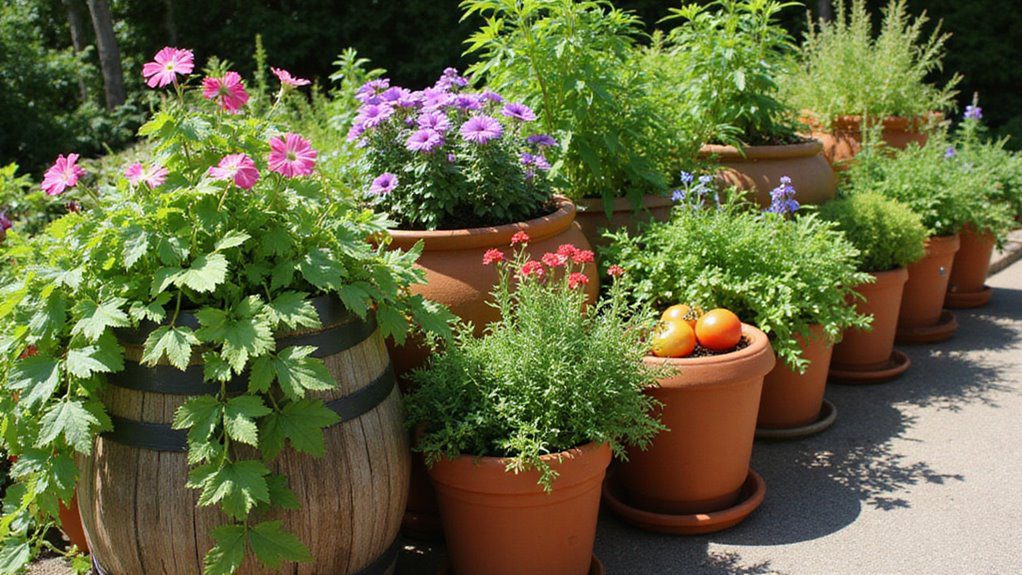
When I think about container gardening, I see endless possibilities for creativity and practicality. Selecting the right plants for your climate is crucial, as is the size of your pots to ensure proper water retention. I’ve found that using quality soil makes a significant difference. Let’s explore some innovative ideas that can transform your space and elevate your gardening experience. You might be surprised at how simple changes can lead to stunning results.
Choosing the Right Plants for Your Climate

When it comes to container gardening, selecting the right plants for your climate can make all the difference in your success. I focus on climate flexibility and regional selection, choosing plants suited for my area’s temperature, moisture, and light conditions.
For instance, I grow succulents in arid climates and opt for cool-season crops like kale in colder regions, ensuring thriving plants year-round.
Container Size Matters
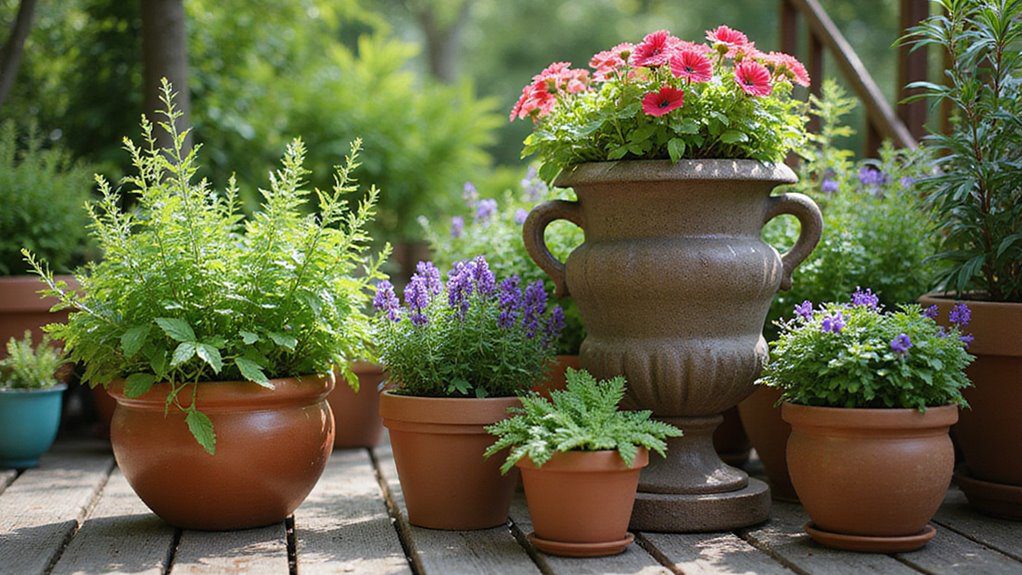
Choosing the right container size is essential for successful container gardening, and I can’t stress enough how it impacts plant health and growth. Through careful Size Analysis, I’ve learned that larger containers enhance water retention and support root development, while smaller ones require more frequent watering.
It’s crucial to match the container size to the plant’s mature root system for optimal growth.
Selecting the Best Soil for Containers

Selecting the right soil for your containers is crucial to achieving vibrant, healthy plants. I recommend using potting mixes that ensure excellent soil drainage and aeration. Look for blends with peat moss and perlite to retain moisture without waterlogging.
Avoid garden soil, as it compacts easily. Choosing the right mix can make all the difference for your container garden’s success
Optimizing Location for Sunlight
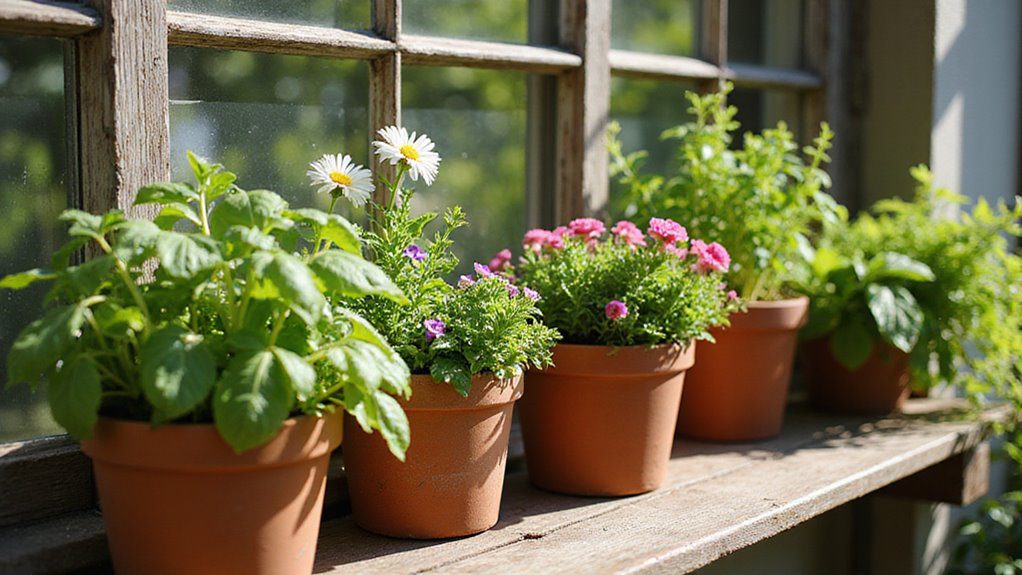
After setting up the right soil for your container garden, the next step is optimizing the location for sunlight.
I recommend using sunlight tracking apps to analyze exposure and manually observing patterns throughout the day. In urban settings, consider reflective surfaces and rooftop gardening. Don’t forget to adjust your containers seasonally to ensure your plants get the light they need to thrive.
Designing a Harmonious Container Garden

A well-designed container garden can transform any space into a vibrant oasis. I start by choosing a theme and assessing lighting, ensuring my plants match their environment.
Selecting a cohesive color palette and utilizing container innovations adds character. Combining different shapes and textures creates visual interest, while incorporating accessories enhances the overall garden narrative.
Proportion and scale are essential for harmony.
The Thriller, Filler, Spiller Technique
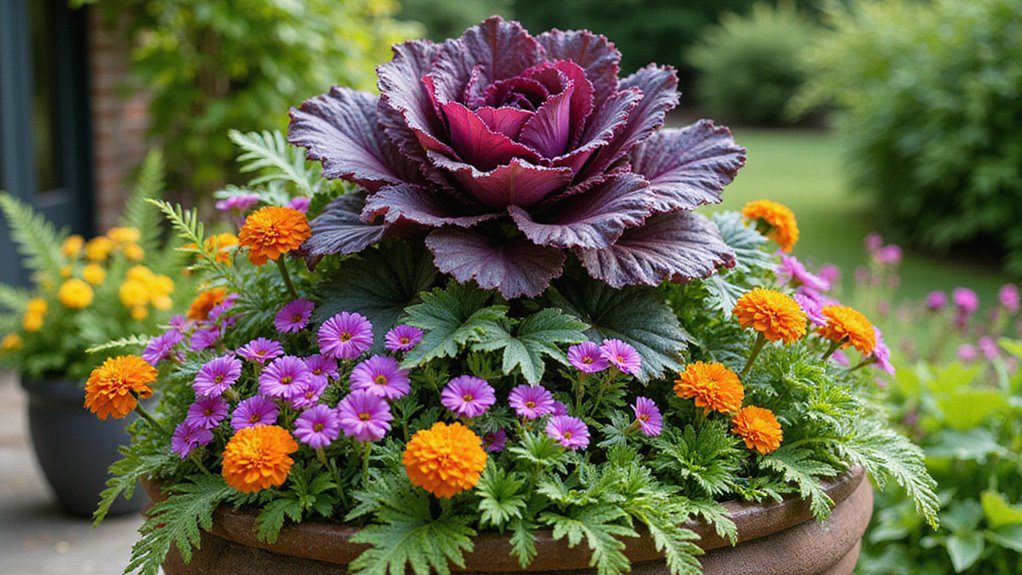
Creating a stunning container garden involves more than just choosing beautiful plants; it’s about understanding how to layer them for maximum impact. The Thriller, Filler, Spiller technique utilizes Container Dynamics effectively.
I often start with a striking Thriller selection, like ornamental grasses, then fill gaps with vibrant fillers like coleus, and let spillers like creeping Jenny cascade for a lush finish.
Combining Color and Texture
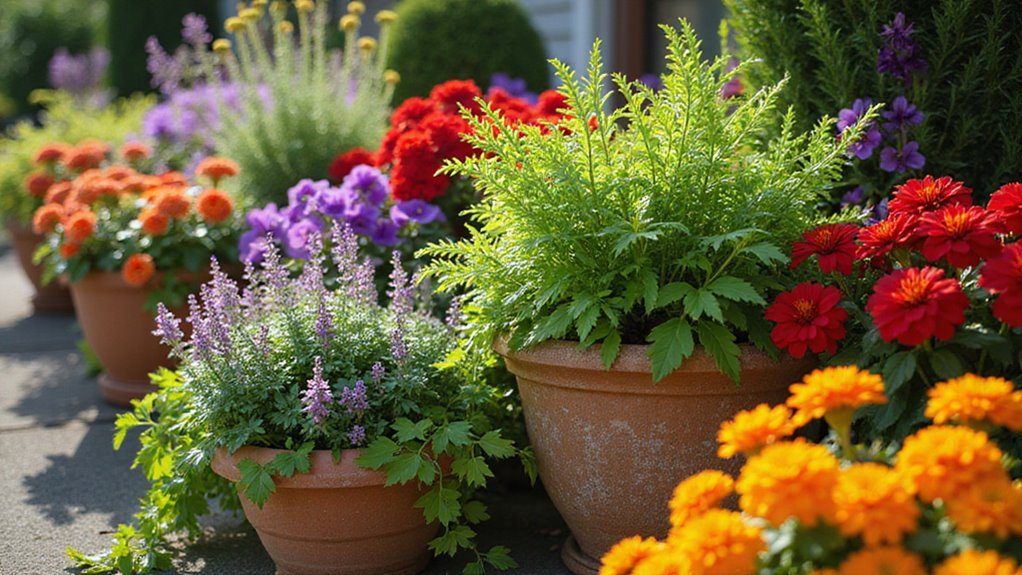
Three key elements can transform your container garden into a stunning visual masterpiece: color, texture, and contrast.
I love experimenting with vibrant color combinations, like pairing blue flowers with orange blooms. For texture mixing, I combine varied leaf shapes and flower forms. Adding natural materials like moss enhances depth, while using neutral backgrounds keeps the focus on my colorful plants.
Creating Rhythm With Repetition
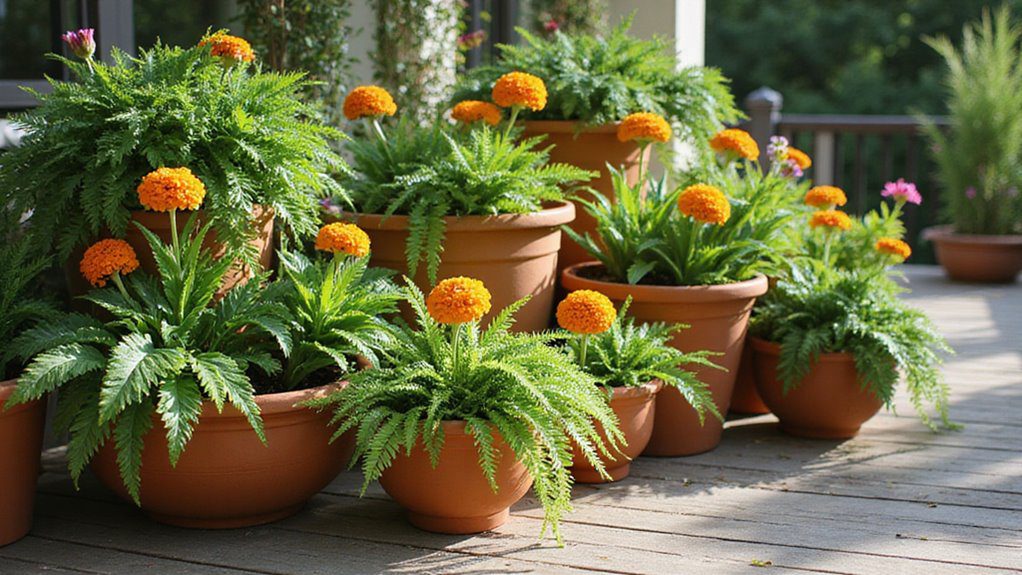
Rhythm plays a crucial role in the overall aesthetic of a container garden, and repetition is the key to achieving that harmonious flow.
Exploring Vertical Gardening Options

Vertical gardening options frequently open up a world of possibilities for maximizing space and enhancing the beauty of your container garden.
I love using vertical supports like trellises for vining plants and creating stunning Hanging Gardens with hanging planters. You can even repurpose materials for unique designs.
Changing Seasonal Themes
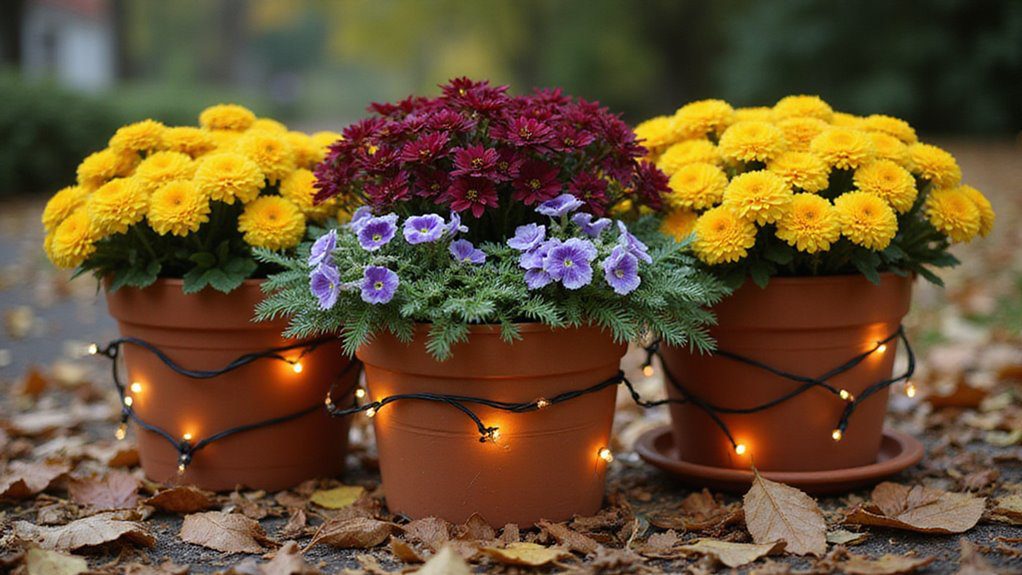
As the seasons change, so can your container garden, allowing you to bring fresh energy and color to your outdoor space.
I love making seasonal updates with themed arrangements. In spring, I fill containers with daffodils and cool-season flowers, while summer showcases vibrant succulents. For fall, I opt for mums, and winter brings in evergreens, ensuring year-round beauty and interest.
Choosing the Right Container Materials

Selecting the right container materials is crucial for the success of your garden, as it directly impacts plant health and aesthetics. I recommend a material comparison: terracotta offers excellent drainage, while coir provides sustainable options. Avoid plastic due to environmental concerns.
For durability, consider stone or metal, but be mindful of heat absorption. Choose wisely to match your plants’ needs and maintain a beautiful garden.
Creative Use of Unconventional Containers

When it comes to container gardening, thinking outside the box can lead to some truly unique and eye-catching displays.
I love using repurposed planters like vintage toolboxes and old kitchen sinks to create whimsical decor. Items like broken pots and galvanized tubs add character, while half-whiskey barrels provide ample planting space.
Embracing these unconventional containers not only enhances beauty but also promotes sustainability.
Essential Plant Care and Maintenance Tips

To keep your container garden thriving, understanding essential plant care and maintenance tips is crucial.
Start with essential watering practices; check soil moisture regularly and adjust frequency, especially in heat.
For proper fertilization, use balanced fertilizers tailored to your plants, applying them every two to three weeks.
This combination ensures your plants remain healthy and vibrant throughout the growing season.