

Creating a butterfly garden is a rewarding endeavor, blending aesthetics with ecological benefits. I’ve found that choosing the right location and selecting the right plants are just the beginning. With a bit of planning and creativity, you can attract a variety of butterflies while also supporting their life cycles. Curious about how to bring this vision to life? Let’s explore the essential elements that make a butterfly garden thrive.
Choosing the Right Location

When I think about creating a butterfly garden, choosing the right location is crucial.
I assess the microclimate, ensuring at least six hours of sunlight and wind protection.
I look for habitat diversity, incorporating natural features like rocks and water sources.
Designing a Diverse Layout

After finding the perfect spot for my butterfly garden, I’m excited to focus on designing a diverse layout that not only attracts these beautiful insects but also creates a visually appealing space.
I’ll use layered planting to create height variation and incorporate sheltered areas with shrubs and stones, providing butterflies safe spots to rest while enhancing the garden’s overall beauty and biodiversity.
Selecting Nectar-Rich Flowers

As I dive into selecting nectar-rich flowers for my butterfly garden, I realize that the right choices can make all the difference in attracting these delicate creatures.
I focus on bright flower colors like purples and yellows, ensuring a mix of perennials and annuals for continuous nectar timing.
Incorporating Host Plants
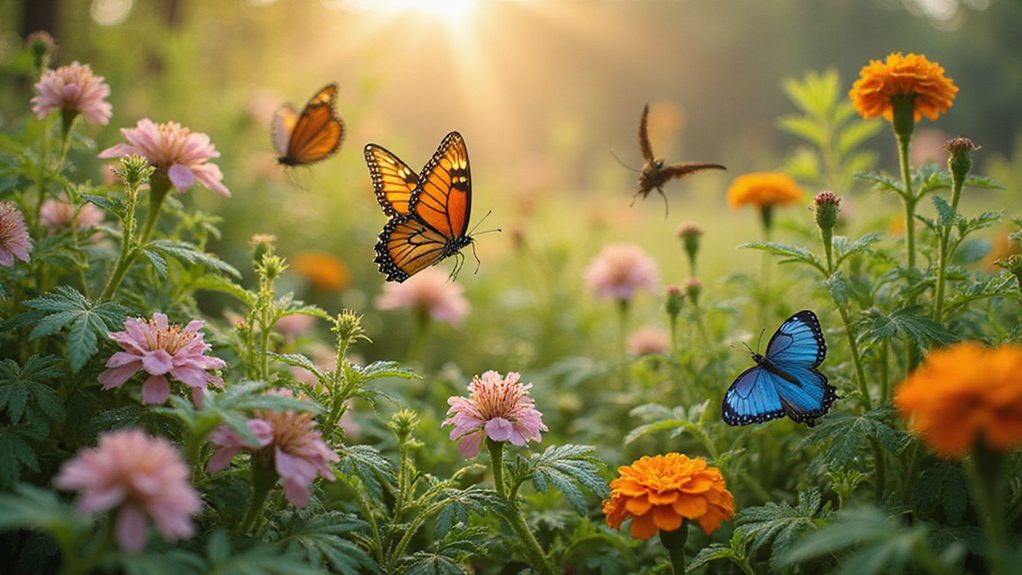
Attracting butterflies isn’t just about nectar-rich flowers; incorporating host plants is equally important for creating a thriving ecosystem.
I focus on plant selection that encourages habitat diversity, like milkweed for monarchs and willow for swallowtails.
These host plants provide essential nutrition for caterpillars, ensuring their growth while enhancing the overall health of my garden.
It’s a delicate balance, but so rewarding!
Utilizing Native Plant Species

Utilizing native plant species in my butterfly garden not only enhances its beauty but also creates a vital habitat for local butterfly populations.
Plants like milkweed and purple coneflower provide essential native nectar, attracting various butterflies.
By choosing native species, I support biodiversity and ensure a resilient butterfly habitat, promoting pollination and overall ecosystem health.
It’s truly rewarding to nurture these local wonders!
Creating Water Features
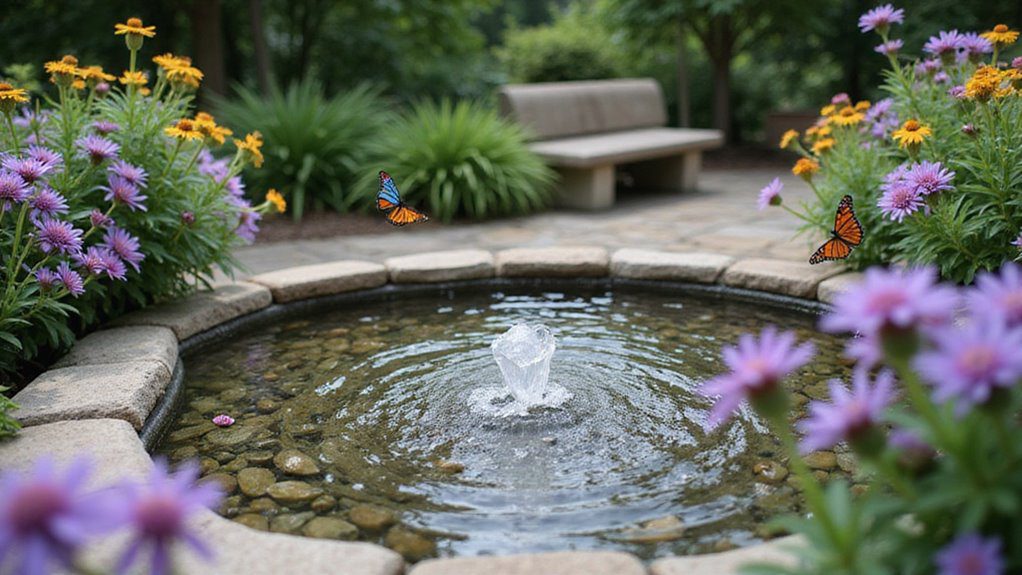
Creating water features in my butterfly garden not only enhances the space’s aesthetic appeal but also provides essential hydration for these delicate creatures.
I love adding puddling stations with fine gravel, allowing butterflies to safely access moisture.
Enhancing Sun Exposure
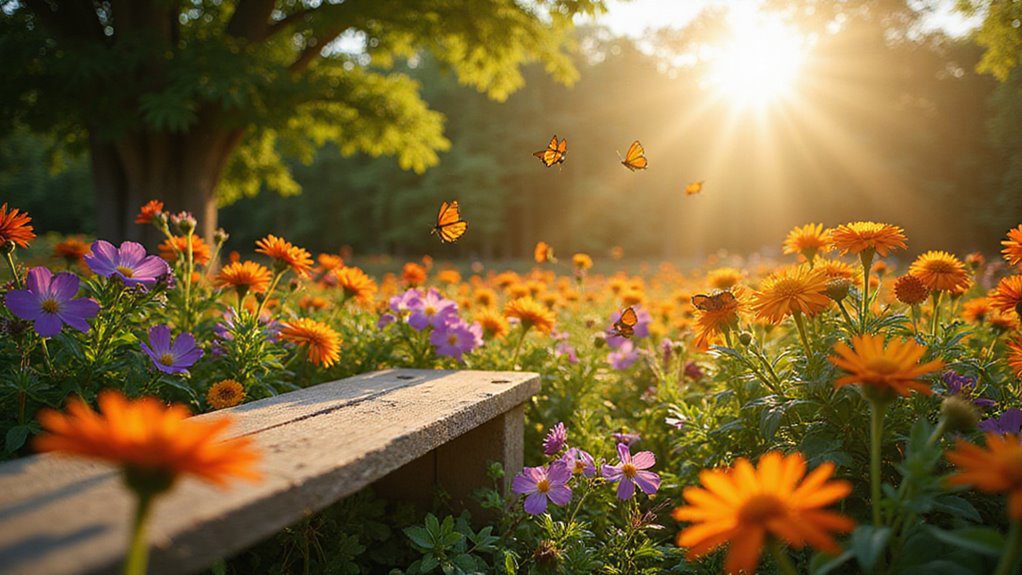
While I’m designing my butterfly garden, I always prioritize sun exposure, knowing how crucial it’s for these beautiful creatures.
I ensure my garden features sunny spots where nectar-rich flowers thrive, like butterfly bush and salvia.
I also incorporate flat rocks as basking surfaces, allowing butterflies to warm up and navigate effortlessly.
It’s all about creating a welcoming, sunlit haven for them!
Adding Puddling Stations

Puddling stations are essential additions to any butterfly garden, and I’ve found they can truly elevate the experience for both butterflies and myself.
These stations offer vital puddling station benefits, supplying essential mineral sources like salts and amino acids.
I set up shallow containers with moist soil and overripe fruit, drawing in various butterflies while enhancing their health and vitality.
It’s a win-win!
Providing Fresh Water Sources
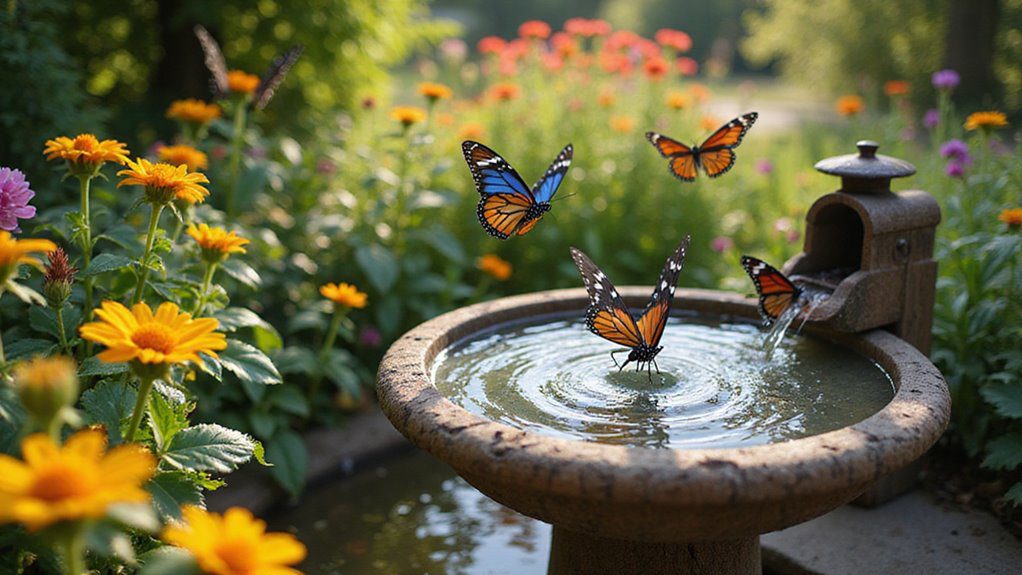
To truly attract butterflies, I’ve learned that providing fresh water sources is just as crucial as offering nectar-rich flowers.
I recommend shallow birdbaths and fountains to ensure butterfly hydration. Placing flat rocks in these features helps them land safely.
Maintaining water quality is key; regular cleaning prevents mosquito larvae, keeping the environment safe and inviting for our delicate visitors.
Implementing Natural Pest Control

As I dive into the world of butterfly gardening, I’ve discovered that implementing natural pest control methods is essential for maintaining a thriving habitat.
I rely on natural repellents like marigolds and thyme, while also inviting beneficial insects such as lady beetles to keep pests at bay.
Regularly inspecting my plants helps ensure a healthy ecosystem, allowing butterflies to flourish in my garden.
Attracting With Additional Foods

While I’ve found that diversifying the plants in my butterfly garden is crucial, adding specific food sources truly enhances the experience for these beautiful creatures.
Incorporating various nectar sources like butterfly bush and zinnia attracts adults, while host plants such as milkweed support caterpillar survival.
Observing butterfly behaviors becomes more rewarding as they thrive in a well-nourished environment.
Engaging the Community
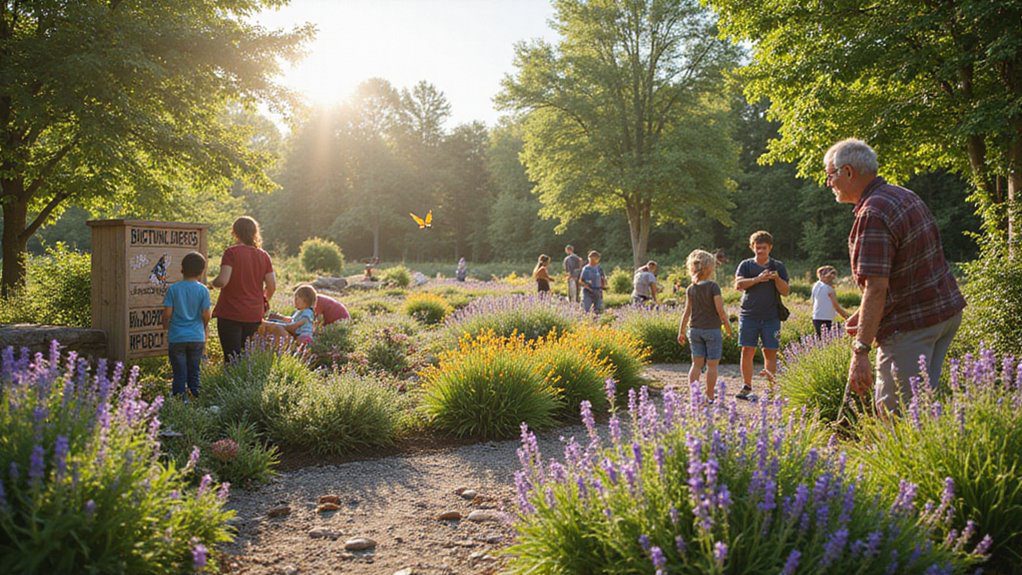
Engaging the community in butterfly gardening can transform a simple plot of land into a vibrant sanctuary for both butterflies and people.
By organizing educational workshops, we can boost community awareness and create volunteer opportunities.
Collaborating with local organizations for events fosters a sense of belonging, while installing informative signage enhances the garden’s educational value.
Together, we can cultivate beauty and awareness.
Maintaining Your Butterfly Garden
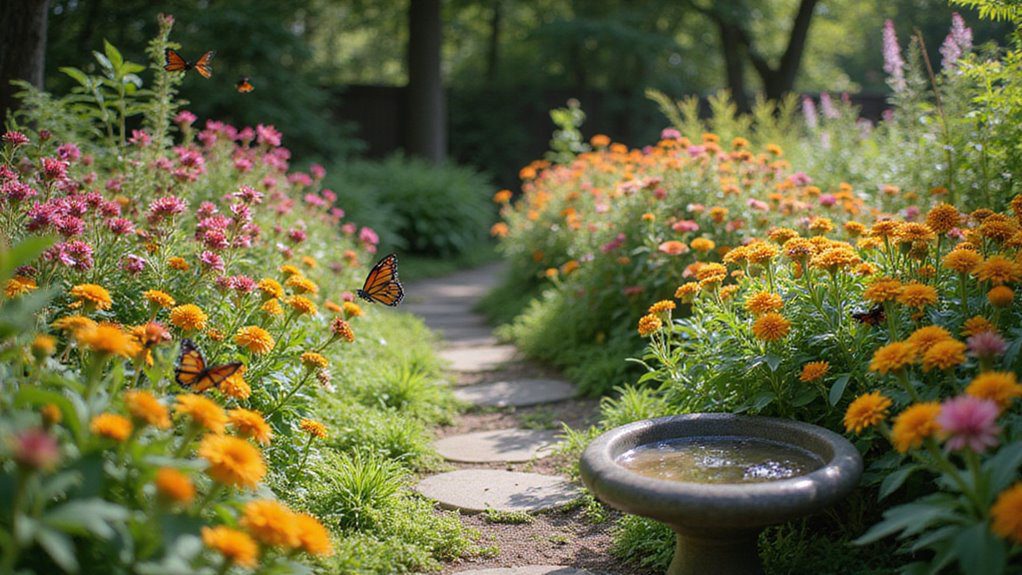
To create a thriving butterfly garden, it’s essential to focus on ongoing maintenance and care.
I make seasonal adjustments by observing plant health and butterfly activity. I keep a garden diary to track these observations, allowing me to adapt my strategies.