

Yes, I can definitely feed my chickens banana peels, but I must prepare them correctly to ensure their safety and enhance their nutritional benefits. Banana peels are rich in potassium and magnesium, which support muscle function and egg production, while the dietary fiber aids in digestion. To prepare, I first rinse the peels thoroughly to remove any pesticides, then chop them into small pieces and boil them to soften. I gradually introduce these to my chickens, always watching for any adverse reactions. By incorporating these peels into their diet, my chickens not only gain improved health but also contribute to a more sustainable environment. There are further nuances to this practice that could optimize the health and productivity of the flock.
Understanding Chicken Diets
Chickens thrive on a varied diet primarily composed of grains, greens, and protein sources, essential for their health and productivity in egg laying.
Introducing fruits like bananas can enrich their nutritional intake, but it’s crucial to strike a balance. A balanced diet, supplemented with these treats, ensures chickens receive all necessary vitamins and minerals.
When feeding bananas, monitoring how your chickens react is key to determining if this food is safe and beneficial for their overall health.
It’s vital to include a mix of appropriate foods to promote natural foraging behaviors and avoid potential health issues from toxic substances.
Including native plants in their environment can also support local pollinators, contributing to ecosystem health.
Always ensure the diet remains diverse and nutritionally adequate to support their growth and egg production.
Benefits of Banana Peels
While considering the diverse diet beneficial for chickens, it’s interesting to note the specific advantages that banana peels offer.
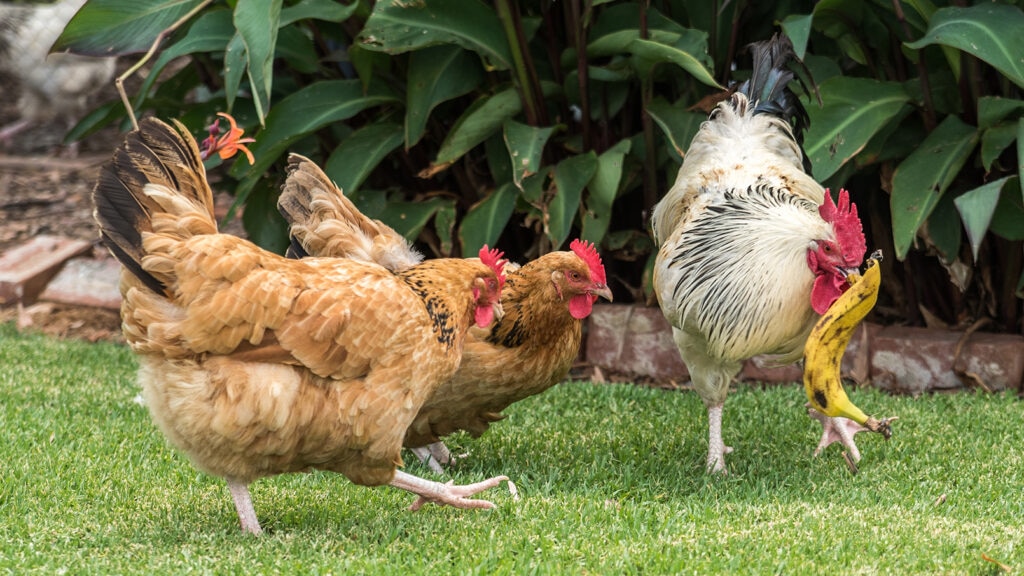
Banana peels, often overlooked, are a powerhouse of essential nutrients that can notably enhance a chicken’s diet. Rich in potassium and magnesium, these peels support vital functions including health maintenance and egg production.
Additionally, the dietary fiber in banana peels aids the digestive system, promoting regular bowel movements and preventing constipation. They’re also low in calories, which helps manage weight and prevents obesity in chickens.
Moreover, the antioxidants present in the peels contribute to improved immune system functions. Just as nitrogen promotes lush green growth in grass, the nutrients in banana peels are crucial for maintaining overall health in chickens.
Incorporating banana peels into their diet can significantly enrich the nutritional value and health benefits, ensuring a balanced intake when combined with other feeds.
Preparation of Banana Peels
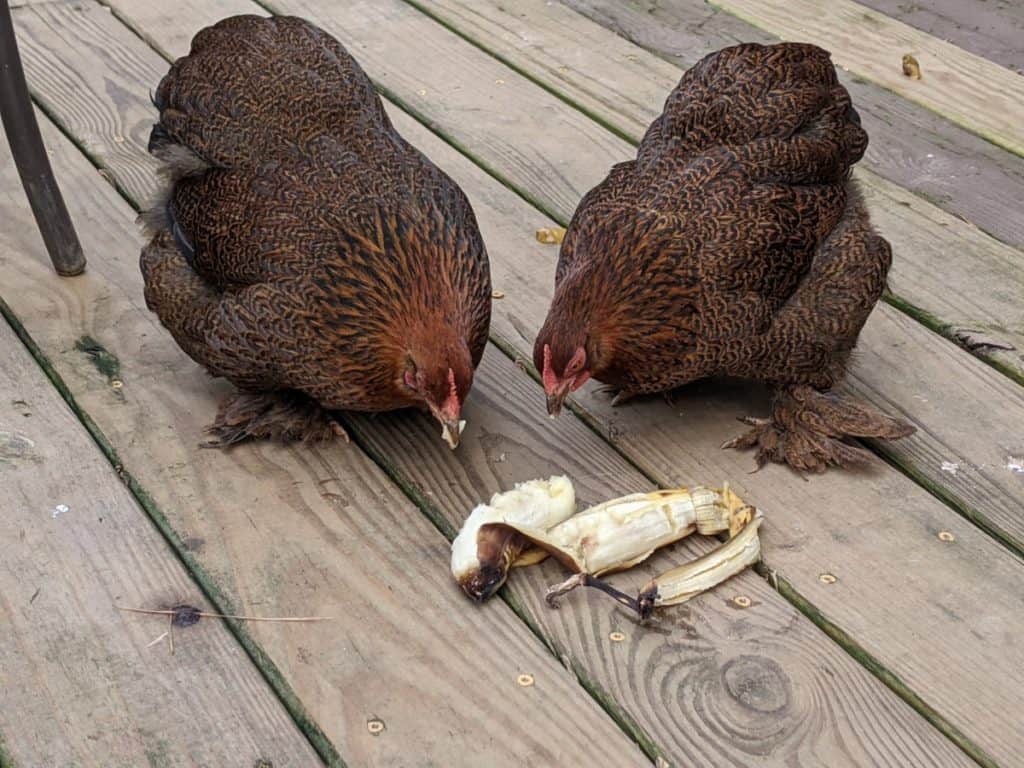
To ensure the safe and effective inclusion of banana peels in your chickens’ diet, begin by thoroughly rinsing the peels to eliminate any pesticides or harmful contaminants.
Next, the preparation process involves chopping the peels into small pieces, enhancing their palatability and making them easier for chickens to consume. Boiling the chopped peels for 20-30 minutes can soften their tough texture, making them more digestible.
For a fun twist, scatter these softened pieces around the yard to stimulate your chickens’ natural foraging behavior. Always remember to gradually introduce banana peels into their feed, monitoring for any adverse reactions.
This careful preparation ensures your chickens enjoy the nutritional benefits without risk.

Safety Guidelines for Feeding
Ensuring the safety of banana peels for your chickens requires careful attention to preparation and serving practices. Here are some key points to remember:
- Wash Thoroughly: Always ensure banana peels are free from pesticides and contaminants by washing them thoroughly. This step is crucial to make banana peels safe for chickens.
- Chop Into Smaller Pieces: To aid digestibility and prevent choking, chop the banana peels into smaller pieces before offering them to your chickens.
- Monitor for Adverse Reactions: Introduce banana peels gradually and watch for any signs of digestive distress or allergic reactions.
Feeding banana peels should complement, not replace, a balanced diet including regular chicken feed.
Avoid overfeeding to prevent nutritional imbalances and maintain a varied diet for optimal health.
Nutritional Impact on Chickens
Banana peels, often discarded as waste, hold significant nutritional benefits for chickens. Rich in potassium, these peels support muscle function crucial for egg production.
Additionally, their dietary fiber content plays a key role in digestion, ensuring chickens maintain a healthy gut for optimal nutrient absorption. When you incorporate banana peels into their diet, you’re not just disposing of waste; you’re enhancing their overall health.
The antioxidant content in the peels strengthens the chickens’ immune system, providing a robust defense against diseases.
However, preparation is essential. Chopping or boiling the peels can enhance their digestibility and maximize their nutritional value, making them a worthwhile addition to a balanced feed for chickens.
Alternative Fruit Options
Beyond banana peels, chickens can benefit from a variety of other fruits like apples (seeds removed), berries, melons, and grapes, all of which are both safe and nutritious.
Peaches and pears also make great alternative fruit options, enhancing your flock’s diet with essential vitamins and hydration.
- Apples and Pears: Loaded with fiber and vitamins, these fruits aid in digestive health but remember to remove all seeds and cores.
- Berries: A powerhouse of antioxidants, berries help boost the immune system of chickens.
- Melons and Grapes: High in water content, they help in keeping your chickens hydrated especially during hot weather.

Always wash fruits thoroughly and serve in moderation to maintain a balanced diet and prevent any health issues.
Environmental Considerations
While exploring various fruits for chicken diets, it’s equally important to consider the environmental benefits of incorporating kitchen scraps like banana peels into their feed.
Feeding banana peels to chickens not only reduces landfill contributions but also recycles organic materials, turning potential food waste into a sustainable supplement. This practice exemplifies eco-friendly practices within backyard farming.
By educating chicken owners on these benefits, we foster a greater awareness of sustainable poultry management. Monitoring the environmental impact is crucial to ensure that this recycling doesn’t attract pests or contribute to food waste in the coop.
Ultimately, using banana peels as part of chicken feed promotes a circular economy and enhances the sustainability of our daily living practices.

Community Engagement Insights
Community chicken owners’ forums have proven to be invaluable resources for sharing insights and experiences about feeding banana peels to poultry. Through these platforms, I’ve learned that:
- Trial-and-error approaches are encouraged to identify chickens’ preferences for banana peels.
- Seasonal adjustments in feeding can optimize nutrition and enhance chicken health.
- Resource exchange among community members promotes shared learning and innovative feeding practices.
Community discussions on chicken care forums highlight the diverse feeding practices and the value of personal experiences in refining poultry diets.
Engaging in these dialogues has underscored the importance of adapting feeding strategies like incorporating banana peels, fostering a collaborative environment that supports the well-being and nutritional needs of chickens through collective wisdom and trial results.