
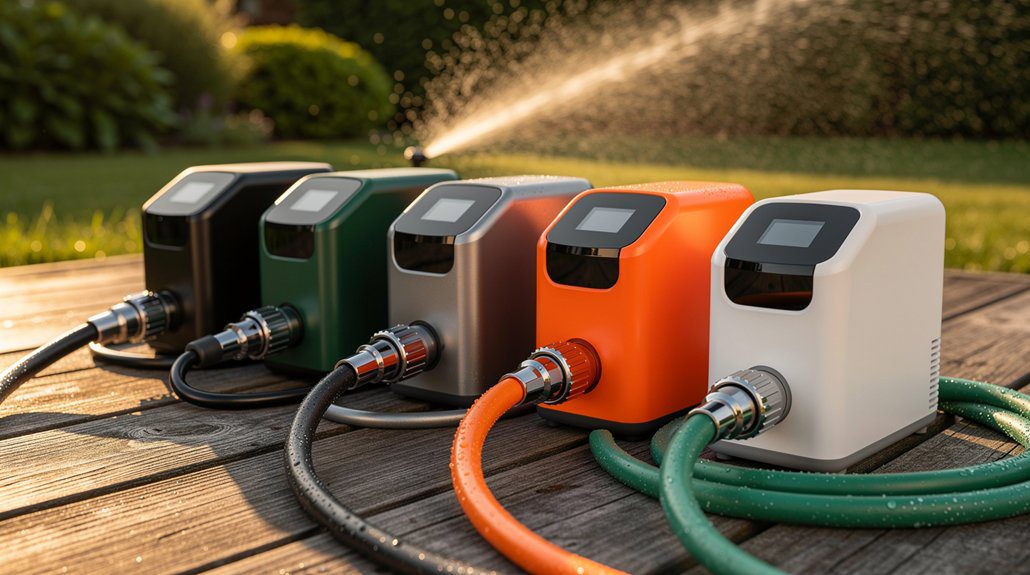
Looking for the best electric pump for a garden hose in 2026? Pick from five reliable options: a 115V 1/10HP transfer pump kit for quick priming and corrosion resistance; ECO-WORTHY’s 4.0 GPM RV diaphragm pump for quiet pressure control; Trupow’s portable 1/10HP stainless pump for lightweight draining; Tdrsuper’s 75 PSI booster diaphragm for high-pressure needs; and VEVOR’s 360 GPH aluminum transfer pump for compact, durable use—keep scrolling to see specs, pros, and fit for your tasks.
| 115V 1/10HP Electric Water Transfer Pump Kit | 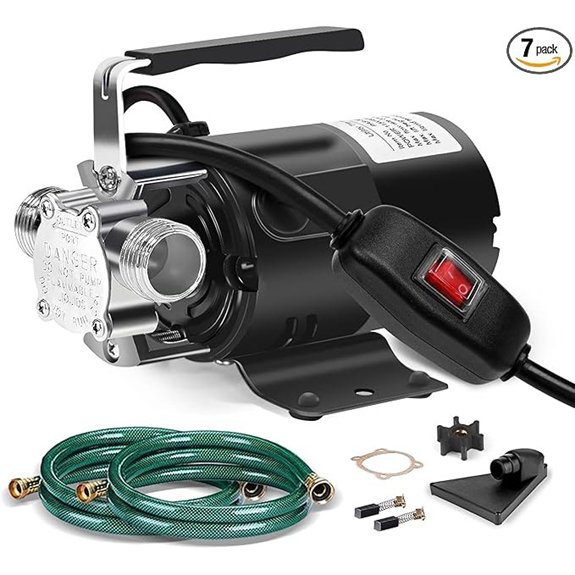 | Versatile Utility | Power / Voltage: 115V AC / 60 Hz | Flow Rate: 5.5 GPM (330 GPH) | Maximum Lift / Head: 42 feet maximum lifting height | VIEW LATEST PRICE | Read Our Analysis |
| ECO-WORTHY 33-Series 110V 4.0GPM RV Water Pump | 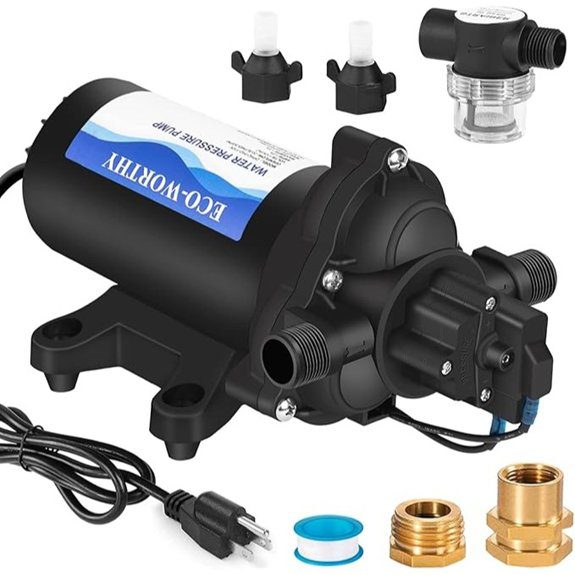 | Pressure-Controlled | Power / Voltage: 110V AC | Flow Rate: 4.0 GPM | Maximum Lift / Head: up to ~131–148 feet (lift reported) | VIEW LATEST PRICE | Read Our Analysis |
| Trupow 115V 1/10HP Portable Water Transfer Pump | 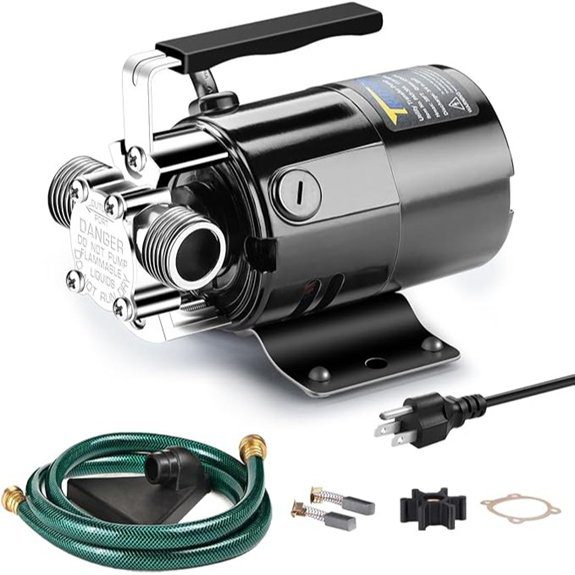 | Reliable Classic | Power / Voltage: 115V AC | Flow Rate: 5.5 GPM (330 GPH) | Maximum Lift / Head: 39 feet maximum lifting height | VIEW LATEST PRICE | Read Our Analysis |
| Tdrsuper 110V Water Pressure Booster Diaphragm Pump | 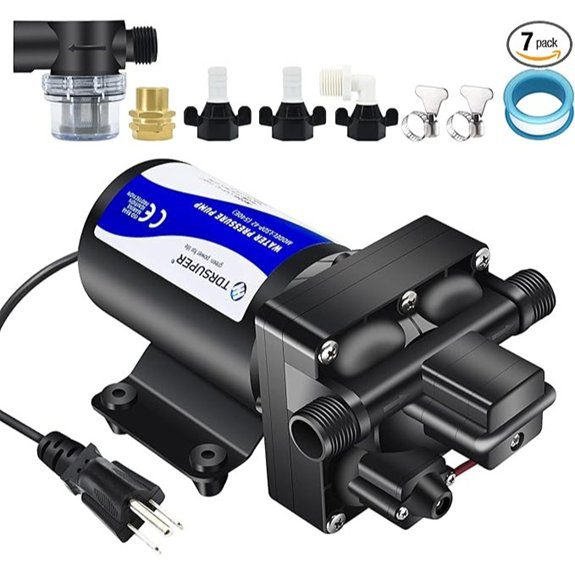 | High-Pressure Booster | Power / Voltage: 110V AC | Flow Rate: 5.5 GPM | Maximum Lift / Head: up to 164 feet lift | VIEW LATEST PRICE | Read Our Analysis |
| VEVOR 115V 360 GPH Portable Water Transfer Pump | 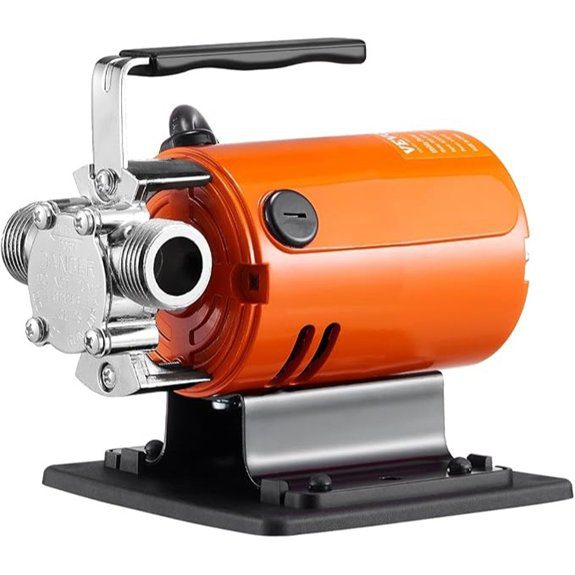 | Sturdy Performer | Power / Voltage: 115V AC | Flow Rate: 6.0 GPM (360 GPH) | Maximum Lift / Head: 46 feet maximum lift | VIEW LATEST PRICE | Read Our Analysis |
More Details on Our Top Picks
115V 1/10HP Electric Water Transfer Pump Kit
If you need a compact, reliable pump to move water from barrels, pools, or a flooded basement, the 115V 1/10HP Electric Water Transfer Pump is a smart choice — it delivers 5.5 GPM, self-primes quickly, and lifts up to 42 feet while running quietly and resisting corrosion thanks to its zinc alloy volute and stainless components. You’ll get a 115V, 1/10 HP copper-wound motor with waterproof on/off switch, two 6 ft suction hoses, strainer, and impeller kit. It suctions to 1/8 inch, needs priming before use, and benefits from edible-oil lubrication for longer life. Use supplied hoses for best performance.
- Power / Voltage:115V AC / 60 Hz
- Flow Rate:5.5 GPM (330 GPH)
- Maximum Lift / Head:42 feet maximum lifting height
- Self-Priming Capability:Self-priming
- Included Suction Hose / Strainer:2 × 6 ft suction hoses + suction strainer attachment
- Motor / Construction Materials:Copper wire motor; zinc alloy volute; stainless steel components
- Additional Feature:Waterproof on/off switch
- Additional Feature:Replaceable impeller kit
- Additional Feature:Edible-oil lubrication tip
ECO-WORTHY 33-Series 110V 4.0GPM RV Water Pump
For campers and gardeners who need a reliable, mains-powered boost, the ECO-WORTHY 33-Series 110V 4.0 GPM diaphragm pump delivers quiet, automatic pressure control without a battery. You get 4.0 GPM flow and an adjustable pressure switch that activates around 50 PSI (45–70 PSI range). The 110V AC unit is self-priming to about 9.8 feet, can lift water over 100 feet, and runs continuously for extended periods with thermal overload protection above 95°C. Metal construction, included garden-hose adapters, and a compact 9.45 x 5.31 x 5.12-inch footprint make it ideal for RV, marine, and irrigation tasks.
- Power / Voltage:110V AC
- Flow Rate:4.0 GPM
- Maximum Lift / Head:up to ~131–148 feet (lift reported)
- Self-Priming Capability:Self-priming up to 9.8 vertical feet
- Included Suction Hose / Strainer:Included garden hose adapters (diaphragm pump)
- Motor / Construction Materials:Metal diaphragm pump (metal construction noted)
- Additional Feature:Smart pressure switch
- Additional Feature:Adjustable pressure range
- Additional Feature:Thermal overload protection
Trupow 115V 1/10HP Portable Water Transfer Pump
Choose the Trupow 115V 1/10HP Portable Water Transfer Pump when you need a compact, stainless-steel unit that moves up to 330 gallons per hour and hooks directly to a 3/4″ garden hose for quick pool draining, rain barrel emptying, or flooded-basement cleanup. You’ll get a 1/10 HP pure-copper motor, 39-foot lift capability, and a lightweight 5.2-pound footprint that’s easy to carry with its non-slip handle. The PAS-30 includes a 6-foot suction hose, strainer (down to 1/8″), metal hose connectors, and spare carbon brushes and impeller. It’s tested by the maker, backed by support, and fits many household water tasks.
- Power / Voltage:115V AC
- Flow Rate:5.5 GPM (330 GPH)
- Maximum Lift / Head:39 feet maximum lifting height
- Self-Priming Capability:Self-priming (clear air from hose recommended)
- Included Suction Hose / Strainer:6 ft inlet suction hose + inlet suction strainer
- Motor / Construction Materials:Pure copper motor; stainless steel and carbon steel housing
- Additional Feature:Metal hose connectors
- Additional Feature:Non-slip carrying handle
- Additional Feature:Replacement carbon brushes
Tdrsuper 110V Water Pressure Booster Diaphragm Pump
Homeowners and RV owners who need a compact, low-power boost in water pressure will find the Tdrsuper 110V diaphragm pump an excellent fit, thanks to its 5.5 GPM flow and factory-set 75 PSI (adjustable) output. You’ll appreciate self-priming to 9.8 feet, 164-foot lift capability, and the ability to run dry without damage. It starts when you open a tap and stops when you close it, with overload/overheat protection and corrosion-resistant valves. Pure copper motor, CE certification, anti-vibration mounting, and included filter, fittings, Teflon tape, spanner, and 180-day warranty make installation and service straightforward.
- Power / Voltage:110V AC
- Flow Rate:5.5 GPM
- Maximum Lift / Head:up to 164 feet lift
- Self-Priming Capability:Self-priming up to 9.8 vertical feet
- Included Suction Hose / Strainer:Filter with 50-mesh stainless steel screen (plus hose fittings)
- Motor / Construction Materials:Pure copper motor; corrosion-resistant valves; iron mounting bracket
- Additional Feature:Automatic start/stop
- Additional Feature:Anti-vibration mounting
- Additional Feature:CE certified
VEVOR 115V 360 GPH Portable Water Transfer Pump
If you need a lightweight, portable pump that handles routine water-transfer tasks without fuss, the VEVOR 115V 360 GPH is a strong pick—its 1/10 HP motor moves up to 360 GPH (about 6 GPM) while the compact aluminum-alloy body and carry handle make it easy to tote between tanks, rain barrels, or shallow flood spots. You’ll appreciate the flat base for stability, electrostatic-coated finish that resists stains and corrosion, and included 6 ft suction hose, strainer, spare impeller, and carbon brushes. Prime before first use, avoid submerged operation or running dry, and expect up to 46 ft lift.
- Power / Voltage:115V AC
- Flow Rate:6.0 GPM (360 GPH)
- Maximum Lift / Head:46 feet maximum lift
- Self-Priming Capability:Self-priming (prime inlet before first use)
- Included Suction Hose / Strainer:6 ft suction hose + water suction strainer
- Motor / Construction Materials:Aluminum alloy body; sturdy/wear-resistant construction
- Additional Feature:Electrostatic surface finish
- Additional Feature:Flat stable base
- Additional Feature:Spare carbon brushes included
Factors to Consider When Choosing an Electric Pump for Garden Hose
When picking an electric pump for your garden hose, you’ll want to match flow rate to how much water you need and check the pressure the pump can sustain. Decide between centrifugal or diaphragm types, consider whether you’ll use mains power, battery, or a hybrid option, and verify the pump’s suction lift for drawing from tanks or ponds. These factors together determine performance, efficiency, and suitability for your setup.
Flow Rate Needs
Typically you’ll match a pump’s flow rate (GPM) to the tasks you plan to do—light watering and single hoses usually need 4–6 GPM, while multiple sprinklers or long runs call for 6+ GPM to maintain coverage. Start by totaling the GPM of all outlets you’ll run at once (two hoses at 3 GPM each = 6 GPM) and add about 10–20% margin for losses and future expansion. Know advertised GPMs are at zero head; flow drops with vertical lift and hose friction, so size up if you have long runs or elevation change. For drip systems or low-pressure fixtures pick a pump with stable low-flow performance and adjustable output, not just a high GPM rating.
Required Water Pressure
Because pressure determines how well water reaches and sprays from your hose, pick a pump that reliably delivers the PSI range your fixtures need—most garden hoses and spray nozzles work best between about 20–60 PSI. Decide whether you’ll run multiple sprinklers or high-pressure nozzles at once; add expected losses and choose a pump with higher PSI or adjustable output to hold flow. Remember elevation: every 2.31 feet up costs ~1 PSI, so factor extra head for uphill watering. Account for hose friction—longer or narrower lines can drop several PSI—so leave a pressure margin. If you use pressurized manifolds or auto shutoff valves, match the pump’s pressure switch or compatible controller to your target activation range (for example, 45–75 PSI).
Pump Type Choice
Now that you’ve matched pump pressure to your hoses and fixtures, pick a pump type that fits how you’ll use water. If you need steady pressurized delivery—irrigation, RV or onboard use—choose a diaphragm/pressure-activated pump; it self-primes, tolerates small particulates, often cycles automatically at set PSI (e.g., 45–75), and keeps output consistent. For moving large volumes fast—draining, filling or bulk transfer—use a centrifugal (utility/transfer) pump; it gives higher GPM but usually needs priming, runs continuously, and struggles at low water levels. If you must draw from very shallow sources, want quiet operation, or need submerged installation, pick a submersible pump; it handles low suction depths well but must stay underwater and be protected from debris. Consider solids-handling and suction-lift limits for each.
Power Source Options
Several clear power choices will shape what your pump can do and where you can use it. You’ll pick mains-powered 110–125 VAC units for continuous, higher-flow jobs or portable battery/solar models for off-grid flexibility. Check power ratings: small utility pumps run near 0.1 HP (≈75 W) while boosters or diaphragm units can draw several hundred watts, which directly affects flow and head. Match voltage and wattage to avoid tripped breakers or drained batteries. Verify current and plug type—AC pumps list amperage (≈1–2 A for light units) and need compatible outlets; DC/battery models require correct voltage and connectors. Finally, prefer pumps with appropriate duty cycle and thermal protection—thermal overload or auto-shutoff prevents overheating during prolonged use.
Suction And Lift
After you’ve picked a power source, check how far and how high the pump can move water: suction (how far it can draw water up) is typically limited to about 9–10 feet for small utility pumps, while lift or discharge head (how high it can push water) can range from roughly 30 to 160+ feet depending on design. You’ll need to match suction capability to your source depth and keep suction hoses short, straight, airtight, and free of kinks to avoid cavitation and meet NPSHr. Remember self-priming pumps still require initial priming and only clear water down to a small residual depth. Finally, compare the pump’s maximum lift to your outlet elevation plus expected friction losses to ensure adequate nozzle flow.
Hose And Fitting Size
Size matters when you hook a pump to a garden hose: match the pump’s discharge thread to your hose (usually 3/4 in.) or fit a proper adapter to prevent leaks and pressure loss, and choose larger hose diameters for longer runs to cut friction and preserve flow. You should also ensure the inlet/suction hose I.D. is at least as large as the pump inlet to avoid cavitation and loss of suction; an undersized suction hose lowers effective head and flow. Use short, straight runs with smooth fittings and gradual bends—tight turns, many fittings, or restrictive nozzles increase head loss and reduce GPM. Finally, pick barbed, threaded, or quick-connect fittings rated for the pump’s operating pressure to prevent blow-offs.
Durability And Materials
Because your pump will spend a lot of time exposed to water, soil, and garden chemicals, pick models built from corrosion-resistant metals like stainless steel, aluminum alloys, or zinc-alloy volutes to avoid premature deterioration. You’ll also want motors with copper windings and sturdy housings—copper resists overheating and lasts longer during continuous runs. Check for replaceable wear parts (impellers, carbon brushes, seals) and easy-to-find spare kits so repairs aren’t a headache. Protective features such as thermal overload/overheat protection and sealed or waterproof switches prevent moisture ingress and motor damage. Finally, favor construction that reduces wear: solid mounting or base plates, anti-vibration supports, and strainers or screens to keep debris out of pump internals for reliable, long service life.