
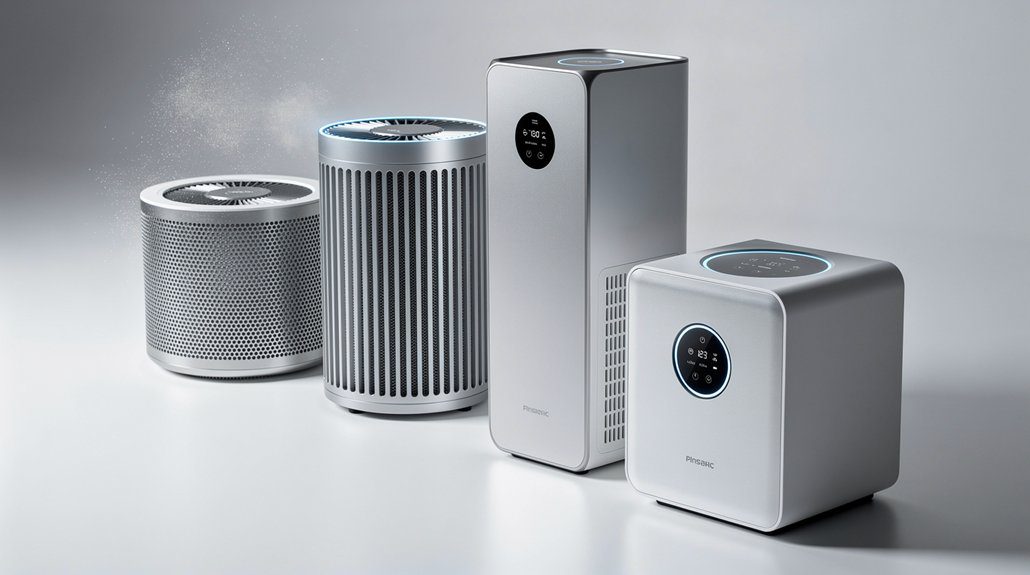
You’ll want a quiet true‑HEPA unit sized for multiple ACH: Levoit Core300‑P is compact and near‑silent with specialty filters; MOOKA’s H13 combo adds activated carbon and very low noise; KNKA APH4000 offers strong CADR, dual airflow and AQI feedback; PuroAir 240 promises rapid whole‑room cleaning and US support; Afloia covers large areas with ultra‑quiet sleep mode. Pair HEPA + pre‑filter, aim for 4–5 ACH in bedrooms, and keep filters fresh to actually cut mite allergens — more details follow.
| LEVOIT Core300-P Air Purifier for Home (White) | 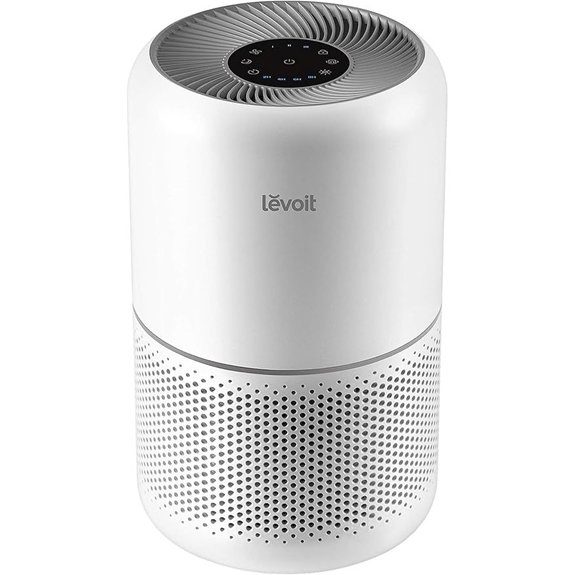 | Best for Bedrooms | Coverage / Room Size: Refreshes air in 222 ft² room 4.8×/hr; 1,073 ft² once/hr | Filtration Stages / Filter Type: 3-in-1 filter (HEPA-grade + options: toxin absorber, smoke, pet) | Removes / Targets: Pollen, dust, animal dander, smoke, odors, VOCs (depending on filter) | VIEW LATEST PRICE | Read Our Analysis |
| MOOKA H13 HEPA Air Purifier for Large Rooms | 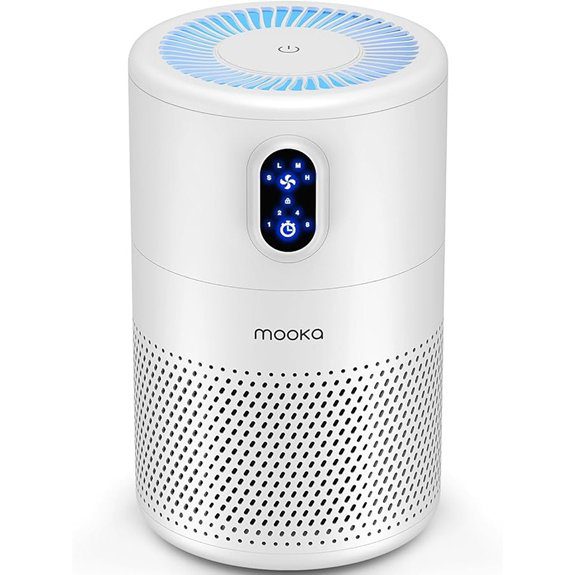 | Ultra-Quiet Choice | Coverage / Room Size: Covers up to 1,076 ft²; 6×/hr in 215 ft²; 1×/hr in 1,076 ft² | Filtration Stages / Filter Type: 3-stage (pre-filter, H13 True HEPA, activated carbon) | Removes / Targets: Pet hair/dander, smoke, odors, large dust particles | VIEW LATEST PRICE | Read Our Analysis |
| KNKA HEPA Air Purifier for Large Rooms (APH4000) | 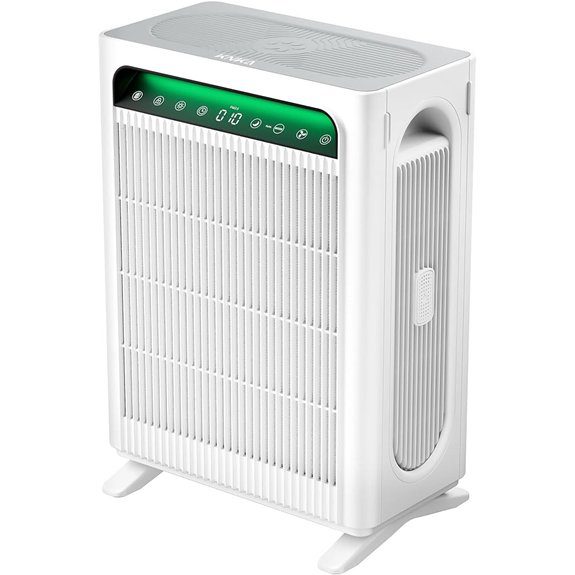 | Best for Large Spaces | Coverage / Room Size: 4.8×/hr in 350 ft²; 1×/hr in 1,695 ft² | Filtration Stages / Filter Type: Dual 3-stage per cartridge (washable pre-filter, True HEPA, activated carbon) | Removes / Targets: Pet hair/dander, dust, pollen, microscopic particles, odors | VIEW LATEST PRICE | Read Our Analysis |
| PuroAir 240 HEPA Air Purifier for Large Rooms | 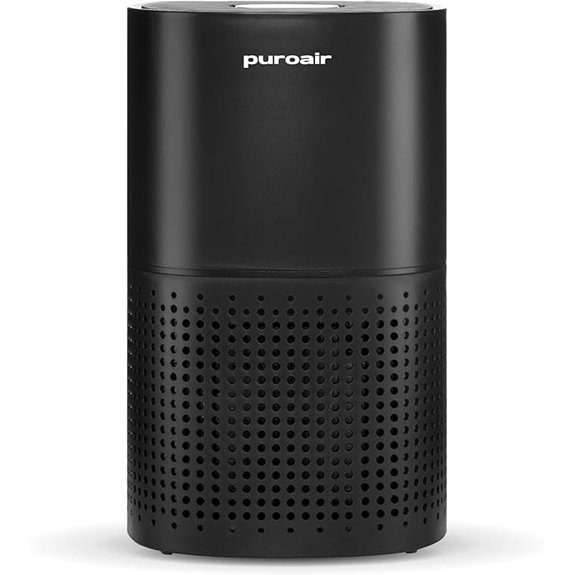 | Smart Sleep Pick | Coverage / Room Size: Cleans up to 1,000 ft² in one hour | Filtration Stages / Filter Type: 3-layer (pre-filter, HEPA, activated carbon) | Removes / Targets: Dust, pollen, smoke, pet dander, VOCs | VIEW LATEST PRICE | Read Our Analysis |
| Afloia Air Purifier for Large Rooms (Up to 1076 ft²) | 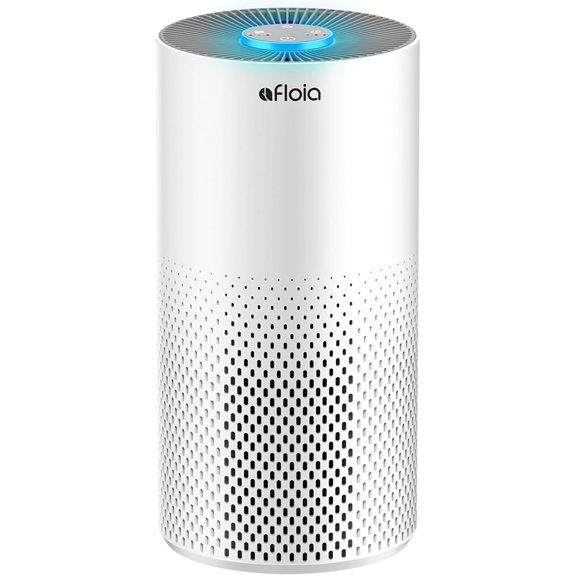 | Best for Allergies | Coverage / Room Size: Purifies up to 1,076 ft² in one hour; 4×/hr in 269 ft² | Filtration Stages / Filter Type: Advanced imported 3-stage (triple-stage) filter | Removes / Targets: Pet dander, dust, pollen, smoke, mold, odors | VIEW LATEST PRICE | Read Our Analysis |
More Details on Our Top Picks
LEVOIT Core300-P Air Purifier for Home (White)
If you’re looking for a compact, bedroom-ready purifier that tackles dust and allergens quietly, the LEVOIT Core300-P is a strong choice — it refreshes a 222 ft² room nearly five times an hour, uses a true HEPA-grade filter to capture 99.97% of 0.1–0.3 μm particles, and drops to a near-silent 24 dB in Sleep Mode so it won’t disturb your sleep. You’ll get AHAM-verified CADR (167 pollen, 153 dust, 143 smoke), a 56W motor, and CARB/ETL/FCC compliance. Choose genuine 3-in-1 filters or specialty options (Smoke, Toxin, Pet) for targeted dust-mite and allergen control.
- Coverage / Room Size:Refreshes air in 222 ft² room 4.8×/hr; 1,073 ft² once/hr
- Filtration Stages / Filter Type:3-in-1 filter (HEPA-grade + options: toxin absorber, smoke, pet)
- Removes / Targets:Pollen, dust, animal dander, smoke, odors, VOCs (depending on filter)
- Noise / Sleep Mode Level:Sleep Mode ~24 dB (QuietKEAP)
- Timers / Modes:Timer 2/4/6/8 hrs; Sleep Mode; display off; fan modes
- Filter Replacement Interval / Maintenance:Recommend genuine replacement filters (interval varies; implied regular replacement)
- Additional Feature:AHAM VERIFIDE certified
- Additional Feature:FCC & ETL listed
- Additional Feature:QuietKEAP Sleep Mode
MOOKA H13 HEPA Air Purifier for Large Rooms
Choose the MOOKA H13 HEPA if you need quiet, whole-room filtration—its H13 True HEPA and activated carbon stages capture dust, pet dander, and particles down to 0.3 microns while handling spaces up to 1,076 ft² (or providing six air changes/hour in a typical 215 ft² bedroom). You’ll get a 3-stage system that removes pet hair, smoke, odors, and large dust. The brushless motor runs around 20 dB and uses little power; child lock adds safety. Use four fan modes and timers, disable the night light if desired, and replace filters every 3–6 months. Customer support is available.
- Coverage / Room Size:Covers up to 1,076 ft²; 6×/hr in 215 ft²; 1×/hr in 1,076 ft²
- Filtration Stages / Filter Type:3-stage (pre-filter, H13 True HEPA, activated carbon)
- Removes / Targets:Pet hair/dander, smoke, odors, large dust particles
- Noise / Sleep Mode Level:Sleep Mode ~20 dB (ultra-quiet)
- Timers / Modes:Timer 1/2/4/8 hrs; 4 fan modes (Sleep, Low, Med, High); night light
- Filter Replacement Interval / Maintenance:Replace filter every 3–6 months (depends on use)
- Additional Feature:Child lock feature
- Additional Feature:Brushless ultra-quiet motor
- Additional Feature:Soft night light
KNKA HEPA Air Purifier for Large Rooms (APH4000)
For homes with pets or large open living areas, the KNKA APH4000 stands out because its dual intake/outlet design and strong CADR (226–244 CFM) circulate air fast enough to cut allergens and pet dander in big rooms—refreshing air nearly five times an hour in spaces up to 350 ft² and offering full-hour refresh capability in much larger areas. You’ll get dual cartridges with 3-stage filters (washable pre-filter, True HEPA, activated carbon) that trap hair, dander, dust, pollen, and PM2.5. Use PET, Auto, ECO, or Sleep modes, watch the AQI display, and replace genuine KNKA filters every 3–6 months.
- Coverage / Room Size:4.8×/hr in 350 ft²; 1×/hr in 1,695 ft²
- Filtration Stages / Filter Type:Dual 3-stage per cartridge (washable pre-filter, True HEPA, activated carbon)
- Removes / Targets:Pet hair/dander, dust, pollen, microscopic particles, odors
- Noise / Sleep Mode Level:Sleep Mode 22–24 dB (ultra-quiet)
- Timers / Modes:Auto, ECO, PET, Sleep modes; four fan speeds; Auto Mode
- Filter Replacement Interval / Maintenance:Replace filters every 3–6 months; remove plastic before install
- Additional Feature:Dual intake/outlet design
- Additional Feature:Built-in real-time AQI
- Additional Feature:PET Mode rapid refresh
PuroAir 240 HEPA Air Purifier for Large Rooms
The PuroAir 240 HEPA is ideal when you need fast, whole-room relief from dust mites and other allergens—its proven ability to clean up to 1,000 sq ft in an hour makes it a strong choice for large living areas or open-plan homes. You’ll get a 3-layer system (pre-filter, HEPA, activated carbon) that captures particles 700× smaller than hair and removes up to 99.9% of dust, pollen, smoke, pet dander, and VOCs. A smart particle sensor ramps power as needed, and sleep mode keeps operation quiet. Certified (CARB, ETL, ISO, UL), it includes a 2-year warranty and US-based support.
- Coverage / Room Size:Cleans up to 1,000 ft² in one hour
- Filtration Stages / Filter Type:3-layer (pre-filter, HEPA, activated carbon)
- Removes / Targets:Dust, pollen, smoke, pet dander, VOCs
- Noise / Sleep Mode Level:Built-in sleep mode for quiet 24/7 operation (quiet level not specified)
- Timers / Modes:Smart auto mode (particle sensor) and sleep mode; continuous operation
- Filter Replacement Interval / Maintenance:Implied regular replacement (standard HEPA/carbon maintenance; lab-tested continuous use)
- Additional Feature:ISO 17025 lab tested
- Additional Feature:SleepScore sleep-tested benefits
- Additional Feature:2-year risk-free warranty
Afloia Air Purifier for Large Rooms (Up to 1076 ft²)
If you need an air purifier that can clear large open spaces quickly, the Afloia handles rooms up to 1,076 ft² in an hour and gives four full air changes per hour in spaces up to 269 ft², making it a strong pick for allergy sufferers with big living areas. You’ll get an imported 3-stage filter that traps pet dander, dust, pollen, smoke, mold, and hair while neutralizing household odors. It offers specialized replacement filters for pet allergy or antibacterial needs, ultra-quiet 22 dB sleep mode, 7-color auto-dimming lighting, adjustable fan speeds, and 2/4/8-hour timers. Replace filters every 4–6 months.
- Coverage / Room Size:Purifies up to 1,076 ft² in one hour; 4×/hr in 269 ft²
- Filtration Stages / Filter Type:Advanced imported 3-stage (triple-stage) filter
- Removes / Targets:Pet dander, dust, pollen, smoke, mold, odors
- Noise / Sleep Mode Level:Sleep Mode ~22 dB (white noise)
- Timers / Modes:Timer 2/4/8 hrs; adjustable fan speeds; Sleep Mode
- Filter Replacement Interval / Maintenance:Replace filters every 4–6 months; specialized replacement filter options
- Additional Feature:7-color atmosphere lighting
- Additional Feature:Imported advanced filter
- Additional Feature:Multiple specialty filters
Factors to Consider When Choosing an Air Purifier for Dust Mites
When choosing an air purifier for dust mites, you’ll want to focus on HEPA filtration efficiency and the smallest particle sizes the unit can capture. Check the CADR and coverage to match your room, and consider airflow and circulation for effective distribution. Also note filter replacement frequency so performance stays consistent over time.
HEPA Filtration Efficiency
Because dust-mite allergens mostly sit in the 0.5–10 µm range, you’ll want a true HEPA filter that captures at least 99.97% of particles down to 0.3 µm and still performs well for smaller fragments via diffusion and interception. Choose a purifier sized to deliver multiple air changes per hour so room air repeatedly passes the HEPA element—single-pass efficiency won’t help if airflow is too low. Inspect housing seals and avoid “HEPA-like” or electrostatic-only claims; leaks or non-rated media cut real-world capture dramatically. Follow manufacturer replacement intervals (commonly 3–12 months) because clogged or aged filters reduce airflow and efficiency. In short: prioritize certified HEPA, proper sizing, airtight construction, and timely filter replacement to cut dust-mite allergen exposure.
Particle Size Capture
Often you’ll find that the particles carrying dust-mite allergens are much larger than people expect. Mite feces and fragments typically fall in the 10–40 micron range, so a true HEPA filter—which captures 99.97% of particles down to 0.3 microns—will remove the bulk of allergenic material. You won’t rely on filtration alone: because whole mites (~200–300 microns) rarely become airborne, it’s their smaller fragments you need to catch. Choose a purifier with a genuine HEPA stage plus a pre-filter or larger-pore stage to trap hair and fibers, extending HEPA life. Also ensure good room circulation so suspended allergenic fragments pass through the filter regularly; frequent air exchanges raise the odds that HEPA will capture what’s in the air.
CADR And Coverage
If you want an air purifier that actually reduces dust-mite allergens, pay attention to CADR and true coverage, not just the room-size label. You should aim for 4–5 air changes per hour (ACH) where you sleep or spend most time; calculate required CADR from room volume: CADR ≈ (room volume × ACH) / 60. For example, a 250 ft² room with 8 ft ceilings (~2000 ft³) needs roughly 133 CFM for 4 ACH. Prioritize CADR ratings for dust or pollen—these target the ~1–10 µm particles that carry mite allergens. Check whether the manufacturer’s coverage is stated per 1 ACH or per multiple ACH; 1 ACH claims often fall short. Finally, verify CADR at lower fan speeds so quieter operation still meets your ACH target.
Filter Replacement Frequency
Now that you’ve matched CADR and coverage to your room and sleep habits, plan for the ongoing cost and upkeep: filter replacement frequency determines how well your purifier keeps dust-mite allergens down over time. HEPA filters (efficiency ≥0.3 μm) typically need swapping every 3–6 months if you have pets or allergies, and every 6–12 months in low-dust homes. If you live with heavy dust mite loads, many occupants, or frequent HVAC use, change filters near the 3-month mark. Inspect and clean pre-filters monthly to preserve airflow and extend HEPA and carbon life. Watch particle counts, airflow reduction, or fan strain—these signal early replacement. Always follow the manufacturer’s schedule and use genuine filters to maintain capture efficiency and avoid damage.
Airflow And Circulation
Because airborne dust-mite allergens settle quickly unless you keep air moving, choose a purifier that delivers high CADR and enough air changes per hour (aim for 4–6 ACH in bedrooms) and that directs airflow around the room rather than just toward a wall. Place the unit centrally or along typical airflow paths—near beds or seating and away from walls and obstacles—so intakes can draw allergen-laden particles from occupied zones. Prefer designs with multiple intake/outlet directions to avoid dead corners. Pick a model that balances strong continuous airflow with selectable lower-speed sleep modes to maintain removal without excessive noise or drafts. Remember to pair filtration with sealed bedding, dehumidification below ~50% RH, and regular vacuuming to reduce reservoirs that airflow alone can’t eliminate.
Allergy-Specific Filters
Pick a purifier with a True HEPA (H13 or higher) filter and you’ll capture the vast majority of dust-mite allergen particles—HEPA removes at least 99.97% of particles down to 0.3 µm, covering both larger mite fragments and the smaller allergenic particles that can float in air. Beyond HEPA, choose a unit with a washable pre-filter to catch hair and skin flakes and extend HEPA life, cutting maintenance. An activated carbon or allergen-adsorbing layer helps control odors and VOCs that can worsen symptoms, though it won’t remove mite proteins directly. Check manufacturer filter-change intervals (typically 3–6 months) and use genuine replacements. Prefer models with independent lab-tested removal rates and CADR/room-size specs that support multiple air changes per hour.
Noise Levels And Sleep
You’ve chosen filters that trap dust-mite allergens—next consider how the purifier will affect your sleep. Use a unit with a Sleep or Night mode and aim for measured noise around 20–30 dB for continuous overnight use. Even small increases matter: keep levels under ~35 dB to minimize fragmentation, and avoid machines above ~40 dB that raise awakenings. Choose models that lower fan speed and dim displays while maintaining adequate air changes per hour so allergens keep dropping without audible disruption. Place the purifier near the bed but not pointed directly at you; direct airflow often forces higher fan speeds and more noise. Prioritize true low-noise operation over raw CADR for bedroom units you’ll run every night.
Energy Use And Safety
When you run a purifier every night to cut dust-mite allergens, energy use and built-in safety features become as important as filtration performance. Choose low-wattage motors (commonly 20–60W) so continuous operation doesn’t spike bills, and compare CADR-to-power (CFM per watt) to find models that deliver more clean air for less energy. Use programmable timers, auto modes tied to air-quality sensors, or sleep schedules to cut runtime without sacrificing allergen control. Prefer units with ENERGY STAR or lab-rated power specs, and check that replacement filters don’t create high pressure drop, which forces motors to draw more current. Finally, verify ETL/UL listings, thermal cutoffs, and child-lock or tamper protections to reduce overheating, electrical faults, and unintended operation.