

In New York, you can spot nine woodpecker species like the Northern Flicker, known for drumming and nesting habits. The Pileated Woodpecker stands out with its size and striking appearance in various regions. The Yellow-bellied Sapsucker, a medium-sized woodpecker, thrives on tree sap, while the petite Downy Woodpecker prefers natural or altered environments. These woodpeckers play vital roles in the ecosystem and demonstrate unique behaviors worth observing. Their diversity enriches New York’s birdwatching opportunities, offering a deeper understanding of these fascinating avian creatures.
1. Northern Flicker Overview

The Northern Flicker, a distinctive woodpecker species commonly found in New York State, is known for its unique coloration and foraging behavior. During the breeding season, which typically occurs from April to July, Northern Flickers engage in courtship displays to attract mates. Males can be observed drumming on resonant surfaces like metal objects or hollow tree branches as part of their courtship ritual. They also vocalize loudly to establish territories and communicate with potential partners.
Northern Flickers are cavity nesters, and breeding pairs work together to excavate a suitable nesting site. These woodpeckers often reuse old woodpecker holes or create new ones in dead trees or wooden structures. The female Northern Flicker lays a clutch of around 5-8 eggs, which both parents take turns incubating for about 11-14 days. Once the eggs hatch, both adults participate in feeding the young by regurgitating insects they have foraged. The young Northern Flickers fledge after about 25-28 days, marking the end of the breeding season for this species.
2. Northern Flicker Habitat

Northern Flickers are commonly found in open woodlands, forest edges, and grasslands with scattered trees. They also inhabit parks, yards, and agricultural areas with suitable habitat. These woodpeckers are known to nest in tree cavities, either excavating their own or repurposing old woodpecker holes. Their range extends across North America, with different subspecies occupying various regions. The distinctive appearance of Northern Flickers includes a brown body, black spots, and a prominent white rump patch visible in flight.
- Prefer open woodlands, forest edges, and grasslands with scattered trees.
- Nest in tree cavities, often creating their own or using old woodpecker holes.
- Range extends across North America, with different subspecies in various regions.
- Distinctive appearance with a brown body, black spots, and a noticeable white rump patch.
- Found in parks, yards, and agricultural areas with suitable habitat.
3. Pileated Woodpecker Overview

How does the Pileated Woodpecker’s size compare to other North American woodpecker species? The Pileated Woodpecker, found in eastern North America, stands out as one of the largest woodpecker species on the continent, measuring an impressive 16 to 19 inches in length. Recognizable by its striking black plumage, vibrant red crest, and distinct white facial stripes, this woodpecker is a magnificent sight in the forests of the Adirondacks. Known for their resonant drumming on trees to mark territories and attract mates, Pileated Woodpeckers play a vital role in forest ecosystems by feeding on carpenter ants and beetle larvae found in decaying wood. Thriving in mature forests with ample large trees for nesting and foraging, these woodpeckers emphasize the importance of conserving old-growth habitats to ensure their continued presence in the wilds of eastern North America.
4. Pileated Woodpecker Habitat
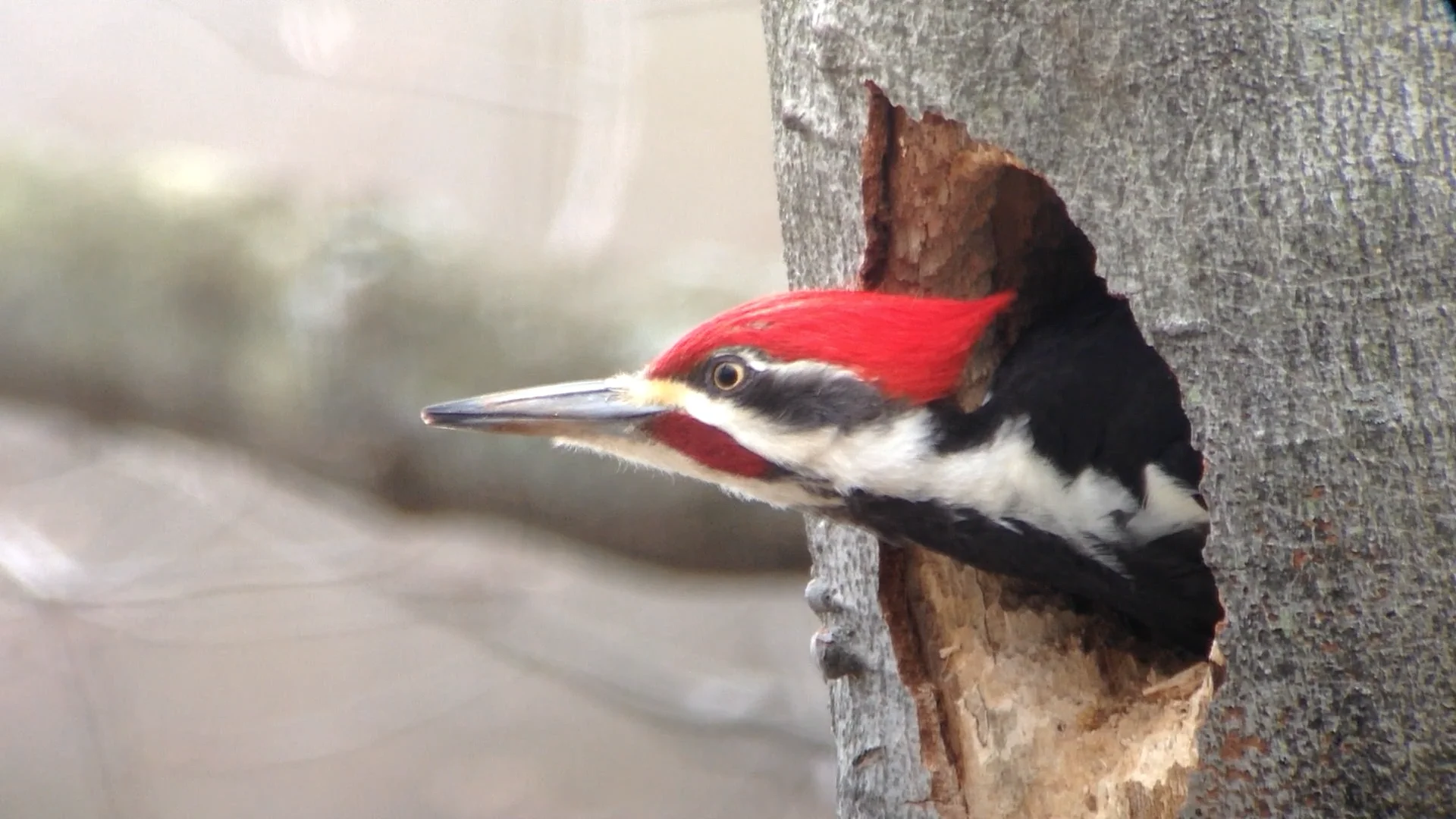
In mature forests throughout New York State, Pileated Woodpeckers establish their habitats among the towering trees, utilizing both deciduous and coniferous woodlands for nesting and foraging. These impressive woodpeckers are a common sight in the diverse forests of North America, displaying specific habitat preferences for their survival and reproduction. Here are some key points about the Pileated Woodpecker habitat:
- Preference for Mature Forests: Pileated Woodpeckers thrive in mature forests with an abundance of large trees.
- Variety of Woodland Types: They can be found in deciduous, coniferous, and mixed woodlands across New York State.
- Importance of Dead Trees: Forests with large, dead trees or snags are favored by Pileated Woodpeckers for food and nesting.
- Wide Range in New York: These woodpeckers occupy various regions within New York, including the expansive Adirondack Park.
- Distinctive Behaviors: Pileated Woodpeckers are known for their loud drumming and calls that resonate through the forest, marking their presence in the woodlands.
5. Yellow-bellied Sapsucker Overview

Yellow-bellied Sapsuckers, a medium-sized woodpecker species characterized by a red crown, black and white facial markings, and a yellowish belly, exhibit unique feeding behaviors that involve drilling rows of small holes in trees to access sap and insects. These woodpeckers have a distinctive appearance and behavior that sets them apart from other species. Yellow-bellied Sapsuckers are known to build their nests in tree cavities, using their bills to excavate suitable homes for their young. They typically choose trees with softer wood, such as aspens and pines, to create these nesting sites. During the breeding season, both male and female sapsuckers participate in nest-building activities, with the female ultimately selecting the final site. This cooperative behavior ensures the successful reproduction of the species. Understanding the nesting habits of Yellow-bellied Sapsuckers is crucial for conservation efforts aimed at protecting their breeding populations.
| Nesting Habit | Details |
|---|---|
| Nest Type | Tree cavities |
| Preferred Trees | Soft wood species like aspens, pines |
| Nest Building | Both male and female sapsuckers participate |
| Selection of Site | Female makes the final decision |
| Importance | Crucial for successful reproduction |
6. Yellow-bellied Sapsucker Habitat
When considering the habitat preferences of the Yellow-bellied Sapsucker, it is evident that this woodpecker species shows a distinct inclination towards mixed woodlands, orchards, and forest edges for nesting and foraging activities. These preferences align with their feeding habits, which often revolve around trees with sap flow. Here are some key points about the Yellow-bellied Sapsucker habitat:
- Yellow-bellied Sapsuckers rely on trees with sap flow for feeding, creating rows of small holes in tree bark.
- They are commonly found in the Adirondack Park, particularly in areas with a mix of deciduous and coniferous trees.
- Dead or dying trees are essential for cavity nesting, making old-growth forests crucial for their habitat.
- Protection of suitable habitat with a variety of tree species is vital for their conservation in New York.
- While their primary range is in North America, they migrate to Mexico and Central America during the winter months.
7. Downy Woodpecker Overview

A common sight across North America, the Downy Woodpecker is renowned for being the smallest woodpecker species on the continent. This bird species is easily recognizable by its black-and-white striped back, white belly, and the males’ distinctive red spot on the back of their head. Downy Woodpeckers are versatile in their habitat choices, thriving in woodlands, parks, and even suburban areas. Their diet consists of insects, seeds, and sap, which they extract by pecking at trees with their short, chisel-like beaks. When it comes to nesting, Downy Woodpeckers are cavity nesters, utilizing old woodpecker holes or excavating their own in dead trees for shelter.
8. Downy Woodpecker Habitat

Downy Woodpeckers inhabit a variety of wooded habitats, showcasing a preference for areas rich in trees for nesting and foraging, as well as open spaces conducive to hunting insects. These habitats can range from deciduous forests to orchards, parks, and even residential areas. Here are some key points about the Downy Woodpecker habitat:
- Diverse Habitats: Downy Woodpeckers can be found in a range of environments, from forests to urban settings.
- Tree Availability: They seek out locations with abundant trees for nesting and finding food.
- Open Spaces: Open areas are essential for their insect-hunting activities.
- Eastern United States: Commonly residing in the eastern U.S., including New York.
- Adaptability: Downy Woodpeckers can thrive in both natural landscapes and areas altered by human activity.
These woodpeckers typically raise one brood per breeding season, making their habitat selection crucial for successful reproduction and survival.
9. Other Woodpecker Species in NY

In New York, various woodpecker species, such as the Northern Flicker and Yellow-bellied Sapsucker, coexist alongside the common Downy and Hairy Woodpeckers, each contributing uniquely to the state’s avian diversity. The Northern Flicker, with its black markings and red tail feathers, exhibits interesting migration patterns, often moving southward during winter to escape colder temperatures. On the other hand, the Yellow-bellied Sapsucker, distinguished by its red forehead and throat, tends to stay in New York year-round, relying on tree sap for sustenance. Downy Woodpeckers, despite being the smallest in North America, are resilient migrants, adapting well to various habitats within the state. Hairy Woodpeckers, larger in size with longer bills, are known to migrate shorter distances compared to some other woodpecker species. Understanding the migration behaviors of these woodpeckers is crucial for conservation efforts and maintaining the delicate balance of New York’s ecosystem.